As investors navigate the financial landscape of 2026, the SGOV ETF yield 2026 has emerged as a critical benchmark for those seeking a safe harbor for their capital. As a premier cash-equivalent investment, understanding its mechanics is paramount. This guide provides a comprehensive breakdown of everything an investor needs to know about the SGOV ETF, from its 30-Day SEC yield to its dividend payouts, offering the clarity required to make an informed and strategic decision in the current economic climate.
Table of Contents
What is the SGOV iShares 0-3 Month Treasury Bond ETF?
The iShares 0-3 Month Treasury Bond ETF (SGOV) is an exchange-traded fund designed to provide investors with exposure to ultra-short-term U.S. Treasury bonds. It seeks to track the investment results of an index composed of U.S. Treasury bonds with remaining maturities of three months or less. In essence, it functions as a liquid and transparent vehicle for holding the shortest-duration government debt available, making it a popular tool for cash management and capital preservation.
Core Objective: Investing in Ultra-Short-Term U.S. Treasury Bonds
The primary goal of SGOV is to mirror the performance of the ICE 0-3 Month US Treasury Securities Index. The fund achieves this by investing its assets in a portfolio of U.S. Treasury bills (T-bills) that are close to maturity. Because these bonds have such a short lifespan, they exhibit minimal sensitivity to interest rate changes, which is a key source of volatility for longer-dated bonds. This focus on the shortest end of the yield curve allows SGOV to offer a yield that is highly responsive to the current federal funds rate while maintaining a stable net asset value (NAV).
Key Benefits: Why SGOV is a Popular Choice for Capital Preservation
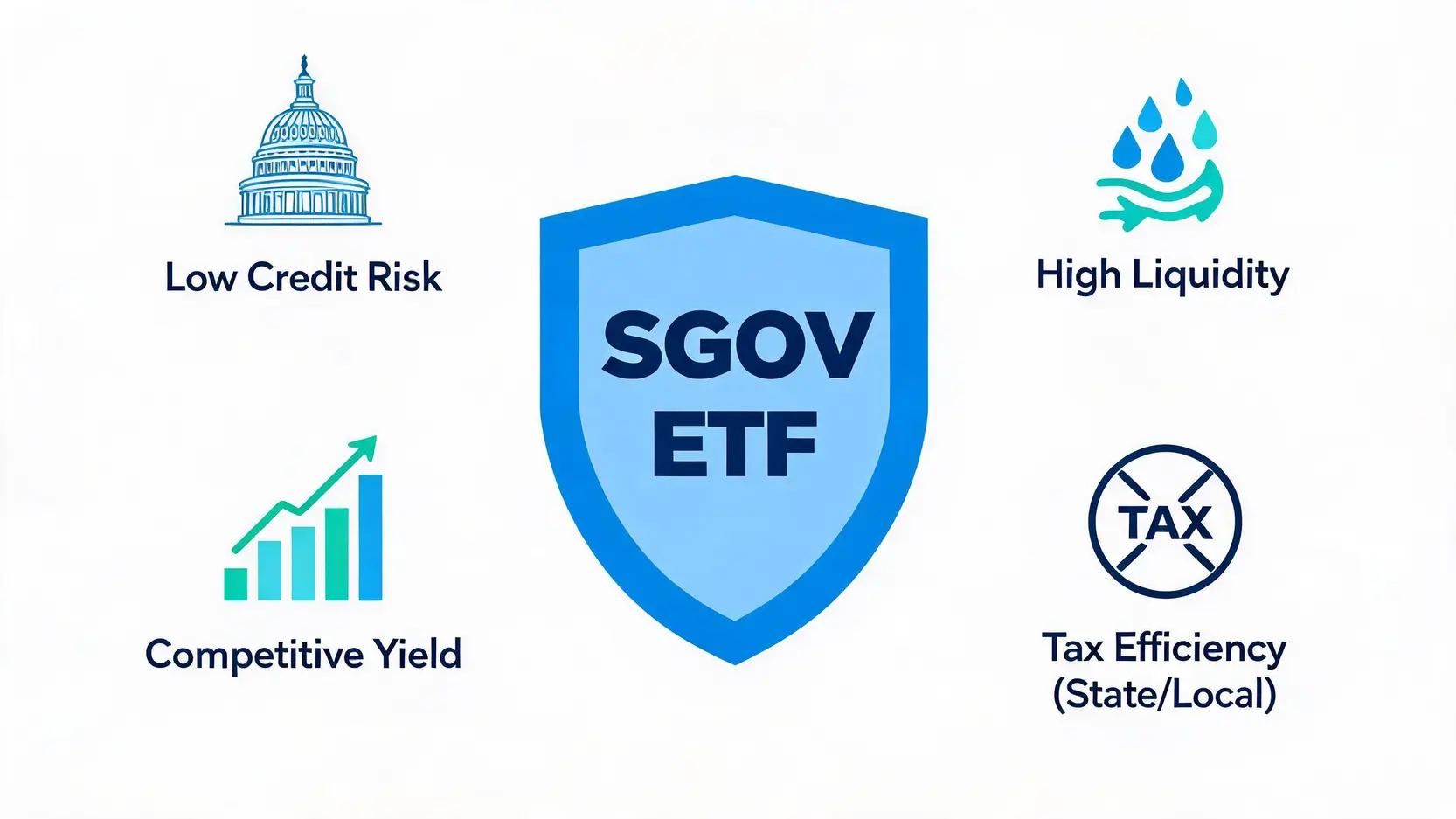
Investors are drawn to SGOV for several compelling reasons, particularly in an environment of economic uncertainty. Its popularity stems from a unique combination of safety, liquidity, and yield.
- 🛡️ Low Credit Risk: The fund’s holdings consist exclusively of bonds issued by the U.S. Department of the Treasury. These are backed by the full faith and credit of the U.S. government, representing the lowest possible credit risk in the financial markets.
- 💧 High Liquidity: As an ETF, SGOV trades on major stock exchanges throughout the day, just like a stock. This allows investors to buy or sell shares at market prices with ease, providing far more flexibility than traditional money market funds or certificates of deposit.
- 📊 Competitive Yield: The SGOV yield is directly influenced by prevailing short-term interest rates set by the Federal Reserve. When rates are elevated, SGOV can offer a more attractive return than traditional savings accounts.
- Tax Efficiency: The income generated from U.S. Treasury bonds is typically exempt from state and local income taxes, a significant advantage for investors in high-tax jurisdictions.
For those new to this asset class, understanding the fundamentals is key. A traditional bond ETF provides a diversified way to access fixed-income markets, and SGOV is a prime example of a fund targeting a very specific and safe segment of that market.
Breaking Down the Different SGOV Yield Types in 2026
When analyzing the SGOV ETF yield 2026, investors will encounter several different metrics. Each tells a slightly different story about the fund’s earnings, and understanding their distinctions is crucial for setting realistic expectations. The two most prominent figures are the 30-Day SEC Yield and the 12-Month Trailing Yield.
The 30-Day SEC Yield: A Standardized Snapshot of Earnings
The 30-Day SEC Yield is the most accurate forward-looking indicator of what an investor might earn over the next year, assuming market conditions remain stable. It is a standardized calculation mandated by the U.S. Securities and Exchange Commission (SEC) to ensure a fair comparison across different funds.
This yield is based on the interest income collected by the fund’s underlying bonds over the most recent 30-day period, annualized, and then adjusted for the fund’s expenses (its expense ratio). Because SGOV holds ultra-short-term T-bills, its SEC yield is highly sensitive to the latest changes in the Federal Reserve’s policy rate, making it a very current and relevant metric for investors today.
The 12-Month Trailing Yield: A Look at Past Performance
The 12-Month Trailing Yield, also known as the distribution yield, offers a historical perspective. It is calculated by taking the total dividends paid out to shareholders over the previous 12 months and dividing that sum by the fund’s most recent net asset value (NAV).
While this metric is useful for understanding the income an investor actually received in the past, it can be less predictive for an ETF like SGOV, especially in a dynamic interest rate environment. For example, if the Federal Reserve has been actively changing rates over the past year, the trailing yield will reflect an average of those past conditions and may not accurately represent the fund’s current earning potential, which is better captured by the SEC Yield.
Understanding SGOV’s Dividend Schedule and Payouts
SGOV typically distributes its income to shareholders in the form of dividends on a monthly basis. These payouts are derived from the interest payments made by the Treasury bills held within the fund’s portfolio. The amount of each monthly dividend can fluctuate slightly based on the specific yields of the bonds being held and any purchases or sales made by the fund managers. Investors should monitor the fund’s dividend announcements, which are made public in advance of the payout date, to stay informed on their expected income stream.
Key Factors Driving the SGOV ETF Yield in 2026
The yield on the SGOV ETF is not static; it is influenced by a confluence of macroeconomic forces. For any investor considering this instrument in 2026, understanding these drivers is essential to contextualize its returns and anticipate future trends. The primary determinant, by a significant margin, is the monetary policy set by the U.S. Federal Reserve.
The Crucial Role of Federal Reserve Interest Rate Policy
The single most important factor dictating the SGOV yield is the Federal Funds Rate. This is the target interest rate at which commercial banks lend reserves to each other overnight, and it serves as the foundation for all short-term rates in the U.S. economy. The yields on the 0-3 month Treasury bills that SGOV holds are directly and immediately impacted by the Fed’s decisions.
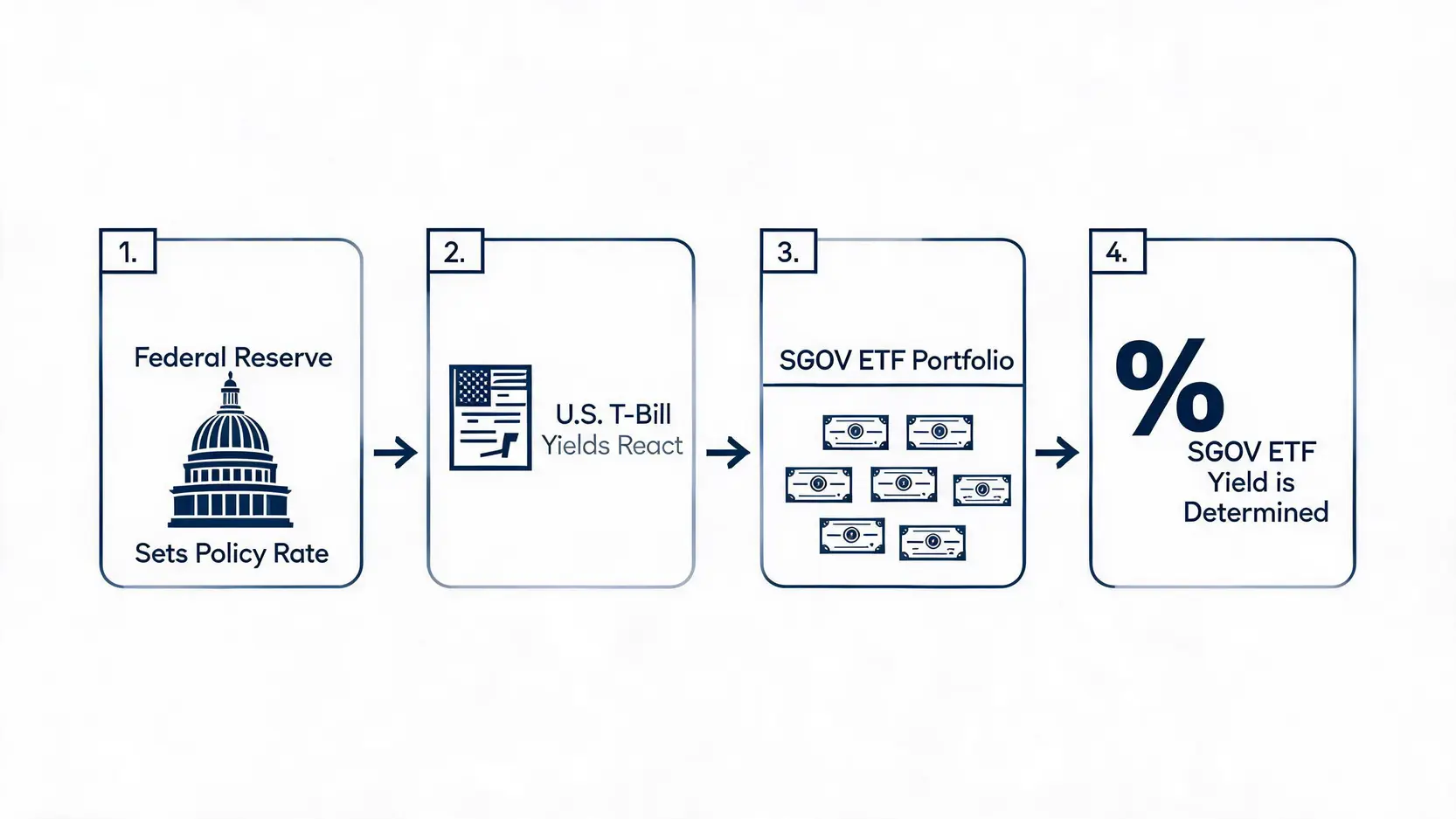
As of mid-2026, the market consensus, informed by recent Federal Open Market Committee (FOMC) statements, suggests a cautious stance. While inflation has shown signs of moderation, core metrics remain persistent, leading most analysts to project that the Fed will hold rates steady through the remainder of the year. Any unexpected economic data, whether showing stronger inflation or a weakening labor market, could shift this outlook and, consequently, the yield offered by SGOV.
Market Demand for Short-Term Government Debt
While Fed policy is the primary driver, the laws of supply and demand also play a role. During periods of high market volatility or economic uncertainty—often termed “risk-off” events—investors flock to the safety of U.S. Treasury bonds. This surge in demand can bid up the price of T-bills, which in turn slightly compresses their yield. Conversely, when investor appetite for risk is strong, demand for ultra-safe assets like those held by SGOV may wane, putting modest upward pressure on yields.
How SGOV’s Yield Compares to High-Yield Savings Accounts (HYSAs)
For investors managing cash, the most common alternative to SGOV is a High-Yield Savings Account (HYSA). In 2026, both offer competitive rates, but they come with different structures:
| Feature | SGOV ETF | High-Yield Savings Account (HYSA) |
|---|---|---|
| Underlying Asset | U.S. Treasury Bills (0-3 Month) | Cash Deposits at a Bank |
| Yield Driver | Directly tied to T-bill market rates | Set by the bank, influenced by Fed rates |
| Insurance | Not FDIC insured; backed by U.S. Gov’t credit | FDIC insured up to $250,000 |
| Taxation | Federally taxed; exempt from state/local taxes | Taxable at federal, state, and local levels |
| Liquidity | Traded on an exchange; price can fluctuate slightly | Funds are accessible, but transfers may take 1-3 days |
The key differentiator is often taxation. For an investor in a state with high income taxes, SGOV’s tax-exempt status can result in a higher after-tax return, even if its stated yield is comparable to that of an HYSA. However, the FDIC insurance of an HYSA provides a level of protection that an ETF cannot offer.
Conclusion
In summary, the SGOV ETF yield in 2026 stands as a critical metric for investors focused on stability, liquidity, and competitive returns for their cash reserves. Its performance is intrinsically linked to the monetary policy of the Federal Reserve, making the 30-Day SEC yield the most reliable indicator of its earning potential. By understanding the distinction between different yield measurements, the macroeconomic factors that influence them, and how SGOV compares to alternatives like HYSAs, investors can strategically assess whether this ultra-short-term Treasury bond ETF aligns with their financial objectives for the year.
Frequently Asked Questions (FAQ)
Q: What is a realistic yield expectation for SGOV in 2026?
A: Based on the current macroeconomic outlook and the Federal Reserve’s data-dependent approach, a realistic expectation is that the SGOV yield will remain closely aligned with the upper end of the federal funds rate target range. For 2026, analysts widely anticipate this to be in the 3.50% to 3.75% range, assuming no significant economic shocks that would force a policy pivot. The 30-Day SEC yield will be the most accurate real-time indicator of this expectation.
Q: How is the dividend income from SGOV taxed?
A: The dividend income distributed by SGOV, which is derived from U.S. Treasury obligations, holds a special tax status. It is subject to ordinary income tax at the federal level. However, it is generally exempt from all state and local income taxes. This can provide a significant tax advantage for residents of states with high tax rates, such as California, New York, or New Jersey. Understanding how ETF distributions are taxed is a critical component of investment planning.
Q: Is SGOV a risk-free investment?
A: No investment is completely risk-free. However, SGOV is considered to be at the very low end of the risk spectrum. Its primary risk is interest rate risk, although this is minimal due to the 0-3 month maturity of its holdings. The credit risk is negligible because the bonds are backed by the U.S. government. Unlike a bank account, SGOV is not FDIC insured, and its market price can fluctuate slightly during the trading day. These fluctuations are typically very small, but its value is not guaranteed.
Q: What is the difference between SGOV’s SEC yield and its market price return?
A: The SEC yield reflects the income generated by the ETF’s underlying bonds. The market price return, however, reflects the change in the price at which the ETF shares trade on the stock exchange. While SGOV’s price is designed to be very stable (hovering close to its NAV), small deviations can occur due to intraday supply and demand. An investor’s total return is a combination of the dividend yield they receive and any capital appreciation or depreciation from changes in the market price.