The Alpha Architect 1-3 Month Box ETF (BOXX) has rapidly gained attention for its innovative approach, promising Treasury-like returns with a unique tax advantage. However, as we head further into 2026, the sustainability of this structure is under increasing scrutiny. For high-income investors, understanding the intricate BOXX ETF tax strategy 2026, the looming risks of regulatory changes, and its suitability for your portfolio is more critical than ever. This analysis dissects the mechanics of BOXX, its celebrated tax deferral benefits, and the significant legislative risks that could redefine its value proposition.
Table of Contents
What Is the BOXX ETF and How Does It Generate Returns?
Unlike traditional ETFs that hold a basket of securities like stocks or bonds, BOXX employs a sophisticated options strategy to achieve its investment objective. Its goal is to provide returns that mirror those of holding short-term U.S. Treasury bills, but with a more favorable tax treatment. The entire structure is built upon a market-neutral options strategy known as a “box spread.”
The Core Mechanism: A Simple Explanation of ‘Box Spreads’
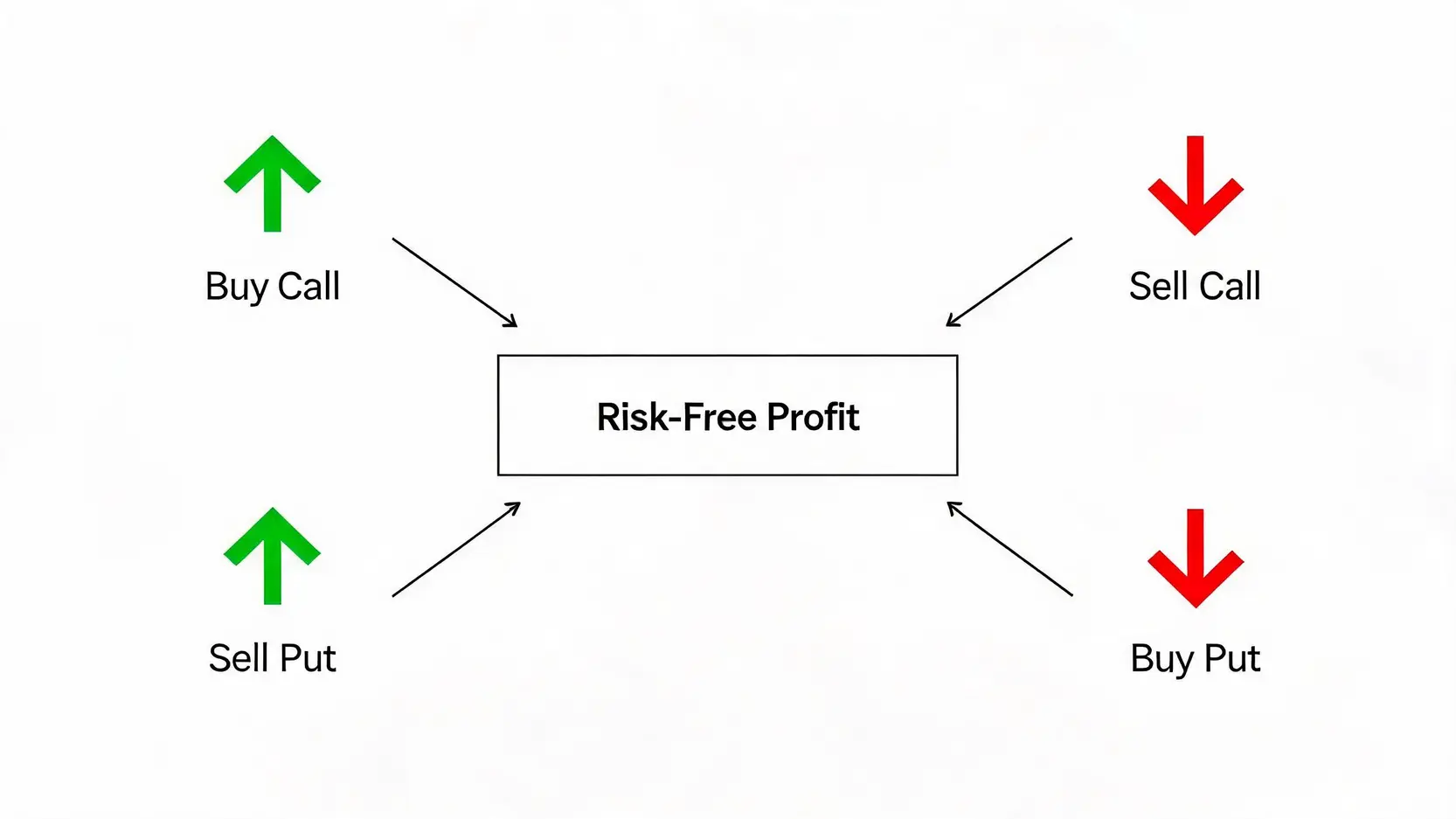
At its heart, BOXX utilizes a strategy called a box spread. This is an options arbitrage strategy that combines buying a bull call spread with a matching bear put spread. By using four different options contracts with the same expiration date, the strategy creates a risk-free position whose payoff is the difference between the strike prices of the options. This payoff is known upon execution and is designed to approximate the risk-free interest rate over the life of the options. Essentially, BOXX is creating a synthetic, low-risk loan and capturing the interest. This method is designed to be market-neutral, meaning its performance is not dependent on the direction of the broader stock market.
From Options to Yield: How It Aims for Cash-Like Returns
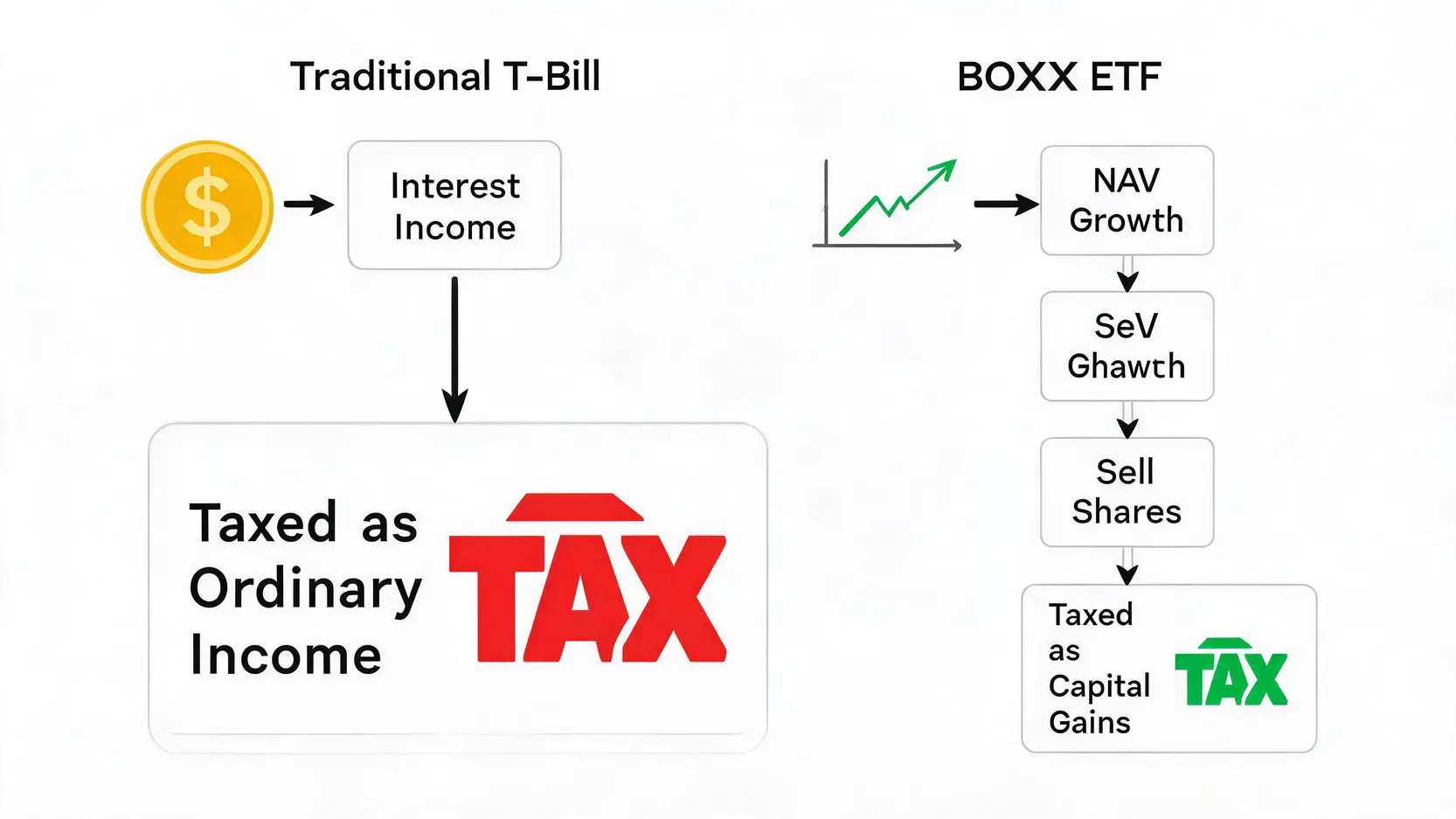
The fund continuously enters into these box spread positions. The profit generated from these spreads—which is structurally similar to interest income—is not distributed to shareholders as a dividend. Instead, the gains are reinvested within the fund, causing the Net Asset Value (NAV) of the ETF shares to appreciate over time. This steady, predictable appreciation is what allows BOXX to mimic the returns of short-term cash equivalents like Treasury bills. The key difference, however, lies not in how the return is generated, but in how it is taxed.
The Main Attraction: Breaking Down the BOXX Tax Strategy
The primary appeal of the BOXX ETF for investors in high tax brackets is its unique tax structure. It transforms what would typically be considered high-tax ordinary income into deferred, lower-tax capital gains. This financial engineering is what sets it apart from traditional cash-management investment tools.
Tax Deferral: How BOXX Postpones Your Tax Bill
Because BOXX does not make distributions, investors do not receive an annual Form 1099-DIV reporting taxable income. Instead, the fund’s value grows internally. A tax liability is only created when an investor decides to sell their shares of the ETF. This tax deferral is a powerful advantage, allowing capital to compound for years without an annual tax drag, a significant benefit compared to the annual tax liability generated by interest from T-bills or money market funds. This is a core component of the BOXX ETF tax treatment that attracts savvy investors.
Capital Gains vs. Ordinary Income: The Key Tax Rate Advantage
When you sell your BOXX shares after holding them for more than one year, the appreciated value is taxed as a long-term capital gain. As of 2026, the top long-term capital gains tax rate is 20% (plus a potential 3.8% Net Investment Income Tax), which is substantially lower than the top federal ordinary income tax rate of 37%. Furthermore, because the underlying options are Section 1256 contracts, the gains are treated as 60% long-term and 40% short-term capital gains, regardless of the holding period. This blended rate provides a significant tax advantage even for holding periods of less than a year. This conversion of income character is the cornerstone of its tax-efficiency promise.
The ‘Tax Gimmick’ Debate: Potential Risks and the 2026 Outlook
While the strategy is technically compliant with current laws, its rise has sparked a fierce debate. Critics argue it’s an aggressive tax-avoidance vehicle, while supporters see it as an innovative investment tool. As its assets under management swell, so does the attention from regulators, creating a palpable risk for investors.
Why Critics Call It a ‘Tax Trap’: Understanding the Controversy
The term ‘tax gimmick’ stems from the argument that BOXX exists almost exclusively to exploit a tax loophole. The strategy does not provide exposure to a traditional asset class but rather re-engineers interest income into a more favorable form. The ‘trap’ lies in the potential for the IRS or Congress to retroactively change the rules. An adverse ruling could potentially reclassify past gains as ordinary income, leading to an unexpected and significant tax bill for investors. As publications like The Wall Street Journal have highlighted, these novel structures are drawing increased attention.
Potential for IRS Scrutiny: What to Watch for Before 2026
There is no official guidance or blessing from the Internal Revenue Service (IRS) confirming that the tax treatment of BOXX’s strategy is valid. As of early 2026, reports indicate that the IRS is scrutinizing whether box spreads packaged within an ETF should indeed be taxed as capital gains. Investors should monitor any IRS notices, revenue rulings, or announcements related to options-based ETFs and the tax treatment of synthetic interest income. A formal challenge from the IRS could materialize quickly, posing a significant risk to the fund’s core value proposition.
Legislative Risk: Could Future Tax Laws Impact the BOXX Strategy?
Beyond the IRS, the U.S. Congress poses an even greater threat. Lawmakers could easily draft legislation to close what they perceive as a loophole for wealthy investors. A new tax law could specifically target strategies that convert ordinary income to capital gains, effectively neutralizing the BOXX ETF’s main advantage overnight. Given the political climate and focus on tax fairness, this legislative risk is arguably the most significant long-term threat to the strategy’s viability heading into and beyond 2026.
Comparing BOXX: How It Stacks Up Against T-Bills and MMFs
To make an informed decision, investors must compare BOXX not just on its tax merits but also on its overall risk and return profile against traditional cash alternatives. While the allure of tax savings is strong, it doesn’t come without trade-offs. A thorough analysis of its mechanics is crucial, much like what is covered in this guide to AAA CLO ETFs.
Risk and Return Profile
Returns: BOXX aims to track the return of T-bills, but it is subject to an expense ratio (currently 0.19%). This fee creates a small but persistent drag on performance compared to holding T-bills directly through a service like TreasuryDirect.
Risk: While the box spread strategy is designed to be risk-free, there are underlying risks. These include counterparty risk on the options contracts and liquidity risk, especially during times of market stress. T-bills, backed by the full faith and credit of the U.S. government, are considered the gold standard of risk-free assets.
After-Tax Yield Comparison for Different Brackets
The true benefit of BOXX is most apparent when analyzing its after-tax yield. Let’s consider a hypothetical example for an investor in the highest federal tax brackets.
| Investment | Pre-Tax Yield (Annual) | Tax Rate Applied | After-Tax Yield |
|---|---|---|---|
| U.S. Treasury Bill | 5.00% | 37% (Ordinary Income) | 3.15% |
| BOXX ETF (Net of fees) | 4.81% | 23.8% (LTCG + NIIT) | 3.67% |
*Note: This is a simplified, hypothetical example for illustrative purposes. It assumes the BOXX return is net of its 0.19% expense ratio and gains qualify for long-term capital gains treatment. Actual results will vary.
Conclusion
In conclusion, the BOXX ETF presents a compelling and innovative tax strategy for high-income investors seeking to optimize the returns on their cash holdings. The ability to defer taxes and convert ordinary income into lower-taxed capital gains is a powerful combination. However, this is not a free lunch. The ‘tax gimmick’ debate is intensifying, and the risks of an adverse action from the IRS or Congress are significant and growing as we look ahead in 2026. Weighing the quantifiable benefits of tax deferral against the unquantifiable but very real potential for regulatory changes is the key decision point. Always consult a qualified financial advisor and tax professional to discuss how the BOXX ETF tax strategy fits within your specific financial situation and risk tolerance.
Frequently Asked Questions about the BOXX ETF
Q: How are BOXX ETF gains taxed when I sell my shares?
A: When you sell shares of BOXX, the profit (the difference between your sale price and your cost basis) is reported as a capital gain. Due to the fund’s use of Section 1256 contracts, these gains are taxed at a blended rate: 60% are considered long-term capital gains and 40% are short-term, regardless of how long you held the shares. This is generally more favorable than the ordinary income tax rates applied to interest from bonds or savings accounts.
Q: What are the primary risks of investing in the BOXX ETF?
A: The single greatest risk is regulatory or legislative action. The IRS could challenge the fund’s tax treatment, or Congress could pass a law to eliminate it. Other risks include tracking error relative to T-bills, liquidity risk in the options market during periods of stress, and the performance drag from the fund’s expense ratio.
Q: Is the BOXX ETF a suitable investment for a retirement account like an IRA?
A: No, it is generally not suitable for a tax-advantaged retirement account like a 401(k) or IRA. The primary benefit of BOXX is its preferential tax treatment in a taxable brokerage account. Since investments within an IRA already grow tax-deferred, the complex structure and tax advantages of BOXX are redundant and would only be hampered by its management fee.
Q: Who is the ideal investor for the BOXX ETF?
A: The ideal investor is an individual in a very high federal and state income tax bracket with a large cash allocation in a taxable account. They must also have a high tolerance for regulatory risk and understand that the tax benefits, while powerful today, may not exist in the future.