As we navigate the intricate financial landscape of 2026, income-focused investors face a critical decision in their high-yield dividend stocks vs Treasury bonds 2026 analysis. The central question is whether to embrace the higher potential returns and inherent volatility of dividend-paying equities or to seek the comparative safety and predictable income stream offered by U.S. Treasury bonds. This guide provides a detailed breakdown of portfolio allocation strategies, dissecting the risk-return profiles, impact of prevailing economic conditions, and tax implications to help you determine which asset class aligns best with your financial objectives.
Table of Contents
The Contenders: Defining High-Yield Stocks and Treasury Bonds in 2026
Understanding the fundamental characteristics of each asset is the first step in making an informed investment choice. While both can provide income, their mechanics, risk profiles, and roles within a portfolio are distinctly different.
What Are High-Yield Dividend Stocks?
High-yield dividend stocks are shares of companies that pay out a portion of their earnings to shareholders at a rate significantly higher than the market average (e.g., the S&P 500 average yield). These are typically mature, well-established companies in sectors like utilities, consumer staples, energy, and real estate investment trusts (REITs). Investors are drawn to them for two primary reasons:
- Income Stream: They provide a regular, often quarterly, cash flow, which can be particularly attractive for retirees or those seeking to supplement their income.
- Growth Potential: In addition to dividends, the underlying stock price can appreciate, offering the potential for capital gains. This dual-return potential is a key differentiator from fixed-income instruments.
However, the “high-yield” nature comes with its own set of risks. A very high yield can sometimes be a red flag, indicating that the market perceives a higher risk of a future dividend cut or that the company’s stock price has fallen significantly. A sound dividend investing strategy involves scrutinizing a company’s financial health, payout ratio, and history of dividend payments.
What Are U.S. Treasury Bonds?
U.S. Treasury bonds (T-bonds), along with Treasury notes (T-notes) and Treasury bills (T-bills), are debt securities issued by the United States Department of the Treasury to finance government spending. They are considered one of the safest investments in the world because they are backed by the full faith and credit of the U.S. government. Key features include:
- Fixed Income: Treasury bonds pay interest at a fixed rate (coupon) semi-annually until they mature, at which point the principal amount (par value) is returned to the investor.
- Safety: The risk of default is virtually zero, making them a benchmark for “risk-free” returns.
- Liquidity: The market for U.S. Treasuries is extremely large and liquid, meaning they can be bought and sold easily.
This predictability makes them a cornerstone for conservative investors and those focused on capital preservation. For those looking to add this asset to their portfolio, a guide to bond investing for beginners can provide foundational knowledge.
Head-to-Head for 2026: A Core Comparison for Your Portfolio
Evaluating dividend stocks against Treasury bonds requires a multi-faceted analysis. As we look at the 2026 investment landscape, four key areas stand out: risk, return, interest rate sensitivity, and taxation.
Risk & Volatility: The Fundamental Trade-Off
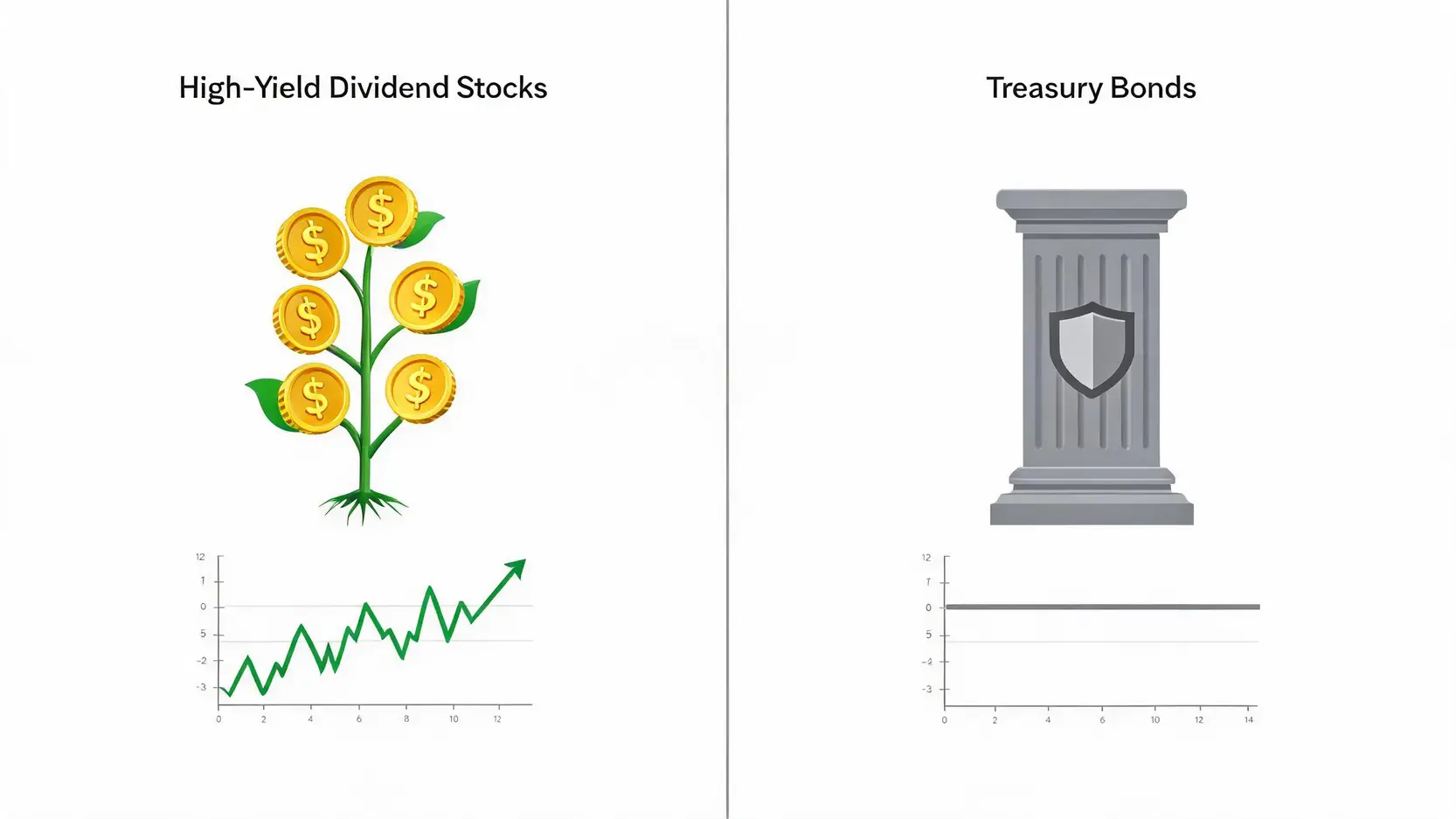
The primary distinction lies in their risk profiles. High-yield dividend stocks are subject to market risk and business-specific risk. A market downturn, sector rotation, or poor company performance can lead to both a fall in stock price and a potential cut in dividends. Their value can fluctuate significantly in the short term. 📈
Conversely, Treasury bonds are insulated from market volatility. Their main adversaries are interest rate risk and inflation risk. If interest rates rise after a bond is purchased, its fixed coupon payments become less attractive, and its market price will decrease if sold before maturity. Inflation erodes the purchasing power of the fixed payments over time.
Yield & Return Potential: Income Generation vs. Capital Preservation
For high-yield dividend stocks, the total return is a combination of the dividend yield and any capital appreciation. A healthy company may increase its dividend over time, providing a growing income stream that can outpace inflation. The potential for capital growth is unlimited, but so is the potential for loss.
Treasury bonds offer a more defined return. An investor knows the exact yield-to-maturity if the bond is held until its term ends. The primary goal here is capital preservation and generating a predictable income, not significant capital growth. In 2026, this is a choice between a potentially higher, but uncertain, total return from stocks versus a lower, but highly predictable, return from bonds.
Impact of Interest Rates: How Fed Policy Shapes Their Value
The monetary policy set by the Federal Reserve is a powerful force influencing both asset classes. In a rising interest rate environment, newly issued bonds offer higher yields, making existing, lower-yielding bonds less valuable. This same dynamic affects dividend stocks; when yields on safe-haven Treasuries rise, the risk premium for holding stocks becomes less appealing, which can put downward pressure on their prices. According to forecasts from institutions like J.P. Morgan, the Fed’s decisions throughout 2026 will be a critical factor. A stable or declining rate environment, on the other hand, tends to boost the value of both existing bonds and high-yield stocks.
Tax Treatment: Qualified Dividends vs. Bond Interest
Tax efficiency is a crucial, often overlooked, aspect of the comparison. The tax treatment of income from these two assets differs significantly:
- Qualified Dividends: Income from most high-yield dividend stocks (if held for a specific period) is taxed at the lower long-term capital gains rates, which are 0%, 15%, or 20% at the federal level, depending on your income bracket.
- Treasury Bond Interest: Interest earned from Treasury bonds is subject to federal income tax at your ordinary income tax rate (which can be much higher than capital gains rates). However, it holds a significant advantage: it is completely exempt from state and local taxes. This makes Treasuries particularly attractive for investors in high-tax states like California or New York.
Understanding these tax nuances is essential for calculating the true after-tax return of each investment, which can dramatically alter the comparison based on your personal financial situation.
The 2026 Outlook: Key Economic Factors to Watch
Beyond the fundamental characteristics, the prevailing economic climate in 2026 will heavily influence which asset class is better positioned to outperform. Three factors are paramount: interest rates, inflation, and market sentiment.
Projected Interest Rate Environment & Its Impact on Your Choice
As of mid-2026, the economic consensus points towards a cautiously stable interest rate environment. Projections from sources like the Federal Reserve’s own materials and analysis from Trading Economics suggest that the aggressive rate hikes of the past have effectively curbed inflation, allowing for a more measured policy stance. For investors, this means the headwind of rising rates that previously pressured both stock and bond prices may be subsiding. If rates hold steady or even begin to decline later in the year, it could provide a favorable backdrop for both asset classes, though likely benefiting bond prices more directly and immediately.
Inflation Forecasts: Which Asset Protects Your Purchasing Power Better?
Inflation remains a key concern. The Congressional Budget Office and other economic bodies project inflation to moderate but remain slightly above the Fed’s 2% target for most of 2026. In this environment, Treasury bonds’ fixed payments risk losing purchasing power. High-quality dividend stocks from companies with strong pricing power—the ability to pass on rising costs to consumers—may offer a better hedge. These companies can potentially grow their earnings and dividends, helping your income stream keep pace with inflation.
Market Sentiment: Will 2026 Favor Equities or Fixed Income?
Market sentiment appears to be cautiously optimistic but sensitive to geopolitical and economic data releases. A “risk-on” environment, driven by stable growth and positive earnings reports, would favor high-yield dividend stocks. In contrast, any unexpected economic slowdown or global instability would trigger a “risk-off” flight to safety, boosting demand for U.S. Treasury bonds. The key for investors in 2026 is to assess whether the potential rewards in the equity market justify the risks, given the reliable, albeit lower, returns offered by government debt.
How to Choose: Building Your 2026 Portfolio
The optimal choice is not a one-size-fits-all answer but rather a decision tailored to individual investor profiles, goals, and risk tolerance.
Case for High-Yield Dividend Stocks (Growth & Income Focus)
You might lean towards high-yield dividend stocks if:
- You have a longer investment horizon and can withstand short-term market volatility.
- Your primary goal is a growing income stream that can combat inflation over time.
- You are seeking capital appreciation in addition to income.
- Your risk tolerance is moderate to high.
Case for Treasury Bonds (Safety & Predictability Focus)
Treasury bonds may be the superior choice if:
- You prioritize capital preservation above all else.
- You are near or in retirement and require a highly predictable income stream.
- You have a low tolerance for risk and market fluctuations.
- You live in a high-tax state and can benefit significantly from the state/local tax exemption.
A Hybrid Approach: Can You Have the Best of Both Worlds?
For many, if not most, investors, the most prudent strategy in 2026 is not an “either/or” decision but a balanced allocation. A hybrid approach allows you to:
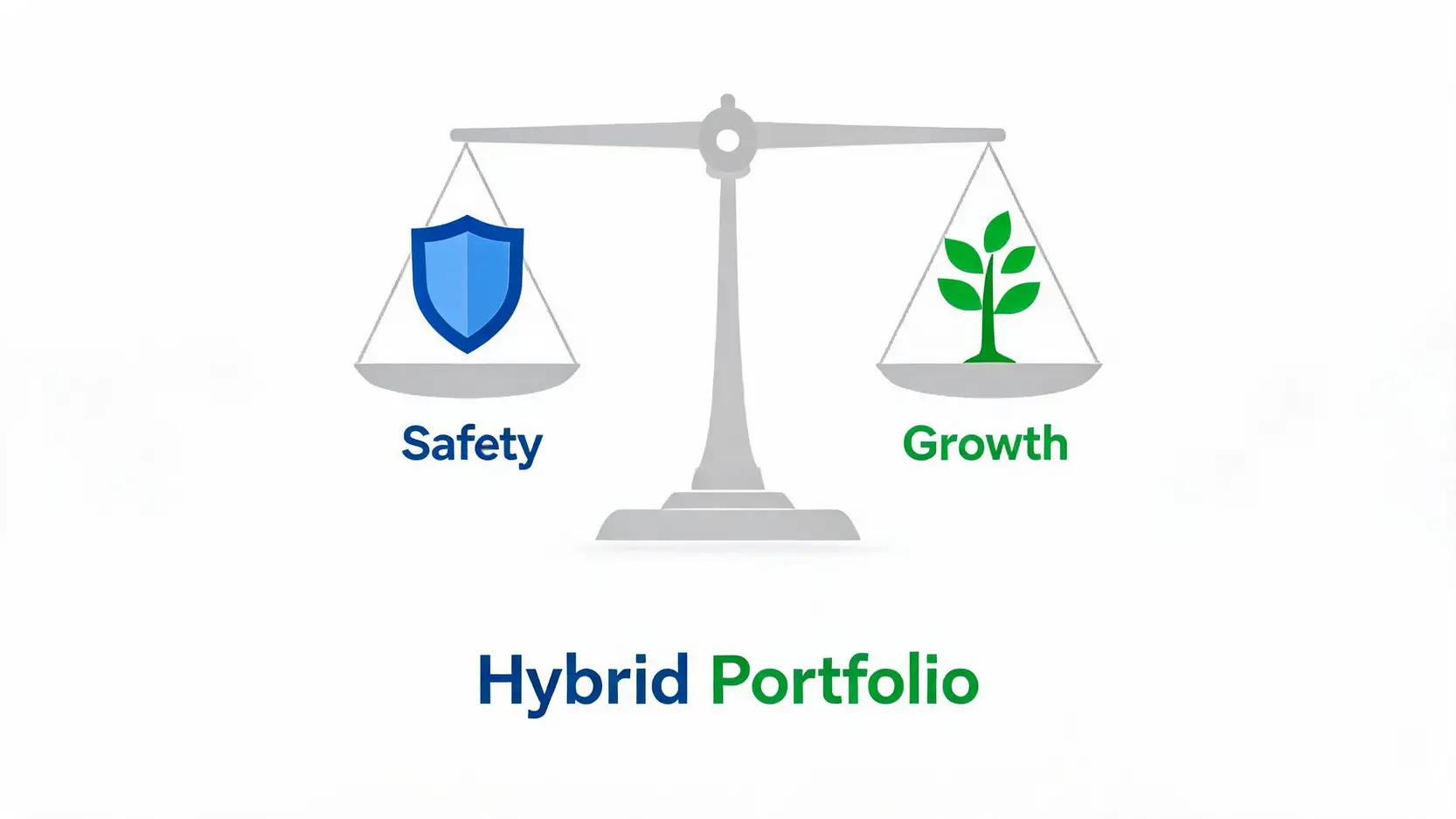
- Diversify Income Sources: Combining dividend income with coupon payments creates a more resilient cash flow.
- Manage Risk: The stability of Treasury bonds can cushion the portfolio during stock market downturns.
- Capture Growth: The equity portion of the portfolio provides the engine for long-term growth and inflation protection.
A classic 60/40 portfolio (60% stocks, 40% bonds) is a traditional starting point, but the exact allocation should be calibrated to your personal financial situation and outlook for the remainder of 2026.
Conclusion
Ultimately, the decision between high-yield dividend stocks and Treasury bonds in 2026 is a function of your personal risk tolerance, income requirements, tax situation, and investment horizon. Dividend stocks offer the potential for a growing income stream and capital appreciation, making them a powerful tool for wealth creation. Treasury bonds provide unmatched safety and predictability, serving as the bedrock of a conservative portfolio. By carefully assessing the current economic outlook and your own financial goals, you can construct a well-balanced portfolio that allows you to invest with confidence for the remainder of 2026 and the years to come.
Frequently Asked Questions
Q: Are high-yield dividend stocks safe for 2026?
A: Safety is relative. They are not as safe as Treasury bonds because they carry market and business risk. The stock price can decline, and dividends are not guaranteed. However, choosing stocks from financially sound companies with a long history of stable or growing dividends can significantly mitigate this risk. In 2026, safety depends on careful stock selection and diversification.
Q: How does inflation affect Treasury bonds and dividend stocks differently?
A: High inflation is generally more detrimental to Treasury bonds. Since their interest payments are fixed, rising inflation erodes the real (after-inflation) return and purchasing power of that income. Dividend stocks can offer better protection if the underlying companies have the ability to raise prices and, consequently, their dividends over time, allowing the income to potentially keep pace with inflation.
Q: What is the easiest way to buy Treasury bonds?
A: The most direct and cost-effective way for an individual investor to buy U.S. Treasury bonds is through the official government website, TreasuryDirect. It allows you to buy securities directly from the U.S. Treasury without a broker, eliminating commission fees. You can also purchase them through most brokerage accounts, which may offer a more user-friendly interface but could involve small fees.
Q: Which is better for retirement income in 2026: dividend stocks or Treasury bonds?
A: This depends on the retiree’s risk tolerance. Treasury bonds offer unparalleled predictability, which is ideal for those who need a fixed amount of income to cover living expenses without fear of market downturns. Dividend stocks offer a higher potential yield and growth to combat inflation but come with the risk of capital loss. Many retirees use a hybrid approach, using a base of Treasury bonds to cover essential expenses and a portfolio of high-quality dividend stocks for discretionary spending and long-term growth.