In today’s increasingly complex financial landscape, traditional indicators are casting long shadows over digital asset markets. For astute investors, understanding the Treasury yields crypto impact is no longer optional—it’s a critical component of a resilient strategy. As the lines between TradFi and DeFi blur, the intricate relationship between US Treasury yields and crypto asset prices has become a focal point of market analysis. This article will demystify these connections, exploring the macroeconomic factors that dictate capital flows and providing clear, actionable insights for navigating the volatility of 2026.
Table of Contents
What Are Treasury Yields and Why They Matter for Investors
Before diving into the crypto-specific implications, it’s essential to grasp the fundamental role of U.S. Treasury yields in the global financial system. They are, in essence, the heartbeat of the market, signaling shifts in economic health and investor appetite for risk.
Defining the Risk-Free Rate in Simple Terms
A Treasury yield is the effective interest rate the U.S. government pays to borrow money. Because the U.S. government is considered to have a near-zero risk of default, the return on its bonds is used as the benchmark ‘risk-free rate’. This rate serves as the foundation upon which the expected returns of all other, riskier assets are built. For example, an investor will demand a higher return from a volatile stock or a digital asset to compensate for the additional risk they are taking compared to the guaranteed return from a Treasury bond.
How Yields Act as a Barometer for Economic Health and Investor Sentiment
Treasury yields are a powerful economic indicator. Here’s what they typically signal:
- 📈 Rising Yields: Often indicate a strong economy, rising inflation expectations, or anticipation of central bank interest rate hikes. This can make investors more cautious, pulling capital from high-risk assets.
- 📉 Falling Yields: Usually signal economic uncertainty, a flight to safety, or expectations of monetary easing. In this ‘risk-off’ environment, investors prioritize capital preservation over high returns.
By monitoring the yield curve—the difference between short-term and long-term Treasury yields—analysts can gauge market sentiment about future economic growth. A steepening curve often suggests optimism, while an inverted curve (where short-term yields are higher than long-term ones) has historically been a reliable predictor of recessions.
The Direct Impact: How Treasury Yields Influence Crypto Valuations
The core of the relationship between Treasuries and crypto lies in the classic financial concept of capital allocation. As the risk-free rate changes, so does the entire landscape of investment opportunities, creating a significant ripple effect on crypto valuations.
The Opportunity Cost Dilemma: When Safety Becomes More Attractive Than Risk
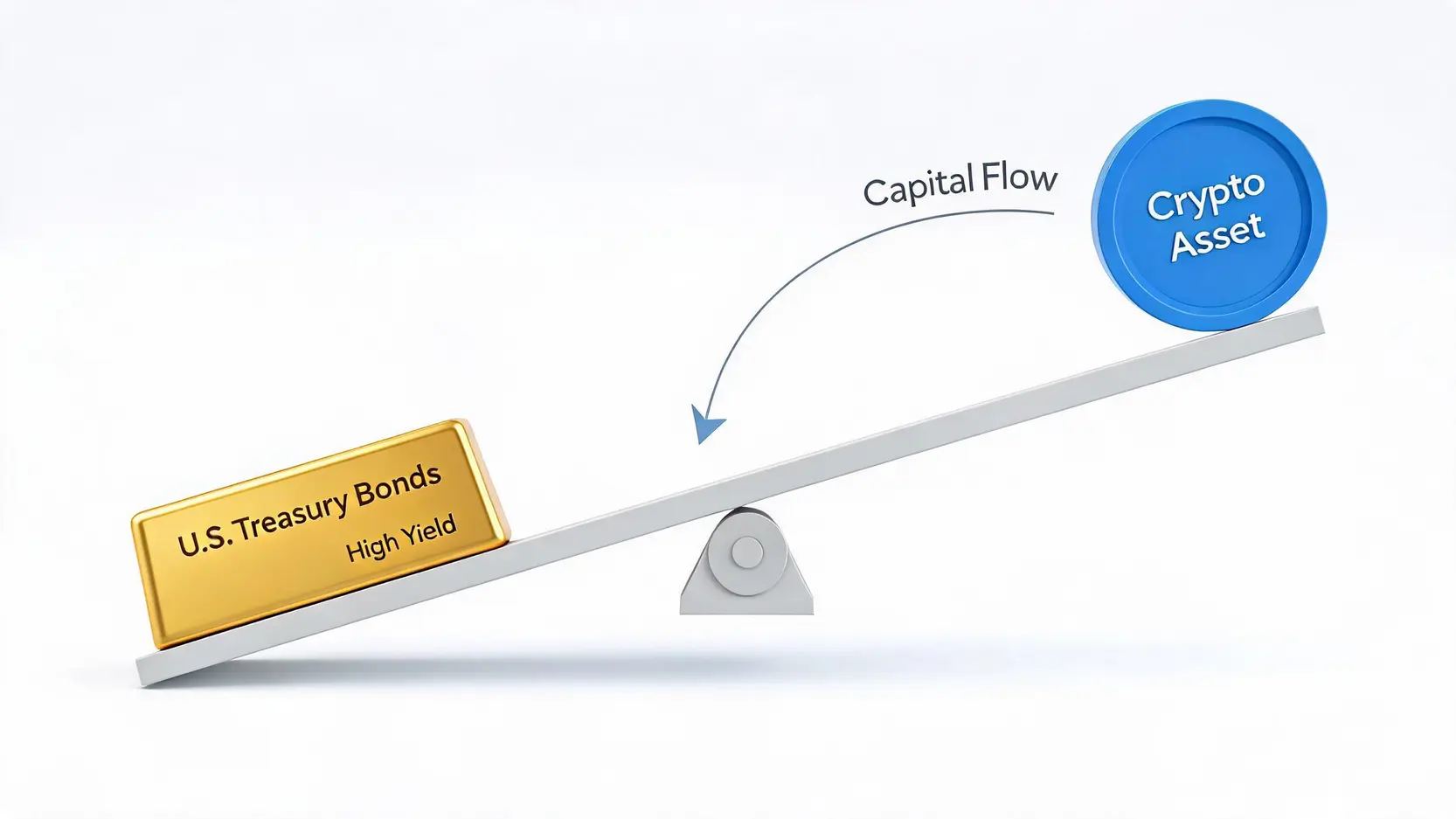
Opportunity cost is the potential return an investor forgoes by choosing one investment over another. When Treasury yields rise, the opportunity cost of holding non-yielding or highly volatile assets like Bitcoin increases. Why? Because investors can now earn a higher, guaranteed return from government bonds.
Consider this scenario in 2026: If a 10-year Treasury note offers a 5% yield, an investor might think twice before allocating significant capital to Bitcoin, which offers no yield and carries substantial price risk. This dynamic often leads to capital flowing out of riskier assets and into safer government debt, putting downward pressure on crypto prices. Conversely, when yields are low, investors are more inclined to seek higher returns in riskier markets, which can fuel crypto bull runs.
Analyzing the Historical Correlation Between Yields and Bitcoin Prices
Historically, an inverse correlation has been observed between the price of Bitcoin and Treasury yields, particularly the 10-year yield. As noted in recent market analyses, periods of rapidly rising yields have often coincided with pullbacks or consolidation in the crypto market. For instance, market analysis has shown that this behavioral pattern explains the historical pressure on cryptocurrency prices during times of rising yields. While this correlation is not always perfect, it has become more pronounced as institutional investors, who are highly sensitive to interest rate fluctuations, have increased their participation in the crypto space. This inverse relationship underscores how Bitcoin is increasingly being treated as a long-duration risk asset, similar to high-growth tech stocks.
The Two-Way Street: How Crypto Is Now Impacting the Treasury Market
For years, the influence flowed in one direction: from traditional finance to crypto. However, the paradigm is shifting. The explosive growth of the crypto ecosystem, particularly the stablecoin sector, has created a new and significant source of demand for U.S. government debt, marking a fascinating turn where digital assets now directly influence the Treasury market.
The Stablecoin Connection: Why Giants Like Tether and Circle Buy Treasuries
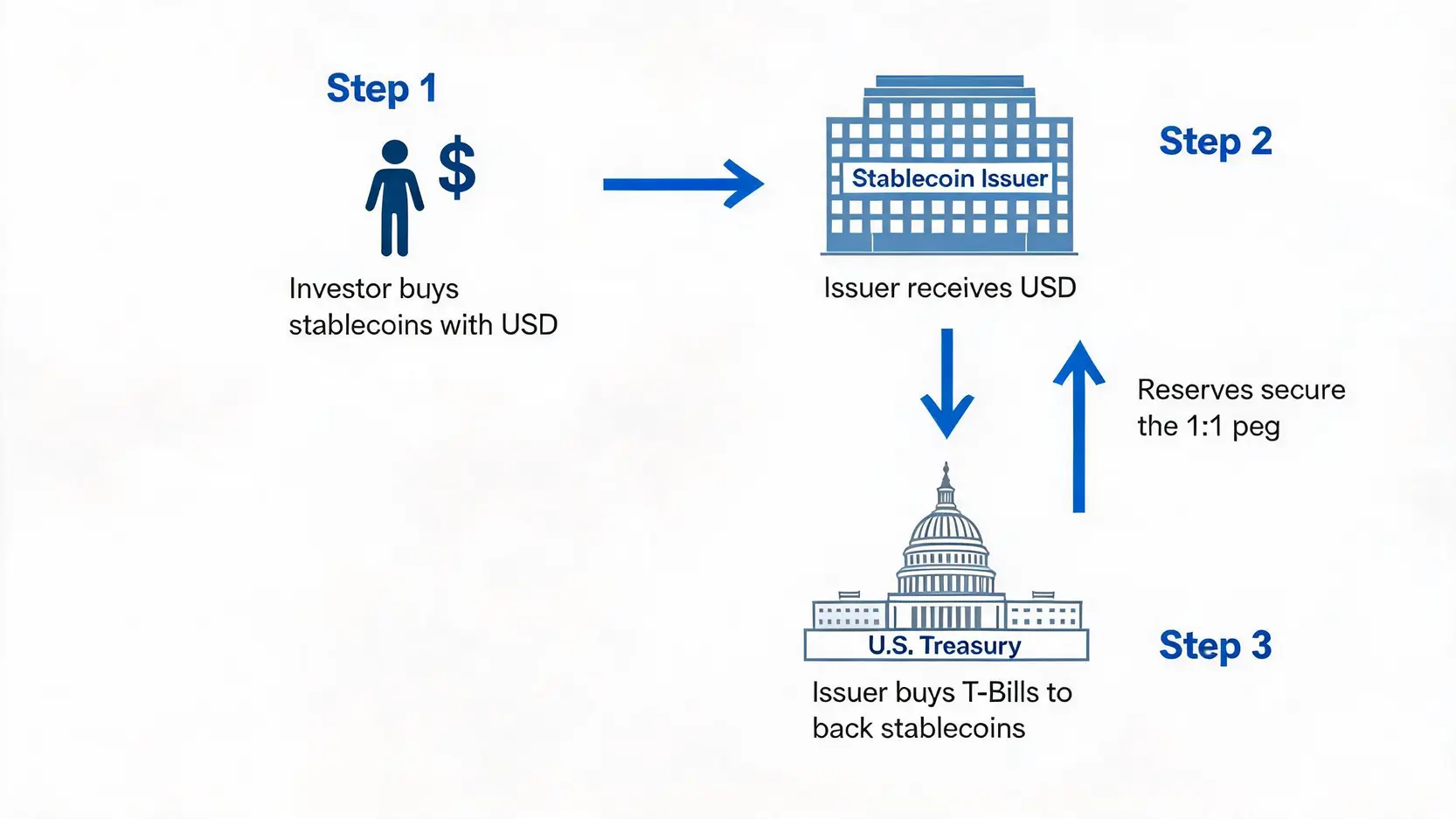
Dollar-pegged stablecoins, such as USDT (Tether) and USDC (Circle), are designed to maintain a 1:1 value with the U.S. dollar. To achieve this, issuers must hold reserves of equivalent value. A significant portion of these reserves is held in the safest and most liquid assets available: U.S. Treasury bills. By holding T-bills, stablecoin issuers ensure they can meet redemption requests and maintain their peg. This strategy has turned them into massive players in the market for short-term government debt.
Quantifying the Impact: What the BIS Research Reveals About Stablecoin Demand
The scale of this influence is no longer trivial. Groundbreaking research from the Bank for International Settlements (BIS) has begun to quantify this effect. A BIS working paper titled “Stablecoins and safe asset prices” highlights that the growing demand from stablecoin issuers can have a tangible impact on the yields of short-term Treasuries. The study suggests that large inflows into stablecoins, which translate into purchases of T-bills, can contribute to lower yields in that segment of the market. As of early 2026, the largest stablecoin issuers collectively hold tens of billions of dollars in U.S. Treasuries, placing them among the larger international holders of U.S. debt.
Future Outlook: Regulation, Growth, and the Deepening Link
The symbiotic relationship between stablecoins and Treasuries is poised to deepen. However, it also introduces new complexities and regulatory considerations. Governments and central banks are closely monitoring this space. Future regulations could formalize the role of stablecoin issuers as key market participants, potentially increasing transparency but also adding compliance costs. As the stablecoin market continues its growth trajectory, its demand for high-quality, liquid assets like T-bills will only increase, further solidifying the link between the crypto world and the bedrock of traditional finance.
Conclusion
The dynamic between U.S. Treasury yields and the crypto market has evolved from a simple inverse correlation to a complex, bidirectional relationship. On one hand, yields remain a fundamental barometer of risk appetite, directly influencing crypto valuations through the lens of opportunity cost. On the other, the meteoric rise of stablecoins has established a new and powerful channel of influence, with the crypto industry now a significant source of demand for government debt. For any serious investor in 2026, ignoring this interplay is a strategic error. A comprehensive understanding of the Treasury yields crypto impact is essential for accurately pricing risk, identifying macro trends, and constructing a portfolio capable of weathering the storms of an interconnected financial future.
Frequently Asked Questions
Q: Is a high Treasury yield always bad for crypto prices?
A: Generally, a high or rapidly rising Treasury yield is considered a headwind for crypto prices due to the opportunity cost effect. It makes holding a risk-free, yield-bearing asset more attractive than a volatile, non-yielding one. However, the relationship isn’t always a perfect 1:1 inverse correlation. Other factors, such as market narratives (e.g., Bitcoin halving), technological adoption, and specific token fundamentals, can sometimes override this macroeconomic pressure.
Q: Do all cryptocurrencies react the same way to changes in Treasury yields?
A: No. Bitcoin, as the largest and most institutionally-held cryptocurrency, tends to show the strongest and most direct correlation to macroeconomic factors like Treasury yields. Altcoins often follow Bitcoin’s lead, but their prices can also be heavily influenced by their own ecosystem developments, hype cycles, and risk profiles. Smaller, more speculative altcoins may exhibit even higher volatility and a less predictable response to traditional market indicators.
Q: What other macroeconomic factors should crypto investors watch?
A: Beyond Treasury yields, investors should closely monitor several other key indicators. These include: inflation data (CPI and PCE reports), central bank monetary policy decisions (especially from the Federal Reserve), the strength of the U.S. Dollar (measured by the DXY index), and major geopolitical events. A strong dollar, for example, often has an inverse relationship with Bitcoin’s price. Understanding these macroeconomic factors is crucial for a holistic market view.
Q: How exactly do stablecoin issuers purchase and hold U.S. Treasuries?
A: Stablecoin issuers operate much like corporate treasuries or money market funds. They don’t buy T-bills directly themselves. Instead, they use the fiat currency from coin purchases (e.g., U.S. dollars) and, through regulated financial partners and custodians, invest those reserves into a portfolio of assets. This portfolio is heavily weighted towards short-duration U.S. Treasury bills, but may also include reverse repurchase agreements and cash deposits, to ensure both liquidity and stability.