As we advance into 2026, the intricate dance between Treasury yields stock market risk is commanding the full attention of investors worldwide. Understanding the implications of rising Treasury yields for the 2026 market outlook is no longer optional—it’s critical for portfolio survival and growth. The persistent question on every analyst’s mind is whether the equity market’s resilience can withstand the gravitational pull of higher rates. This analysis will dissect what these yield movements signify for equity valuations, providing a clear guide to navigating the evolving financial landscape. 📈
Table of Contents
The Fundamental Link: Why Treasury Yields Dictate Stock Market Direction
The relationship between government bond yields and equities is one of the most fundamental tenets of modern finance. At its core, the yield on a U.S. Treasury bond, particularly the 10-year note, serves as a benchmark for the entire financial system. Its movements create ripples that affect the valuation of every other asset, especially stocks.
What is the ‘Risk-Free Rate’ and How Does It Affect Stock Valuations?
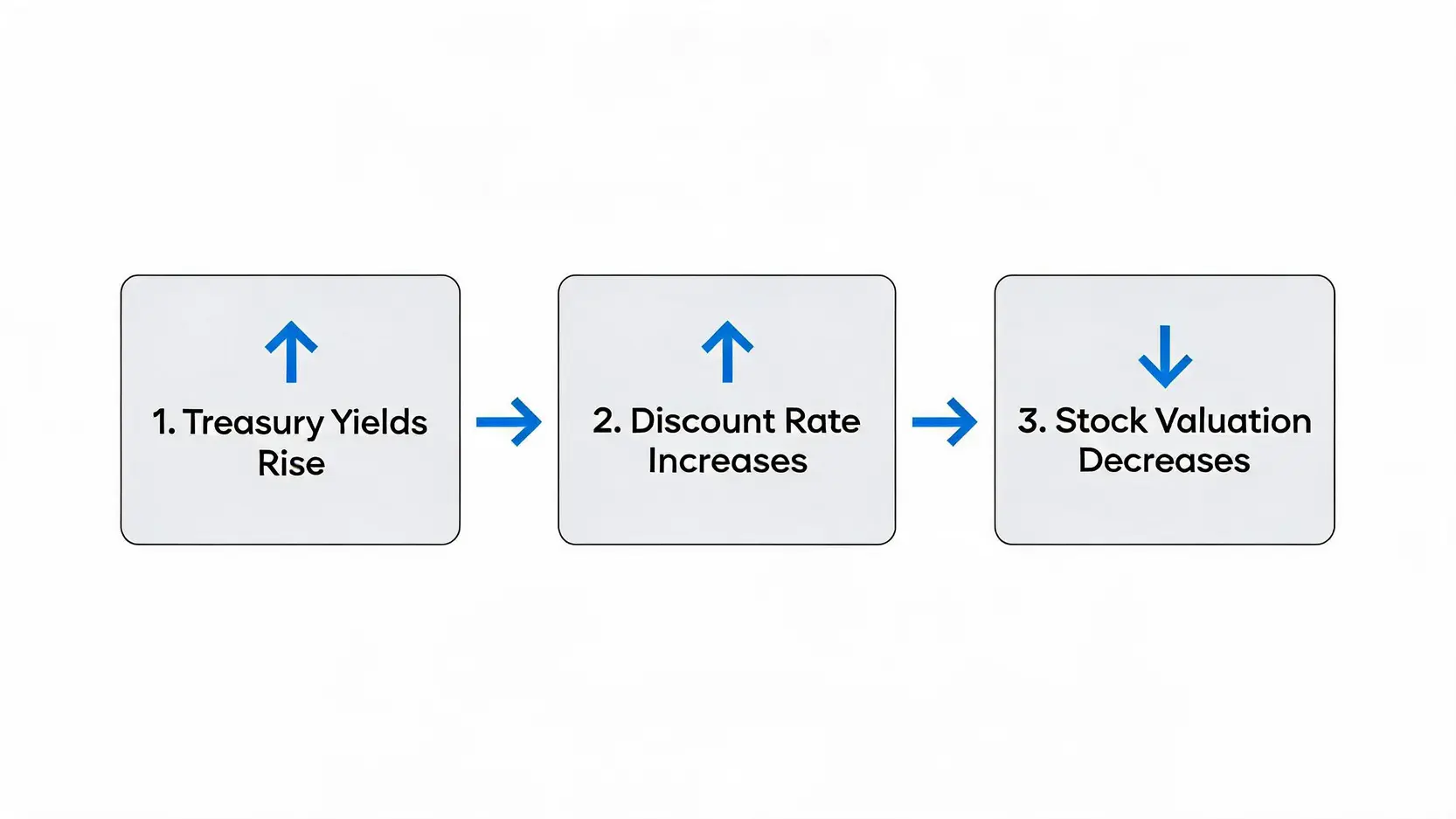
The yield on a U.S. Treasury security is considered the ‘risk-free rate’ of return because it is backed by the full faith and credit of the U.S. government, implying a near-zero risk of default. This rate forms the baseline for all investment decisions. When valuing a stock, analysts often use a Discounted Cash Flow (DCF) model, which projects a company’s future cash flows and discounts them back to their present value. The discount rate used in this calculation starts with the risk-free rate and adds a premium for the additional risk associated with that specific stock. Consequently, when Treasury yields rise, the discount rate increases, and the present value of those future earnings decreases. All else being equal, a higher risk-free rate leads to a lower theoretical stock valuation.
Explaining the Equity Risk Premium (ERP) for Modern Investors
The Equity Risk Premium (ERP) is the excess return that investing in the stock market provides over a risk-free rate. This premium compensates investors for taking on the relatively higher risk of equity investing. It is calculated as the difference between the expected return on stocks and the risk-free rate. As Investopedia explains, the ERP represents the additional return stocks offer over risk-free investments. When Treasury yields climb, the risk-free rate increases. If the expected return on stocks does not rise in tandem, the ERP compresses. A smaller ERP makes stocks less attractive on a relative basis, potentially causing investors to shift capital from equities to the now more appealing—and safer—bond market. This dynamic is a primary source of stock market risk in a rising yield environment.
Primary Forces Driving Treasury Yields in the 2026 Economic Climate
To forecast the impact of Treasury yields on the stock market, we must first understand what drives the yields themselves. In 2026, two primary forces are at play: central bank policy and global economic growth expectations. These factors are interconnected and create a complex environment for bond investors.
Analyzing the Federal Reserve’s Stance on Interest Rates and Inflation
The Federal Reserve’s monetary policy remains the single most dominant driver of Treasury yields. As of the latest FOMC meetings in May 2026, the Fed has maintained a cautiously hawkish stance. With the federal funds rate holding in the 3.50% to 3.75% range, policymakers are signaling a commitment to keeping inflation anchored around their 2% target, even at the cost of moderating economic growth. The latest statements from the Federal Reserve indicate that while the aggressive hiking cycle of previous years is over, the bar for rate cuts remains high. This ‘higher for longer’ interest rate environment provides a firm floor for Treasury yields across the curve, keeping borrowing costs elevated and pressuring stock valuations.
Global Economic Growth Projections and Their Impact on Bond Markets
Global economic health significantly influences the demand for U.S. Treasuries. According to the latest ‘Global Economic Prospects’ report from the World Bank, global growth is projected to be a modest 2.6% in 2026. While avoiding a deep recession, this sluggish growth, particularly in Europe and parts of Asia, creates cross-currents. On one hand, slower global growth can increase demand for safe-haven assets like U.S. Treasury bonds, which would put downward pressure on yields. On the other hand, resilient U.S. economic data compared to its peers keeps the Fed on a tighter policy path, pushing yields higher. This divergence is a key theme for 2026.
Historical Precedents & 2026 Scenarios for Rising Yields Impact on Stocks
History provides a valuable, albeit imperfect, guide to understanding how rising Treasury yields can trigger stock market corrections. By examining past events and modeling future possibilities, investors can better prepare for the challenges of 2026.
Case Study: How Past Yield Spikes Triggered Stock Market Corrections
History is replete with examples of sharp, unexpected rises in bond yields causing equity market turmoil. A classic case is the “Taper Tantrum” of 2013. When then-Fed Chair Ben Bernanke merely suggested the central bank might slow down its asset purchases, the 10-year Treasury yield surged from 1.6% to 3.0% in four months. This rapid repricing of the risk-free rate led to a sharp, albeit temporary, stock market sell-off and significant volatility. Another notable period was in early 2018, when concerns over inflation and faster Fed hikes caused the 10-year yield to spike, contributing to a 10% correction in the S&P 500. These events underscore the market’s sensitivity to the *velocity* of yield changes.
Scenario 1: What Happens to Stocks if Yields Rise with a Strong Economy?
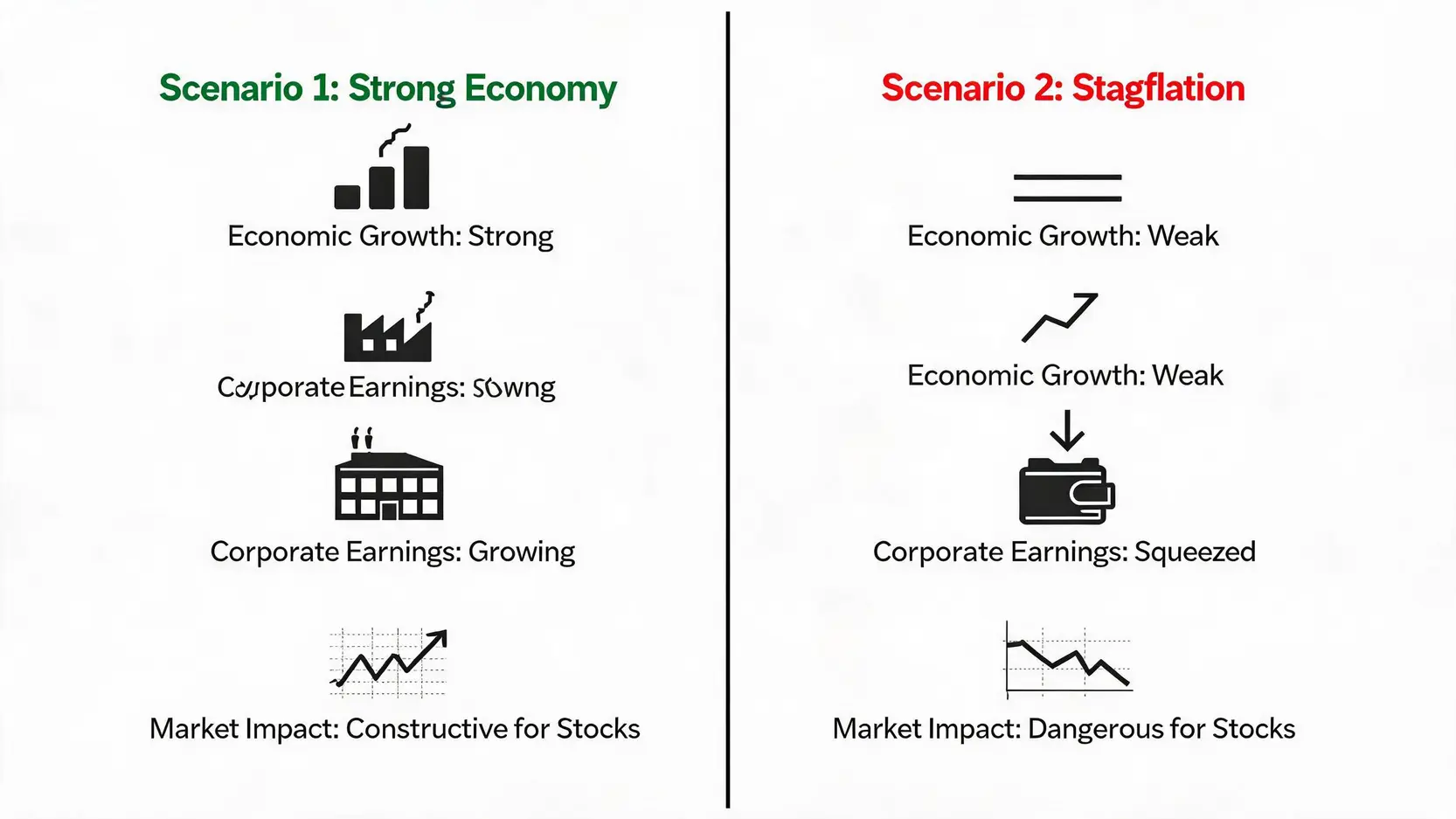
This is the most constructive scenario. Here, Treasury yields are rising in response to robust economic growth, strong corporate earnings, and healthy consumer demand. In this environment, stocks can still perform well. Sectors that are economically sensitive, such as Financials, Industrials, and Energy, often lead the market. While higher discount rates still apply pressure, the growth in earnings (the ‘E’ in P/E ratios) can offset the valuation compression from higher yields. The key is a gradual, orderly rise in yields that doesn’t shock the system. This allows the market to digest the higher-rate environment without panic.
Scenario 2: The Stagflation Threat – Rising Yields in a Weak Economy
This is the most dangerous scenario for investors and a significant source of stock market risk. Stagflation is characterized by high inflation and stagnant economic growth. In this environment, Treasury yields rise because investors demand higher compensation to offset inflation eroding their returns. However, unlike the first scenario, this is not accompanied by strong corporate earnings. Instead, companies face a double blow: rising input costs (due to inflation) and weaker consumer demand. This combination severely squeezes profit margins and leads to sharp downward revisions in earnings forecasts, creating a toxic cocktail for stock valuations. This situation calls for robust risk management strategies to protect capital.
Expert Outlooks: What Top Institutions Forecast for 2026
Wall Street’s top minds are diligently analyzing the 2026 market outlook, offering valuable perspectives for investors. While opinions vary, a few key themes are emerging from major financial institutions.
Synthesizing the 2026 Market Outlook from J.P. Morgan and Goldman Sachs
Leading institutions like J.P. Morgan and Goldman Sachs have published their comprehensive outlooks for 2026. J.P. Morgan’s research forecasts a 35% probability of a U.S. recession in 2026, with inflation remaining sticky. They anticipate that equity markets will offer modest returns, with a preference for value and quality stocks over high-growth names. Meanwhile, Goldman Sachs is slightly more optimistic, projecting sturdy global growth and forecasting that the S&P 500 will see further upside, driven by earnings growth, particularly from technology and AI-related sectors.
Contrasting Views: Where Analysts Agree and Disagree on 2026 Risks
There is a broad consensus among analysts that volatility will remain a key feature of the 2026 market. Most agree that the era of ultra-low interest rates is over and that investors must adapt to a structurally higher yield environment. However, there are significant points of disagreement:
- Recession Probability: Views range from a soft landing (Goldman Sachs) to a mild recession (J.P. Morgan).
- Inflation Path: While all see inflation moderating, the debate is on whether it will settle at the Fed’s 2% target or remain stubbornly higher.
- Sector Leadership: The divergence is clear between those who favor defensive, value-oriented sectors and those who believe technology and growth stocks will continue to lead.
Strategic Portfolio Positioning for the 2026 Yield Environment
Navigating the complex interplay of rising Treasury yields and stock market risk requires a deliberate and strategic approach to portfolio construction. Simply hoping for the best is not a viable strategy. Investors must proactively position their portfolios to be resilient in a higher-rate world.
Identifying Stock Market Sectors Resilient to Higher Interest Rates
Not all stock sectors are created equal in a rising rate environment. Certain sectors historically demonstrate more resilience or can even benefit:
- 🏦 Financials (Banks & Insurance): Banks can benefit from a steeper yield curve, which increases their net interest margin (the difference between what they earn on loans and pay on deposits). Insurance companies can also generate higher returns on their large investment portfolios.
- ⚡ Energy: The energy sector’s performance is often tied to inflation and economic activity. If yields are rising due to inflationary pressures, energy companies with strong pricing power can pass on higher costs and maintain profitability.
- 💊 Healthcare: This is a more defensive sector. Demand for healthcare is relatively inelastic, meaning it is less affected by economic cycles. Companies with strong balance sheets and consistent cash flows can be attractive havens.
- 💎 Value Stocks: Companies trading at lower valuation multiples with stable earnings and strong cash flow (often referred to as ‘value stocks’) tend to be less sensitive to changes in discount rates compared to high-growth stocks whose valuations are based on earnings far in the future.

The Role of Bonds and Alternative Assets in a High-Yield World
In a world of higher yields, the role of fixed income and alternatives becomes more critical for diversification and income generation. After years of providing minimal returns, bonds are once again a compelling asset class. Investors should consider short-to-intermediate duration bonds, which are less sensitive to further rate increases. Furthermore, alternative assets can provide valuable diversification. Assets like real estate, infrastructure, and commodities can offer inflation protection and returns that are less correlated with traditional stock and bond markets, helping to smooth out portfolio volatility in uncertain times.
Conclusion
Navigating the 2026 financial markets demands a sophisticated understanding of the dynamic relationship between Treasury yields and stock market risk. The era of near-zero interest rates has concluded, and investors must now contend with a landscape where the risk-free rate offers a compelling alternative to equities. While rising yields present a clear headwind for stock valuations, the ultimate impact depends heavily on the underlying economic context—be it robust growth or the threat of stagflation. By analyzing expert forecasts, studying historical precedents, and strategically positioning portfolios toward resilient sectors and diversified asset classes, discerning investors can mitigate the inherent risks and uncover opportunities in this evolving environment.
Frequently Asked Questions (FAQ)
Q: What is the main risk of rising Treasury yields for the stock market?
A: The primary risk is valuation compression. As the risk-free rate (represented by Treasury yields) increases, the discount rate used to value stocks also rises. This lowers the present value of a company’s future earnings, making its stock theoretically less valuable. It also makes safer government bonds more competitive, potentially drawing capital away from the riskier stock market.
Q: How does the 10-Year Treasury yield specifically affect stocks?
A: The 10-year Treasury yield is a crucial benchmark. It is used as the base risk-free rate in many equity valuation models, as explained by financial resources like MacroMicro. It also directly influences borrowing costs for both corporations and consumers (e.g., mortgage rates). A higher 10-year yield can slow economic activity by making debt more expensive, which can negatively impact corporate earnings and, consequently, stock prices.
Q: Are any stocks good to own when interest rates are rising?
A: Yes. Certain sectors can be resilient or even benefit. Financial sector stocks, especially banks, often perform well as they can earn a larger spread on their lending. Companies with strong pricing power, low debt, and stable cash flows (often found in the healthcare and consumer staples sectors) are also considered more defensive in a rising-rate environment. Value stocks may also outperform growth stocks.
Q: Should I sell all my stocks if Treasury yields are rising in 2026?
A: A knee-jerk reaction to sell everything is rarely a sound strategy. It’s more important to assess *why* yields are rising. If it’s due to a strong economy, equities can still perform well. The prudent approach is to review your portfolio’s sector allocation, reduce exposure to highly leveraged or speculative companies, and ensure you are diversified across asset classes, including bonds and alternatives that may perform better in a higher-rate environment.