As 2026 unfolds, the financial world is bracing for a significant transition: the appointment of a new Federal Reserve Chair. This pivotal change, anticipated as the current term concludes, introduces both profound uncertainty and distinct opportunity for investors. Understanding the new Fed Chair stock market impact in 2026 is not merely an academic exercise; it’s a critical component of strategic portfolio management. This article provides a comprehensive analysis of the potential market reaction to a 2026 Fed transition, exploring historical precedents, the economic philosophies of potential nominees, and actionable portfolio considerations for the path ahead.
Table of Contents
The Fed Chair’s Power: Why One Appointment Can Shake the Market
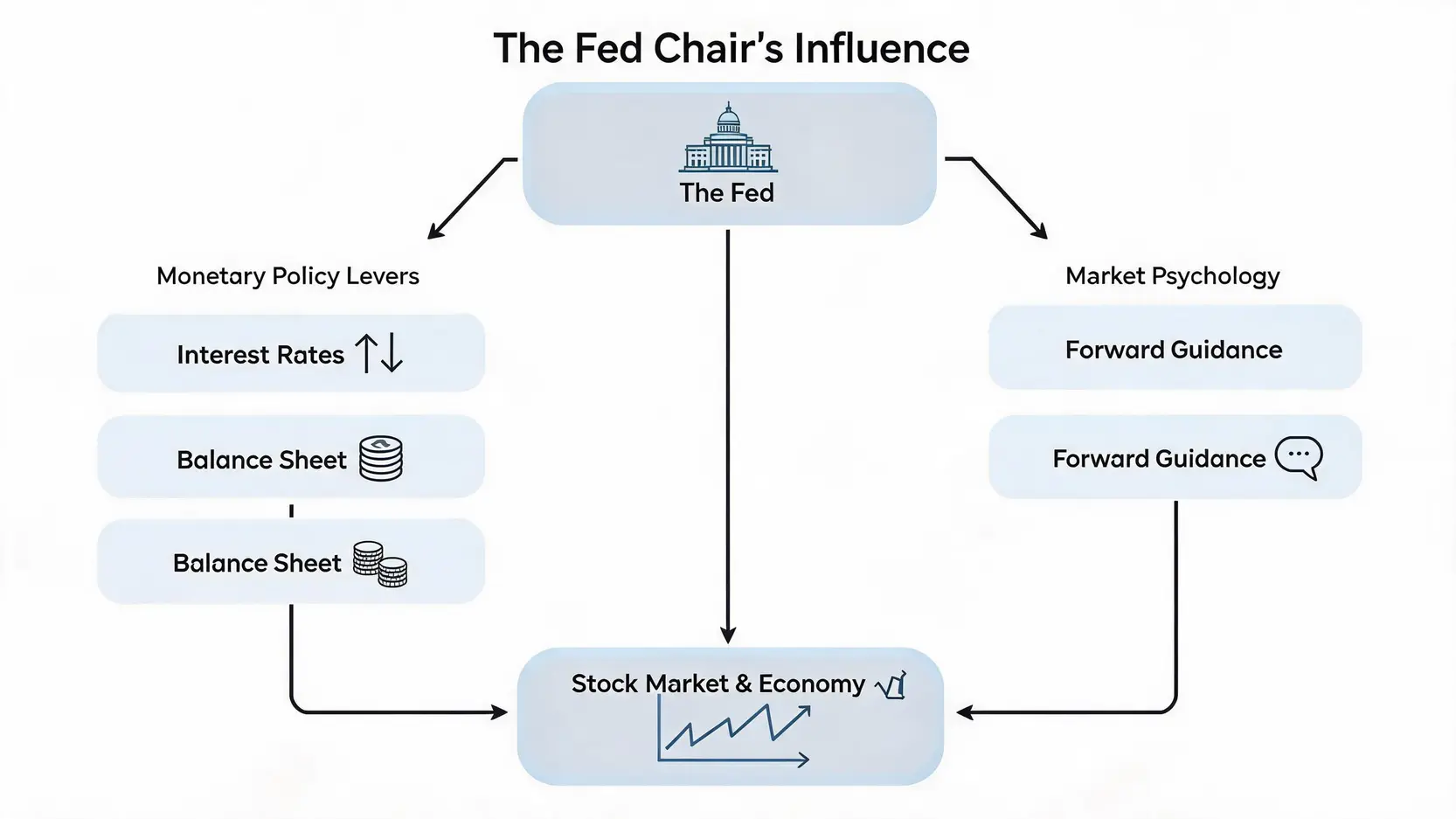
The Chair of the Federal Reserve is arguably the most powerful economic figure globally. Their decisions and communications create ripples that affect everything from Treasury yields to global equity markets. This influence stems from two primary sources: direct policy control and psychological market sway.
Monetary Policy Levers: Interest Rates and Monetary Easing
The primary tool of the Federal Reserve is its control over monetary policy, which directly influences the cost of money. The levers include:
- The Federal Funds Rate: This is the target interest rate for overnight interbank lending. Adjusting this rate has a cascading effect on consumer and business borrowing costs. A higher rate cools the economy to fight inflation, while a lower rate stimulates growth.
- Balance Sheet Operations (Monetary Easing/Tightening): The Fed can buy or sell government securities to inject or withdraw liquidity from the financial system. This process, formerly known as quantitative easing or tightening, impacts long-term interest rates and overall financial conditions. A new Chair’s approach to the size and composition of the Fed’s balance sheet will be a key variable for the market.
Market Psychology: How Fed Communication Influences Investor Sentiment
Beyond direct policy, the Fed Chair’s words carry immense weight. “Fedspeak” is scrutinized by analysts for subtle clues about future policy direction. A Chair perceived as confident and clear can soothe volatile markets, while ambiguous or surprising statements can trigger sell-offs. This forward guidance has become a policy tool in itself, managing market expectations to achieve the Fed’s dual mandate of price stability and maximum employment. The market’s interpretation of a new Chair’s communication style—whether they are transparent, data-dependent, or politically influenced—will be a major factor in the initial reaction.
Potential 2026 Nominees and Their Economic Philosophies
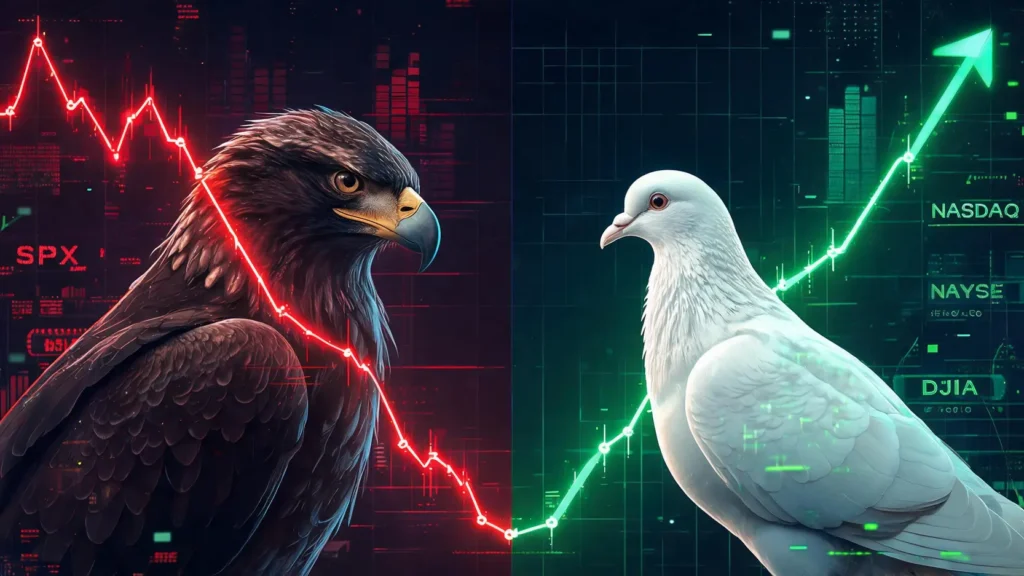
While the specific nominee remains subject to presidential appointment and Senate confirmation, the candidates will invariably be categorized by their perceived monetary leanings. The market will react swiftly to whether the nominee is a “hawk” or a “dove.”
The Hawks: Candidates Favoring Tighter Monetary Policy
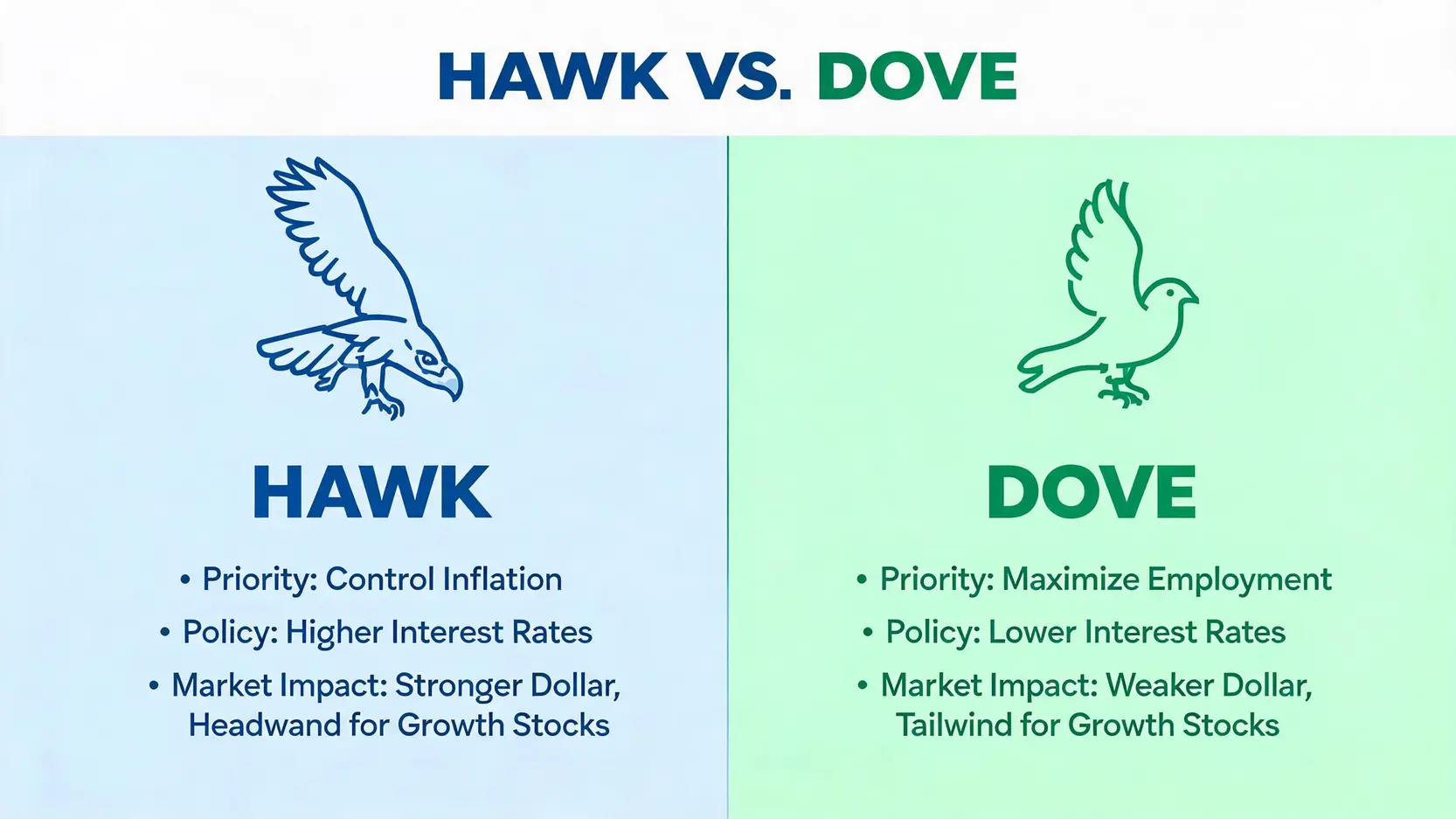
A hawkish candidate prioritizes controlling inflation, even at the risk of slower economic growth. Their philosophy is rooted in the belief that stable prices are the bedrock of a healthy, sustainable economy. 🦅
- Policy Stance: They tend to favor higher interest rates, preemptive rate hikes to head off inflation, and a reduction in the Fed’s balance sheet.
- Potential Market Impact: The nomination of a hawk could initially cause a downturn in equity markets, particularly in interest-rate-sensitive sectors like technology and growth stocks. The US dollar and bond yields would likely rise. Financials, however, may benefit from a steeper yield curve.
The Doves: Candidates Favoring Economic Growth and Lower Rates
A dovish candidate is more concerned with achieving maximum employment and is often more tolerant of inflation exceeding the 2% target for periods of time to support the labor market. 🕊️
- Policy Stance: They favor lower interest rates, a slower pace of rate hikes, and are more willing to use monetary easing tools to stimulate the economy.
- Potential Market Impact: The nomination of a dove would likely be bullish for the stock market in the short term. Growth and tech stocks would probably rally on the prospect of lower borrowing costs. The dollar might weaken, and bond yields could fall.
Political Wildcards and Their Potential Market Surprises
The appointment of a Fed Chair is a political process. The current administration could nominate a “wildcard” candidate—someone from outside the traditional circles of economists and central bankers—to shake up the status quo. Such a move would inject significant uncertainty into the markets. Furthermore, the perceived independence of the nominee is crucial. While a president can appoint a Chair, their ability to remove them is legally restricted to “for cause” reasons, a high bar that doesn’t include policy disagreements. According to a Brookings Institution analysis, this structure is designed to insulate the central bank from short-term political pressures. Any nominee seen as overly aligned with the executive branch could lead to fears of policy being used for political gain, potentially destabilizing markets and eroding confidence in the US dollar.
Historical Precedent: How Past Fed Transitions Impacted Stocks
To understand the future, we must look to the past. Studying market history reveals that leadership changes at the Federal Reserve are often accompanied by significant market volatility as investors attempt to price in the new policy regime.
From Greenspan to Powell: A Look at Market Performance During Leadership Changes
Markets often “test” a new Fed Chair. Historical data shows that the S&P 500 has experienced notable drawdowns within the first year of a new Chair’s tenure. This isn’t necessarily a reflection of the Chair’s incompetence but rather the market’s process of adjusting to a new leadership style and policy framework.
| Fed Chair Transition | Year | Notable Market Event & S&P 500 Performance |
|---|---|---|
| Greenspan → Bernanke | 2006 | Initial stability followed by the beginnings of the subprime mortgage crisis. The market was volatile but did not immediately crash. |
| Bernanke → Yellen | 2014 | Relatively smooth transition. Yellen was seen as a continuity candidate, and the market responded positively as she continued the path of monetary accommodation. |
| Yellen → Powell | 2018 | A period of significant volatility. The market tested Powell with a sharp correction in late 2018 as he pursued a course of monetary tightening, leading to the famous “Powell Pivot.” |
Key Lessons from Previous Nomination Battles and Their Aftermath
History provides two crucial lessons. First, continuity breeds stability. A nominee perceived as an extension of the previous regime (like Yellen) is less likely to spook markets. Second, a new chair who signals a significant policy shift (like Powell in 2018) should expect to be tested by the market. The nomination and confirmation process itself can be a source of volatility. Contentious hearings or a close confirmation vote can signal political division, making investors nervous.
Sector-by-Sector Breakdown: Potential Winners and Losers
The monetary stance of the new Fed Chair will not affect all stocks equally. A clear divergence between sectors is likely, presenting opportunities for strategic sector rotation.
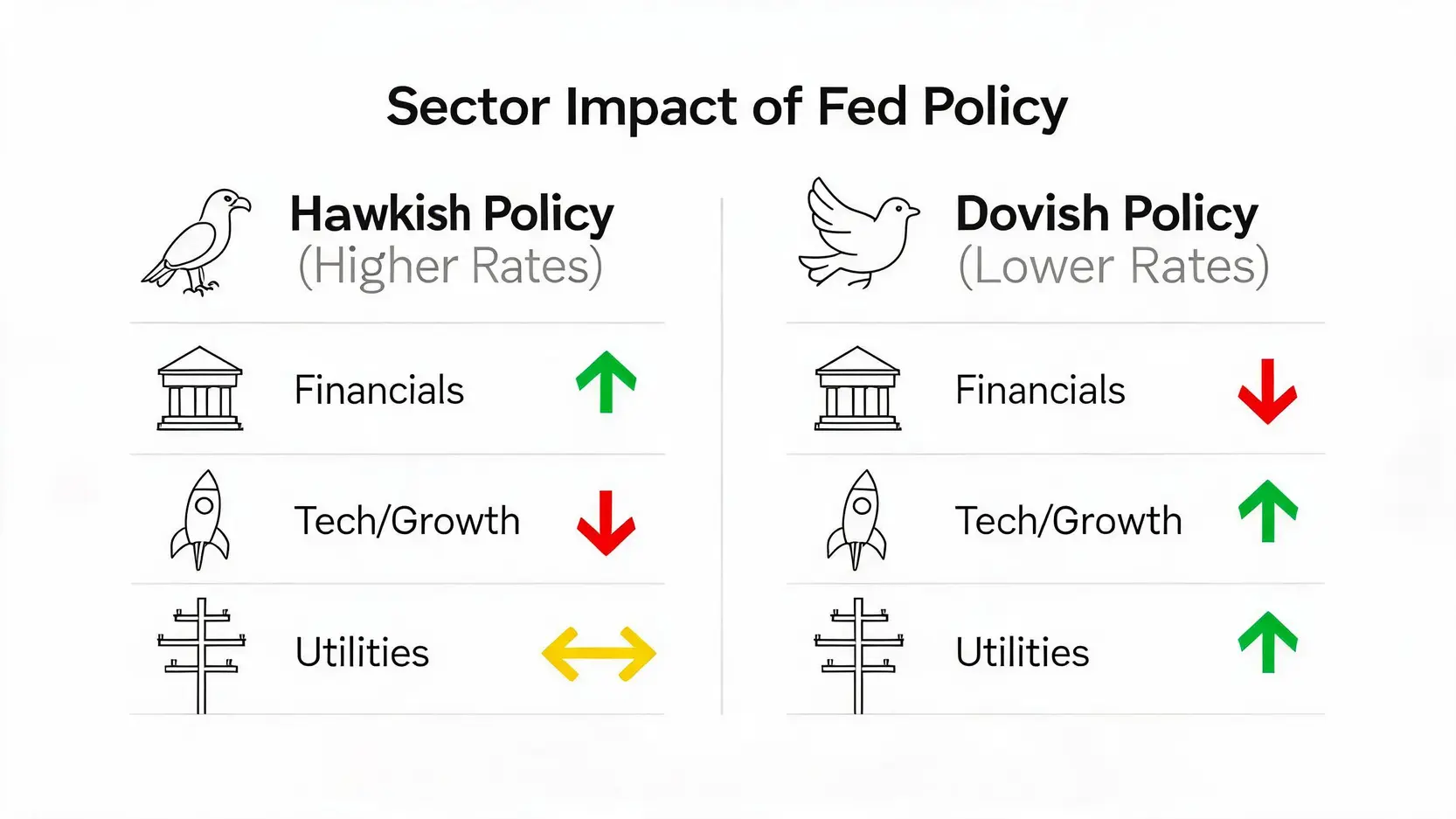
Impact on Financials and Banking Stocks
Banks and financial institutions are highly sensitive to interest rate policy. A hawkish Fed is generally positive for this sector. Higher interest rates can expand net interest margins (the difference between what banks earn on assets and pay on liabilities), boosting profitability. Conversely, a dovish Fed could compress margins and weigh on banking stocks.
How Tech and Growth Stocks Might React to Policy Shifts
Technology and other high-growth stocks have valuations that are heavily dependent on future earnings. A dovish Fed, which keeps interest rates low, is highly beneficial for this group. Lower rates mean future cash flows are discounted at a lower rate, making their present value higher. A hawkish Fed is a major headwind, as higher rates make the long-term earnings of these companies less valuable today and increase borrowing costs for capital-intensive R&D.
Implications for Defensive Sectors like Utilities and Consumer Staples
Defensive sectors like utilities and consumer staples are often prized for their stable cash flows and high dividend yields. They can be a mixed bag during a Fed transition.
- In a hawkish environment, their appeal as “bond proxies” may diminish as yields on actual bonds become more attractive.
- However, during periods of volatility sparked by a Fed transition, their defensive nature can attract capital seeking a safe haven from more cyclical sectors. Their performance will depend on whether investors are more focused on rising yields or market uncertainty.
Strategic Outlook: Positioning Your Portfolio for the 2026 Transition
Navigating the uncertainty of a Fed transition requires a proactive and disciplined approach. Investors should not make rash decisions but rather position their portfolios to be resilient and opportunistic.
Hedging Against Volatility During the Nomination Process
The period from nomination to confirmation is likely to be volatile. Effective hedging is crucial. Consider these strategies:
- Options Strategies: Buying put options on broad market indices like the S&P 500 (SPY) or Nasdaq 100 (QQQ) can provide direct downside protection.
- VIX Exposure: Gaining exposure to the CBOE Volatility Index (VIX) through ETFs or options can be profitable if market turbulence increases.
- Asset Allocation: Increasing allocation to cash or short-term Treasuries can reduce portfolio risk and provide the liquidity to capitalize on market dislocations. For more advanced methods, consider exploring a guide on how traders hedge tail risk.
Identifying Long-Term Opportunities in a New Rate Environment
Once the new Chair’s policy direction becomes clearer, new long-term trends will emerge. A sustained period of dovish policy might favor innovation and growth themes. A hawkish era could signal a shift toward value, quality, and companies with strong pricing power. Being prepared to rotate into sectors that benefit from the new monetary regime will be key to outperformance. An ETF investing guide can be a powerful tool for identifying and acting on these emerging macroeconomic trends.
Conclusion
The new Fed Chair stock market impact in 2026 will be a defining theme for investors. While the specific nominee and their policy leanings remain the great unknown of the year, understanding the potential policy shifts and their downstream effects on different sectors is paramount. The distinction between a hawk and a dove is not just jargon; it has tangible consequences for sector performance and portfolio construction. By analyzing historical precedents, monitoring the political landscape, and preparing to hedge against volatility, investors can transform a period of uncertainty into one of strategic opportunity.
Frequently Asked Questions (FAQ)
Q: What is the timeline for the 2026 Fed Chair nomination?
A: The current Federal Reserve Chair’s term is set to expire in May 2026. The President will likely announce a nominee in the months leading up to this, typically in the first quarter of the year. The nominee must then be confirmed by the Senate, a process that can take several weeks to months, depending on the political climate.
Q: How much does a Fed Chair’s policy really affect my 401(k)?
A: The impact is significant, though often indirect. The Fed’s interest rate policy influences the overall economic environment, corporate profitability, and stock market valuations. A policy that favors growth (dovish) can boost the stock portion of your 401(k), while a policy focused on fighting inflation (hawkish) can act as a headwind for stocks but may stabilize bond holdings.
Q: What’s the main difference between a ‘hawk’ and a ‘dove’ in monetary policy?
A: The core difference lies in their primary focus. A **hawk** prioritizes controlling inflation and is willing to raise interest rates, even if it slows the economy. A **dove** prioritizes promoting maximum employment and is willing to keep interest rates low to stimulate growth, even if it means tolerating slightly higher inflation.
Q: Can the President of the United States fire the Fed Chair?
A: It is extremely difficult. According to the Federal Reserve Act, a member of the Board of Governors, including the Chair, can only be removed by the President “for cause.” This has been legally interpreted to mean more than a policy disagreement and would likely refer to illegal acts or gross negligence. This legal protection is designed to ensure the Federal Reserve’s independence from short-term political pressure.
Q: Which sectors perform best when a new Fed Chair is hawkish?
A: Historically, sectors that benefit from higher interest rates tend to perform better under a hawkish Fed. This primarily includes the **financial sector**, as banks can earn more on their lending. Conversely, sectors that rely on cheap borrowing, such as technology, real estate (REITs), and high-growth, non-profitable companies, typically underperform.