
In a classic case of market paradox, Broadcom (AVGO) saw its shares tumble despite reporting quarterly earnings that surpassed Wall Street’s expectations. This downturn highlights a critical lesson for 2026: performance is measured not just by current success but by future promise. The core catalyst for the Broadcom stock drop was a less-than-stellar forecast for its AI chip sales, sending a wave of concern throughout the tech sector about the sustained momentum of the AI boom and its wider AI market impact. This analysis dissects the numbers, the sentiment, and what this reality check means for AI investors.
Table of Contents
Deconstructing the Discrepancy: Strong Earnings vs. A Weak Forecast for AI Chips
The immediate reaction to Broadcom’s earnings release was a head-scratcher for many. The company demonstrated robust health across its diverse portfolio, yet the market fixated on a single, forward-looking metric. This divergence between past performance and future guidance is central to understanding the sell-off.
Breaking Down the Quarterly Report: Key Financial Highlights
Broadcom’s quarterly report painted a picture of a thriving enterprise. Key metrics showcased significant strength:
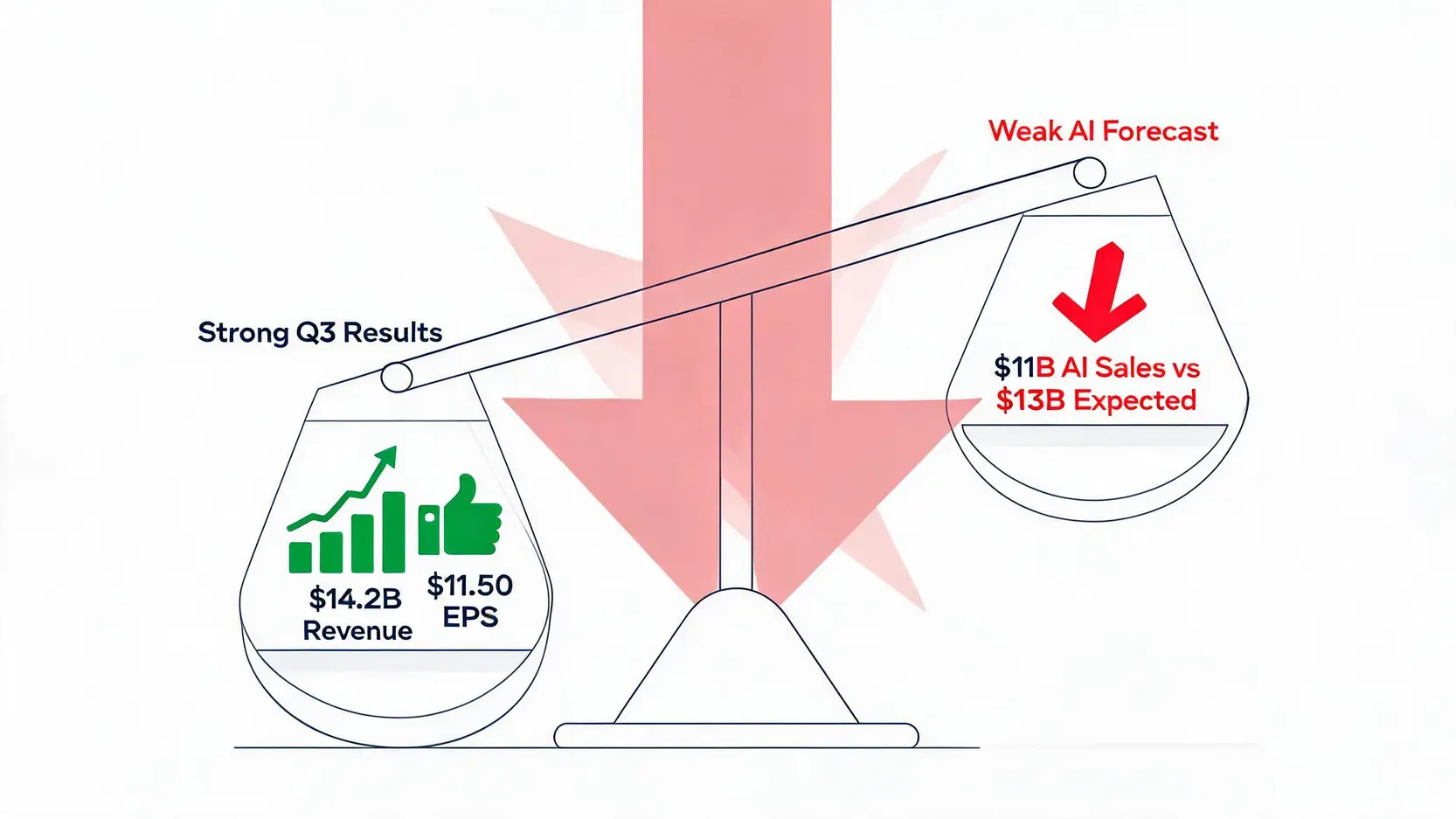
- Revenue: Reported at $14.2 billion, comfortably beating the consensus estimate of $13.8 billion. This was driven by strong demand in its networking and server storage segments, alongside stable growth from its software portfolio, including VMware.
- Earnings Per Share (EPS): Adjusted EPS came in at $11.50, a solid beat over the anticipated $11.25, indicating efficient cost management and high-margin operations.
- Segment Performance: The semiconductor solutions segment saw a 15% year-over-year increase, while infrastructure software revenue surged by over 150%, largely due to the VMware acquisition.
On paper, these results are cause for celebration. However, the market in 2026 is laser-focused on one primary growth engine: Artificial Intelligence.
The AI Forecast: The Specific Numbers That Spooked Wall Street
The optimism evaporated during the guidance portion of the earnings call. While Broadcom raised its full-year revenue forecast, the underlying numbers for its AI segment were the source of anxiety. The company projected approximately $11 billion in revenue from AI-related chips for the fiscal year.
While an impressive figure representing over 35% growth, it fell short of the more aggressive “whisper numbers” on Wall Street, which had anticipated guidance closer to the $13-$14 billion range. This perceived slowdown was interpreted as a potential sign that the hyper-growth phase for AI infrastructure might be moderating, a terrifying thought for a market priced for perfection.
Market Reaction: Understanding the AVGO Stock Fall and Broader Impact
The market’s response was swift and decisive. The AVGO stock fall was not an isolated event; it created ripples across the semiconductor and broader technology landscape, forcing a re-evaluation of sector-wide valuations.
Why Did AVGO Stock Tumble? An Analysis of Investor Sentiment
The core of the issue lies in investor sentiment and sky-high expectations. In the current environment, AI stocks are valued on aggressive future growth multiples. Any guidance that suggests a deceleration in this growth rate can trigger a significant re-pricing. The reasons for the tumble include:
- Valuation Concerns: AVGO, like its peers, has seen its valuation expand dramatically. The softer AI forecast gave bears the ammunition to argue that this premium valuation was no longer justified.
- Profit-Taking: After a massive run-up in AI-related stocks, many investors were sitting on substantial gains. The guidance miss provided the perfect catalyst for them to lock in profits.
- Growth Narrative Disruption: The market thrives on a simple, powerful narrative. For the last 18 months, that narrative has been “unstoppable AI growth.” Broadcom’s forecast, while strong, was the first significant crack in that narrative from a major player.
The Ripple Effect: How the News Affected Other AI-Related Stocks
Broadcom’s news was not contained. It prompted a sell-off in other major AI players as investors grew cautious about the entire ecosystem. Companies like NVIDIA (NVDA), Advanced Micro Devices (AMD), and Marvell Technology (MRVL) all experienced pullbacks. The logic is straightforward: if a key supplier and enabler like Broadcom, known for its custom ASIC projects with hyperscalers, is signaling a more moderate growth trajectory, it could imply a broader slowdown in AI infrastructure spending. This event serves as a crucial reminder for those following a guide to investing in AI stocks that sector-wide sentiment can often overshadow individual company performance.
Beyond the Headlines: Context for the AI Chip Market and Competitor Gaps
To truly grasp the situation, one must look beyond the initial shock and analyze the competitive landscape of the AI chip market. Broadcom’s position is unique, and its forecast reflects its specific role within the AI value chain, which differs significantly from GPU-centric players.
The Pressure of High Expectations in the AI Sector
The AI sector has been the primary driver of market gains, leading to what many analysts call a state of being “priced for perfection.” In this climate, beating earnings is expected. The real test is the forward guidance. A company must not only show strong growth but also signal that this growth will accelerate. Broadcom’s report, despite its strengths, failed this second test, illustrating the immense pressure on tech giants to consistently deliver blowout forecasts.
Comparing Broadcom’s Position with Other Major Chipmakers
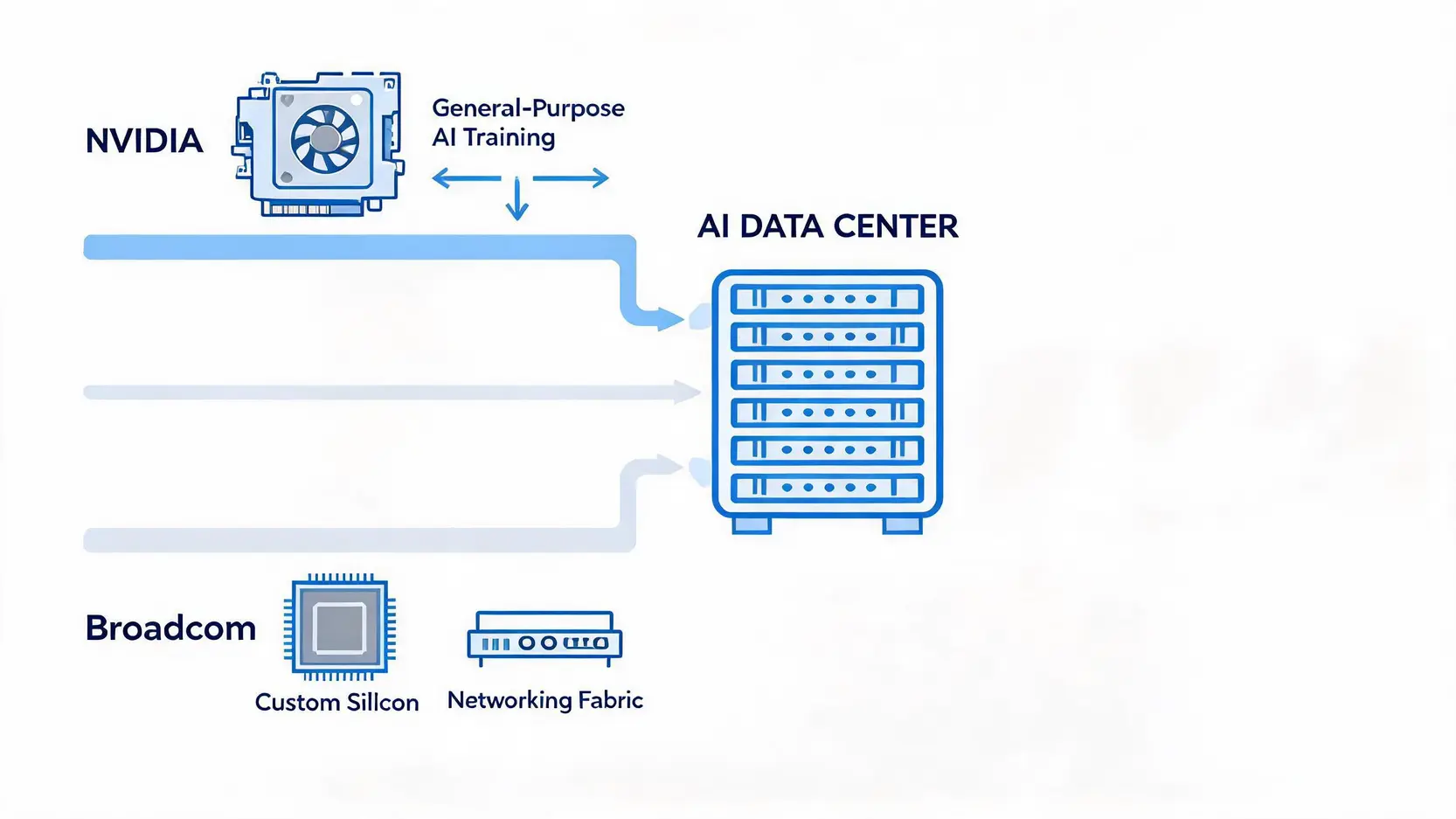
Understanding Broadcom’s market position is key. Unlike NVIDIA, which dominates the market for training AI models with its GPUs, Broadcom excels in other critical areas:
- Custom Silicon (ASICs): Broadcom works with large cloud providers like Google and Meta to create custom-designed chips for specific AI workloads. This is a high-margin business but can have lumpier revenue cycles compared to general-purpose GPUs.
- Networking Hardware: Broadcom is a leader in Ethernet switches and other networking components that are essential for connecting the thousands of GPUs in an AI data center. This is a foundational part of the AI infrastructure.
According to market analysis from firms like Gartner, while NVIDIA holds the largest share of the AI accelerator market, the demand for custom solutions and high-speed networking is a rapidly growing sub-sector. Broadcom’s forecast might reflect the maturation of specific custom projects rather than a collapse in overall AI demand.
Long-Term Fundamentals vs. Short-Term Market Volatility
This event underscores the classic tension between a company’s solid long-term fundamentals and the market’s often-fickle short-term sentiment. Broadcom’s core business remains exceptionally strong. Its acquisition of VMware is transforming it into a software powerhouse, its networking technology is best-in-class, and its custom chip business has deep moats. For long-term investors, this volatility could be a buying opportunity. However, for short-term traders, the negative sentiment around the AI growth story is a powerful headwind that cannot be ignored.
Conclusion
The Broadcom stock drop is a pivotal moment for the AI market in 2026. It serves as a crucial indicator that investor focus has shifted entirely to future growth projections, where even a slight miss on elevated expectations can overshadow stellar current earnings. While Broadcom’s underlying business fundamentals remain solid, anchored by its software and networking dominance, the event highlights the immense pressure on technology leaders to consistently deliver exponential AI growth. For investors, this serves as a lesson in distinguishing between short-term market sentiment and long-term company value, emphasizing the need to closely monitor future forecasts to accurately gauge the sector’s true trajectory.
Frequently Asked Questions (FAQ)
Q: Why did Broadcom stock drop if they beat earnings?
A: The stock dropped because its forecast for future AI chip revenue, while still showing strong growth, did not meet the market’s extremely high expectations. In the current AI-driven market, forward guidance and the perceived rate of growth acceleration often matter more than past performance.
Q: What was Broadcom’s AI revenue guidance?
A: Broadcom guided for approximately $11 billion in AI-related revenue for the fiscal year. This figure was below the more optimistic analyst and investor expectations, which were closer to the $13-$14 billion range, triggering concerns about a potential slowdown in the AI growth rate.
Q: How does this stock drop affect the overall AI market?
A: The drop created a ripple effect, causing a temporary sell-off in other AI-related stocks like NVIDIA and AMD. It injected a dose of caution into the sector, reminding investors that the path of AI growth may not be linear and that valuations are under intense scrutiny.