As the investment landscape of 2026 unfolds, a powerful and synchronized upward trend is materializing in two of the market’s most foundational sectors. The healthcare and financial stocks rally 2026 is not a matter of speculative hype; it’s a convergence of compelling macroeconomic tailwinds and robust sector-specific catalysts. This analysis dissects the core drivers behind this anticipated growth, offering a clear 2026 market outlook for investors seeking to understand the forces propelling these twin engines of the economy. We will explore the key drivers for the healthcare sector and the primary factors influencing the financial sector’s performance, providing a comprehensive forecast for the coming months.
Table of Contents
Macroeconomic Climate: Setting the Stage for the 2026 Surge
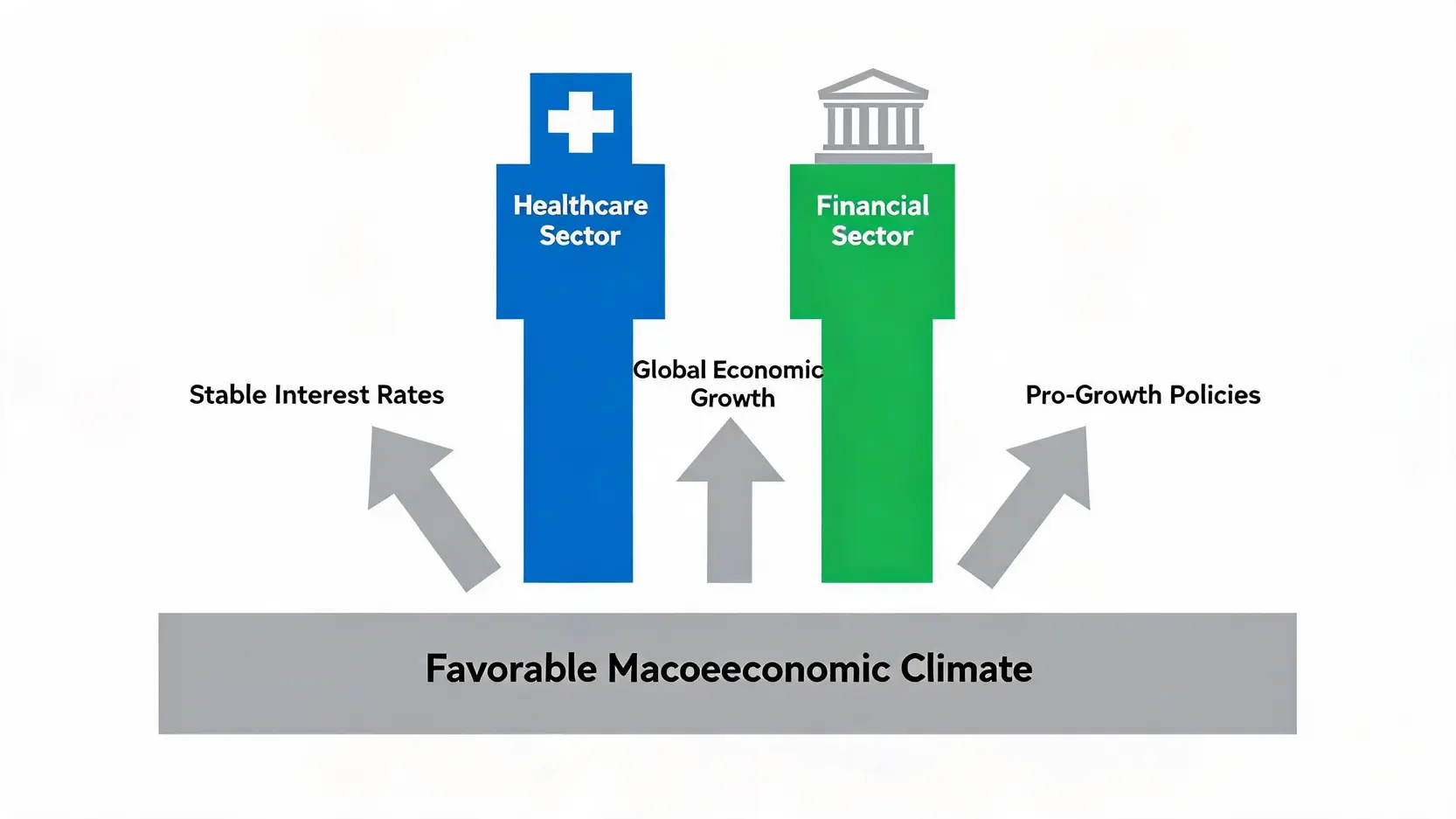
The foundation for the rally in both sectors is a global macroeconomic environment that has become increasingly favorable. After a period of volatility, several key indicators now point towards sustained growth, creating a fertile ground for equity appreciation, particularly in interest-rate-sensitive and non-discretionary sectors.
The Impact of Stabilizing Interest Rate Policies
Central banks globally, including the Federal Reserve and the ECB, have successfully navigated the inflationary pressures of recent years. By mid-2026, interest rate policies have stabilized, with a clear and predictable trajectory. This stability has profound implications: it reduces the cost of capital for corporations, encourages borrowing for expansion, and boosts investor confidence. For the financial sector, a stable, normalized rate environment improves net interest margins (NIMs). For the healthcare sector, it facilitates cheaper funding for capital-intensive R&D and infrastructure projects.
Global Economic Growth Forecasts and Consumer Confidence
Leading economic indicators project a period of synchronized global growth. Resilient labor markets, coupled with rising real wages, have bolstered consumer confidence. This translates to increased spending, not just on discretionary goods, but also on essential services. Healthcare, being largely non-discretionary, benefits from a stable consumer base. Meanwhile, a thriving economy means more transactions, greater demand for loans, and increased activity in wealth management, directly fueling the financial sector’s revenue streams.
Favorable Regulatory Shifts and Government Policies
In 2026, the regulatory environment has shifted towards a pro-growth stance. Governments are enacting policies aimed at fostering innovation and streamlining bureaucracy. In healthcare, this includes faster drug approval processes and incentives for technological adoption. In the financial sector, while maintaining robust oversight, there’s a clearer framework for digital assets and FinTech integration, reducing uncertainty and encouraging investment in innovation. These policies act as a direct accelerant for both sectors.
Why the Healthcare Sector is Poised for Unprecedented Growth
Beyond the supportive macro-environment, the healthcare sector is powered by powerful, secular trends. These deep-rooted drivers ensure that its growth is not just cyclical but structural, presenting a long-term investment thesis. Understanding the key drivers for the healthcare sector rally is crucial for any forward-looking portfolio strategy.
Demographic Tailwinds: The Aging Population Effect
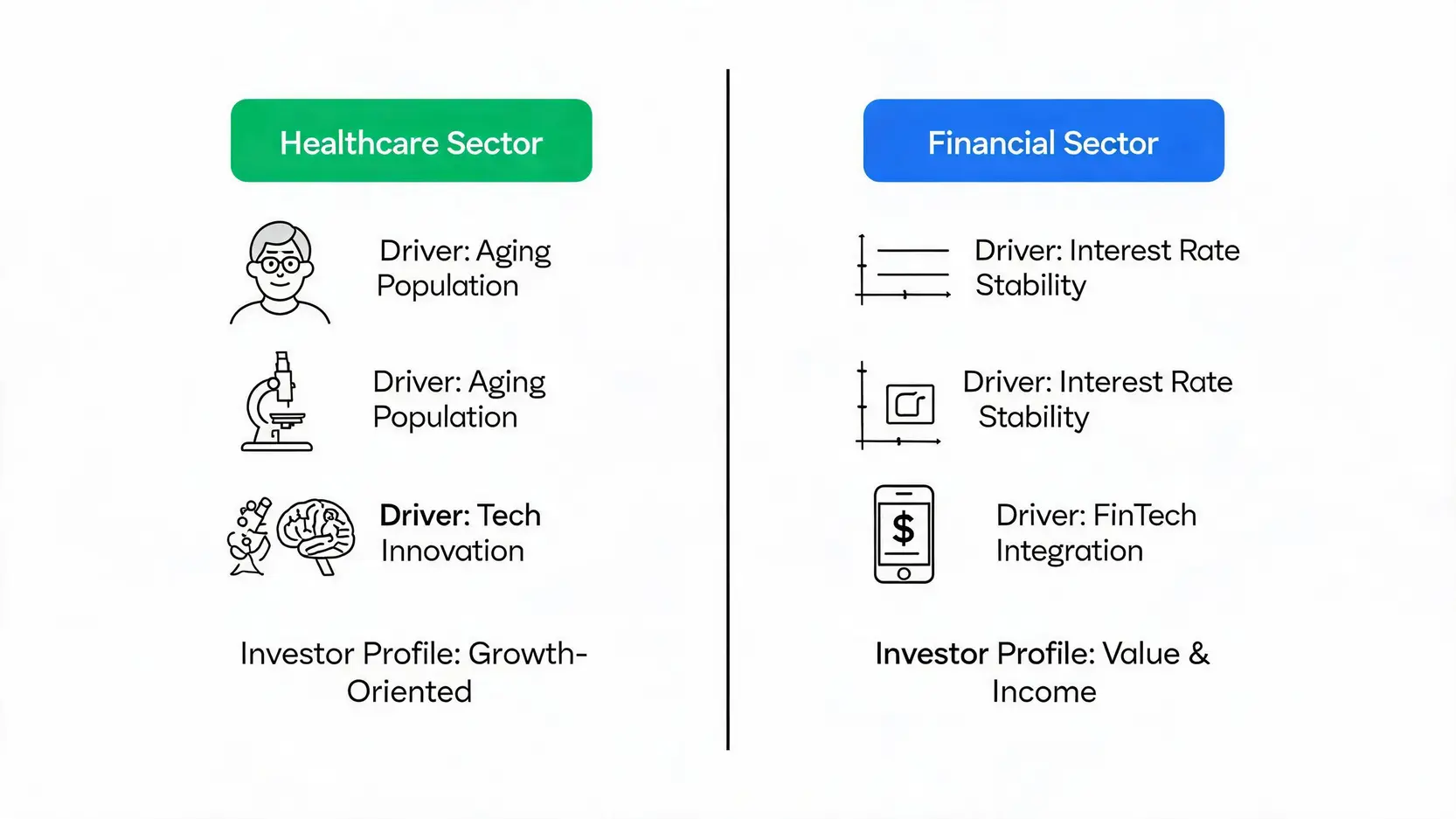
One of the most significant and unstoppable trends is global aging. Developed nations and, increasingly, emerging markets are seeing a larger proportion of their populations enter senior age brackets. This demographic shift creates a sustained, inelastic demand for a wide range of healthcare services, from pharmaceuticals and biotechnology to medical devices and long-term care. This isn’t a temporary spike; it’s a decades-long tailwind that provides a high floor for the sector’s earnings.
Innovation in MedTech and AI-Driven Diagnostics
The pace of technological innovation in healthcare is exponential. In 2026, the impact of Artificial Intelligence is moving from theoretical to practical. AI-driven diagnostic tools are improving accuracy and speed, personalized medicine based on genomic sequencing is becoming mainstream, and robotic surgery is enhancing patient outcomes. Companies at the forefront of this MedTech revolution are unlocking new markets and creating efficiencies, driving significant value creation. This is a key area where investors can find high-growth opportunities, as outlined in our AI Stocks guide.
Mergers & Acquisitions (M&A) Activity as a Growth Catalyst
The healthcare landscape is ripe for consolidation. Large pharmaceutical and biotech companies, flush with cash, are actively seeking to acquire smaller, innovative firms to replenish their drug pipelines. This M&A activity not only provides handsome premiums for acquired companies but also creates more efficient, powerful entities capable of accelerating research and commercialization. The ongoing wave of M&A is a strong indicator of the sector’s health and dynamism.
Analyzing the Strength of the Financial Sector in 2026
The financial sector, often seen as a barometer for the broader economy, is exhibiting remarkable strength in 2026. Its performance is undergirded by a beneficial rate environment, a technological transformation, and robust capital markets, making it a cornerstone of the current market rally.
How the Interest Rate Environment Benefits Banks and Lenders
As mentioned, the stabilization of interest rates at a healthy level is a primary boon for financial institutions. Banks, insurers, and lenders thrive in an environment where they can earn a significant spread between their lending rates and funding costs. A steepening yield curve, where long-term rates are higher than short-term rates, is particularly beneficial for bank profitability. This predictable and profitable operating environment allows for strong earnings growth and increased capital returns to shareholders through dividends and buybacks.
The Rise of FinTech and Digital Transformation in Banking
The financial sector is no longer just about brick-and-mortar banks. The integration of technology—FinTech—is revolutionizing every aspect of the industry. In 2026, digital payments, AI-powered fraud detection, blockchain-based settlements, and robo-advisory services are not just trends but core business components. Traditional institutions that have successfully embraced this digital transformation are seeing significant cost savings and improved customer engagement. As an authoritative source like the Deloitte Finance Trends 2026 report highlights, this fusion of finance and technology is unlocking massive efficiencies and new revenue models.
Capital Market Strength and Investment Banking Outlook
A confident economic outlook directly fuels capital market activity. With corporations looking to expand and innovate, demand for IPOs, secondary offerings, and debt issuance is high. This creates a lucrative environment for investment banking divisions. Furthermore, M&A activity, not just in healthcare but across sectors, generates substantial advisory fees. A vibrant market for deal-making is a clear signal of the financial sector’s health and a key contributor to its bottom line.
The Symbiotic Relationship: How Financial Strength Fuels Healthcare Innovation
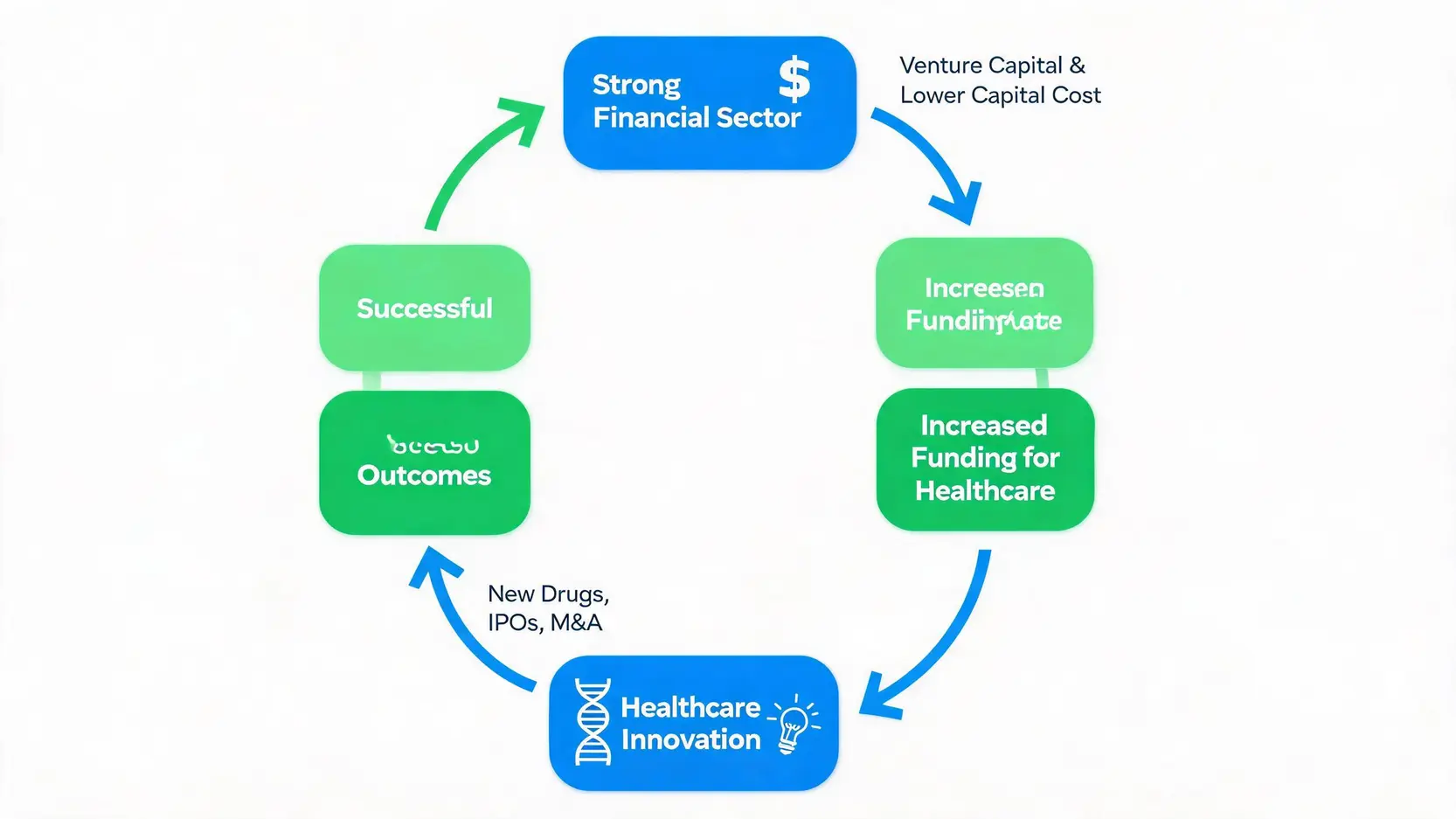
The rallies in healthcare and finance are not happening in isolation; they are intrinsically linked. A strong, liquid, and efficient financial sector is the essential lubricant that allows the engine of healthcare innovation to run at full speed. This symbiotic relationship amplifies the growth potential of both.
Venture Capital and Private Equity Investment Trends in Biotech
The lifeblood of early-stage biotech and MedTech is venture capital (VC) and private equity (PE). In 2026, financial firms are deploying record levels of capital into these areas, driven by the potential for high returns. A robust financial market provides the exit opportunities (IPOs or acquisitions) that VCs and PEs need to realize their gains, creating a virtuous cycle where successful exits encourage even more investment into the next generation of healthcare innovators.
How a Robust Financial Sector Lowers the Cost of Capital for Healthcare R&D
Developing a new drug or medical device is an expensive, long-term endeavor. A healthy financial sector, with deep and liquid capital markets, allows healthcare companies to raise the necessary funds—whether through equity or debt—at a lower cost. This efficiency means more capital can be directed towards actual research and development, accelerating the discovery of new treatments and technologies.
Case Study: Successful Healthcare IPOs and Their Market Impact
The year has already been marked by several blockbuster healthcare IPOs. Consider the recent public offering of “GeneVance Therapeutics,” a company specializing in CRISPR-based therapies. The IPO was heavily oversubscribed, raising over $2 billion and seeing its stock price double in the first month of trading. This success was made possible by skilled investment banks that managed the offering and a market of eager investors with capital to deploy. The outcome? GeneVance now has the funding to push its revolutionary therapies through late-stage clinical trials, and the financial sector reaped the rewards of a landmark deal.
Navigating Potential Risks and Headwinds in the 2026 Market
No market rally is without its risks. While the outlook for healthcare and financial stocks is overwhelmingly positive, prudent investors must remain aware of potential headwinds. Acknowledging these investment risks and opportunities for 2026 is key to navigating the market successfully.
Valuation Concerns: Are These Sectors Overheated?
With any strong rally comes the question of valuation. Some sub-sectors, particularly in high-growth biotech and FinTech, are trading at premium multiples. A key risk is that these valuations have outpaced near-term earnings growth, making them vulnerable to a correction if they fail to meet lofty expectations. Investors must perform rigorous due diligence and distinguish between fundamentally sound growth stories and speculative excess.
Geopolitical Tensions and Their Impact on Market Stability
The global landscape is never entirely free of geopolitical friction. As outlined in publications like the World Economic Forum’s Global Risks Report 2026, unexpected conflicts or trade disputes can rapidly sour investor sentiment and disrupt supply chains. While the core domestic drivers for both sectors are strong, a significant escalation in global tensions could introduce market-wide volatility that would inevitably impact even the strongest sectors.
The Threat of Unexpected Regulatory Scrutiny
While the current regulatory environment is favorable, the pendulum can swing. In healthcare, a sudden political shift could lead to renewed pressure on drug pricing. In finance, concerns over systemic risk or consumer protection could trigger new, more stringent regulations. The threat of such unexpected government intervention remains a persistent, albeit low-probability, risk that could cap the upside of the rally.
Conclusion
The 2026 rally in healthcare and financial stocks is a multifaceted phenomenon, underpinned by a confluence of a stabilizing macroeconomic climate and powerful, sector-specific growth engines. From demographic shifts and technological breakthroughs in healthcare to a favorable rate environment and digital transformation in finance, the fundamental drivers are firmly in place. While vigilance regarding valuations and geopolitical risks is essential, the symbiotic relationship between these two economic powerhouses suggests a resilient and sustained upward trajectory. For informed investors who understand these key drivers, the current market presents a wealth of opportunities for strategic capital deployment.
Frequently Asked Questions (FAQ)
Q: Which sector is a better investment for 2026: healthcare or financials?
A: Both sectors present compelling but different investment theses. Healthcare offers secular, long-term growth driven by demographics and innovation, making it suitable for growth-oriented investors. Financials offer more cyclical exposure to economic strength and can provide strong dividend income, appealing to value and income investors. A diversified approach, holding quality names in both sectors, is often the most prudent strategy.
Q: What are the top sub-sectors to watch within healthcare and finance?
A: Within healthcare, key areas include biotechnology (specifically gene editing and oncology), medical devices, and AI-driven diagnostics. In the financial sector, focus on well-capitalized universal banks, digital payment processors, and wealth management platforms that are effectively leveraging technology to scale their operations.
Q: How does AI technology influence the stock performance of both sectors?
A: AI is a transformative force for both. In healthcare, it’s accelerating drug discovery and creating new diagnostic tools, directly fueling the growth of innovative companies. In finance, AI is driving operational efficiency by automating back-office tasks, improving risk management through predictive analytics, and enhancing customer experience via personalized services. In both cases, companies that are leaders in AI adoption are likely to outperform their peers.
Q: With interest rates stabilizing, are bank stocks still a good buy?
A: Yes, a stable and normalized interest rate environment is arguably the sweet spot for banks. The extreme volatility of rate hikes is behind us, but rates are now at a level that allows for healthy net interest margins. Combined with a strong economy that drives loan growth and limits defaults, the fundamental outlook for bank earnings remains very strong in 2026.