
In a market landscape dominated by the AI stock craze, it’s easy to overlook the immense potential brewing in non-AI sectors. While artificial intelligence continues to reshape industries, the relentless pursuit of the next tech giant has created a valuation bubble, leaving many fundamentally sound companies undervalued. This article presents a curated list of the best non-AI stocks to buy 2026, focusing on robust fundamentals, sustainable growth, and long-term value. For investors seeking strategic investment opportunities outside of AI, these selections represent a cornerstone for building a resilient portfolio prepared for the economic realities of the coming years.
Table of Contents
Why Look Beyond AI for Your 2026 Stock Picks?
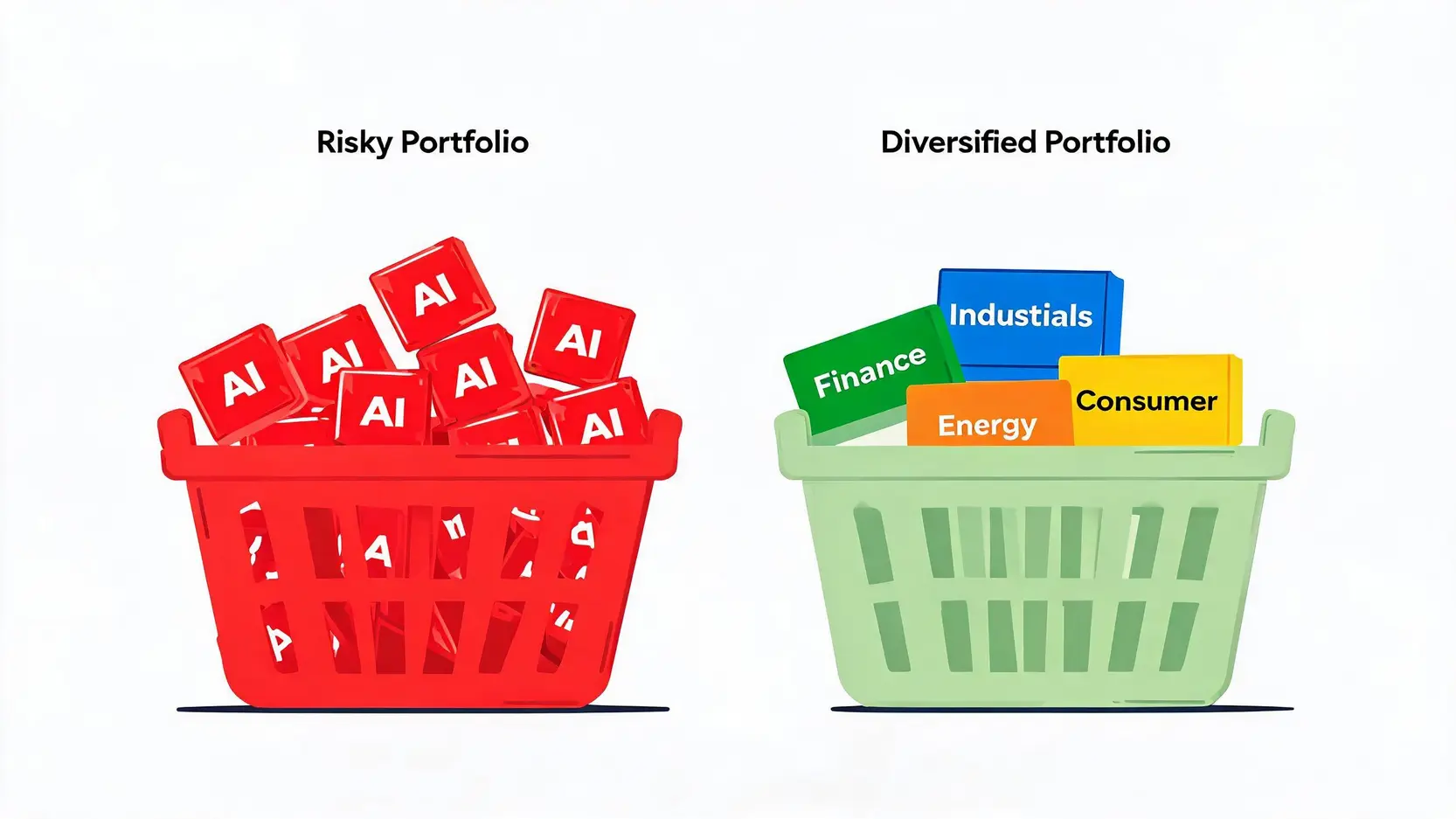
While the allure of exponential growth in the tech sector is undeniable, seasoned investors understand that chasing hype is a perilous strategy. The market’s current obsession with AI has led to inflated P/E ratios and a concentration of risk in a single, volatile sector. Looking beyond this frenzy reveals opportunities for more stable, predictable returns and is a critical component of sophisticated portfolio management.
The Power of Diversification in a Tech-Heavy Market
Market history is replete with examples of sector-specific bubbles. Over-concentration in tech stocks exposes a portfolio to significant downside risk should market sentiment shift. Portfolio diversification across various industries—such as finance, consumer staples, and industrials—acts as a powerful hedge. By allocating capital to the best non-AI stocks, investors can buffer against tech-sector volatility and create a more balanced and resilient financial future. Traditional industries often exhibit different economic cycles, providing stability when high-growth sectors falter.
Identifying Undervalued Gems with Strong Fundamentals
The shadow cast by the AI boom has left many high-quality, non-AI companies trading at a discount. These are not stagnant, old-world businesses; they are established leaders with proven business models, consistent cash flow, and formidable economic moats. By focusing on tangible metrics like revenue growth, profit margins, and return on equity, investors can unearth undervalued gems poised for significant appreciation as the market inevitably corrects its course and rediscovers fundamental value.

Top 5 Non-AI Stocks for Your 2026 Watchlist
After extensive analysis of market fundamentals and sector outlooks, here are five standout non-AI companies that warrant serious consideration for a 2026 investment portfolio. Each possesses a unique combination of market leadership, financial strength, and clear catalysts for future growth.
Stock 1: A Financial Services Titan (Mastercard, NYSE: MA)
Mastercard stands as a global pillar of the digital economy. Its vast payment network is an indispensable piece of financial infrastructure, creating an exceptionally wide economic moat. Unlike traditional banks, MA does not bear credit risk; it profits from transaction volume, making it a resilient beneficiary of the ongoing global shift from cash to digital payments.
Key Strengths:
- Network Effect: With billions of cards in circulation and acceptance at millions of merchants worldwide, its network becomes more valuable with each new user.
- Impressive Margins: The company boasts operating margins that consistently exceed 50%, a testament to its scalable and asset-light business model.
- Innovation: Mastercard is not standing still. It is actively investing in cybersecurity, data analytics, and new payment technologies, securing its relevance for decades to come. As per their latest investor overview, the focus on technology and innovation is a primary driver of growth.
For investors seeking stable, long-term growth from a blue-chip leader, Mastercard is a compelling choice among non-AI investment opportunities.
Stock 2: A Consumer Staples Champion (Casey’s General Stores, NASDAQ: CASY)
Casey’s operates a unique and highly successful business model combining convenience stores with prepared food services, primarily in the American Midwest. This hybrid approach makes it a defensive powerhouse. In any economic climate, consumers need fuel and food, and Casey’s provides both with remarkable efficiency.
Key Strengths:
- Recession-Resilient: The demand for its core products (fuel, groceries, and prepared foods like pizza) remains stable regardless of the economic cycle.
- Strategic Growth: Casey’s is executing a disciplined expansion strategy, both through new store openings and strategic acquisitions, steadily growing its footprint and market share.
- Shareholder Returns: The company has a long history of dividend increases and share buybacks, demonstrating a strong commitment to returning value to its shareholders.
Stock 3: An Industrial Powerhouse (Nucor, NYSE: NUE)
As the largest steel producer in the United States, Nucor is fundamentally tied to the health of the American economy. The company is a leader in using electric arc furnaces, which are more cost-effective and environmentally friendly than traditional blast furnaces. This technological edge gives it a significant competitive advantage.
Key Strengths:
- Cost Leadership: Its efficient production methods allow it to remain profitable even during periods of lower steel prices.
- Infrastructure Play: Nucor is a direct beneficiary of any increase in infrastructure spending, from bridges and roads to new manufacturing facilities.
- Dividend Aristocrat: With over 50 consecutive years of dividend increases, Nucor has proven its ability to generate consistent cash flow and reward investors through thick and thin.
Stock 4: A Discount Retail Leader (Ross Stores, NASDAQ: ROST)
In an era of economic uncertainty and budget-conscious consumers, the value proposition of off-price retailers like Ross Stores has never been stronger. ROST offers branded apparel and home goods at significant discounts, attracting a loyal customer base that spans multiple demographics.
Key Strengths:
- Value Proposition: Its ability to offer bargains creates a treasure-hunt shopping experience that e-commerce giants struggle to replicate.
- Efficient Operations: Ross Stores maintains a lean inventory model and a low-cost operating structure, allowing it to protect its margins and pass savings on to consumers.
- Proven Track Record: The company has a long history of delivering consistent growth in revenue and earnings, even during economic downturns.
Stock 5: An Energy Sector Stalwart (Imperial Oil, TSX: IMO)
Imperial Oil, a majority-owned subsidiary of ExxonMobil, is one of Canada’s largest integrated oil companies. Its operations span the entire value chain, from oil sands production to refining and marketing. This integration provides stability and helps mitigate the volatility inherent in the energy sector.
Key Strengths:
- Integrated Model: Profits from its downstream (refining and marketing) operations often offset weakness in its upstream (production) business, providing a natural hedge against oil price fluctuations.
- Long-Life Assets: Its massive oil sands reserves in Alberta represent decades of future production, ensuring long-term viability.
- Financial Discipline: Imperial Oil is known for its conservative balance sheet and a steadfast commitment to returning cash to shareholders through dividends and buybacks.
Strategic Analysis: How to Evaluate Non-AI Stocks for the Future
Identifying the best non-AI stocks to buy requires a disciplined approach rooted in fundamental analysis. Instead of chasing narratives, investors should focus on the underlying financial health and competitive positioning of a business. This is the essence of building a portfolio designed for long-term growth.
Key Financial Metrics to Check (Beyond P/E Ratio)
The Price-to-Earnings (P/E) ratio is just one tool and can be misleading. A more robust evaluation includes:
- Free Cash Flow (FCF): This represents the cash a company generates after accounting for capital expenditures. A consistently growing FCF is a strong sign of a healthy, self-sustaining business.
- Debt-to-Equity Ratio: This metric assesses a company’s leverage. A low ratio indicates a more conservative balance sheet and lower financial risk.
- Return on Invested Capital (ROIC): ROIC measures how efficiently a company is using its capital to generate profits. A high and stable ROIC is a hallmark of a high-quality business. A deep dive into these metrics can be found in our financial ratio analysis guide.
Assessing Economic Moats and Competitive Advantages
An economic moat is a durable competitive advantage that protects a company from competitors, much like a moat protects a castle. These advantages can take several forms:
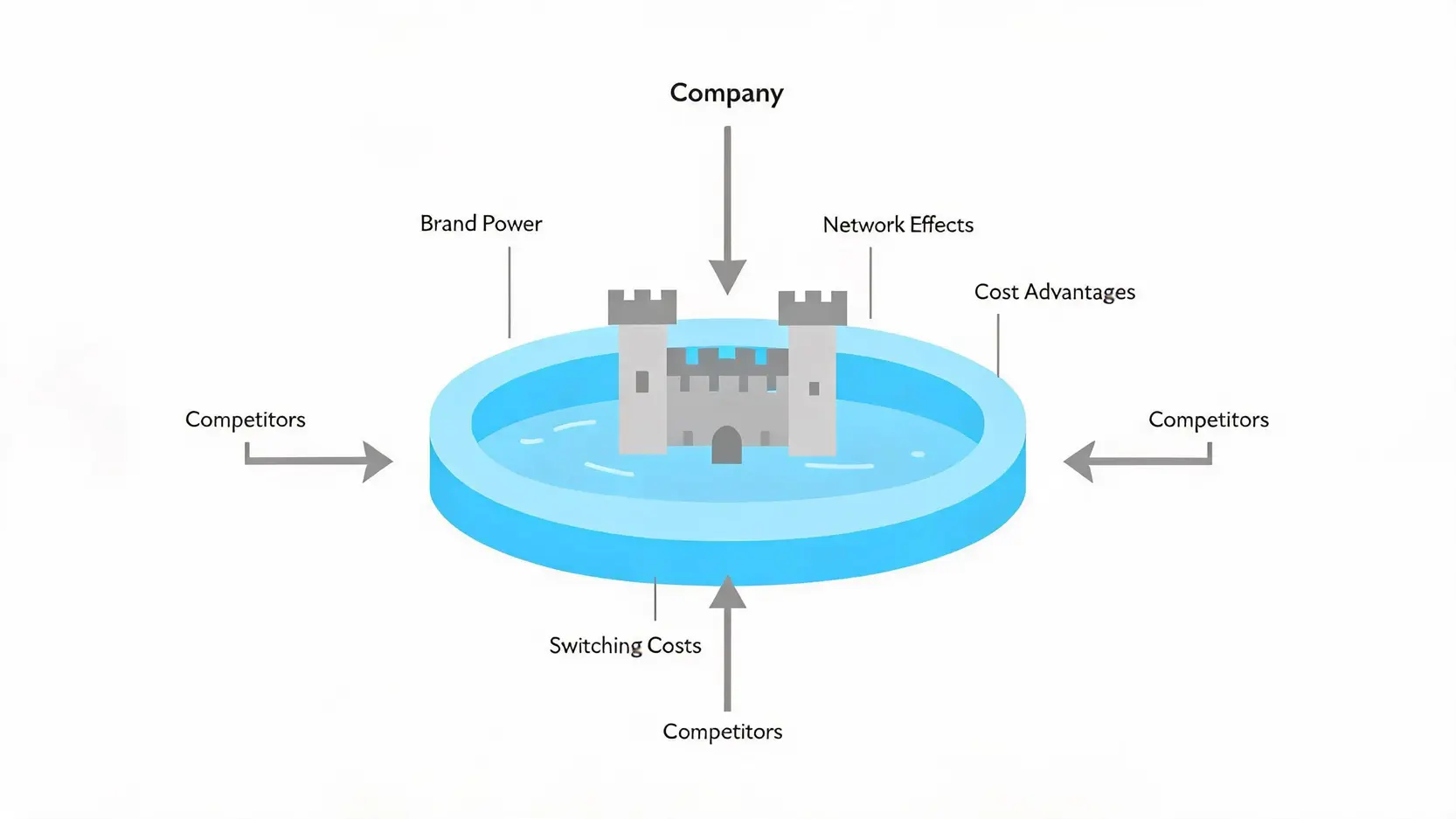
- Brand Power: Think of the trust consumers place in a company like Mastercard.
- Network Effects: Where a service becomes more valuable as more people use it.
- Cost Advantages: Nucor’s efficient steel production is a prime example.
- High Switching Costs: When it is too expensive or inconvenient for a customer to switch to a competitor.
Companies with wide moats can sustain profitability for longer periods, making them excellent long-term investments.
Long-Term Growth Catalysts in Traditional Industries
Growth isn’t exclusive to the tech sector. Traditional industries have their own powerful catalysts. These can include demographic shifts (an aging population needing more healthcare), government policy (infrastructure spending boosting industrials), or the modernization of emerging economies (increasing demand for financial services and consumer goods). Identifying these secular trends is key to finding non-AI stocks with significant upside potential.
Conclusion
Building a robust portfolio for 2026 and beyond requires looking past the dazzling glare of the AI hype machine. The five companies highlighted—Mastercard, Casey’s General Stores, Nucor, Ross Stores, and Imperial Oil—represent the kind of fundamental strength, market leadership, and shareholder commitment that form the bedrock of long-term wealth creation. While the market is captivated by algorithms and data centers, true value often resides in the enduring power of essential services, efficient operations, and disciplined capital allocation. Prudent investors are encouraged to conduct their own due diligence on these promising non-AI stocks, which offer a compelling path to growth outside the crowded tech trade.
Frequently Asked Questions (FAQ)
Q: Are non-AI stocks a safer investment than tech stocks?
A: While no investment is entirely safe, non-AI stocks, particularly those in established sectors like consumer staples and financials, tend to exhibit lower volatility than high-growth tech stocks. Their value is often tied to more predictable revenue streams and tangible assets. However, safety depends on the specific company’s fundamentals, not just its sector. Diligent research is always required.
Q: Which non-AI sectors show the most promise for 2026?
A: Several sectors are well-positioned. Financials, particularly payment processors, benefit from the ongoing digitization of commerce. Industrials are poised to gain from reshoring trends and potential infrastructure investments. Consumer staples offer defensive qualities in uncertain economic times, while the energy sector remains critical to the global economy, offering value and dividend income.
Q: How do I balance my portfolio between AI and non-AI stocks?
A: The optimal balance depends on your individual risk tolerance, investment horizon, and financial goals. A common approach is a core-satellite strategy: the ‘core’ of your portfolio consists of stable, diversified holdings (including non-AI leaders), while the ‘satellite’ portion is allocated to higher-growth opportunities like AI stocks. This allows you to participate in tech growth while maintaining a foundation of stability.