
As the global economic landscape decidedly shifts towards a higher interest rate paradigm, astute investors are recalibrating their portfolios to identify sectors that not only withstand this monetary tightening but actively thrive. With 2026 unfolding, understanding which financial stocks for higher interest rates 2026 are best positioned is no longer just an option—it is a strategic imperative. The performance of the broader financial sector in a high-rate environment is intrinsically positive, yet the nuances between sub-sectors are critical. This guide provides a deep, analytical dive into the financial stocks poised for significant growth, offering a definitive roadmap for your investment strategy in this evolving market.
Table of Contents
The Core Relationship: Why Financials Favor Higher Interest Rates
The conventional wisdom that financial stocks benefit from rising interest rates is grounded in the fundamental business models of these institutions. Unlike most other sectors where higher rates mean increased borrowing costs and dampened consumer demand, for many financial companies, a rising rate environment directly translates to enhanced profitability and a stronger bottom line. This positive correlation is a cornerstone of sector-based investment strategy when central banks pivot towards hawkish policies.
Understanding Net Interest Margin (NIM) Expansion for Banks
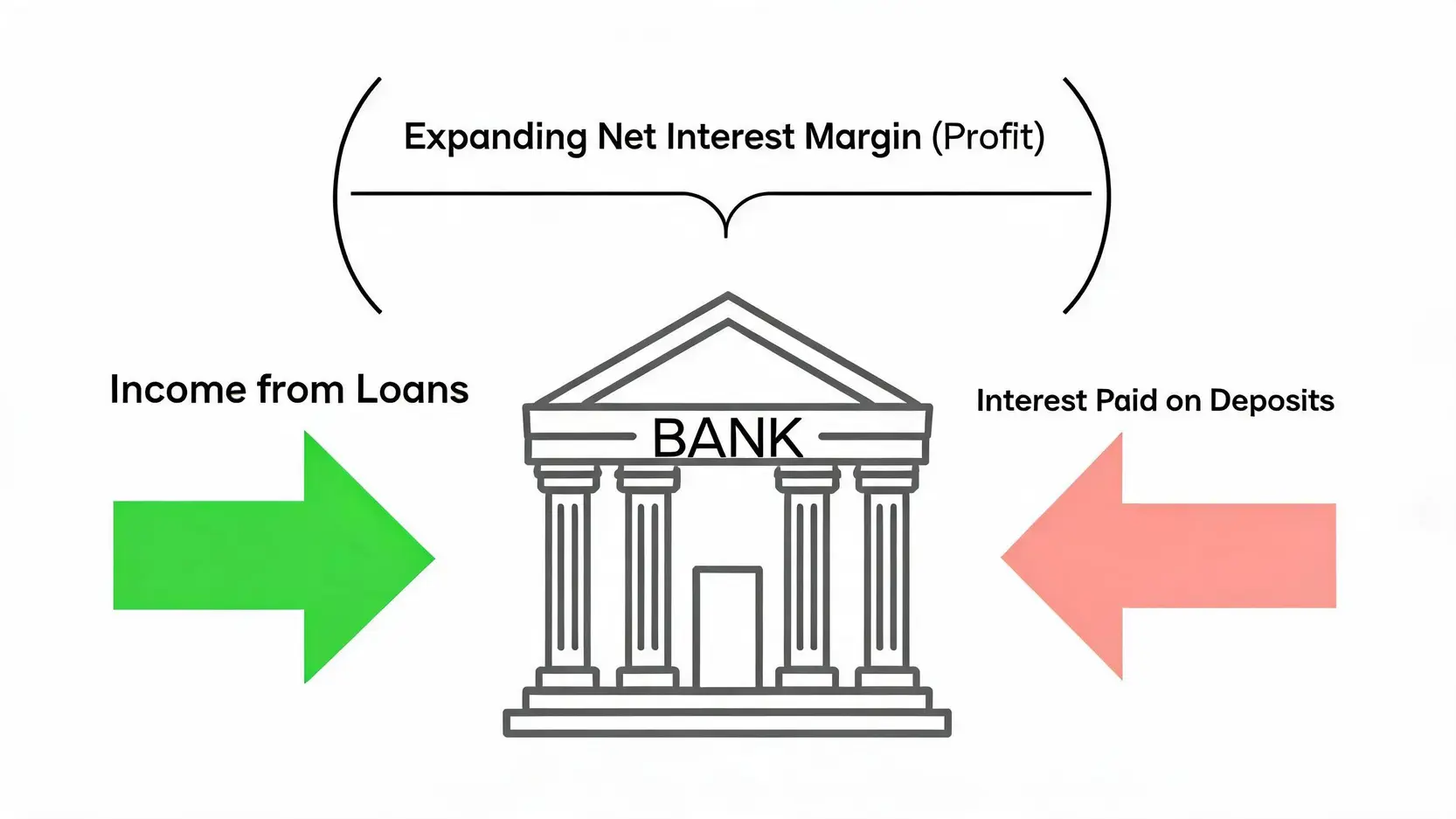
The primary mechanism through which banks profit from higher interest rates is the expansion of their Net Interest Margin (NIM). NIM is a critical measure of a bank’s profitability, representing the difference between the interest income generated from lending activities (loans, mortgages) and the interest paid out on deposits and other borrowings. Here’s the dynamic:
- Asset-Side Repricing: When the central bank raises benchmark rates, banks can almost immediately charge higher interest on new variable-rate loans (like commercial loans and credit cards) and newly issued fixed-rate loans (like mortgages and auto loans).
- Liability-Side Lag: Conversely, the interest rates banks pay on customer deposits (savings accounts, checking accounts) tend to rise much more slowly. This is often referred to as a “deposit beta.” Banks with a large, stable base of low-cost deposits can capitalize on this lag, widening the spread between what they earn and what they pay.
This asynchronous repricing leads to a direct expansion of the NIM, which flows straight through to pre-tax profit. Therefore, a bank’s ability to capitalize on rising rates is a key indicator of its operational efficiency and market position.
The Impact on Insurance and Investment Management Profitability
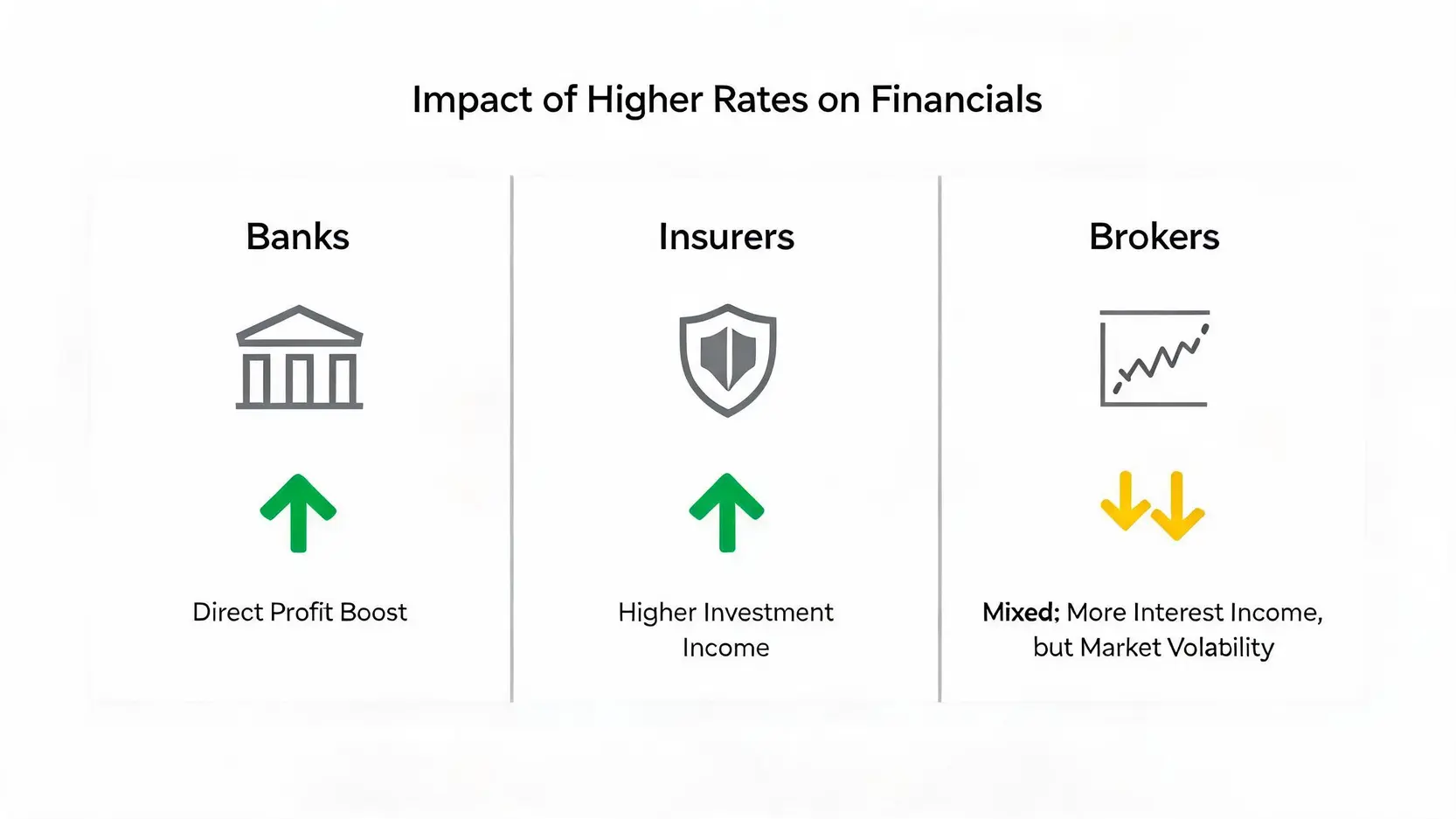
While banks are the most direct beneficiaries, other parts of the financial ecosystem also prosper. Insurance companies, in particular, see a significant boost. They collect premiums from policyholders and invest this capital—known as the “float”—into a diversified portfolio, which is heavily weighted towards fixed-income securities like government and corporate bonds. As explained by Investopedia, rising rates mean insurers’ profits tend to rise as they can reinvest their large bond portfolios at higher yields.
Similarly, investment and wealth managers benefit. They often hold significant client cash balances in money market funds or other short-term instruments. Higher rates allow them to generate more substantial interest income on these cash holdings, which can be a meaningful revenue driver.
Dissecting the Financial Sector: Why Not All Stocks Are Created Equal in a Rising Rate Environment
A granular analysis of the financial sector is crucial; the tailwind of rising rates does not lift all boats equally. Investors must differentiate between the sub-sectors and individual company characteristics to optimize their portfolio for the 2026 market. The impact of rising bond yields and monetary policy varies significantly across different business models within the financial industry.
Commercial & Retail Banks: The Primary Beneficiaries
Commercial and retail banks are at the forefront of benefiting from higher rates. Their core business of taking deposits and making loans is perfectly structured to capitalize on NIM expansion. However, key differentiators exist:
- Deposit Franchise Quality: Banks with a high proportion of non-interest-bearing deposits or low-cost checking and savings accounts (core deposits) will outperform. They are less pressured to increase deposit rates to retain customers.
- Loan Portfolio Mix: Institutions with a significant portion of floating-rate commercial and industrial (C&I) loans will see profits rise faster than those heavily exposed to fixed-rate residential mortgages.
Insurance Companies: A Boost from Investment Portfolios
Insurance companies are the second major group of beneficiaries. Their profitability is heavily linked to the income generated from their vast investment portfolios. When rates rise, they can reinvest maturing bonds and new premium income into higher-yielding assets. This effect is particularly pronounced for:
- Life Insurers: They have very long-term liabilities and invest in long-duration bonds. Persistently higher rates significantly boost their long-term earnings power.
- Property & Casualty (P&C) Insurers: While their bond portfolios are shorter in duration, they still see a material benefit to their investment income from a rising rate environment.
Brokerage Firms and Wealth Managers: A Double-Edged Sword
For brokerage firms and wealth managers, the situation is more nuanced. On one hand, they earn substantially more interest on client cash balances, a direct positive. However, higher rates can create headwinds. Aggressive rate hikes often lead to increased market volatility and can depress asset valuations (both stocks and bonds). This can reduce fee-based revenue, which is tied to assets under management (AUM). Furthermore, a slowing economy can stifle capital markets activity, leading to fewer initial public offerings (IPOs) and mergers, which are key revenue sources for investment banks.
Top Financial Stock Categories to Watch for 2026
Given the varied landscape, a strategic approach is essential. Rather than a broad-brush investment in the sector, focusing on specific categories of financial stocks can yield superior returns in 2026’s high-interest-rate climate. The key is to find companies with resilient business models that are best structured to harness the benefits while mitigating the risks.
Category 1: Large-Cap Banks with Strong Deposit Franchises
Look for the industry titans—the large, diversified banks with what are often termed “fortress balance sheets.” These institutions typically possess vast, low-cost deposit bases gathered through extensive retail and commercial networks. Their scale provides a significant competitive advantage, allowing them to absorb regulatory costs more efficiently and maintain a low “deposit beta.” Their diversified revenue streams, spanning from consumer banking to capital markets, also provide resilience against economic turbulence.
Category 2: Value-Oriented Insurance Giants
In the insurance space, prioritize companies known for disciplined underwriting and conservative investment management. These are often value stocks that may trade at a lower price-to-book ratio. As interest rates rise, the market begins to better appreciate the embedded value of their investment portfolios. The steady, predictable increase in investment income can lead to a significant re-rating of these stocks, offering both capital appreciation and often a reliable dividend yield.
Category 3: Diversified Financial Services Leaders
This category includes firms that operate across multiple financial sub-sectors, such as banking, asset management, and insurance. This diversification can be a powerful hedge. For instance, while a slowdown in capital markets might temper their investment banking arm, the expansion of NIM in their banking division and higher investment yields in their insurance unit can compensate. This model provides multiple avenues to profit from a changing rate environment, offering a more stable risk-reward profile for investors.
Navigating the Risks: Potential Headwinds for Financial Stocks in a High-Rate World
While the outlook for financial stocks is favorable, investors must conduct a balanced analysis and remain vigilant of potential risks. A higher-rate environment is not without its perils, and the very policy designed to benefit financials can also sow the seeds of economic turmoil. Ignoring these headwinds is a critical error in portfolio management for 2026.
The Threat of an Economic Slowdown or Recession
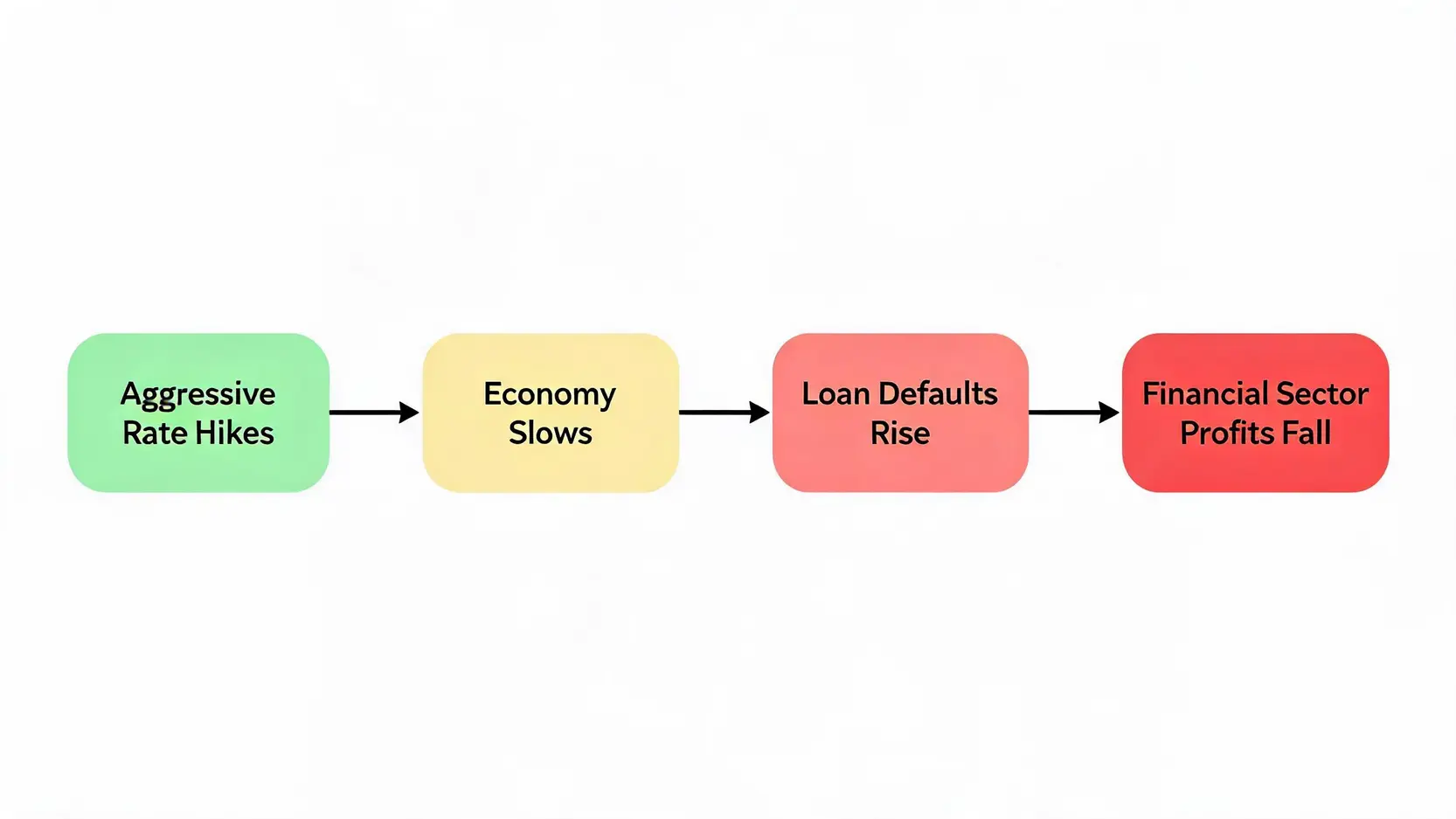
The most significant risk is that the central bank overtightens monetary policy, pushing the economy into a slowdown or an outright recession. Financial institutions are deeply cyclical; their health is inextricably linked to the health of the broader economy. A recession would lead to:
- 📉 Reduced loan demand from both consumers and businesses.
- 📉 Lower capital markets activity, impacting fee income.
- 📉 A potential reversal in central bank policy, leading to rate cuts that would compress margins once again.
Historical data from sources like the Federal Reserve Economic Data (FRED) repository often shows a correlation between aggressive rate-hike cycles and subsequent economic contractions. Monitoring macroeconomic indicators is therefore paramount.
Monitoring Credit Quality and Loan Defaults
Higher interest rates directly increase the cost of borrowing for everyone. For consumers, this means higher payments on mortgages, credit cards, and auto loans. For businesses, it means a higher cost to service their debt. If rates rise too quickly or the economy weakens, a growing number of borrowers may struggle to make their payments. This leads to a deterioration in credit quality and an increase in loan defaults. Banks and other lenders must then increase their provisions for credit losses, which directly reduces their earnings. An unexpected spike in loan defaults can quickly erase the benefits gained from NIM expansion.
Conclusion
Investing in financial stocks for a higher interest rate environment in 2026 requires a sophisticated and nuanced strategy. While the sector as a whole is structurally positioned to benefit—primarily through the expansion of net interest margins for banks and increased investment income for insurers—it is not a monolithic entity. The most promising opportunities lie with high-quality, large-cap banks with dominant deposit franchises and value-oriented insurance companies with disciplined underwriting. However, investors must remain acutely aware of the macroeconomic risks, particularly the potential for a policy-induced recession and the subsequent deterioration in credit quality. By focusing on quality and maintaining a balanced perspective, a portfolio can be strategically positioned to capitalize on the shifting monetary landscape of 2026.
Frequently Asked Questions (FAQ)
Q: Which specific sub-sectors within financials are best positioned for 2026?
A: The most favorably positioned sub-sectors are commercial and retail banks, especially those with strong, low-cost deposit bases, as they benefit directly from Net Interest Margin (NIM) expansion. Following them are life and P&C insurance companies, which profit from reinvesting their large bond portfolios at higher yields.
Q: How does the speed of interest rate hikes affect financial stocks?
A: A slow, steady pace of rate hikes is generally ideal. It allows banks to reprice their assets upward while deposit costs lag, and it gives the economy time to adjust. Conversely, very rapid and aggressive hikes can shock the system, increasing the risk of a recession and widespread loan defaults, which can quickly negate the benefits of higher rates.
Q: Are regional banks a riskier bet than large national banks in this environment?
A: Regional banks can be more of a mixed bag. While they can be very sensitive to NIM expansion and thus offer higher potential upside, they are also often less diversified. They may have higher concentrations in specific loan types (like commercial real estate) and can be more vulnerable to localized economic downturns, making them a higher-risk, higher-reward play compared to their large-cap, diversified counterparts.
Q: What is the role of the yield curve in this analysis?
A: The shape of the yield curve is critical. Banks profit from a steep yield curve (where long-term rates are significantly higher than short-term rates) because they tend to borrow short-term (deposits) and lend long-term (mortgages). An inverted yield curve (where short-term rates are higher than long-term rates) is a classic recession indicator and can severely compress bank profitability, even if rates are high overall.