The long-awaited SpaceX Initial Public Offering (IPO) is the seismic event of 2026, creating unprecedented opportunities for investors globally. As anticipation builds, the primary question is shifting from the stock itself to a more sophisticated instrument: the specific SpaceX options trading date in 2026. This guide provides the definitive timeline, a detailed operational playbook, and penetrating analysis to prepare you for this historic market debut. Understanding how to buy SpaceX stock and options post-IPO is critical for anyone looking to capitalize on the immense volatility and potential of this new public entity.
Table of Contents
SpaceX IPO: The Official Timeline and Key Dates for Investors
Navigating a monumental IPO requires precision. The timeline for the SpaceX public launch is condensed and demands investor readiness. Key events are structured to ensure a stable transition from a private behemoth to a publicly-traded entity, with distinct phases for equity and derivatives.
The Public Offering Date: Friday, June 12, 2026
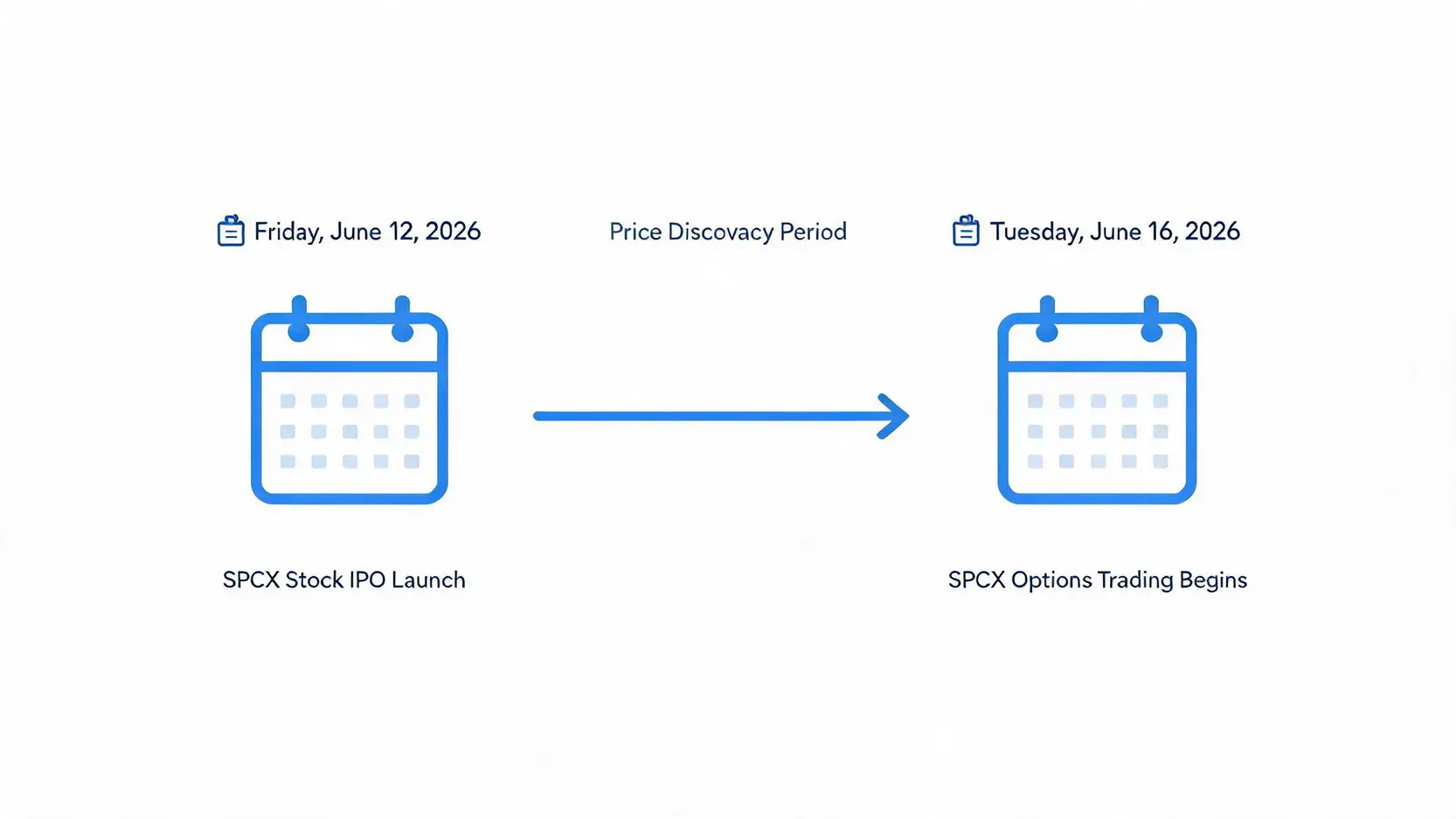
Mark your calendars: SpaceX is slated to begin trading on the Nasdaq exchange on Friday, June 12, 2026. On this day, institutional and (if allocated) retail investors who participated in the initial offering will see their shares become liquid. The first day of trading is notoriously volatile, driven by pent-up demand and price discovery. It is the foundational event upon which all subsequent trading, including options, is built.
The Options Trading Launch Date: Tuesday, June 16, 2026
The official launch for SpaceX options trading is Tuesday, June 16, 2026. The several-day gap between the IPO and the options launch is standard market practice. It allows the underlying stock to establish a preliminary trading history and for market makers to set initial pricing for options contracts. This brief period is crucial for some of the initial IPO-day volatility to subside, providing a slightly more stable ground for pricing derivatives. For traders, this is the date when strategies involving leverage, hedging, or speculation on volatility can be executed.
Understanding the Ticker: Why It’s ‘SPCX’
The designated stock ticker for SpaceX will be SPCX. This choice is deliberate, standing for ‘Space Exploration Corporation’. While many anticipated a more creative ticker like ‘MARS’ or ‘STAR’, the company opted for a classic, professional identifier that aligns with its corporate identity and mission, signaling a mature and serious market presence to institutional investors.
How to Buy SpaceX Stock and Trade Options After the IPO
Acquiring shares and options in a high-demand IPO like SpaceX requires a clear, systematic approach. Whether you’re aiming to hold the stock long-term or trade the short-term price action with options, preparation is paramount. The process begins with selecting the right platform and understanding the mechanics of order execution on high-volume days.
A Step-by-Step Guide to Buying SPCX Shares on IPO Day
Participating in the public market for SPCX shares on or after the IPO date is straightforward, provided you have a brokerage account. Here is a tactical breakdown:
- Select a Brokerage: Ensure you have a funded account with a reputable online broker. For an event of this magnitude, prioritize brokers known for stable platforms that can handle extreme trading volumes without crashing. Our guide on how to choose a broker provides critical selection criteria.
- Fund Your Account: Transfer funds well in advance of June 12. ACH transfers can take several business days to settle, and you must have cleared funds to trade.
- Understand Order Types:
- Market Order: Buys shares at the best available current price. Warning: In a volatile IPO, the price can change drastically between order placement and execution, leading to a much higher cost than anticipated. Use with extreme caution.
- Limit Order: Sets a maximum price you are willing to pay per share. If the stock price does not fall to your limit, the order will not execute. This is the recommended approach for IPOs to protect against price spikes.
- Execute the Trade: On June 12, once SPCX begins trading, enter the ticker, specify the number of shares, set your limit price, and place the order. Monitor the position closely.
Finding and Trading SpaceX Options on Your Brokerage Platform
Beginning June 16, the options market for SPCX will open. This requires a different level of authorization and understanding.
- Enable Options Trading: Most brokers require a separate application to enable options trading, often with different levels based on your experience and risk tolerance. Complete this process well ahead of the launch date.
- Navigate to the Option Chain: In your broker’s platform, enter the ‘SPCX’ ticker and find the ‘Options’ or ‘Option Chain’ tab. This will display a table of all available contracts.
- Understand the Chain: The option chain lists contracts by expiration date. For each date, you will see ‘Calls’ on one side and ‘Puts’ on the other, organized by ‘Strike Price’. Key metrics like Bid, Ask, and Volume will be displayed.
- Place Your Options Order: Select the specific contract you wish to trade (e.g., a July 2026 $180 Call). You will then enter the number of contracts, choose an order type (Limit orders are strongly advised), and execute the trade.
A Primer on Trading IPO Options
Trading options on a newly minted stock like SpaceX is a high-stakes endeavor that amplifies both risk and reward. Unlike buying stock, options introduce the complexities of time decay and implied volatility, which are extremely pronounced in an IPO environment. This is a domain reserved for traders with a firm grasp of derivatives and risk management.
What Are Stock Options and Why Are They Popular for IPOs?
Stock options are contracts that give the holder the right, but not the obligation, to buy (call) or sell (put) a stock at a predetermined price (the strike price) on or before a specific expiration date. For IPOs, they are popular for several reasons:
- 💰 Leverage: Options allow traders to control a large number of shares with significantly less capital than buying the stock outright.
- 📈 Speculation on Direction: They provide a direct way to bet on whether the stock will rise (buying calls) or fall (buying puts) post-IPO.
- 🛡️ Hedging: For investors who received shares in the IPO, buying put options can serve as an insurance policy against a sharp decline in the stock’s price.
The High-Volatility Risk: Understanding the Dangers of IPO Options
The single greatest factor in IPO options is implied volatility (IV). IV represents the market’s expectation of future price swings. For a blockbuster IPO like SpaceX, IV will be extraordinarily high. This means option premiums (the price of the contracts) will be very expensive. The danger is that even if you are correct on the direction of the stock, a sharp decrease in IV (known as “IV crush”) can cause the value of your option to fall, leading to a loss. This often happens after the initial IPO excitement fades.
Basic Strategies: Calls (Betting on a Rise) vs. Puts (Betting on a Fall)
For those new to options, it’s essential to understand the two basic contract types and their application in an IPO context:
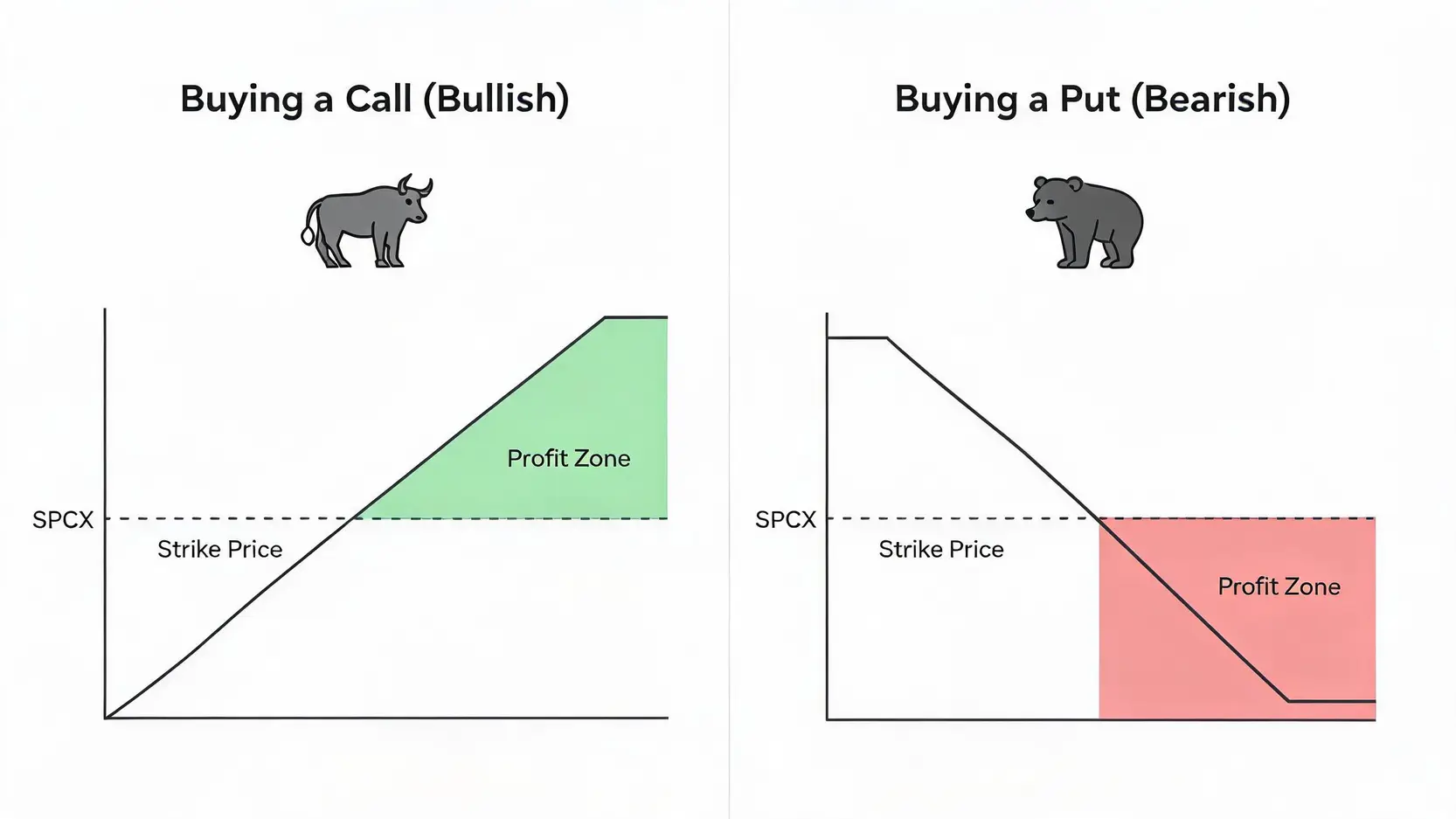
- Buying a Call Option: This is a bullish strategy. You profit if SPCX stock rises significantly above your strike price before the option expires. It’s a way to bet on post-IPO upside momentum with limited downside risk (the premium you paid).
- Buying a Put Option: This is a bearish strategy. You profit if SPCX stock falls significantly below your strike price before expiration. Traders use this to speculate on a post-IPO slump, or investors use it to hedge their long stock positions.
Mastering these requires more than a basic understanding. Exploring actionable trading strategies is a critical next step for any serious participant.
Expert Analysis: Valuation and Risks of the SpaceX Public Offering
The SpaceX IPO isn’t just a market event; it’s a referendum on the future of commercial space exploration, satellite communications, and interplanetary travel. The valuation reflects these colossal ambitions, but investors must also weigh the profound risks tied to such a capital-intensive and technologically pioneering enterprise. A successful investment requires a clear-eyed view of both the bull and bear cases.
What Analysts Predict for SpaceX’s Market Valuation
As of its public filing, SpaceX is targeting a valuation north of $200 billion, with some pre-IPO secondary market trades suggesting figures approaching $250 billion. The official IPO price will be finalized in the days leading up to June 12. Key drivers supporting this valuation include:
- Starlink Dominance: The Starlink satellite internet constellation is a revolutionary asset, providing high-speed internet to a global user base and generating recurring revenue. Analysts see this as the primary engine of near-term cash flow.
- Launch Monopoly: SpaceX has achieved near-total dominance in the commercial launch market, with its reusable Falcon 9 and Falcon Heavy rockets drastically lowering the cost of access to space.
- Starship’s Potential: The next-generation Starship vehicle, designed for missions to the Moon and Mars, represents a paradigm shift. Its success could unlock trillions of dollars in economic value, from point-to-point Earth travel to asteroid mining. Recent news indicates successful test flights are accelerating its operational timeline.
However, the valuation is not without its skeptics, who point to the immense capital required to fund the Mars colonization vision as a long-term drain on profitability.
Key Risks to Consider Before Investing in the SpaceX IPO
Investing in SPCX carries a risk profile far beyond that of a typical tech company. The U.S. Securities and Exchange Commission (SEC) provides guidance on the general risks of IPOs, but SpaceX has unique challenges:
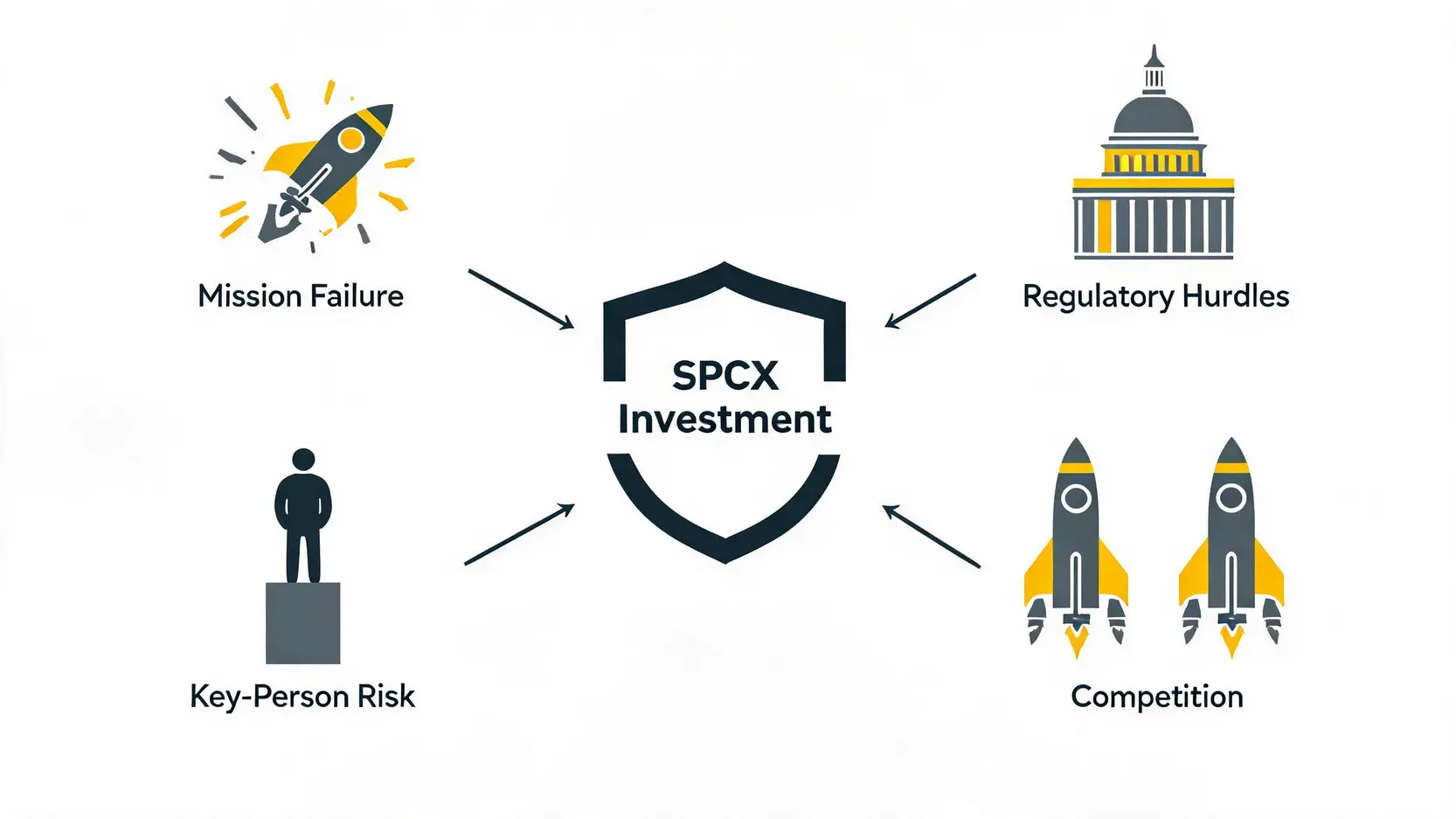
- Mission-Critical Failures: While SpaceX has a strong track record, its business is inherently risky. A catastrophic launch failure, especially one involving human life, could have a devastating impact on the stock price and public confidence.
- Regulatory Hurdles: The space and telecommunications industries are heavily regulated by bodies like the FAA and FCC. Unfavorable rulings, licensing delays for Starlink, or changes in international space law could impede growth.
- Competitive Landscape: While SpaceX is the clear leader, competitors like Blue Origin, ULA, and emerging national players (especially from China) are intensifying their efforts. Any erosion of SpaceX’s technological lead is a long-term risk.
- Key-Person Risk: Elon Musk’s vision and leadership are inextricably linked to SpaceX’s success. His controversial management style and involvement in other major ventures (like Tesla and X) create a unique and significant key-person dependency.
A thorough analysis of the company’s S-1 filing, once public, is non-negotiable for any serious investor to fully grasp the financial details and disclosed risks.
Conclusion
In summary, the key SpaceX options trading date for 2026 is confirmed for Tuesday, June 16th, following the stock’s public debut on Friday, June 12th. For investors and traders aiming to capitalize on what may be the largest market event of the decade, these dates are merely the starting pistol. True success will depend on a rigorous understanding of the underlying company, the immense risks of trading options on a hyper-volatile IPO, and a well-defined strategy. Prepare your accounts, conduct your due diligence, and approach this monumental opportunity with the discipline it demands.
Frequently Asked Questions (FAQ)
Q: What is the official stock ticker for SpaceX?
A: The official stock ticker for SpaceX upon its debut on the Nasdaq exchange will be SPCX. This represents the company’s corporate identity, Space Exploration Corporation.
Q: Can I buy SpaceX shares before the IPO?
A: For the vast majority of retail investors, the answer is no. Pre-IPO shares are typically reserved for institutional investors, venture capital firms, and accredited investors through private placements. The first opportunity for the general public to purchase shares will be on the IPO date, June 12, 2026, once the stock begins trading on the open market.
Q: What are the biggest risks associated with the SpaceX IPO?
A: The primary risks include potential for catastrophic mission failures, significant regulatory and geopolitical hurdles, intense long-term competition, and an extreme dependency on its founder, Elon Musk. Furthermore, the very high valuation and the capital-intensive nature of its Mars ambitions present significant financial risks.
Q: Why is there a delay between the stock IPO and the options trading date?
A: The delay, typically a few trading days, is a standard market mechanism. It allows the newly public stock to establish an initial price range and trading history. This price discovery period is essential for market makers to accurately calculate implied volatility and set fair prices for the bid and ask spreads on the options contracts.
Q: What kind of volatility should be expected for SPCX options?
A: Expect exceptionally high Implied Volatility (IV) for SPCX options in the initial weeks and months of trading. This means option premiums will be very expensive, reflecting the market’s uncertainty and anticipation of large price swings. Traders should be wary of “IV crush,” where a decline in volatility can erode an option’s value even if the stock price moves favorably.