For income-focused investors, the Verizon dividend forecast 2026 is a cornerstone of portfolio planning. As a mature blue-chip stock in the telecommunications sector, Verizon (VZ) has long been a bastion for those seeking reliable shareholder returns. This guide provides a comprehensive analysis of Verizon’s upcoming dividends, dissecting its financial health, potential for a dividend increase, and the key factors that will determine its payout stability through 2026 and beyond. Understanding the safety of the VZ dividend is critical in a dynamic economic landscape.
Table of Contents
Verizon’s Official Dividend Schedule for 2026
While Verizon formally declares its dividend quarterly, we can project the 2026 schedule with high accuracy based on decades of consistent payment history. For dividend capture strategies or simple income planning, marking these dates on your calendar is essential. 🗓️
Expected Dividend Payment Dates
Verizon typically pays its dividend on the first business day of February, May, August, and November. Based on this precedent, the anticipated payment dates for 2026 are as follows:
- Q1 2026: Monday, February 2, 2026
- Q2 2026: Friday, May 1, 2026
- Q3 2026: Monday, August 3, 2026
- Q4 2026: Monday, November 2, 2026
Record Dates and Ex-Dividend Dates to Watch
To receive the dividend, an investor must own the stock before the ex-dividend date. The ex-dividend date is typically set one business day before the record date. The record date, in turn, usually falls around the 10th of the month prior to the payment month (January, April, July, October). Investors should monitor the official announcements from Verizon’s Investor Relations for precise dates.
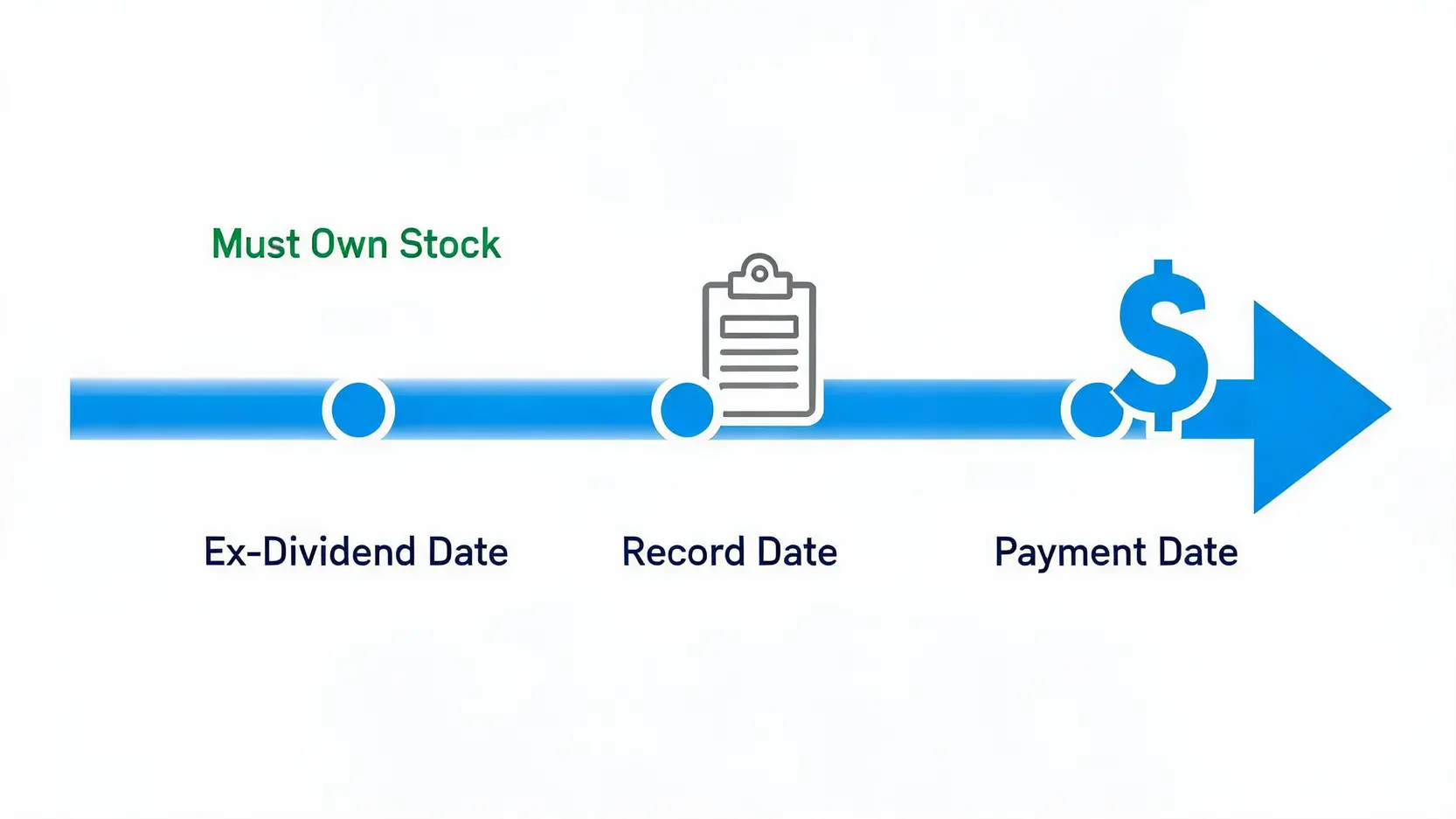
Here is a projected timeline for these crucial dates in 2026:
| Quarter | Projected Ex-Dividend Date | Projected Record Date | Projected Payment Date |
|---|---|---|---|
| Q1 2026 | Thursday, January 8, 2026 | Friday, January 9, 2026 | Monday, February 2, 2026 |
| Q2 2026 | Thursday, April 9, 2026 | Friday, April 10, 2026 | Friday, May 1, 2026 |
| Q3 2026 | Thursday, July 9, 2026 | Friday, July 10, 2026 | Monday, August 3, 2026 |
| Q4 2026 | Thursday, October 8, 2026 | Friday, October 9, 2026 | Monday, November 2, 2026 |
Analyzing the Projected 2026 Verizon Dividend Payout
The central question for investors is not just *when* the dividend will be paid, but *how much* it will be and whether it will grow. Analyzing the VZ dividend payout requires a look at both future projections and historical performance.
Forecasted Dividend Per Share: Will There Be an Increase?
Verizon has a long-standing tradition of consecutive annual dividend increases. As of early 2026, the company has raised its dividend for 19 straight years. However, these increases have been modest, typically around 2% annually. Given the current economic climate, high capital expenditures, and focus on debt reduction, a similar pattern is expected for 2026.
The quarterly dividend per share exiting 2025 was $0.6775. The annual dividend increase is historically announced in early September. Therefore, we can forecast the following:
- Q1 & Q2 2026 Payout (Projected): $0.6775 per share
- Q3 & Q4 2026 Payout (Projected): A ~2% increase to approximately $0.6910 per share.
This would bring the total 2026 dividend payout to around $2.737 per share, a slight increase from the 2025 total. This demonstrates a commitment to shareholders while maintaining financial prudence.
A Look at Verizon’s Historical Dividend Growth Trend
To appreciate the forecast, one must understand the history. Verizon’s dividend growth is a story of slow but steady progress, prioritizing reliability over rapid expansion. This consistency is a key appeal for conservative income investors.
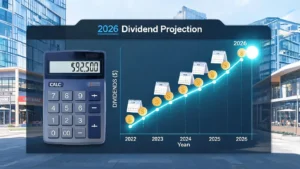
- 2022: $2.585 per share
- 2023: $2.635 per share
- 2024: $2.660 per share
- 2025 (Est.): $2.710 per share
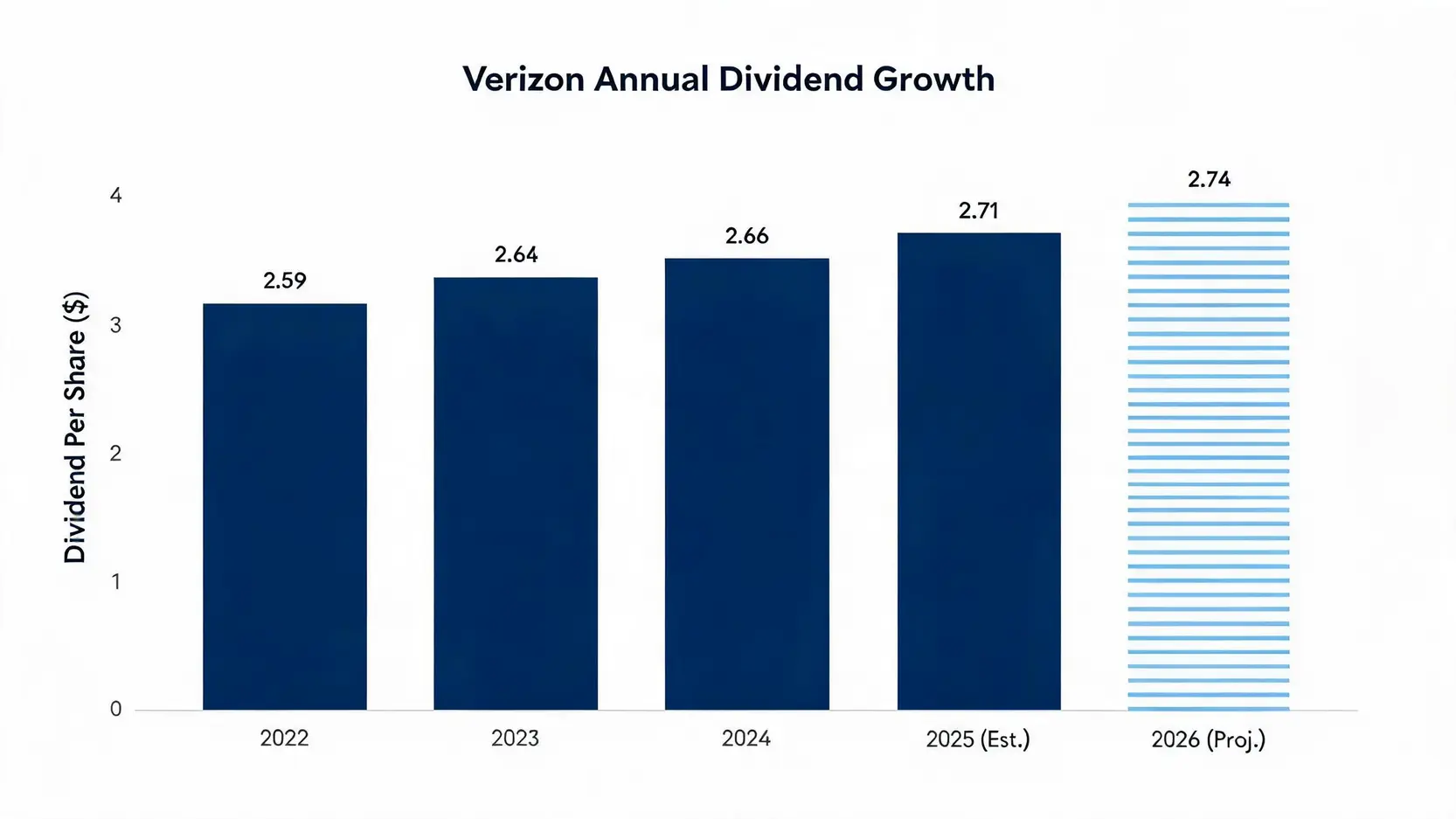
This trend reinforces the forecast of a minor, token increase in 2026. The company’s management clearly signals that dividend safety and sustainability are more important than large, potentially unsustainable hikes.
Key Factors Influencing the 2026 Dividend
A dividend forecast is only as strong as the financial foundation supporting it. Several key metrics and strategic initiatives will directly influence Verizon’s ability and willingness to pay and grow its dividend in 2026. A thorough review of a company’s financial health is essential. To learn more, explore our guide on Cash Dividend Investing Strategy 2026: Your Ultimate Guide.
Impact of Free Cash Flow and Debt Levels
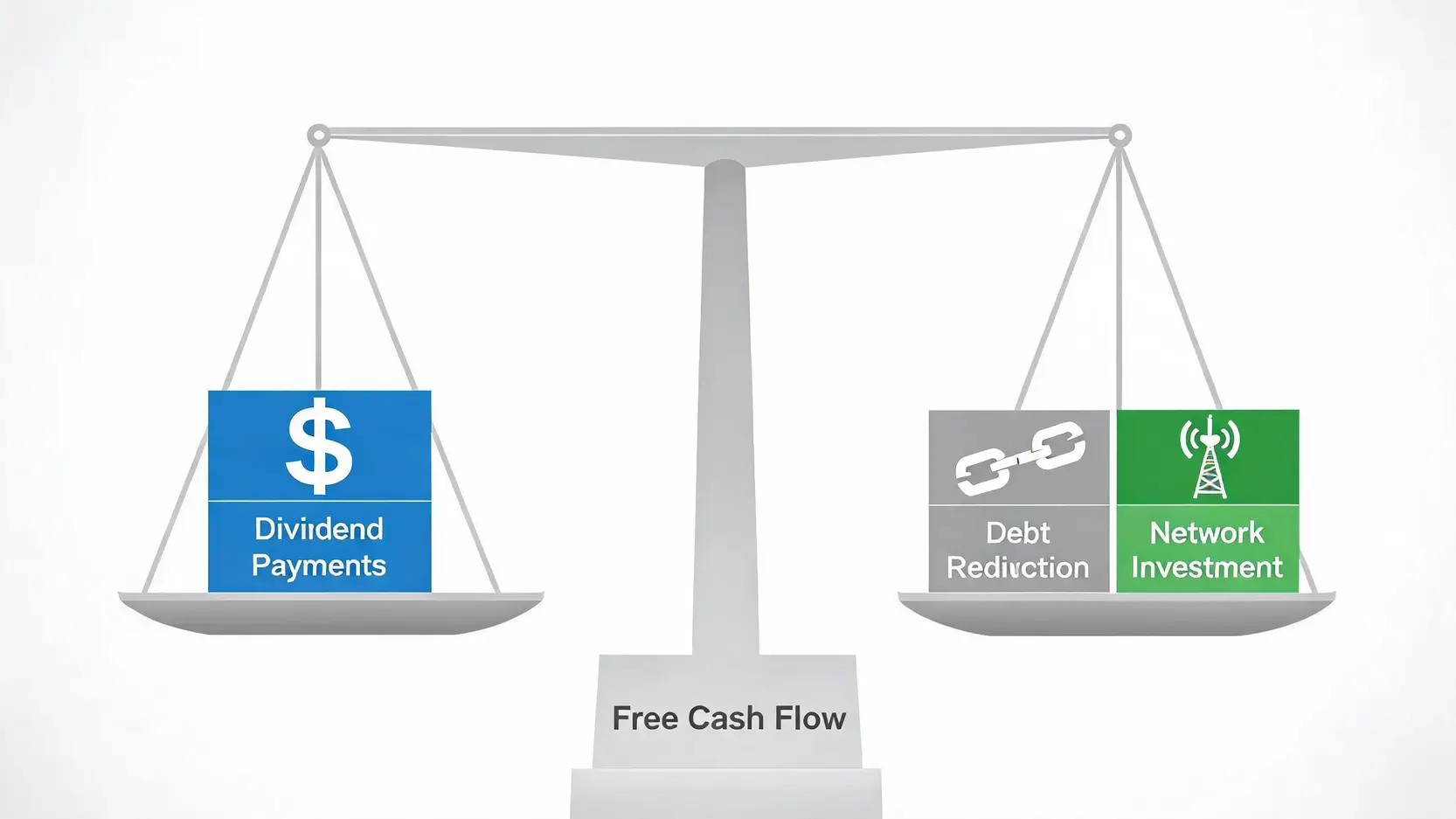
Free Cash Flow (FCF) is the lifeblood of any dividend. It’s the cash left over after a company pays for its operating expenses and capital expenditures. Verizon’s FCF needs to comfortably cover its total dividend payments. For 2025, Verizon generated over $18 billion in FCF, which was more than sufficient to cover its ~$11 billion in dividend obligations. Investors should watch the quarterly FCF figures closely in 2026. Any significant decline could pressure the dividend.
Debt is the other side of the balance sheet. Verizon carries a substantial debt load, a legacy of spectrum acquisitions and network investments. Management has made debt reduction a top priority. Aggressive deleveraging could compete for cash that might otherwise go to larger dividend increases. However, maintaining its investment-grade credit rating is also paramount, which requires a stable dividend policy.
How Will 5G and C-Band Investments Affect Shareholder Payouts?
Capital expenditure (CapEx) remains a major use of cash for Verizon as it continues to build out its 5G Ultra Wideband network and deploy C-Band spectrum. While the peak spending years are likely behind us, network maintenance and expansion still require billions annually. The pace of this spending directly impacts FCF. The current strategy appears to balance network leadership with shareholder returns, making drastic cuts to the dividend for CapEx highly unlikely. The focus is on disciplined spending to ensure that network investments generate sufficient returns to support future cash flows and, consequently, the dividend.
Assessing Financial Health: Insights from Analyst Ratings
Credit rating agencies like Fitch, Moody’s, and S&P provide an independent assessment of a company’s financial stability. Verizon has consistently maintained investment-grade credit ratings (typically in the BBB+/Baa1 range). These ratings affirm the company’s ability to meet its debt obligations, which is a positive indicator for dividend safety. A ratings downgrade could signal underlying financial stress and would be a major red flag for income investors. As of early 2026, the outlook from these agencies remains stable, supporting the forecast of a secure dividend.
Is the Verizon Dividend Sustainable Beyond 2026?
Looking past the immediate year, investors need to assess the long-term sustainability of the VZ dividend. This involves examining the payout ratio and the competitive landscape.
Evaluating the Payout Ratio and Its Implications
The dividend payout ratio measures the percentage of net income paid out to shareholders as dividends. A ratio that is too high (e.g., over 85-90%) can be a warning sign that a company is paying out more than it can afford. Verizon’s payout ratio based on earnings has historically fluctuated between 50% and 60%. More importantly, its FCF payout ratio has been in a healthy range of 55-65%. As long as the payout ratio remains in this territory, the dividend is considered well-covered and sustainable. Investors should monitor this metric in each quarterly earnings report.
Comparing VZ’s Dividend Yield with Competitors
Context is crucial. Verizon’s dividend yield, which is the annual dividend per share divided by the stock’s price, typically hovers in the 6-7% range. This is highly competitive within the telecom industry and broader market.
- AT&T (T): Often has a similar or slightly higher yield but has a recent history of a dividend cut, making its safety profile different.
- T-Mobile (TMUS): Initiated a dividend more recently and has a much lower yield, prioritizing growth investments over shareholder payouts.
Compared to its peers, Verizon offers a compelling blend of high yield and perceived safety, backed by a long history of consistent payments. This competitive positioning makes it a core holding for many income-oriented portfolios.
Conclusion
The Verizon dividend forecast for 2026 points toward continued stability and a modest, predictable increase. The company’s financial posture, characterized by strong free cash flow generation that comfortably covers payments, supports this outlook. While the high debt load and ongoing network investments remain critical watchpoints, management’s disciplined capital allocation strategy prioritizes maintaining its investment-grade credit rating and its long-standing commitment to shareholders. For investors in 2026, Verizon (VZ) remains a pillar of high-yield income, though expectations for significant dividend growth should be tempered. The key to its long-term appeal is its reliability, a trait that appears secure for the foreseeable future.
Frequently Asked Questions (FAQ)
Q: What is the specific Verizon dividend forecast for 2026?
A: The forecast for 2026 anticipates a total annual dividend of approximately $2.737 per share. This is based on two quarterly payments at the existing rate of $0.6775 and two subsequent payments at a projected increased rate of around $0.6910, following the company’s historical pattern of a ~2% annual raise announced in September.
Q: How often has Verizon increased its dividend?
A: As of 2026, Verizon has a track record of increasing its dividend for 19 consecutive years. This makes it a member of the ‘Dividend Achievers’ group, showcasing a long-term commitment to growing shareholder returns, even if the pace of growth is modest.
Q: What are the biggest risks to Verizon’s dividend in 2026?
A: The three primary risks are: 1) A sharp, unexpected decline in free cash flow due to worsening economic conditions or subscriber losses. 2) A credit rating downgrade, which would increase borrowing costs and force a more aggressive focus on debt reduction over dividends. 3) A major strategic shift, such as a large, debt-fueled acquisition, that alters capital allocation priorities.
Q: Is the Verizon dividend safe for 2026?
A: Based on all available data, the Verizon dividend is considered very safe for 2026. The free cash flow payout ratio is in a sustainable range (around 60%), the company maintains investment-grade credit ratings, and its management has consistently reiterated its commitment to the dividend. While no dividend is ever 100% guaranteed, VZ’s is among the more reliable in the large-cap space.
Q: What is a good dividend yield for VZ stock?
A: Verizon’s dividend yield has historically been attractive, often ranging between 6% and 7.5%. A yield at the higher end of this range can signal that the stock price is undervalued relative to its payout, representing a potentially better entry point for long-term income investors. Conversely, a yield dipping significantly below this range might suggest the stock is overvalued.