As we navigate 2026, constructing a resilient financial future is more critical than ever. For investors pursuing a dependable stream of passive income, a well-executed cash dividend investing strategy 2026 offers a formidable solution. This approach not only provides regular cash flow but also harnesses the power of compounding to build long-term wealth. This comprehensive guide will dissect everything required to build and manage a successful dividend portfolio tailored for the distinct economic climate of 2026, focusing on high-yield opportunities and sustainable growth.
Table of Contents
Understanding the Fundamentals of Dividend Investing
Before deploying capital, a firm grasp of the basics is essential. Dividend investing is not merely about picking stocks with the highest payouts; it’s about identifying fundamentally strong companies capable of sustaining and growing their distributions over time.
What Are Cash Dividends and How Do They Generate Income?
A cash dividend is a direct payment made by a corporation to its shareholders, typically distributed quarterly. These payments represent a portion of the company’s profits returned to its owners. For investors, this creates a predictable income stream, much like interest from a savings account, but with the added potential for capital appreciation of the underlying stock. 📈 This dual return characteristic is a cornerstone of the cash dividend investing strategy.
Key Metrics to Know: Dividend Yield, Payout Ratio, and Ex-Dividend Date
Analyzing dividend stocks requires a specific set of tools. Familiarity with these key metrics is non-negotiable for success:
- Dividend Yield: This is the annual dividend per share divided by the stock’s current price, expressed as a percentage. While a high yield is attractive, it can sometimes signal underlying risk. A sustainable yield is more important than a high one.
- Payout Ratio: This metric indicates the proportion of a company’s earnings paid out as dividends. A ratio between 40% and 60% is often considered healthy, suggesting the company is sharing profits while retaining enough capital for future growth. A ratio over 100% is a major red flag, as it means the company is paying out more than it earns.
- Ex-Dividend Date: This is the cutoff date for dividend eligibility. To receive the upcoming dividend, an investor must own the stock before the ex-dividend date. On this date, the stock price will typically drop by the dividend amount.
The Core Benefits: Passive Income, Compounding Growth, and Market Stability
A disciplined approach to dividend investing offers several compelling advantages:
- 💰 Passive Income: The primary allure is the creation of a regular, passive income stream that can supplement or eventually replace earned income.
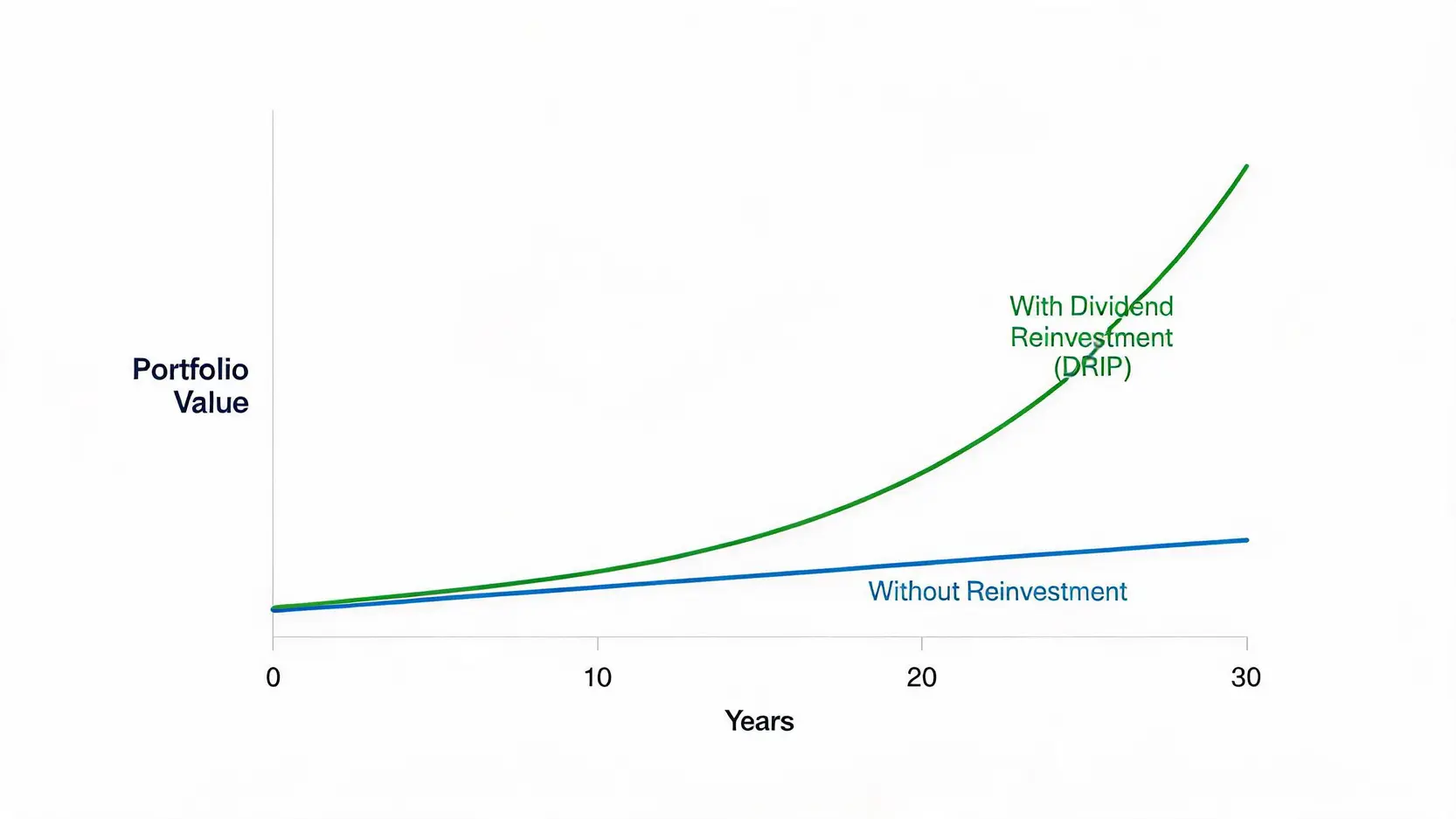
- 🔄 Compounding Growth: By reinvesting dividends (a strategy known as DRIP – Dividend Reinvestment Plan), investors can purchase more shares, which in turn generate more dividends. This creates a powerful compounding effect that can dramatically accelerate portfolio growth over the long term.
- 🛡️ Market Stability: Companies that consistently pay dividends are often mature, profitable, and well-established leaders in their industries. Their stocks tend to be less volatile than non-dividend-paying growth stocks, providing a degree of stability and defensiveness during market downturns.
Developing Your Dividend Strategy for the 2026 Market
No single dividend strategy fits all investors. The optimal approach depends on your financial goals, risk tolerance, and time horizon. For the 2026 market, which is characterized by shifting interest rate policies and technological disruption, selecting a focused strategy is key.
Strategy 1: Dividend Growth Investing for Long-Term Wealth
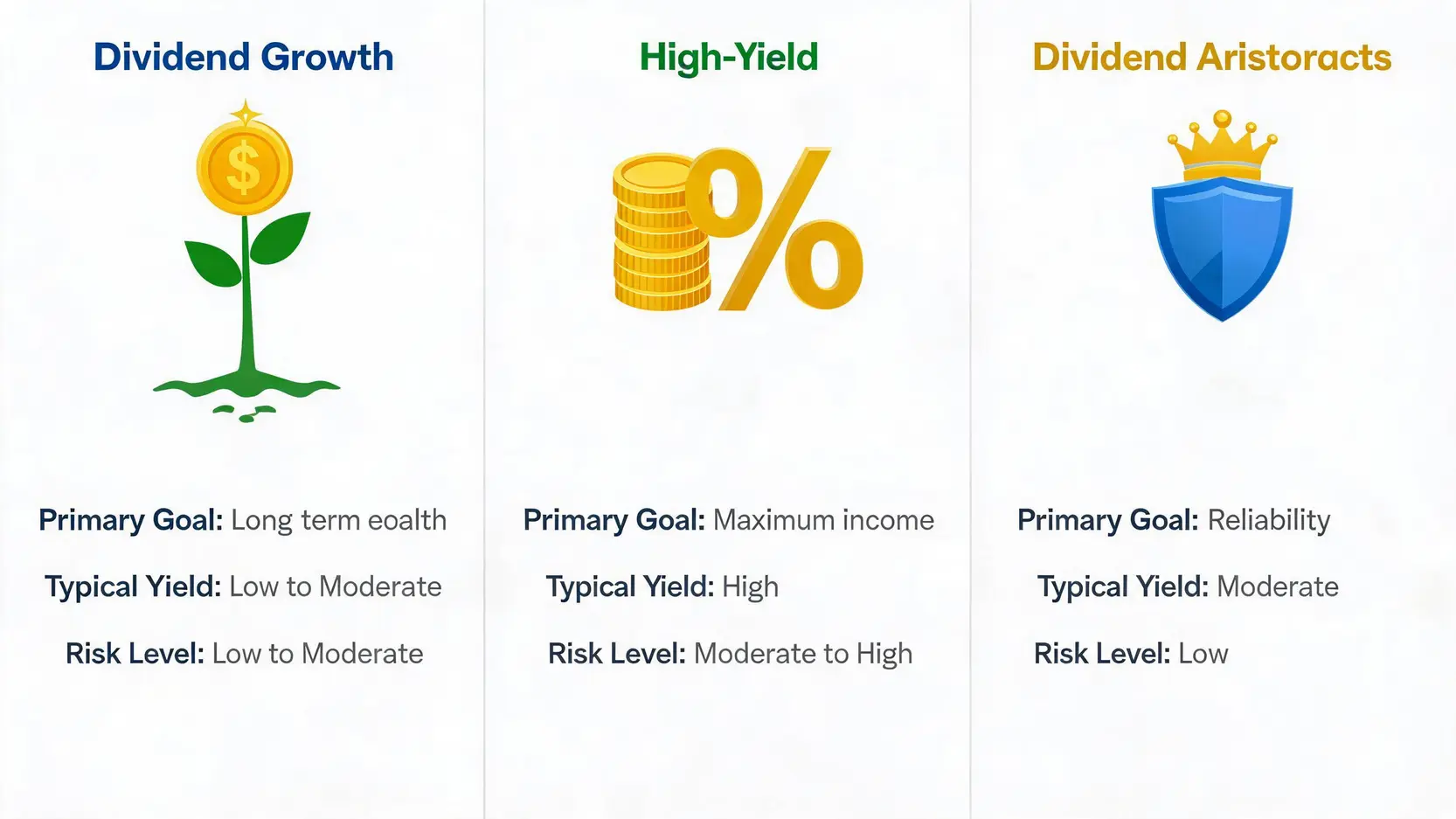
This strategy prioritizes companies with a consistent history of increasing their dividend payments year after year. While the initial yield may be modest, the focus is on the growth of the dividend itself. A growing dividend often signals a healthy, expanding business. This approach is ideal for younger investors with a long time horizon, as the compounding effect of rising dividends can lead to substantial wealth accumulation.
Strategy 2: High-Yield Dividend Investing for Maximum Cash Flow
As the name suggests, this strategy focuses on stocks with an above-average dividend yield. This is often favored by retirees or those seeking to maximize their current passive income. However, it requires careful due diligence. An unusually high yield can be a ‘yield trap,’ indicating that the market perceives the dividend as unsustainable. Investors must scrutinize the company’s financial health, payout ratio, and debt levels to ensure the dividend is secure.
Strategy 3: Investing in Dividend Aristocrats for Reliability
The Dividend Aristocrats are a select group of S&P 500 companies that have increased their dividends for at least 25 consecutive years. These companies have proven their resilience across multiple economic cycles. Investing in Aristocrats is a conservative strategy that combines the principles of dividend growth with a focus on high-quality, blue-chip companies. It offers a balance of income, growth, and relative safety, making it a popular choice for risk-averse investors.
How to Build and Analyze Your 2026 Dividend Portfolio
Building a robust dividend portfolio is a methodical process. It’s not about chasing headlines but about applying a consistent framework for selection and analysis. A successful dividend portfolio must be built with clear objectives and a deep understanding of diversification.
Step 1: Setting Your Investment Goals and Risk Tolerance
First, define your objectives. Are you building a portfolio for retirement income in 20 years, or do you need supplemental income now? Your time horizon will heavily influence your strategy. Simultaneously, assess your risk tolerance. Can you stomach market volatility, or do you prefer a more stable, conservative approach? Answering these questions will help you decide whether to lean towards dividend growth, high-yield, or an Aristocrat-focused strategy.
Step 2: Key Factors for Analyzing and Selecting Dividend Stocks
Effective stock selection goes beyond a simple yield check. A comprehensive analysis should include:
- Financial Health: Examine the balance sheet. Look for manageable debt levels (Debt-to-Equity ratio) and strong free cash flow. Free cash flow is what funds dividend payments.
- Earnings Stability and Growth: A company cannot pay a growing dividend without growing its earnings. Look for a history of consistent revenue and earnings per share (EPS) growth.
- Competitive Advantage (Moat): Does the company have a durable competitive advantage, such as a strong brand, network effects, or patents? A strong moat helps protect long-term profitability and, by extension, the dividend.
- Valuation: Avoid overpaying. Use metrics like the Price-to-Earnings (P/E) ratio and compare it to industry peers and the company’s historical average to gauge if the stock is fairly valued.
Step 3: The Importance of Diversification Across Sectors
Concentrating your portfolio in a single sector, even a traditionally high-paying one like utilities or real estate, exposes you to significant risk. A downturn in that sector could cripple your income and portfolio value. A sound guide to portfolio diversification would advise spreading your investments across various sectors (e.g., Technology, Healthcare, Consumer Staples, Industrials, Financials) to mitigate risk. This ensures that a shock to one part of the economy doesn’t disproportionately impact your entire portfolio.
Navigating 2026 Economic Trends: A Competitive Edge
The economic landscape of 2026 presents unique challenges and opportunities. After a period of aggressive monetary tightening, central banks are now in a delicate balancing act. Understanding these macro trends gives dividend investors a significant edge.
Impact of Potential Interest Rate Shifts on Dividend Stocks
As of 2026, the era of near-zero interest rates is firmly in the past. If central banks continue to hold rates steady or signal future cuts, it can have a mixed impact. High-yield dividend stocks, often seen as bond proxies, may become more attractive as their yields offer a competitive spread over government bonds. Conversely, if inflation proves stubborn and rates need to be held higher for longer, companies with high debt loads could face pressure on their margins, potentially endangering their dividends.
Which Sectors Show the Most Promise for Dividend Growth in 2026?
Looking ahead, several sectors are well-positioned for dividend growth:
- Technology: Mature tech giants, flush with cash from software, cloud, and AI dominance, are increasingly initiating and growing their dividends. They offer a blend of growth and income.
- Healthcare: With an aging global population and continuous innovation in pharmaceuticals and medical devices, healthcare companies offer defensive qualities and reliable dividend growth.
- Energy (with a caveat): While traditional oil and gas companies offer high yields, investors should focus on those with strong balance sheets and a clear strategy for transitioning towards renewable energy, which presents long-term growth opportunities.
- Industrials: Companies involved in automation, infrastructure renewal, and green technology are set to benefit from long-term secular trends, supporting future earnings and dividend growth.
Common Mistakes in Dividend Investing to Avoid This Year
Steering clear of common pitfalls is as important as picking winners. In 2026, be wary of:
- Chasing the Highest Yield: As mentioned, an exceptionally high yield is often a warning sign of a potential dividend cut.
- Ignoring Valuation: Paying too much for a stock, no matter how good the dividend, can lead to capital losses that outweigh the income received.
- Forgetting Diversification: Over-concentration in a few stocks or a single industry is a recipe for volatility and risk.
- Neglecting Total Return: Dividend income is only part of the equation. A stock with a 5% yield that loses 10% of its value results in a net loss. Always consider both income and capital appreciation potential.
Conclusion
In conclusion, a well-executed cash dividend investing strategy for 2026 can be a cornerstone of your financial independence. By focusing on quality companies with sustainable and growing payouts, understanding the evolving economic landscape, and maintaining a disciplined, long-term perspective, you can construct a resilient portfolio that delivers consistent passive income and capital growth. The journey to financial freedom through dividends begins with research and a commitment to your goals. Start today by analyzing your first potential dividend stock.
Frequently Asked Questions (FAQ)
Q: How much money do you need to start a cash dividend investing strategy?
A: You can start with any amount. Thanks to the availability of fractional shares and zero-commission trading platforms, you can begin building a dividend portfolio with as little as $100. The key is to start early and contribute regularly, allowing the power of compounding to work in your favor.
Q: How often are cash dividends typically paid out?
A: The most common dividend payment schedule for U.S. companies is quarterly (four times a year). However, some companies pay semi-annually, annually, or even monthly. A portfolio of several quarterly-paying stocks can be structured to provide income every month.
Q: What are the tax implications of dividend income in 2026?
A: Dividend income is taxable. In the U.S., dividends are categorized as either ‘qualified’ or ‘ordinary.’ Qualified dividends are taxed at the more favorable long-term capital gains rates (0%, 15%, or 20%, depending on your income). Ordinary dividends are taxed at your regular income tax rate. According to the latest information from the IRS, the income thresholds for these tax brackets are adjusted for inflation. For 2026, the 0% rate generally applies to those with lower taxable incomes, while the 15% rate applies to the majority of investors.
Q: Are dividend payments guaranteed?
A: No, dividends are not guaranteed. A company’s board of directors can choose to increase, decrease, or eliminate its dividend at any time. This is why it’s crucial to invest in financially sound companies with a long history of stable or growing payments, as this demonstrates a strong commitment to shareholder returns.