For investors dreaming of reliable passive income, generating $1,000 a month is a significant milestone. The key question for many is, how many Verizon shares to make $1,000 a month? As a telecommunications giant with a reputation for high yields, Verizon (VZ) is often a top consideration for building a sustainable income stream. This 2026 guide provides a blueprint for this Verizon dividend income strategy, breaking down exactly how many shares you need, the total capital required, and a critical analysis of the strategy’s feasibility and underlying risks.
Table of Contents
The Core Calculation: How Many Verizon Shares for $1,000 a Month in Dividend Income?
Achieving a specific income target from dividends is a matter of straightforward mathematics. Before deploying significant capital, it’s essential to understand the numbers. Here’s a step-by-step breakdown based on current 2026 data.
Step 1: Understand Verizon’s Current Dividend (Yield and Per Share Payout)
First, we must identify Verizon’s dividend payout. As of mid-2026, Verizon has continued its long-standing practice of rewarding shareholders. Let’s look at the key figures:
- Quarterly Dividend Per Share: ~$0.7075
- Annual Dividend Per Share: Approximately $2.83 ($0.7075 x 4)
- Approximate Stock Price: $50.50
- Dividend Yield: ($2.83 / $50.50) x 100% ≈ 5.6%
This yield is notably higher than the S&P 500 average, making it an attractive option for income-focused investors. However, a high yield always warrants a closer look at its sustainability.
Step 2: The Formula for $1,000 a Month ($12,000 a Year)
With the annual dividend per share established, calculating the number of shares needed is simple. The goal is $1,000 per month, which translates to an annual dividend income of $12,000.
The formula is:
Total Shares Needed = Annual Dividend Goal / Annual Dividend Per Share
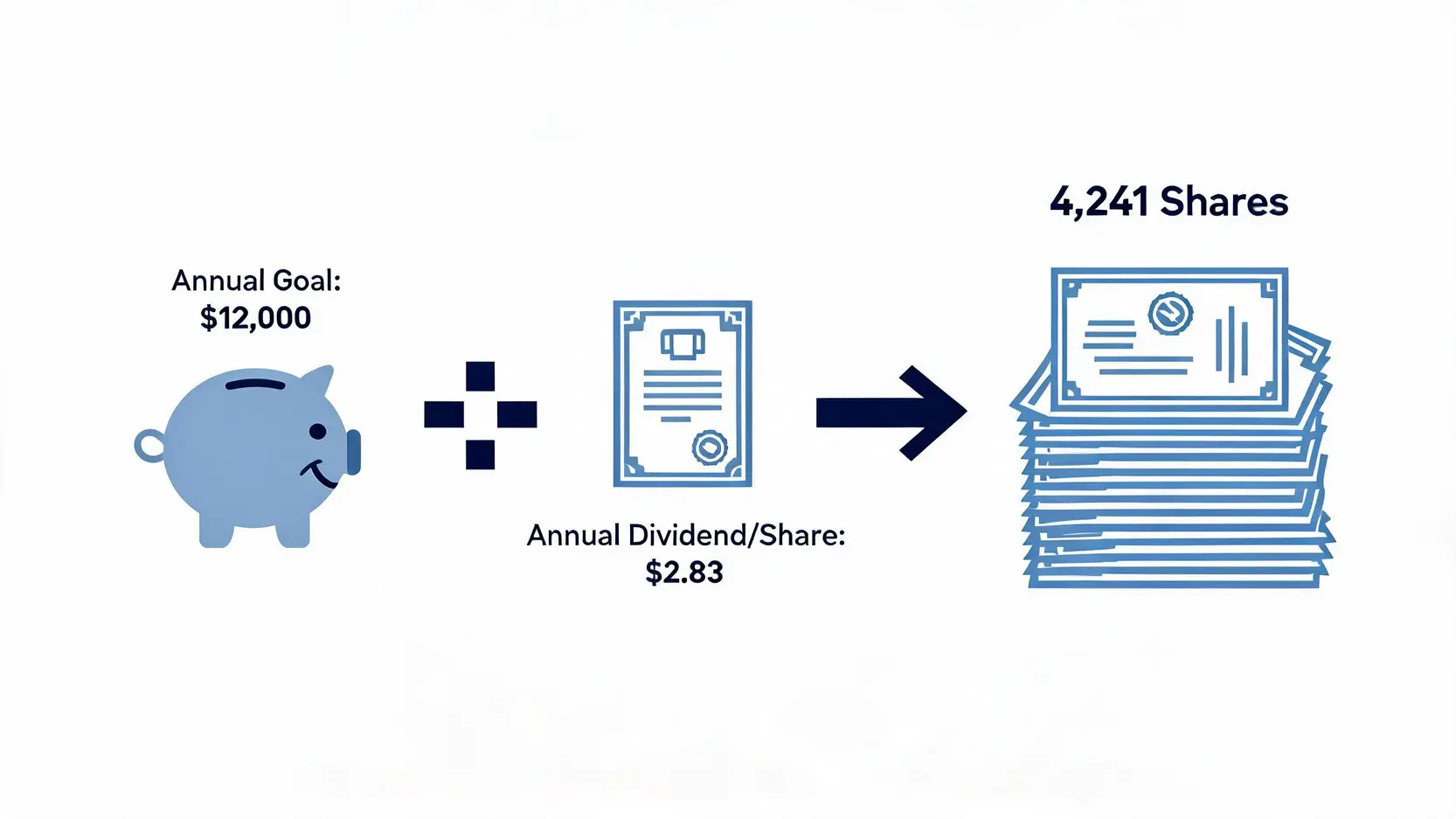
- $12,000 / $2.83 ≈ 4,240.3 shares
To be safe, it’s best to round up. Therefore, you would need to own 4,241 shares of Verizon (VZ) stock to generate at least $12,000 in annual pre-tax dividend income.
Step 3: Calculating the Total Capital Investment Needed
The final step is to determine the total capital required to purchase these shares. This reveals the true scale of the investment needed to hit your passive income target.
The formula is:
Total Capital Investment = Total Shares Needed x Stock Price Per Share
- 4,241 shares x $50.50/share = $214,170.50
Here is a summary table for clarity:
| Metric | Value |
|---|---|
| Desired Annual Dividend Income | $12,000 |
| Verizon Annual Dividend Per Share (2026) | ~$2.83 |
| Total VZ Shares Required | 4,241 |
| Approximate VZ Stock Price (2026) | ~$50.50 |
| Total Capital Investment Needed | ~$214,171 |
Is Verizon a ‘Safe’ Bet for Your High-Yield Dividend Goal?
Calculating the numbers is easy. The difficult part is assessing the risk. A high dividend yield can sometimes be a warning sign of underlying business challenges. A thorough analysis requires looking at both the bull and bear cases for Verizon’s dividend sustainability.
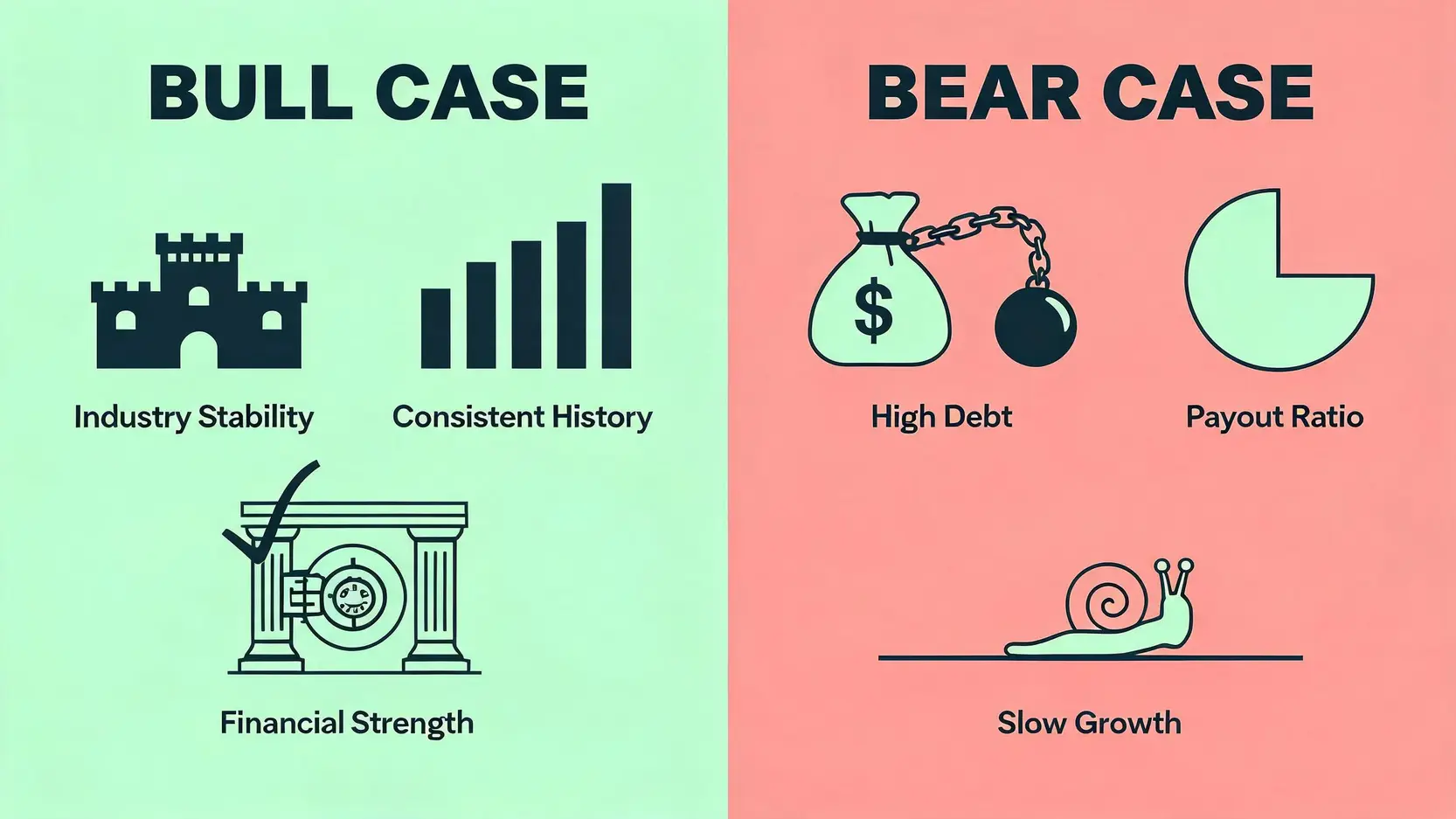
The Bull Case: A History of High Yield and Telecom Stability
Investors favoring Verizon often point to several strengths that support its dividend payments:
- 📈 Industry Stability: The telecommunications sector provides an essential service, leading to relatively predictable revenue streams and cash flow, even during economic downturns.
- 💰 Consistent Dividend History: Verizon has a long track record of increasing its dividend, having done so for over 19 consecutive years. While not yet a Dividend Aristocrat, this history demonstrates a strong management commitment to shareholder returns.
- 🏦 Investment-Grade Credit Rating: Verizon maintains a solid investment-grade credit rating. For instance, Moody’s affirmed Verizon’s Baa1 rating, citing its scale, market position, and expectations of stable performance. This financial stability is crucial for sustaining dividend payments.
The Bear Case: Analyzing Payout Ratio, Debt, and Dividend Growth Concerns
Conversely, there are valid concerns that any potential investor must consider:
- 📉 High Debt Load: The telecom industry is capital-intensive. Building and maintaining 5G networks requires massive investment, and Verizon carries a significant amount of debt on its balance sheet. High interest payments can constrain cash available for dividends.
- 📊 Payout Ratio Scrutiny: While Verizon’s earnings-based payout ratio can fluctuate, analysts often focus on the free cash flow (FCF) payout ratio. If capital expenditures rise or profits fall, a high FCF payout ratio could signal that the dividend is at risk of a cut or freeze.
- 🐌 Slow Dividend Growth: In recent years, Verizon’s dividend increases have been modest, often around 2%. For investors seeking income growth that outpaces inflation, this slow rate can be a significant drawback. It suggests the company is prioritizing debt reduction and reinvestment over aggressive dividend hikes.
A Smarter Strategy Than Just Buying Verizon Shares
Relying solely on one stock for a significant income goal is a high-risk strategy. A more sophisticated approach involves optimizing your returns and, most importantly, managing risk. Simply calculating how many Verizon shares to make $1,000 a month is only the beginning.
The Impact of Taxes: Calculating Your Real Net Dividend Income
The $1,000 per month figure is a pre-tax amount. Dividend income is taxable. In the U.S., qualified dividends are typically taxed at lower long-term capital gains rates (0%, 15%, or 20%), but this still reduces your net income. An investor in the 15% bracket would see their $1,000 monthly income reduced to $850. It’s crucial to factor this into your financial planning and consider holding dividend stocks in tax-advantaged accounts like a Roth IRA where possible.
Using DRIP (Dividend Reinvestment Plan) to Compound Your Way to $1,000
A Dividend Reinvestment Plan (DRIP) is a powerful tool for long-term investors. Instead of receiving cash dividends, a DRIP automatically uses the payout to purchase more shares (or fractional shares) of the stock. This process creates a compounding effect: your new shares generate their own dividends, which then buy more shares. For an investor who doesn’t need the income immediately, a DRIP can significantly accelerate the growth of their position and help them reach their income goal faster. This is a core component of any robust dividend investing strategy.
De-Risking Your Goal: Why You Shouldn’t Put All Your Money in VZ
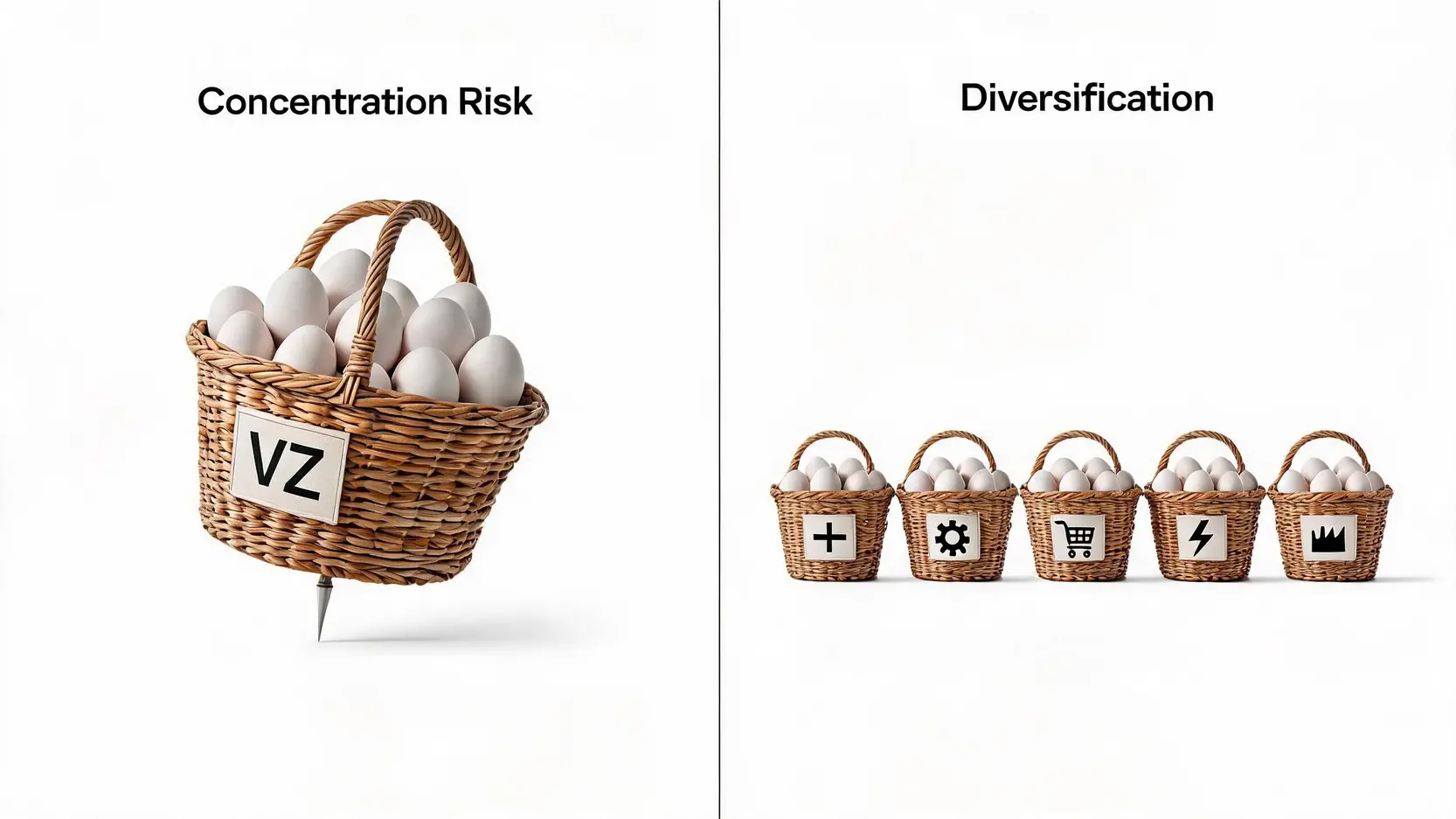
Concentration risk is one of the biggest threats to an investment portfolio. Placing over $200,000 into a single stock, even a seemingly stable one like Verizon, exposes you to company-specific risks. A sudden regulatory change, a new disruptive competitor, or a management misstep could lead to both a stock price decline and a dividend cut, jeopardizing your entire income stream.
A far safer approach is diversification. Instead of going all-in on VZ, consider building a portfolio of 10-20 high-quality dividend stocks across different sectors (e.g., consumer staples, healthcare, utilities). Even better, for instant diversification, consider high-yield dividend ETFs. These funds hold a broad basket of dividend-paying companies, spreading your risk and providing a more resilient income source.
Conclusion
Reaching a $1,000 monthly dividend income from Verizon is an achievable goal, but it requires substantial capital—over $200,000 in 2026—and a clear-eyed understanding of the associated risks. While we have calculated the exact number of shares needed, a truly successful and resilient investment strategy involves looking beyond this simple math. The prudent investor must account for tax implications that reduce net income, leverage compounding tools like DRIP to accelerate growth, and prioritize diversification to protect against company-specific risk. By combining a core holding like Verizon with other high-quality dividend stocks or ETFs, you can build a more robust and sustainable passive income machine for the long term.
Frequently Asked Questions
Q: How often does Verizon pay dividends?
A: Verizon (VZ) pays dividends on a quarterly basis, typically in February, May, August, and November. To receive the dividend, an investor must own the stock before the ex-dividend date for that quarter.
Q: Is Verizon’s dividend guaranteed to be safe in the next 5 years?
A: No dividend is ever 100% guaranteed, as all dividend payments are at the discretion of the company’s Board of Directors. However, Verizon’s dividend is considered relatively safe due to its consistent free cash flow, stable position in the telecom industry, and long history of payments. The main risks to its dividend would be a severe economic recession, increased competition that erodes profitability, or a strategic decision to aggressively pay down debt at the expense of shareholder returns.
Q: What are some alternative high-yield stocks or ETFs to consider besides Verizon?
A: For investors seeking to diversify their income portfolio, there are many alternatives. Other high-yield sectors include utilities (e.g., Duke Energy), consumer staples (e.g., Altria Group), and energy (e.g., Chevron). For broader diversification, high-yield dividend ETFs like the Schwab U.S. Dividend Equity ETF (SCHD) or the Vanguard High Dividend Yield ETF (VYM) offer exposure to a basket of dozens or hundreds of dividend-paying stocks in a single investment.
Q: What is a dividend payout ratio?
A: The dividend payout ratio measures the percentage of a company’s earnings that are paid out to shareholders as dividends. A lower ratio (e.g., under 60%) is generally considered safer, as it indicates the company has more cushion to maintain the dividend if profits decline. A ratio over 100% means the company is paying out more than it earns, which is unsustainable. Analysts often prefer using a free cash flow payout ratio for a more accurate picture of dividend sustainability.