
For investors navigating the 2026 market in search of reliable passive income, the **Verizon vs Realty Income** debate presents a classic dilemma: established telecom behemoth or steady real estate powerhouse? Both are top contenders for a high-yield dividend stock portfolio, but they operate in vastly different sectors with unique risk-reward profiles. This head-to-head comparison dissects their business models, provides a crucial dividend safety analysis, and evaluates future growth potential to determine which stock is the superior fit for your portfolio’s objectives.
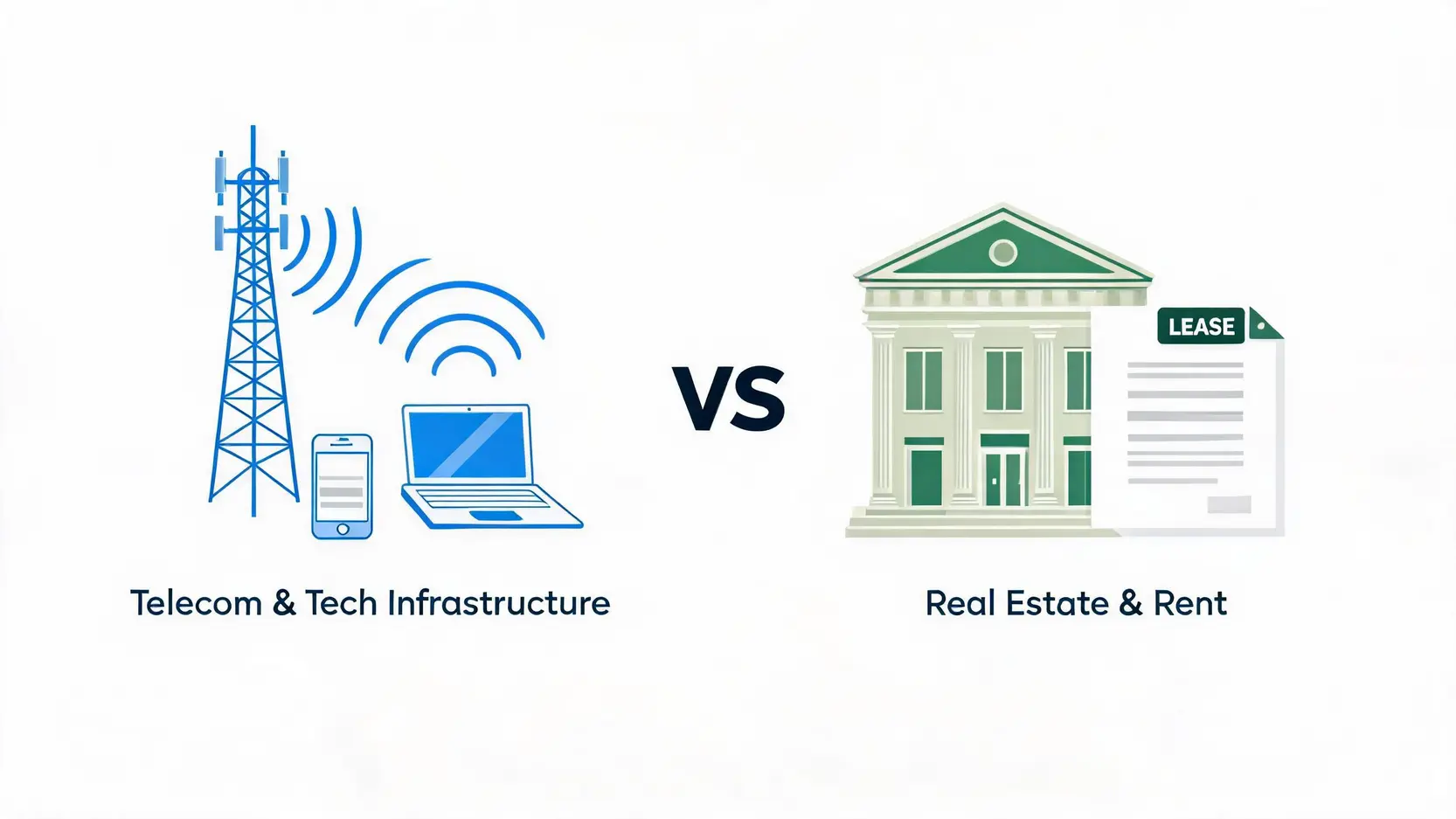
Table of Contents
At a Glance: Comparing Key Metrics for Verizon (VZ) and Realty Income (O)
Before delving into the operational nuances, a side-by-side quantitative overview provides a clear snapshot of these two income-generating giants. The numbers offer the first layer of insight into their scale, valuation, and immediate appeal to dividend investors.
Side-by-Side Comparison Table
| Metric | Verizon (VZ) | Realty Income (O) |
|---|---|---|
| Sector | Communication Services | Real Estate (REIT) |
| Dividend Yield (Approx.) | ~6.8% | ~5.9% |
| Payout Ratio | ~55% of Earnings | ~75% of AFFO |
| Market Cap (Approx.) | $175 Billion | $48 Billion |
Initial Impressions: What the Numbers Tell Us Immediately
From the outset, Verizon catches the eye with a higher dividend yield, suggesting a greater immediate return on investment. However, its position in the hyper-competitive telecom sector is a critical context. Realty Income, known as “The Monthly Dividend Company®,” offers a slightly lower yield but operates on a foundation of long-term real estate contracts. Its payout ratio, measured against Adjusted Funds From Operations (AFFO)—the standard for REITs—is well within a sustainable range, highlighting its commitment to consistent shareholder returns.
Business Model Breakdown: Telecom Giant vs. The Monthly Dividend Company
Understanding how each company generates revenue is fundamental to assessing the long-term viability of their dividends. Their operational structures are worlds apart, catering to different market dynamics and investor expectations for stability.
How Verizon Makes Money: The 5G, Wireless, and Broadband Empire
Verizon’s revenue is primarily driven by its massive wireless network. It profits from monthly subscription fees from millions of consumer and business customers for mobile data and voice services. Key revenue streams include: 📈
- Consumer Wireless: The largest segment, offering postpaid and prepaid mobile plans powered by its extensive 5G network.
- Business Services: Providing wireless and wireline services, including IoT connectivity and networking solutions, to corporate clients.
- Broadband & Fios: A growing segment focused on high-speed internet through its fiber-optic network (Fios) and 5G Home Internet, competing directly with traditional cable companies.
Verizon’s model is capital-intensive, requiring billions in annual investment to maintain and upgrade its network infrastructure to stay competitive.
How Realty Income Makes Money: Understanding the Triple-Net Lease REIT Model
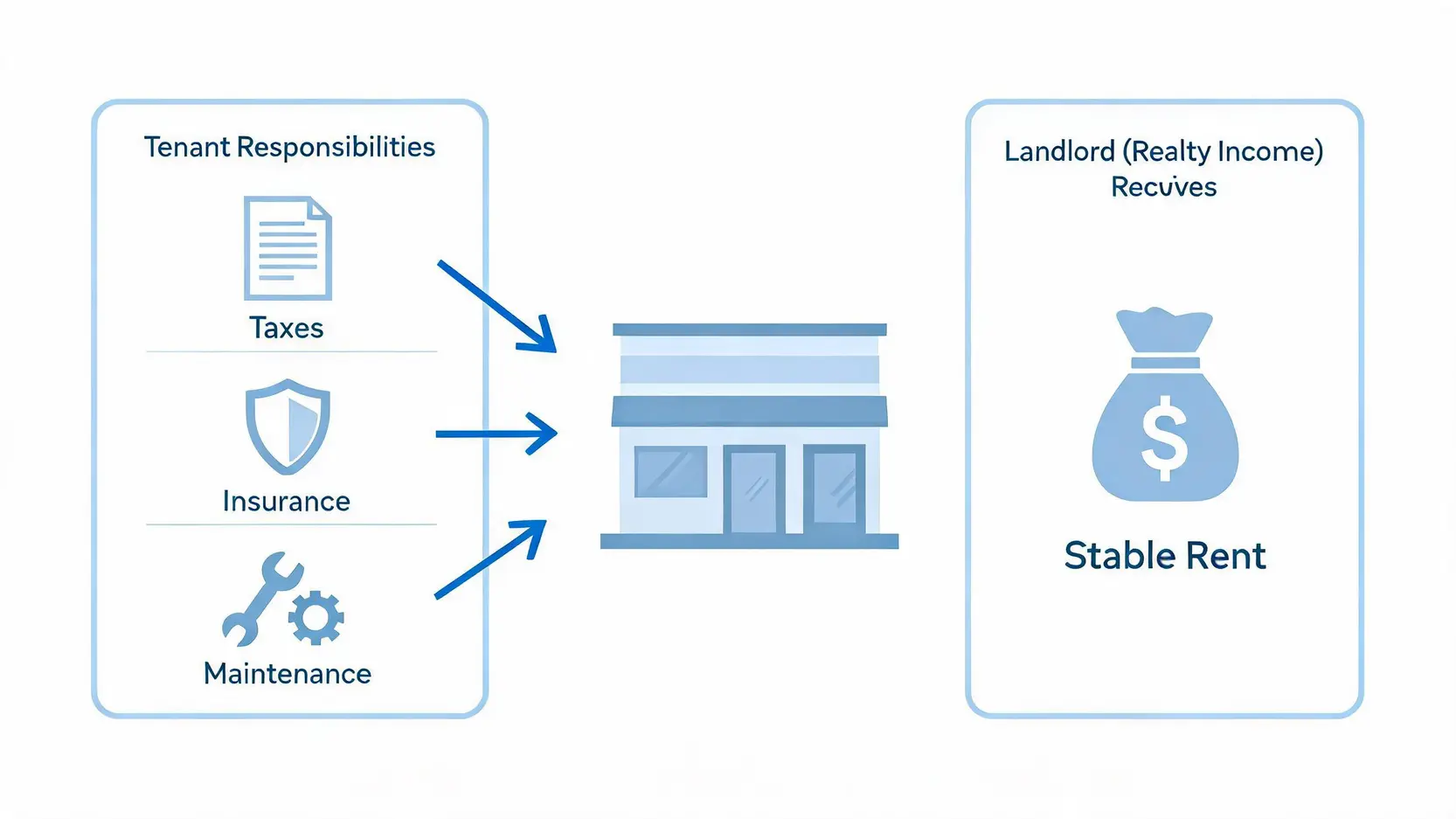
Realty Income operates as a Real Estate Investment Trust (REIT) specializing in freestanding, single-tenant commercial properties. Its genius lies in the **Triple Net Lease (NNN)** model. Under an NNN lease, the tenant is responsible for paying not only rent but also the three main property operating expenses: taxes, insurance, and maintenance. This structure provides Realty Income with a highly predictable and stable stream of revenue, insulating it from the variable costs of property ownership. Its portfolio is diversified across various industries, with tenants like Walgreens, 7-Eleven, and Dollar General, which are largely resilient to economic downturns.
Dividend Analysis: A Deep Dive into Yield, Growth, and Sustainability
For income-focused investors, the dividend is paramount. This section dissects the dividend yield and history of both companies, their growth consistency, and the critical factors of safety and sustainability that underpin their shareholder distributions.
Dividend Yield & Payout History: A Tale of Two Income Streams
Verizon has long been a favorite for its high yield, often surpassing its telecom peers. It boasts a long history of consistent dividend payments and has increased its dividend for over 19 consecutive years, a testament to its commitment to returning capital to shareholders. Realty Income, on the other hand, is a Dividend Aristocrat with over 25 consecutive years of dividend increases. It is renowned for its monthly payout schedule, a feature highly attractive to retirees and those seeking regular cash flow. While its current yield is slightly lower than Verizon’s, its track record of over 640 consecutive monthly dividends paid is a powerful statement of reliability.
Dividend Growth Rate: Which Company Rewards Shareholders More Consistently?
Historically, neither company is known for rapid dividend growth. Verizon’s dividend increases have been modest, typically around 2% annually, reflecting the mature nature of its business and high reinvestment needs. Realty Income’s dividend growth has also been in the low-to-mid single digits, prioritizing sustainability and predictability over aggressive hikes. For investors, the choice is between Verizon’s higher starting yield and Realty Income’s unparalleled consistency and monthly payment schedule. For a deeper understanding of building a dividend portfolio, exploring a comprehensive Cash Dividend Investing Strategy 2026: Your Ultimate Guide is highly recommended.
Assessing Dividend Safety: Payout Ratios and Debt Levels
Dividend safety is where the comparison becomes most critical. Verizon’s payout ratio of around 55% of net income appears safe on the surface. However, the company carries a substantial debt load, a consequence of massive spectrum acquisitions and network investments. This leverage is a key risk factor that investors must monitor. Realty Income’s dividend is backed by its AFFO, with a payout ratio typically hovering between 70-80%. While this may seem high, it is a sustainable level for a triple-net lease REIT with predictable, long-term cash flows. Its debt levels are managed prudently, and it maintains a strong investment-grade credit rating, adding a layer of security to its dividend.
Growth Prospects and Future Headwinds for VZ and O
A stable dividend is excellent, but future growth ensures that income can outpace inflation. Here, we analyze the potential growth drivers and the significant challenges each company faces in the economic landscape of 2026 and beyond.
Verizon’s Future: Can 5G and Fiber Drive Growth?
Verizon’s primary growth catalyst is the full monetization of its 5G network. This includes expanding its 5G Home Internet service and developing new revenue streams from enterprise applications like edge computing and private networks. Its fiber-optic Fios network also presents an opportunity for growth in a market hungry for high-speed connectivity. However, the telecommunications space is fiercely competitive and largely saturated, meaning growth will likely be incremental rather than explosive. The primary headwind is the constant need for capital expenditure to stay ahead in the technology race.
Realty Income’s Future: Navigating Interest Rates and the Retail Landscape
Realty Income’s growth strategy involves the steady acquisition of new properties. The company has expanded its portfolio into Europe and even into other sectors like gaming (e.g., Wynn Resorts). Its future growth depends on its ability to continue making accretive acquisitions. The primary headwind is interest rate sensitivity. As a REIT, higher interest rates increase its cost of capital, potentially slowing its acquisition pace. Furthermore, while its tenant base is strong, it is not entirely immune to shifts in the retail landscape or potential tenant defaults during severe economic downturns.
Risk Factor Deep Dive: Comparing Core Investment Vulnerabilities
No investment is without risk. Acknowledging the core vulnerabilities of both Verizon and Realty Income is essential for making an informed decision that aligns with your risk tolerance.
Verizon’s Risks: Intense Competition, High Capital Expenditures, and Regulation
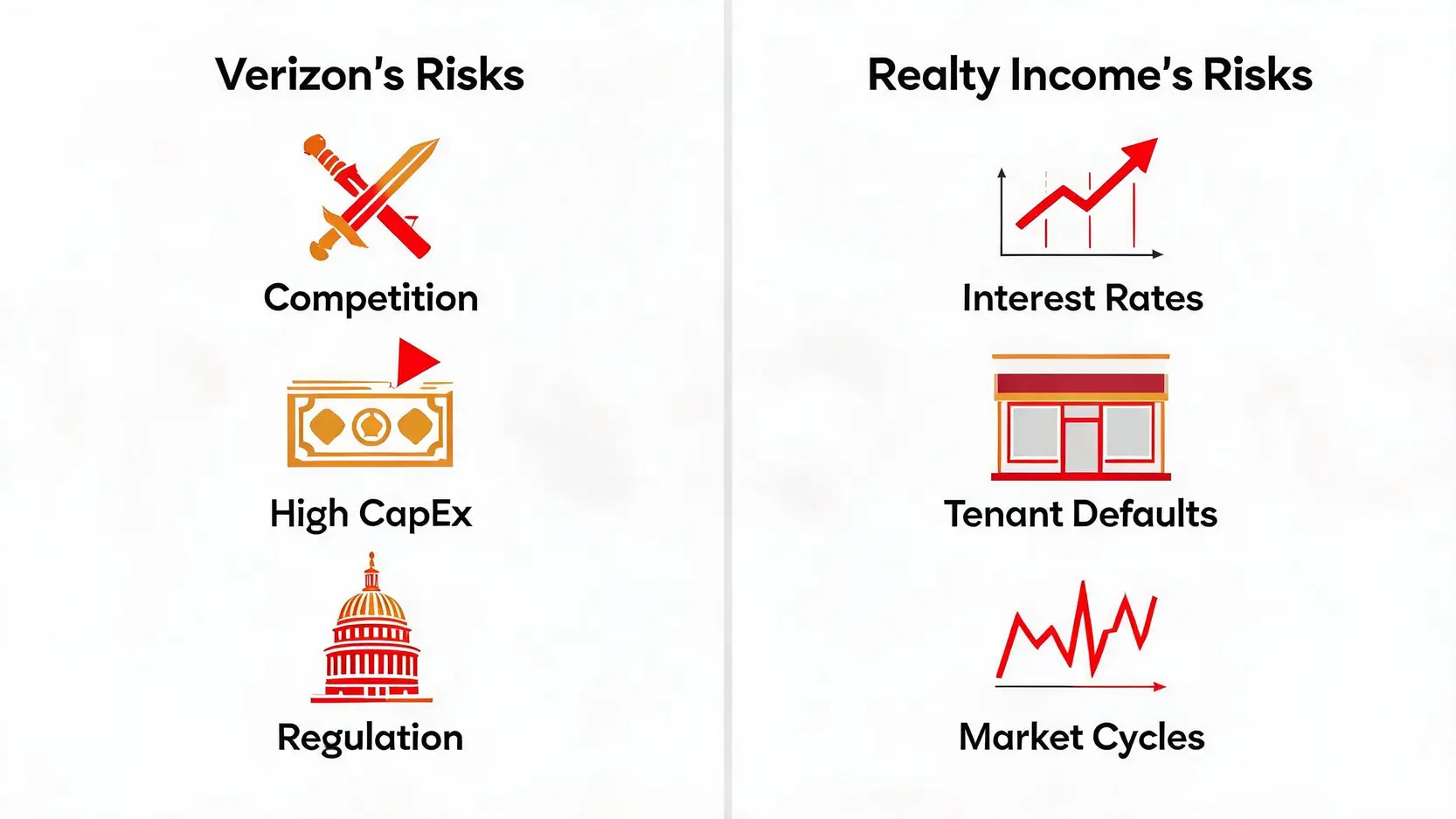
- Intense Competition: Verizon operates in a cutthroat industry, constantly battling with AT&T and T-Mobile for market share, which puts pressure on pricing and margins.
- High Capital Expenditures (CapEx): Maintaining and upgrading its vast network requires a relentless flow of capital, which can limit free cash flow available for dividends and debt reduction.
- Regulatory Scrutiny: As a major telecom provider, Verizon is subject to government regulations that can impact its operations and profitability.
Realty Income’s Risks: Interest Rate Sensitivity, Tenant Defaults, and Property Market Cycles
- Interest Rate Sensitivity: REITs are often treated as bond proxies. When interest rates rise, their stock prices can fall as their yields become less attractive compared to safer government bonds.
- Tenant Defaults: Although its portfolio is high-quality, a severe recession could lead to an increase in tenant bankruptcies, disrupting rental income.
- Property Market Cycles: The value and acquisition potential of commercial real estate are subject to broader economic cycles and market sentiment.
The Verdict: Which Stock Is a Better Fit for Your Portfolio?
After a thorough analysis of their business models, dividends, growth prospects, and risks, the choice between Verizon and Realty Income boils down to individual investor priorities and risk appetite.
The Case for Buying Verizon (VZ)
Verizon is for the investor seeking the highest possible current yield from a blue-chip company. If you have a higher tolerance for risk related to debt and competition and believe in the long-term potential of 5G and the digital economy, VZ offers a compelling income opportunity. Its dividend is well-covered by earnings, and its essential services provide a defensive moat.
The Case for Buying Realty Income (O)
Realty Income is the quintessential choice for the conservative income investor who prioritizes stability, reliability, and frequency of payments. If your goal is a predictable, rising stream of monthly income with lower volatility, O is arguably the superior option. Its triple-net lease model and diversified, high-quality tenant base are designed for resilience through economic cycles.
Final Recommendation Based on Investor Profile
Ultimately, the decision rests on what you value most. 🎯
- For Maximum Current Yield & Turnaround Potential: Verizon (VZ)
- For Maximum Stability, Monthly Income & Lower Risk: Realty Income (O)
Many income-focused investors choose to own both, creating a diversified income stream that blends Verizon’s high yield with Realty Income’s unmatched consistency. Carefully consider your financial goals before allocating capital.
Conclusion
In the final analysis, both Verizon and Realty Income present compelling cases for dividend investors in 2026. Verizon offers a robust yield backed by its indispensable role in the modern digital infrastructure, making it a powerful income generator. Realty Income delivers unparalleled dividend consistency through its fortress-like real estate portfolio and landlord-friendly business model. The superior choice is not universal; it hinges on an investor’s specific income needs, timeline, and tolerance for the distinct risks inherent in the telecom and real estate sectors. A thorough evaluation of these factors is critical before committing to either of these dividend champions.
Frequently Asked Questions (FAQ)
Q: Is Realty Income a safe stock for retirees?
A: Realty Income is widely considered one of the safer high-yield stocks for retirees due to its long history of reliable monthly dividends, strong investment-grade credit rating, and a business model designed for predictable cash flow. However, no stock is entirely without risk. Retirees should be aware of its sensitivity to interest rate fluctuations, which can affect the stock price.
Q: Is Verizon’s high dividend yield sustainable?
A: Verizon’s dividend sustainability is a frequent topic of debate. While the company generates massive cash flow to cover the dividend, its high debt load and intense capital expenditure requirements are significant constraints. The dividend appears sustainable for the foreseeable future, but its long-term health depends heavily on the company’s ability to grow earnings and manage its balance sheet effectively.
Q: What are the tax differences between Verizon’s and Realty Income’s dividends?
A: There is a significant tax difference. Verizon’s dividends are typically “qualified dividends,” meaning they are taxed at the lower long-term capital gains tax rate for most investors. In contrast, as a REIT, Realty Income’s dividends are usually “non-qualified” and are taxed as ordinary income, which is a higher rate. A portion of a REIT’s distribution may also be classified as a non-taxable return of capital, which reduces your cost basis.