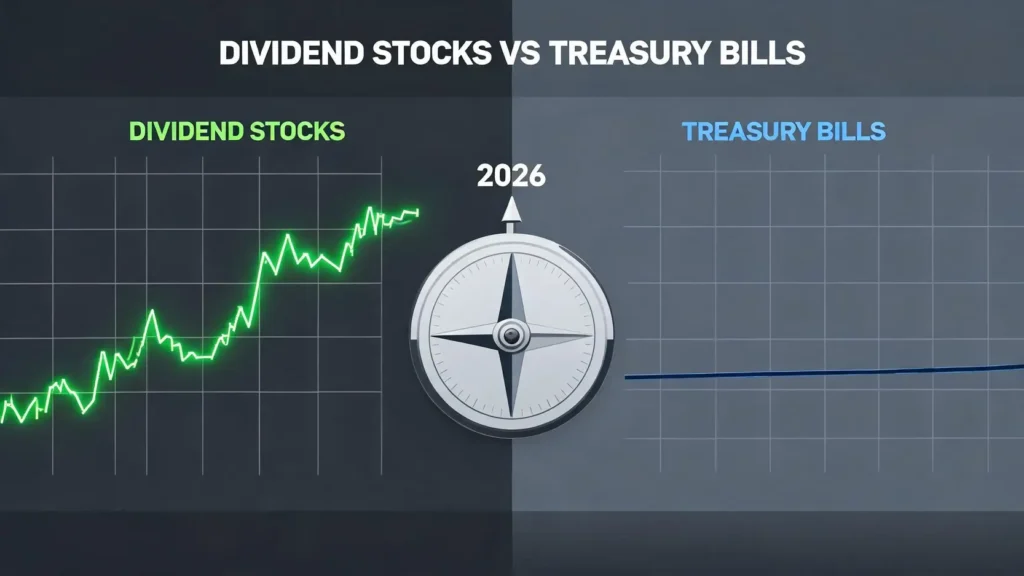
Navigating the 2026 investment landscape presents a classic dilemma for discerning investors: the potential long-term growth of dividend stocks vs Treasury bills 2026. This choice pits the allure of compounding returns and rising income against the steadfast safety of government-backed securities. This guide will break down the critical differences, analyze the current economic environment, and provide a clear framework to help you decide which asset is the right fit for your financial goals and your ideal investment strategy this year.
Table of Contents
Core Concepts: Understanding the Two Investment Vehicles
Before diving into a direct comparison, it’s essential to grasp the fundamental nature of each asset class. They serve different purposes within a portfolio and react differently to market forces.
What Are Dividend Stocks? The Engine for Growth and Income
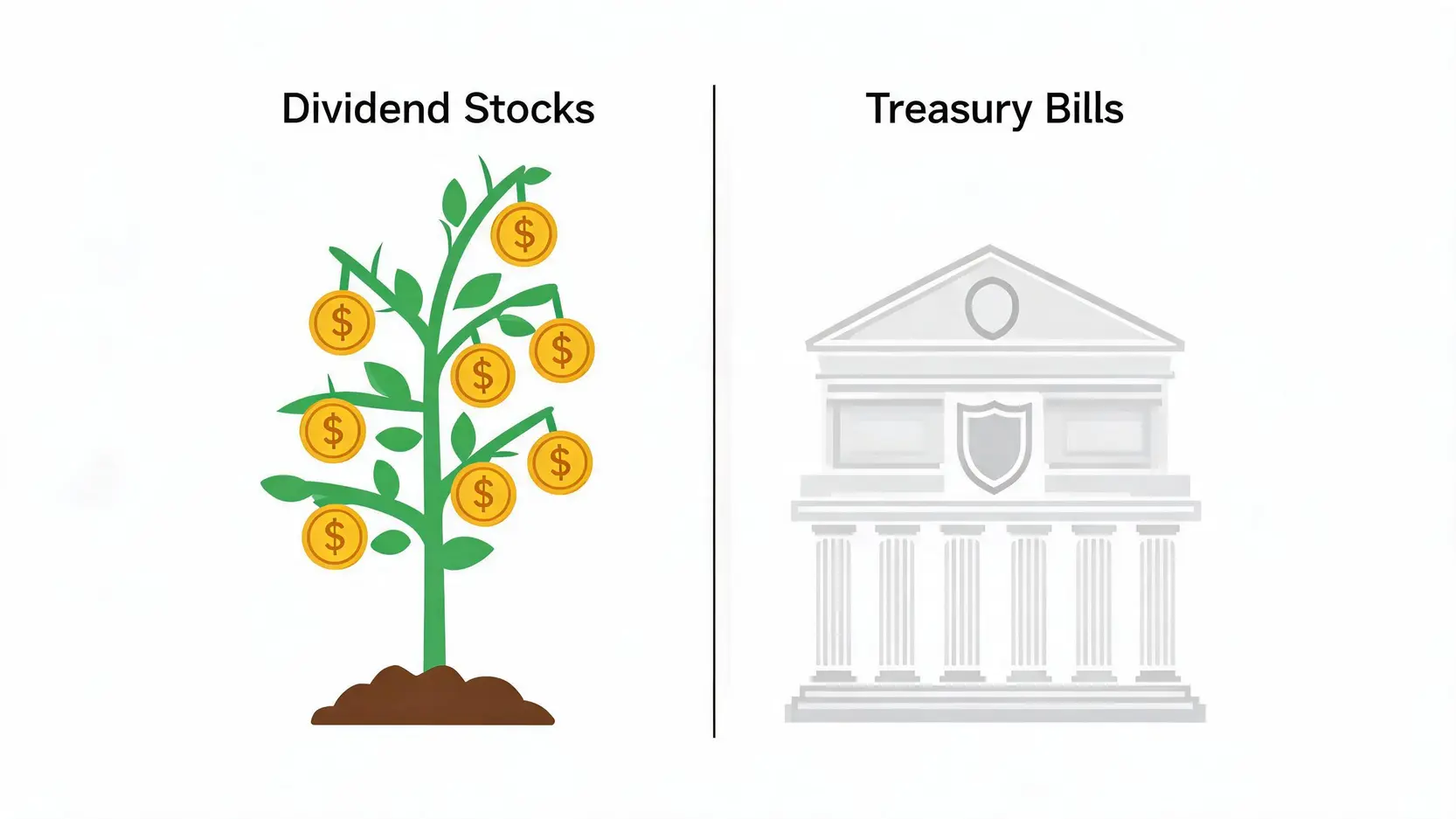
Dividend stocks represent ownership shares in established, profitable companies that distribute a portion of their earnings to shareholders regularly. These payments, or dividends, offer a steady income stream. Beyond income, these stocks also offer the potential for capital appreciation as the company grows and its stock price increases. Investing in a portfolio of high-quality dividend-paying companies can be a powerful strategy for building long-term wealth through both income and growth. For those looking to delve deeper, a comprehensive guide to dividend investing can provide more granular insights.
- ✅ Potential for Capital Growth: The stock’s value can increase over time.
- ✅ Income Stream: Regular dividend payments provide cash flow.
- ✅ Inflation Hedge: Growing dividends can outpace inflation, protecting purchasing power.
What Are Treasury Bills (T-Bills)? The Benchmark for Safety
Treasury bills, or T-bills, are short-term debt securities issued by the U.S. Department of the Treasury. They have maturities of one year or less and are sold at a discount to their face value. The investor’s return is the difference between the purchase price and the face value received at maturity. T-bills are considered one of the safest investments in the world because they are backed by the full faith and credit of the U.S. government. This makes them a cornerstone for capital preservation. Learning how to buy treasury bills is a straightforward process, often done directly through the government or a brokerage.
- ✅ Extreme Safety: Backed by the U.S. government, default risk is virtually zero.
- ✅ Predictable Return: The yield is known at the time of purchase if held to maturity.
- ✅ Tax Advantages: Interest income is exempt from state and local taxes.
Head-to-Head Battle: A Detailed Comparison of Dividend Stocks vs. T-Bills
To make an informed decision, investors must weigh the characteristics of each asset side-by-side. The optimal choice often depends on which factors are most important to your personal financial situation.
| Feature | Dividend Stocks | Treasury Bills (T-Bills) |
|---|---|---|
| Risk Profile | Higher risk; subject to market volatility and company-specific risk. Dividends can be cut. | Extremely low risk; backed by the U.S. government. Considered a risk-free asset. |
| Return Potential | Higher potential; combination of dividend yield and capital appreciation. Subject to market performance. | Lower, predictable return; yield is fixed at purchase if held to maturity. |
| Tax Treatment | Qualified dividends are taxed at lower long-term capital gains rates. Unqualified at ordinary income rates. | Interest is taxed at the federal level but is exempt from all state and local income taxes. |
| Liquidity | Very high; can be bought or sold on stock exchanges during market hours. | Very high; can be sold on the secondary market before maturity or held until the term ends. |
| Inflation Hedge | Strong; companies can increase prices and dividends, helping to protect purchasing power. | Weaker; the fixed return may not keep pace with high or unexpected inflation. |
Risk Profile: Market Volatility vs. Government Guarantee
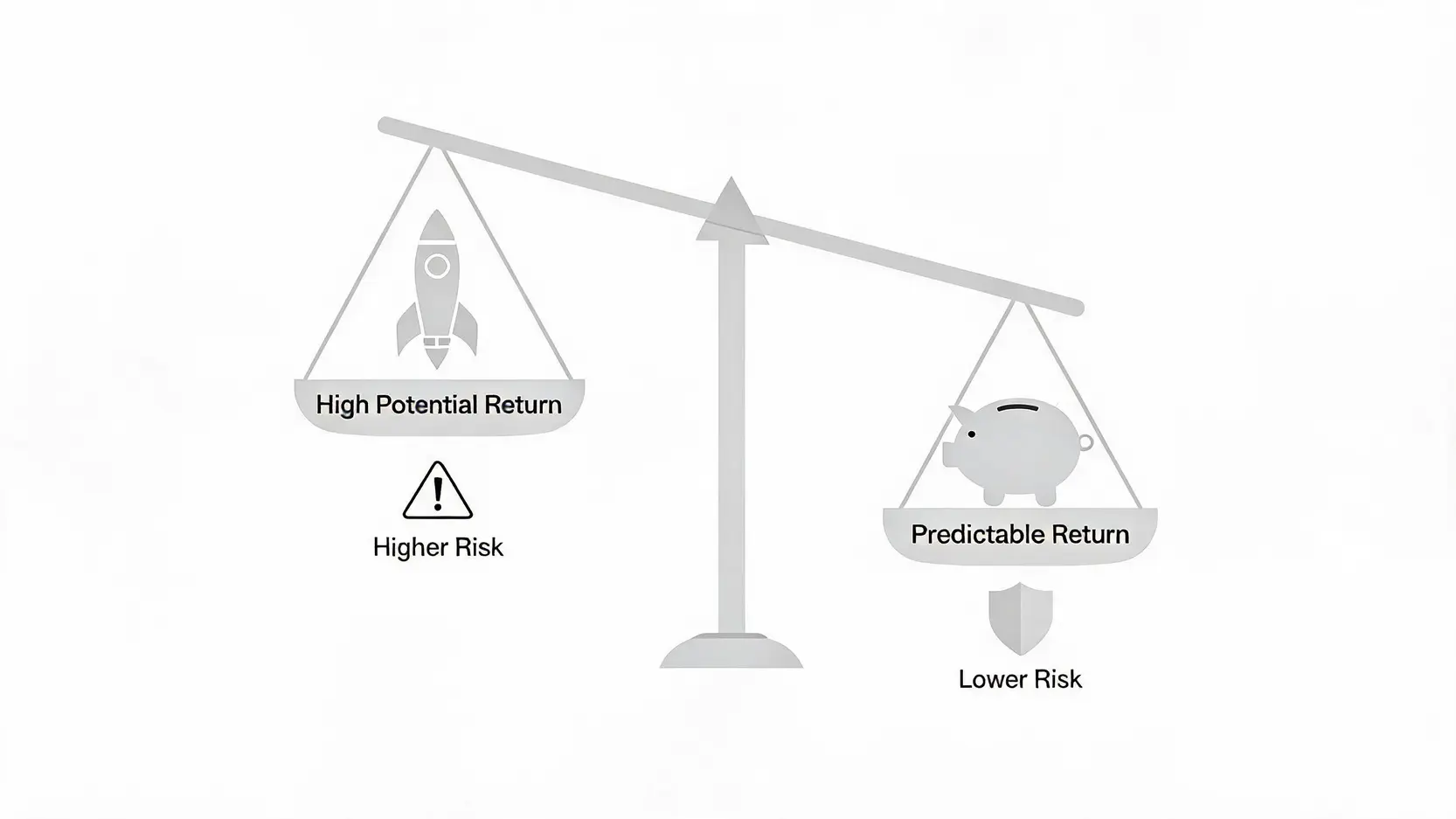
The most significant differentiator is risk. Dividend stocks are equities, and their prices can fluctuate dramatically based on market sentiment, economic news, and company performance. There’s always the risk that a company could reduce or eliminate its dividend. In contrast, T-bills carry a guarantee from the U.S. government, making the risk of losing your principal investment negligible. This is a crucial consideration for anyone prioritizing capital preservation. Understanding market volatility is key for any equity investor.
Return Potential: Compounding Growth vs. Predictable Yield
With higher risk comes the potential for higher returns. The total return from dividend stocks can be substantial, driven by both the dividend yield and the growth of the underlying stock price. Reinvesting those dividends can create a powerful compounding effect over time. T-bills offer a more modest, but highly predictable, return. You know exactly what your yield will be, which is ideal for planning and stable income needs.
Tax Treatment: How Dividends and Interest Income Are Taxed Differently
Tax implications can significantly impact your net returns. Most dividends from U.S. companies are considered “qualified” and are taxed at favorable long-term capital gains rates. T-bill interest, on the other hand, is taxed as ordinary income at the federal level. However, its exemption from state and local taxes is a major benefit for investors in high-tax states, potentially making its after-tax yield more attractive than it first appears.
Liquidity: How Easily Can You Access Your Money?
Both asset classes are highly liquid. You can sell dividend stocks on any day the market is open. Similarly, T-bills can be sold before their maturity date on a deep and active secondary market. This ensures that investors in both assets can access their capital quickly if needed, though selling either before the intended time could result in a gain or loss depending on market conditions.
The 2026 Economic Outlook: Factors Influencing Your Choice
The macroeconomic environment is a critical overlay to this decision. As of mid-2026, several key factors are shaping the relative attractiveness of stocks and government bonds.
Projected Interest Rate Environment and its Effect on T-Bill Yields
The Federal Reserve’s monetary policy is a dominant force. Current economic analyses and futures markets in 2026 are pricing in a federal funds rate holding in the 3.75% to 3.8% range for the remainder of the year. After a period of hikes to combat earlier inflation, this stabilization provides a relatively high and attractive yield for T-bills. When you can lock in a government-guaranteed return near this level, the appeal of safety is magnified, making T-bills a strong contender for conservative capital.
Market Forecasts: Will 2026 Favor Growth or Value Investing?
The stock market narrative in 2026 has seen a notable rotation. After years of dominance by mega-cap growth stocks, market volatility and a more discerning economic climate are favoring value stocks. As noted by analysts at J.P. Morgan Asset Management, value has outperformed growth year-to-date. Since many high-quality, stable dividend-paying companies fall into the value category (e.g., in sectors like consumer staples, industrials, and financials), this trend provides a significant tailwind for dividend stock investors.
Inflation Concerns and Protecting Your Purchasing Power
Inflation remains a key concern for long-term investors. According to the latest outlook from the Congressional Budget Office (CBO), PCE inflation is projected to be around 2.7% in 2026. While this is lower than in previous years, it still erodes the real return on investments. A T-bill yielding 3.8% offers a real return of just over 1%. In contrast, companies with strong pricing power can raise prices and, consequently, their dividends, offering a dynamic hedge against inflation that a fixed-yield T-bill cannot match.
Which Is Right for You? A Profile-Based Recommendation
The best choice is not universal; it’s personal. It depends entirely on your age, financial goals, and stomach for risk.
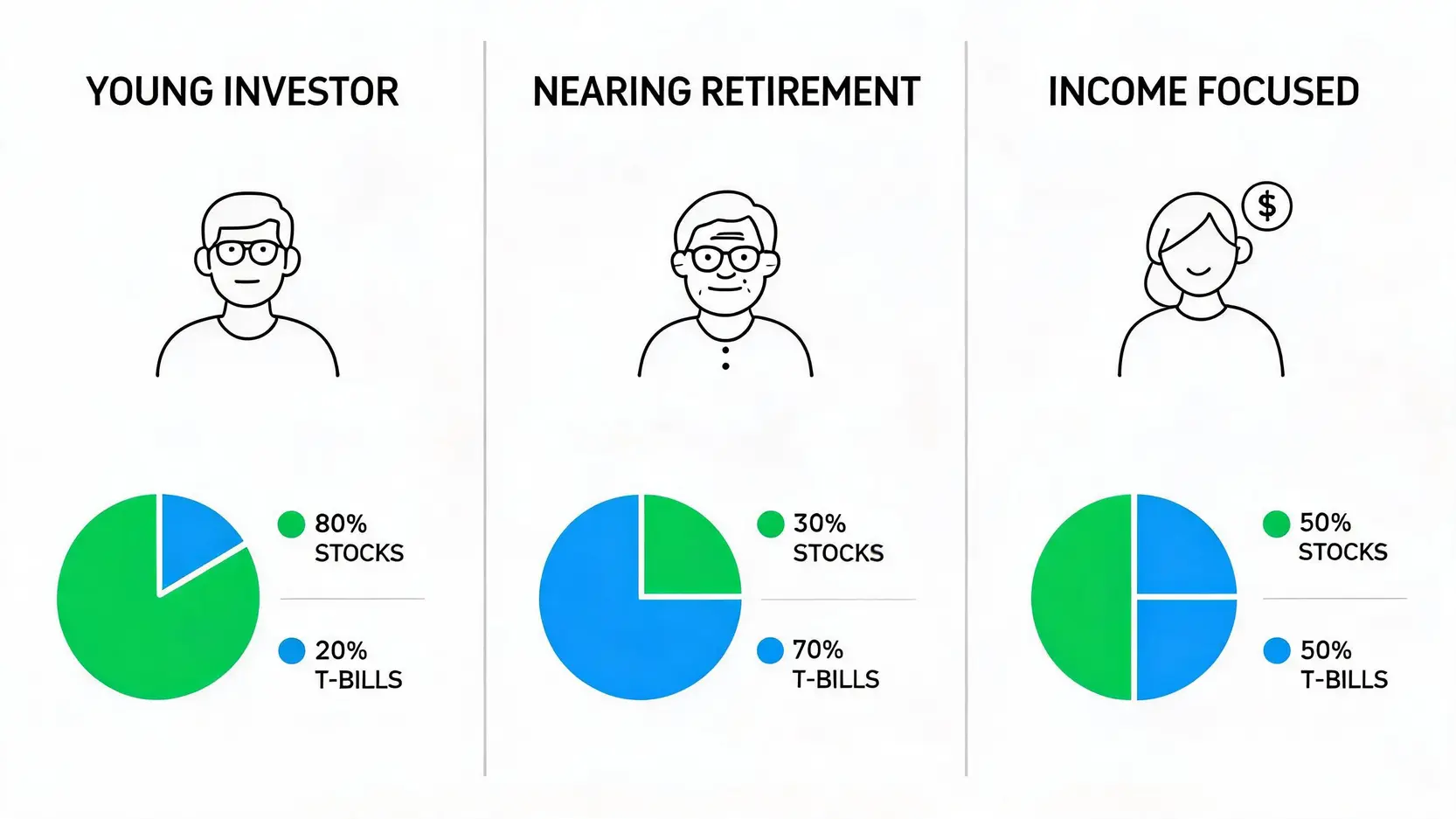
For the Young Investor: The Argument for Taking on More Risk
An investor in their 20s or 30s has a time horizon measured in decades. This longevity allows them to ride out market downturns. For them, the primary goal is wealth accumulation. Dividend stocks are the superior vehicle here, offering the potential for significant capital growth and a rising dividend stream that can be reinvested to accelerate compounding. The short-term safety of T-bills is less valuable than the long-term growth potential of equities.
For the Investor Nearing Retirement: The Case for Capital Preservation
For someone within 5-10 years of retirement, the priority shifts from growth to preservation. A significant market downturn could jeopardize their retirement plans. In this scenario, the guaranteed return and principal safety of Treasury bills are paramount. A substantial allocation to T-bills and other short-term bonds can provide stability and predictable income to cover living expenses, insulating the portfolio from stock market volatility.
For the Income-Focused Investor: A Hybrid Strategy
Many investors, regardless of age, seek to maximize their current income. For this group, a hybrid approach is often optimal. A portion of the portfolio can be allocated to T-bills to create a reliable “income floor”—a base level of cash flow that is virtually guaranteed. The remainder can be invested in a diversified portfolio of high-quality dividend stocks to provide a higher, growing stream of income that also acts as a hedge against inflation. This balanced strategy captures the best of both worlds: safety and growth.
Conclusion
In summary, the decision between dividend stocks and Treasury bills in 2026 isn’t one-size-fits-all. It hinges on your personal risk tolerance, investment timeline, and the prevailing economic conditions. T-bills offer unparalleled safety and a predictable, tax-advantaged income stream, making them ideal for capital preservation. Dividend stocks provide the engine for long-term wealth creation through capital growth and a rising income stream that can combat inflation. By understanding the fundamental differences and aligning them with your goals, you can build a resilient and effective portfolio for the year ahead and beyond.
Frequently Asked Questions (FAQ)
Q: Are T-bills always a safer investment than dividend stocks?
A: Yes, in terms of default risk. T-bills are backed by the U.S. government, which can print money to pay its debts, making them virtually risk-free from a credit perspective. Dividend stocks are equities, and the companies can go bankrupt, causing a total loss of principal. However, T-bills do carry interest rate risk (if you need to sell before maturity) and inflation risk (if the yield doesn’t keep up with rising prices).
Q: Can you lose money on Treasury bills?
A: If you hold a T-bill to maturity, you cannot lose your principal investment. You will receive the full face value. However, if you need to sell the T-bill on the secondary market before it matures and interest rates have risen since you purchased it, the price of your bill will have fallen, and you could realize a small loss.
Q: How do I start investing in dividend stocks and T-bills?
A: Both are easily accessible. You can buy individual dividend stocks or dividend-focused ETFs through any standard brokerage account. T-bills can also be purchased through most brokerages or directly from the U.S. government via the TreasuryDirect website, which is a cost-effective method for individual investors.
Q: How does the 2026 economic forecast impact the choice?
A: The current forecast makes both options compelling for different reasons. Stabilized, higher interest rates make T-bills attractive for their safe, predictable yield. Simultaneously, a market environment that appears to be favoring value stocks provides a strong argument for investing in established, dividend-paying companies for their total return potential and inflation-hedging characteristics.