
Unlock global market potential without leaving the convenience of U.S. exchanges. As the 2026 investment landscape unfolds, certain ADR stocks to watch in 2026 present unique and compelling growth opportunities that savvy investors should not overlook. American Depositary Receipts (ADRs) are a powerful tool for portfolio diversification, offering a direct gateway to international companies poised for significant expansion. This guide reveals the best ADR stocks for your portfolio, providing the in-depth analysis needed to navigate global investing opportunities and make informed decisions.
Table of Contents
What Are ADRs and Why Should They Be on Your 2026 Radar?
Before diving into specific companies, it’s crucial to understand the mechanism and strategic advantage of ADRs. They are more than just another ticker symbol; they represent a sophisticated yet accessible way to gain international exposure, a key strategy for mitigating single-market risk in 2026.
Demystifying American Depositary Receipts (ADRs)
An American Depositary Receipt (ADR) is a certificate issued by a U.S. depository bank that represents a specific number of shares—or a fraction of a share—of a foreign company’s stock. These certificates trade on U.S. stock exchanges like the NYSE and NASDAQ, just like any domestic stock. Essentially, an ADR allows U.S. investors to buy and sell shares of foreign companies without the complexities of dealing with foreign exchanges or currency conversions. For a more detailed explanation, you can refer to authoritative sources like American Depositary Receipts (ADRs): Types, Pricing, and ….
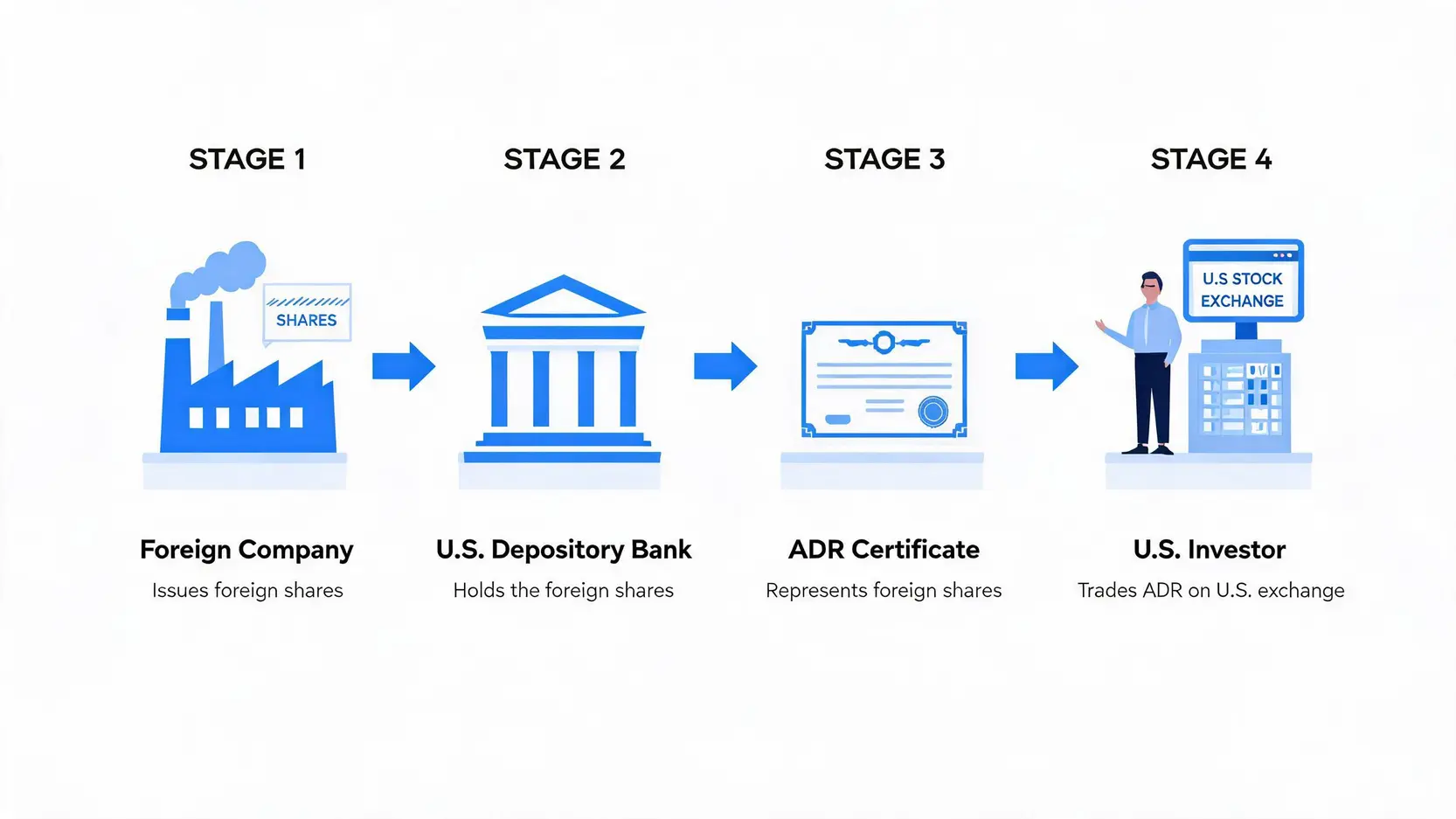
The Core Benefits of Adding ADRs to Your Portfolio
Integrating ADRs into an investment strategy offers several distinct advantages, particularly in the current global economic climate:
- Effortless Diversification: Gain exposure to different economies, industries, and consumer markets outside the U.S., which can buffer your portfolio against domestic market downturns.
- Operational Simplicity: ADRs are priced in U.S. dollars, and dividends are paid in U.S. dollars, eliminating the need for investors to manage foreign currency transactions directly.
- Enhanced Accessibility: They provide access to international giants and emerging market leaders that may not be directly listed on U.S. exchanges.
- Regulatory Transparency: Sponsored ADRs, the most common type, require companies to provide financial information that complies with U.S. accounting standards, offering a layer of transparency and security.
Top 5 ADR Stocks to Watch in 2026
Identifying the most promising ADRs requires a forward-looking analysis of global trends, from technological disruption to shifts in consumer behavior. Here are five top-tier ADRs positioned for potential outperformance in 2026, representing a blend of innovation, market leadership, and strategic growth.
| Company (Ticker) | Sector | Home Country | 2026 Investment Thesis |
|---|---|---|---|
| Taiwan Semiconductor (TSM) | Technology | Taiwan | As the world’s leading semiconductor foundry, TSM is the backbone of the global tech industry. Its dominance in advanced chip manufacturing is indispensable for AI, high-performance computing, and 5G, positioning it for sustained demand and pricing power. |
| Novo Nordisk (NVO) | Healthcare | Denmark | NVO is at the forefront of the lucrative market for GLP-1 drugs (Ozempic, Wegovy) used for diabetes and weight management. With a massive and expanding addressable market, its growth trajectory is one of the most powerful in the pharmaceutical sector. |
| MercadoLibre (MELI) | E-commerce / Fintech | Argentina | Often called the “Amazon of Latin America,” MELI’s integrated ecosystem of e-commerce, digital payments (Mercado Pago), and logistics creates a powerful network effect. The region’s ongoing digital transformation provides a long runway for growth. |
| HSBC Holdings (HSBC) | Financials | United Kingdom | With its strategic pivot towards high-growth Asian markets, HSBC offers unique exposure to the world’s fastest-growing economic region. Its strong capital base and diversified revenue streams make it a compelling financial powerhouse for a global portfolio. |
| LVMH Moët Hennessy (LVMUY) | Consumer Cyclical | France | The undisputed leader in luxury goods, LVMH’s portfolio of iconic brands (Louis Vuitton, Dior, Tiffany & Co.) demonstrates remarkable resilience and pricing power. The growing wealth in emerging markets continues to fuel demand for its high-end products. |
How to Analyze ADRs: Key Metrics Beyond the Ticker
Investing in ADRs requires a broader analytical lens than domestic stocks. While standard financial metrics like P/E ratios and revenue growth are important, a comprehensive analysis must account for country-specific and macroeconomic factors. Considering these additional layers is a hallmark of a robust international investment strategy.
Evaluating the Home Country’s Economic Stability
The health of a company is inextricably linked to the economic environment of its home country. Before investing in an ADR, assess key indicators of the nation’s stability:
- GDP Growth: Is the country’s economy expanding or contracting?
- Inflation Rates: High or volatile inflation can erode corporate profits and consumer purchasing power.
- Political Climate: Stable governance and predictable policy-making are crucial for long-term investment. Political turmoil can create significant headwinds.
Understanding Currency Exchange Rate Risks (Forex Impact)
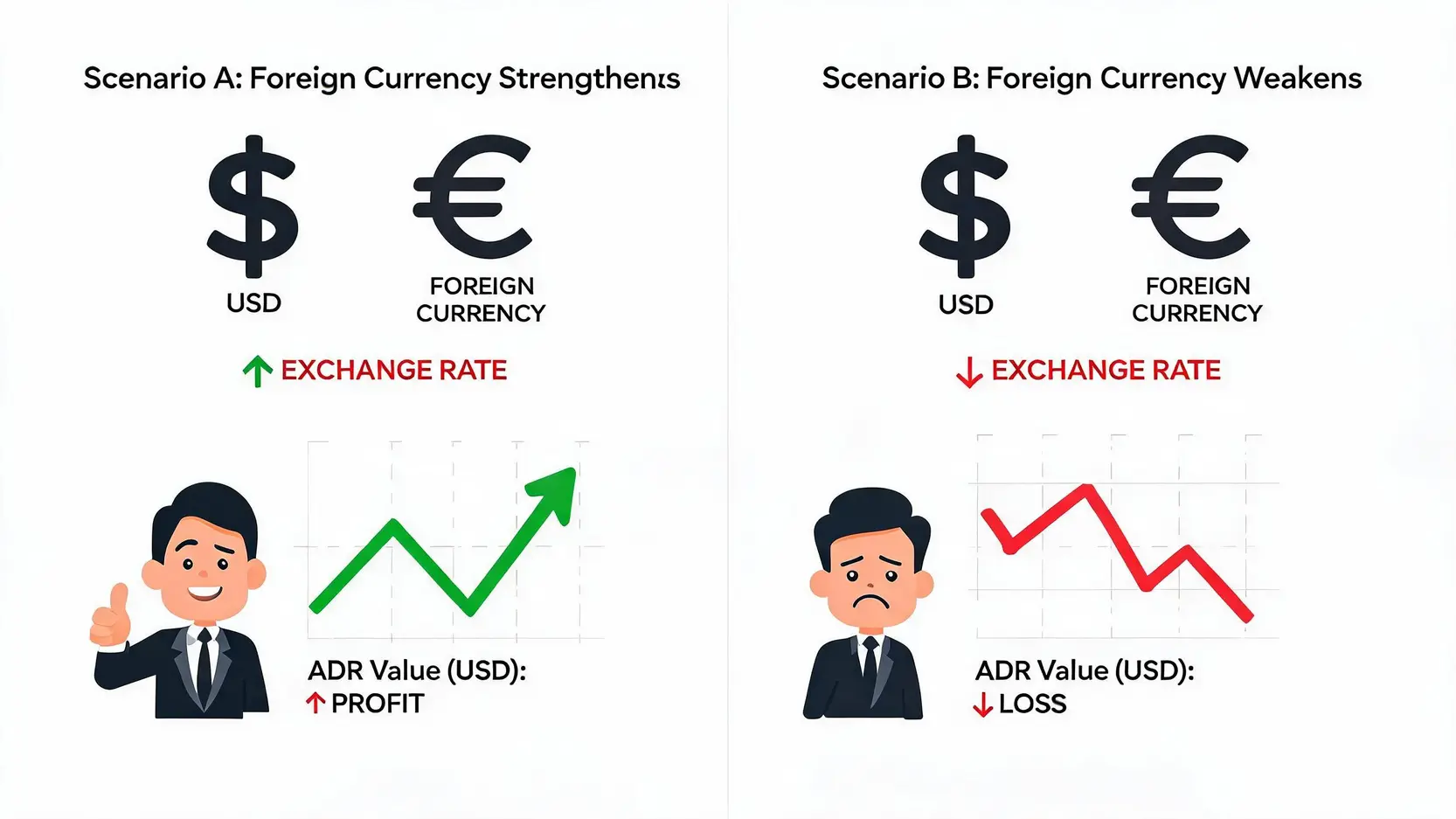
Currency fluctuations are a primary risk for ADR investors. Since the foreign company’s revenue and profits are in its local currency, they must be converted to U.S. dollars for ADR holders. If the U.S. dollar strengthens against the foreign currency, the value of your investment and dividends will decrease when translated back. This is a critical concept to grasp, as a strong stock performance can be negated by unfavorable exchange rate movements. Understanding the impact of currency risk is non-negotiable for global investors.
Navigating Geopolitical Factors and Regulatory Changes
A foreign company operates under a different set of rules. Investors must stay informed about potential geopolitical tensions, trade disputes, and changes in local regulations. For example, new tariffs, data privacy laws, or industry-specific regulations in the company’s home country can have a material impact on its operations and profitability. Monitoring these external factors is just as important as analyzing the company’s balance sheet.
Step-by-Step Guide: How to Buy ADR Stocks
The process of buying an ADR is surprisingly straightforward and nearly identical to purchasing shares of a U.S.-based company. This ease of access is one of their greatest appeals.
Finding a Brokerage that Supports ADR Trading
The good news is that almost every major U.S. brokerage firm supports ADR trading. Platforms like Fidelity, Charles Schwab, E*TRADE, and Interactive Brokers allow you to buy and sell ADRs seamlessly. If you already have a brokerage account, you can likely start trading ADRs immediately without any special setup.
Placing Your First ADR Trade
Once you have a funded brokerage account, buying an ADR is a simple process:
- Research the Ticker: Identify the correct ticker symbol for the ADR you wish to purchase (e.g., TSM, NVO, MELI).
- Use a Standard Order Type: Log into your brokerage account, navigate to the trading screen, and enter the ticker symbol. You can use market orders or limit orders, just as you would for any other stock.
- Execute the Trade: Specify the number of shares you want to buy and submit your order. The transaction is executed on a U.S. exchange, and the shares will appear in your account, denominated in U.S. dollars.
Conclusion
As 2026 approaches, keeping a close watch on promising ADR stocks is a strategic move for any forward-thinking investor. They offer a simple yet effective method for achieving global diversification and tapping into growth stories that extend beyond U.S. borders. By understanding the fundamentals, analyzing the unique risks associated with international investing, and considering the global economic landscape, the ADR stocks to watch in 2026 discussed here can serve as a strong starting point for your research. Always conduct thorough due diligence and align your investment choices with your personal financial goals and risk tolerance.
Frequently Asked Questions (FAQ)
Q: Are ADRs a safe investment for 2026?
A: Like any equity investment, ADRs carry risk. They are subject to the same market volatility as domestic stocks, with the addition of unique risks such as currency fluctuations and geopolitical instability in the company’s home country. However, investing in well-established, profitable international companies via ADRs can be a relatively safe way to diversify a portfolio and potentially enhance long-term returns. Safety depends on the quality of the underlying company and the investor’s due diligence.
Q: How are dividends from ADRs taxed?
A: Dividends from ADRs are paid in U.S. dollars but are often subject to withholding tax by the foreign company’s home country. U.S. investors can typically claim a foreign tax credit on their U.S. tax returns to offset this withholding, preventing double taxation. It’s advisable to consult with a tax professional to understand the specific implications for your situation.
Q: What is the difference between a sponsored and unsponsored ADR?
A: A sponsored ADR is issued in cooperation with the foreign company. This means the company actively participates in the process and typically provides financial information that complies with U.S. SEC standards. An unsponsored ADR is issued by a depository bank without the direct involvement of the foreign company. Sponsored ADRs are far more common and generally offer greater transparency and reliability for investors.
Q: Can ADRs be riskier than U.S. stocks?
A: Yes, they can carry additional layers of risk. The primary risks unique to ADRs are currency risk (the value of your investment changing due to exchange rates), political and economic risk (instability in the foreign country), and regulatory risk (different laws and standards). A U.S. stock is primarily exposed to domestic market and economic risks, whereas an ADR is exposed to both domestic (U.S. market sentiment) and foreign risks.