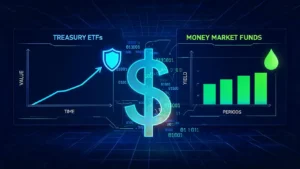
For investors planning for 2026, the quest for the safest investments with monthly income 2026 remains a cornerstone of sound financial strategy. In a market landscape defined by persistent unpredictability, securing a reliable cash flow without exposing your principal to significant risk is paramount. These low-risk investment vehicles are not about chasing meteoric growth; they are about building a durable, predictable income stream. This guide will meticulously dissect the top options to help you construct a resilient income portfolio for 2026 and beyond, ensuring your financial stability through a well-diversified approach.
Table of Contents
Understanding the Core Principles of Safe Income Investing
Before diving into specific investment tools, it’s crucial to grasp the foundational principles that govern safe income investing. This is not about speculation but about strategic wealth preservation and generation. The primary goal is to create a predictable income stream while shielding your initial capital from market volatility. It requires a mindset shift from aggressive growth to steady, reliable returns.
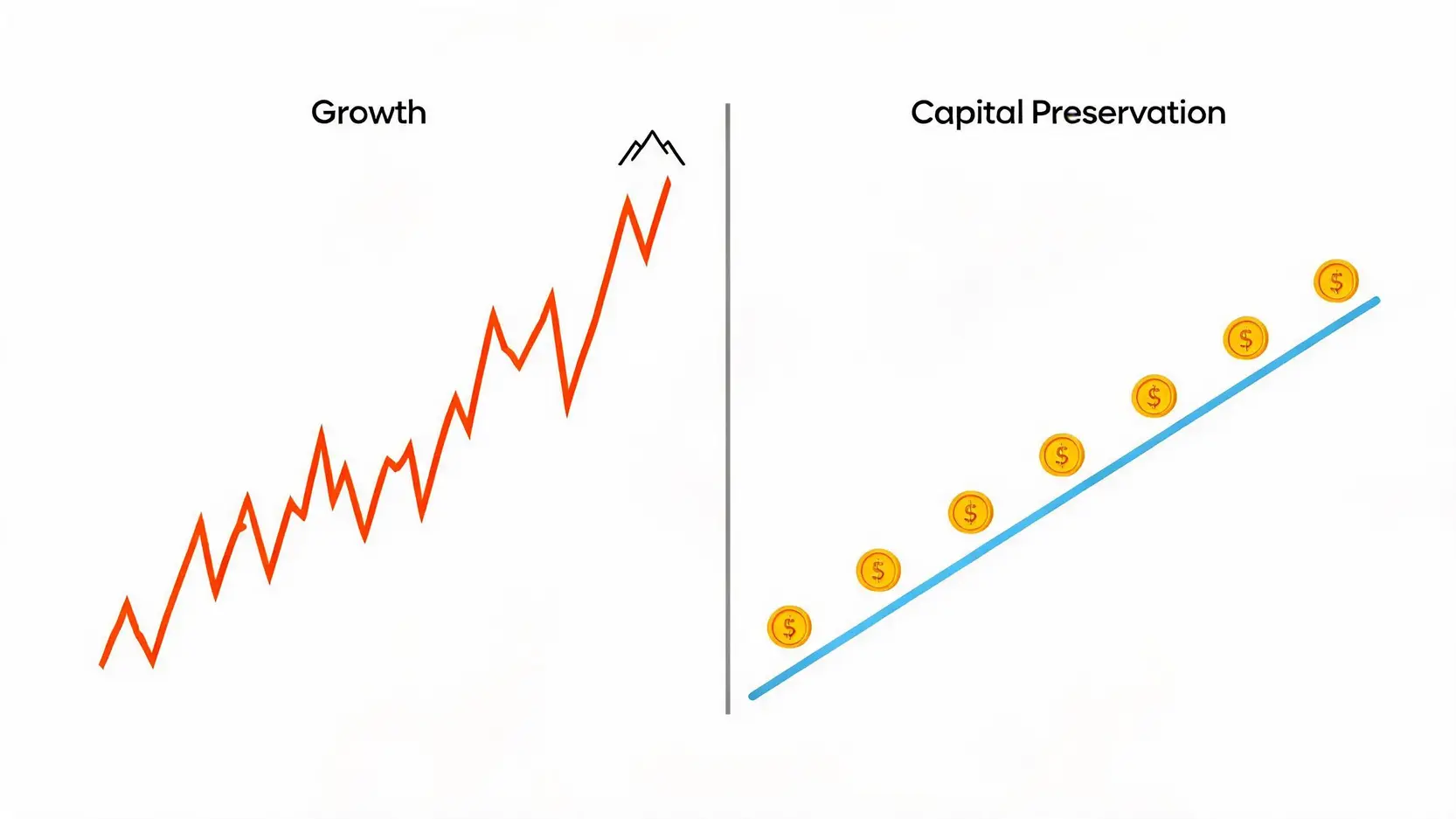
Capital Preservation vs. Growth: Setting Your Priorities
The fundamental trade-off in investing is between risk and reward. High-growth assets like tech stocks or cryptocurrencies may offer substantial returns, but they come with significant volatility and the risk of capital loss. Conversely, the safest investments prioritize capital preservation. Your main objective is to ensure the money you invest remains intact, all while it works to provide you with a monthly income. For retirees or those nearing financial independence in 2026, protecting the principal is non-negotiable. This means consciously choosing stability over the potential for explosive but uncertain gains.
How Inflation and Interest Rates Impact Your Monthly Income
In the economic climate of 2026, understanding macroeconomic factors is essential. Inflation and interest rates are two sides of the same coin, directly impacting the real return of your income investments.
- Inflation: This is the rate at which the purchasing power of money erodes. If your investment yields 3% annually but inflation is at 2.5%, your real return is only 0.5%. A successful income strategy must generate returns that outpace inflation to be truly effective.
- Interest Rates: Central bank policies, such as those from the Federal Reserve or the Bank of England, set the tone for the entire market. When interest rates rise, newly issued bonds and CDs offer higher yields, making existing, lower-yield assets less attractive. Conversely, when rates fall, your existing higher-yield investments become more valuable. This dynamic is a key consideration when structuring a portfolio of safe fixed-income assets.
Top 5 Safest Investment Vehicles for Monthly Income in 2026
Navigating the market for income-generating assets requires a clear understanding of the available options. Here are the five most reliable vehicles for generating a steady monthly income in 2026, each with a unique risk-reward profile.
1. High-Dividend Yield ETFs: Diversification and Regular Payouts
High-Dividend Yield Exchange-Traded Funds (ETFs) are baskets of stocks from companies with a history of paying consistent, and often growing, dividends. They offer a powerful combination of diversification and income generation. Instead of betting on a single company, you own a small piece of dozens or even hundreds.
- Pros: Instant portfolio diversification across multiple sectors, professional management, and typically monthly or quarterly payouts that create a predictable income stream. They are also highly liquid, trading like stocks on major exchanges.
- Cons: While diversified, they are still exposed to stock market risk. If the overall market declines, the ETF’s value can fall. They also have expense ratios, which are annual fees for management.
For those interested in this strategy, understanding how to select the right funds is key. Explore our Trader’s Guide to this Classic Value Strategy for insights into high-yield blue-chip stocks.
2. U.S. Treasury Securities (T-Bills, Notes, Bonds): The Gold Standard of Safety for Low-Risk Investments
When it comes to safety, nothing surpasses securities backed by the full faith and credit of the U.S. government. They are considered virtually free of credit risk, making them the ultimate safe-haven asset.
- Treasury Bills (T-Bills): Short-term debt maturing in one year or less. They don’t pay interest directly but are sold at a discount to their face value.
- Treasury Notes (T-Notes): Mature in two to ten years and pay interest semi-annually.
- Treasury Bonds (T-Bonds): Longest-term, maturing in 20 to 30 years, also with semi-annual interest payments.
While interest is paid semi-annually, investors can build a “ladder” of these securities with different maturity dates to create a monthly income flow. You can purchase them directly from the source at TreasuryDirect, the official U.S. government website.
3. Certificates of Deposit (CDs): Predictable, Insured Returns
CDs are time deposits offered by banks and credit unions. You agree to leave your money with the institution for a specified term (e.g., six months, one year, five years) in exchange for a fixed interest rate. This predictability is a major advantage for income planning.
- Key Feature: CDs are typically insured by the FDIC (for banks) or NCUA (for credit unions) up to $250,000 per depositor, per institution. This makes them exceptionally safe.
- Drawback: Your money is locked up for the term. Withdrawing early usually incurs a significant penalty, reducing your overall return. This makes them less liquid than other options.
4. High-Yield Savings Accounts (HYSAs): Liquidity with Competitive Interest
A High-Yield Savings Account (HYSA) is a simple and effective tool for generating income on your cash reserves. Offered primarily by online banks with lower overhead costs, HYSAs provide interest rates significantly higher than those of traditional brick-and-mortar banks.
- Flexibility: HYSAs are highly liquid. You can deposit and withdraw funds freely (though some may have transaction limits), making them ideal for an emergency fund or for holding cash you plan to deploy soon.
- Variable Rates: The interest rate is not fixed. It moves in response to the central bank’s policy rates. While this can be a benefit in a rising-rate environment, your monthly income could decrease if rates are cut.
5. Money Market Funds: Low-Risk and Highly Liquid
Money market funds (or Money Market Mutual Funds) are a type of mutual fund that invests in high-quality, short-term debt instruments. These can include government securities, commercial paper, and certificates of deposit.
- Objective: Their primary goal is to maintain a stable Net Asset Value (NAV) of $1.00 per share while providing a competitive interest rate. This makes them a very low-risk option for parking cash.
- Important Note: Unlike HYSAs or CDs, money market funds are not FDIC-insured. However, they are regulated by the SEC and invest in extremely low-risk securities, so the risk of losing principal is very low (though not zero).
How to Structure Your Portfolio for Consistent Monthly Payouts
Selecting the right investment vehicles is only half the battle. Structuring them correctly is what transforms a collection of assets into a coherent strategy for a reliable cash flow. The key is to blend different instruments to create a stable and predictable stream of income that aligns with your financial needs.
Creating a CD or Bond Ladder Strategy
A laddering strategy is a time-tested technique to manage interest rate risk and improve liquidity. Instead of putting all your money into a single long-term bond or CD, you diversify across multiple maturities. For example, with $50,000, you could build a five-year ladder:
- $10,000 in a 1-year CD or bond
- $10,000 in a 2-year CD or bond
- $10,000 in a 3-year CD or bond
- $10,000 in a 4-year CD or bond
- $10,000 in a 5-year CD or bond
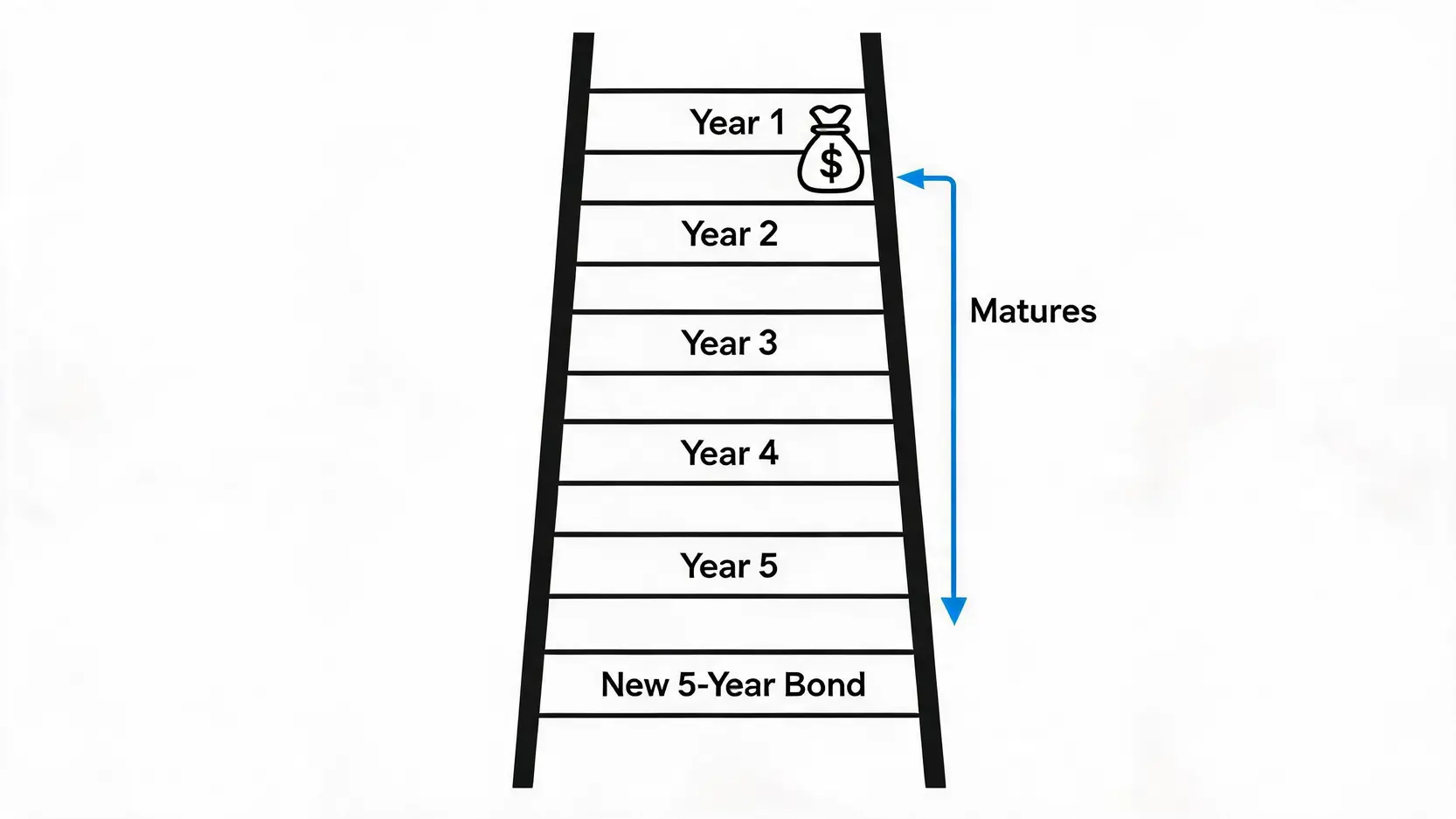
Each year, as one “rung” of the ladder matures, you can reinvest the principal into a new 5-year security. If rates have risen, you capture the higher yield. If you need cash, you can use the maturing principal without penalty. This creates a rolling portfolio that adapts to the interest rate environment.
Combining ETFs with Different Dividend Distribution Schedules
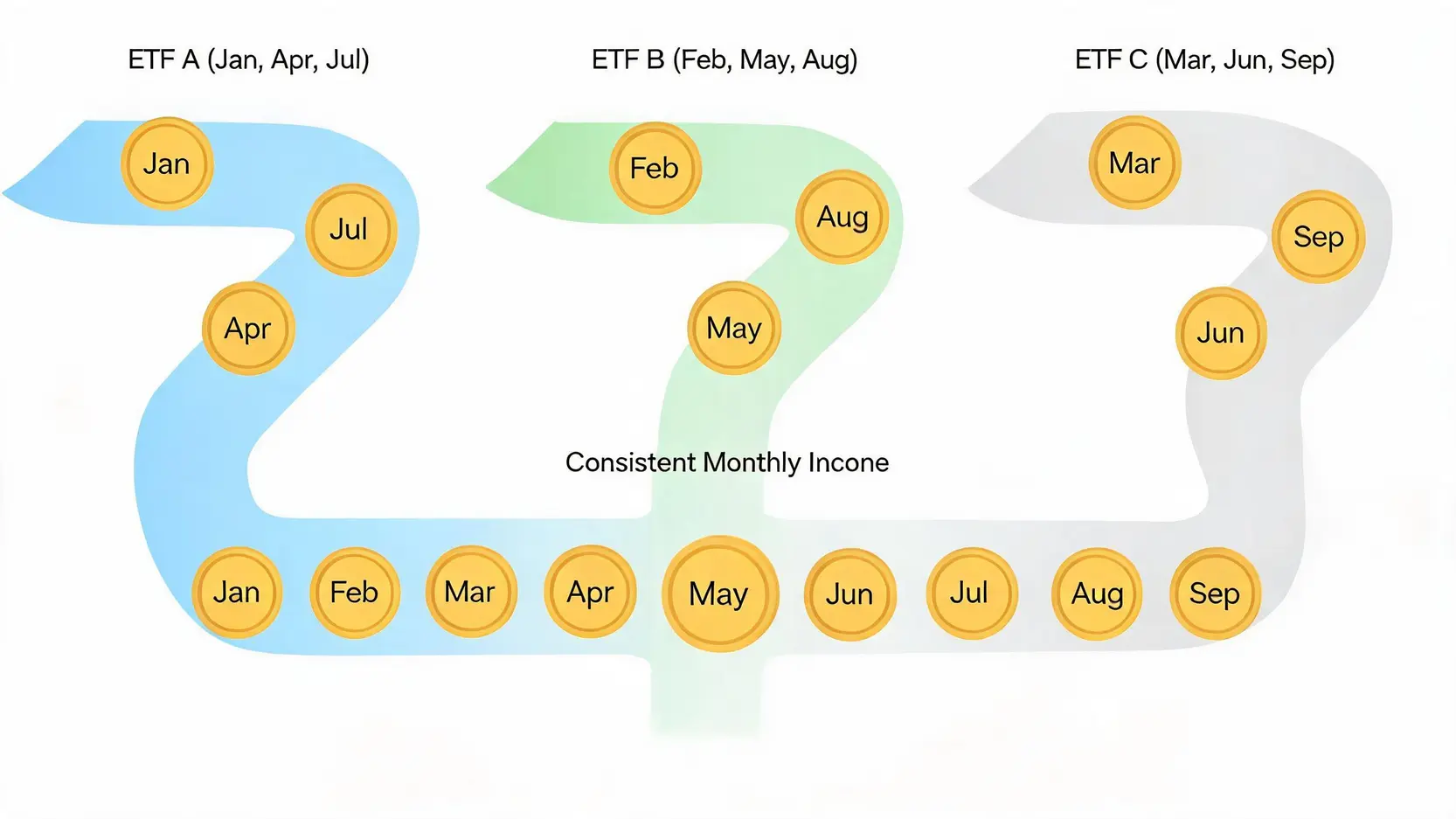
Not all dividend ETFs pay out on the same schedule. Some pay monthly, while many pay quarterly. To engineer a smooth monthly income, you can strategically combine different ETFs. For instance, you could hold three different quarterly-paying ETFs, each distributing dividends in a different month of the quarter (e.g., ETF A pays in January/April/July, ETF B in February/May/August, and ETF C in March/June/September). This combination effectively creates a consistent monthly paycheck from your portfolio.
Balancing Liquidity and Yield for Your 2026 Goals
The optimal portfolio structure depends on your personal financial goals. There is no one-size-fits-all solution. Consider this simple framework to help balance your needs:
| Investment Vehicle | Typical 2026 Yield | Risk Level | Liquidity | Best For |
|---|---|---|---|---|
| High-Yield Savings Accounts | Moderate | Very Low | Very High | Emergency funds, short-term cash |
| Money Market Funds | Moderate | Very Low | High | Holding cash for investment |
| Certificates of Deposit (CDs) | Moderate-High | Extremely Low | Low | Predictable income with no principal risk |
| U.S. Treasury Securities | Moderate-High | Extremely Low | Medium-High | The safest long-term income foundation |
| High-Dividend ETFs | High | Low-Moderate | Very High | Higher income potential with market exposure |
A well-balanced portfolio might use an HYSA for immediate cash needs, a CD ladder for predictable core income, and a dividend ETF for a higher-yield component to outpace inflation.
Conclusion
Securing your financial future in 2026 requires a deliberate and intelligent approach focused on the safest investments with monthly income. By diversifying across a strategic blend of high-dividend ETFs, ultra-safe Treasury securities, predictable CDs, and liquid HYSAs or money market funds, you can construct a resilient portfolio that delivers the steady cash flow you need. The principles of capital preservation and risk management should guide every decision. Always assess your personal risk tolerance, time horizon, and income requirements, and consider consulting a qualified financial advisor to tailor these strategies to your unique financial situation.
Frequently Asked Questions (FAQ)
Q: What is the absolute safest investment with the highest return?
A: This question highlights the core conflict in investing: safety and high returns are opposing forces. There is no single investment that offers both maximum safety and maximum returns. U.S. Treasury securities are considered the safest investment because they are backed by the U.S. government, but their returns are typically lower than riskier assets like dividend stocks. The key is to find the right balance for your risk tolerance. An allocation across several of the ‘safest’ investments discussed here is the most prudent approach.
Q: How much do I need to invest to generate $1,000 per month?
A: The amount needed depends entirely on the annual percentage yield (APY) of your investment portfolio. To calculate this, you can use the formula: Principal = (Desired Annual Income) / (Average Yield). For $1,000 per month, the annual income is $12,000. Here are a few examples:
- At a 3% average yield: $12,000 / 0.03 = $400,000
- At a 4% average yield: $12,000 / 0.04 = $300,000
- At a 5% average yield: $12,000 / 0.05 = $240,000
This illustrates how a slightly higher yield from a well-diversified portfolio can significantly reduce the principal required.
Q: Are corporate bonds a safe option for monthly income?
A: Corporate bonds can be a good source of monthly income, but they are not as safe as U.S. Treasury securities. Their safety depends on the creditworthiness of the issuing company, rated by agencies like Moody’s and S&P. Investment-grade bonds (rated BBB- or higher) are relatively safe but carry more credit risk than government bonds. High-yield bonds (or “junk bonds”) offer much higher income but come with a significantly higher risk of default. They should be considered a riskier component of an income portfolio, not a core safe holding.
Q: What are the tax implications of these monthly income investments?
A: Tax treatment varies. Interest from CDs, HYSAs, and corporate bonds is typically taxed as ordinary income at your marginal tax rate. A key advantage of U.S. Treasury securities is that their interest income is exempt from state and local taxes. Dividends from ETFs can be “qualified” or “non-qualified.” Qualified dividends are taxed at lower long-term capital gains rates, making them more tax-efficient. Always consider the after-tax return of an investment.