
In the architecture of global finance, some entities operate with such scale that their movements, no matter how subtle, create ripples across the entire system. The Government Pension Fund Global (GPFG) of Norway is one such entity—a silent giant whose immense size dictates trends and influences corporate behavior worldwide. Understanding the Norway wealth fund market impact is no longer just an academic exercise; it’s a critical component of modern market analysis. This deep dive will dissect the fund’s investment strategy, its direct consequences for equity and bond markets, and how its pioneering ethical stance is setting new global standards.
Table of Contents
What is the Norway Government Pension Fund Global (GPFG)?
The Government Pension Fund Global, managed by Norges Bank Investment Management (NBIM), is the largest sovereign wealth fund on the planet. It is not a pension fund in the conventional sense; rather, it is a savings instrument designed to secure the long-term financial future of the Norwegian population by investing the surplus revenues from the nation’s petroleum sector. Its primary mandate is to ensure that this wealth benefits both current and future generations.
From North Sea Oil to a Global Financial Powerhouse: A Brief History
The fund’s origins trace back to the discovery of vast oil and gas reserves in the North Sea in 1969. Recognizing the finite nature of these resources, the Norwegian government established the fund in 1990 to shield the domestic economy from the volatility of oil prices and to convert a depleting natural resource into a sustainable financial asset. The first capital transfer was made in 1996. Since then, it has grown exponentially, evolving from a national savings account into a dominant force in international capital markets, a journey that showcases extraordinary foresight in national resource management.
Understanding the Scale: Assets, Holdings, and Global Reach
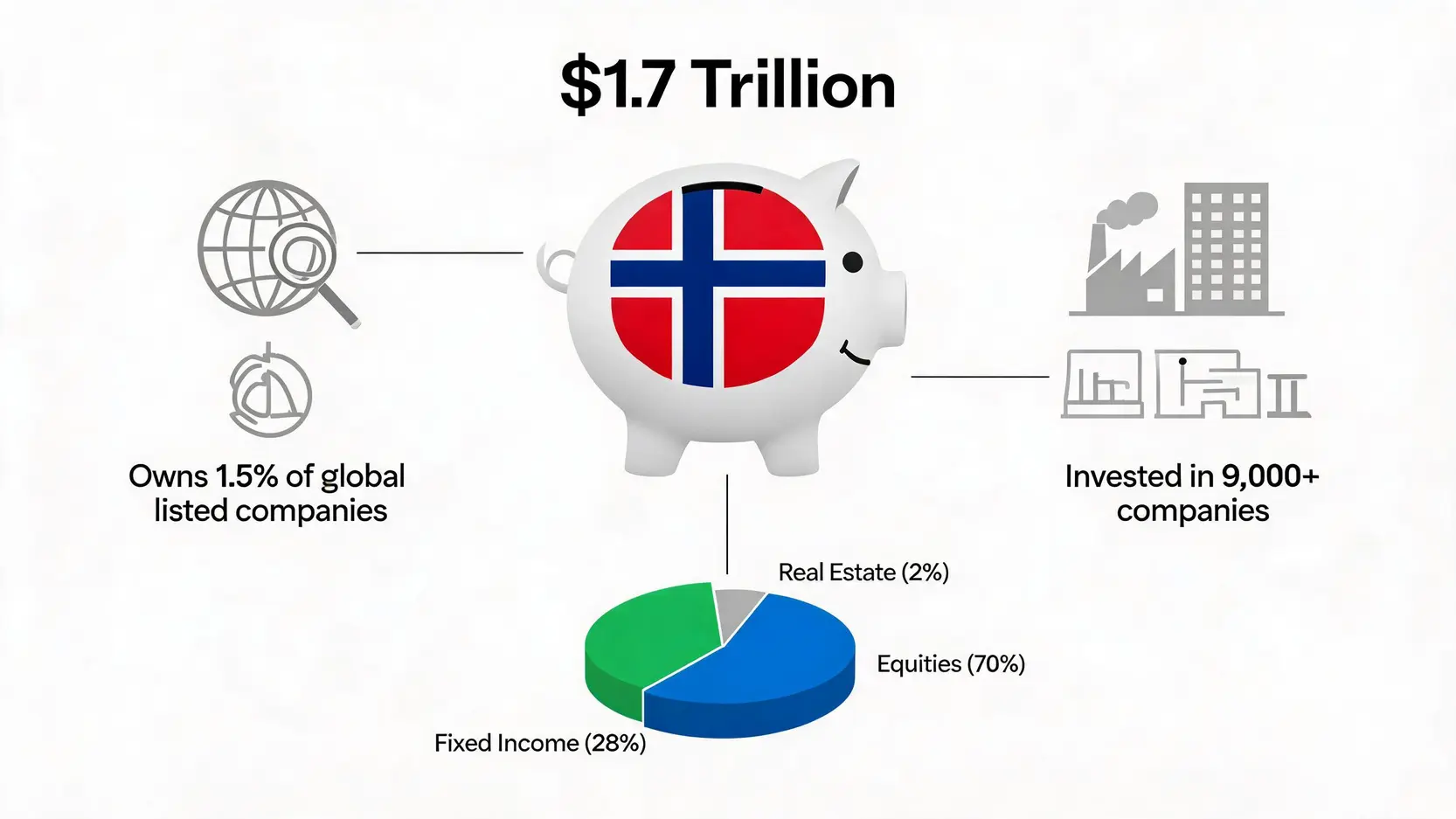
To grasp the fund’s market impact, one must first comprehend its sheer magnitude. As of early 2026, the fund’s market value hovers around $1.7 trillion USD. This colossal figure translates into significant ownership stakes across the global economy:
- 📈 Equity Dominance: The fund holds shares in over 9,000 companies across more than 70 countries. On average, it owns approximately 1.5% of every single listed company in the world.
- 🌍 Geographic Allocation: While global, its investments are heavily weighted towards developed markets, with North America and Europe representing the largest allocations.
- 📊 Asset Mix: The fund’s strategic asset allocation is typically around 70% in equities, 25-30% in fixed income, and a smaller portion in unlisted real estate and renewable energy infrastructure.
This diversification is not just about managing risk; it is a reflection of its role as a universal owner, participating in virtually every sector of the global economy.
The Direct Impact on Equity and Bond Markets
With trillions of dollars at its disposal, the fund’s investment decisions have direct and observable consequences for the markets. Its approach, however, is characterized by a long-term perspective, which differentiates its impact from that of more speculative institutional players.
A Top Shareholder: How Ownership in 9,000+ Companies Influences Stocks
When an investor of this size adjusts its portfolio, the market feels it. Although the fund aims to trade in a way that minimizes market disruption, its rebalancing activities can influence short-term liquidity and pricing. For smaller to mid-cap stocks, the fund’s entry or exit can be a significant price catalyst. More profoundly, its status as a permanent, major shareholder in blue-chip companies like Apple, Microsoft, and Nestlé provides a stable ownership base. This stability can be a double-edged sword; while it supports valuations, any major strategic shift or divestment by the fund sends a powerful signal to other investors, as seen with its ethical exclusions. The very presence of such a large, stable investor can affect everything from daily trading volumes to long-term corporate strategy. For more on this topic, exploring how institutional investors create liquidity can provide deeper context.
The Fund as a Stabilizing Force in Government Bond Markets
In the fixed-income space, the fund is a major creditor to governments worldwide. It is a significant holder of U.S. Treasuries, Japanese Government Bonds, and German Bunds. By acting as a consistent buyer of sovereign debt, it contributes to market liquidity and can act as a stabilizing anchor, especially during periods of volatility. Its investment-grade focus and long-term holding period help to compress yields and lower the cost of borrowing for major economies, making its role integral to the stability of the global financial system.
The ‘Norway Model’: The Market Ripple Effect of Ethical Investing
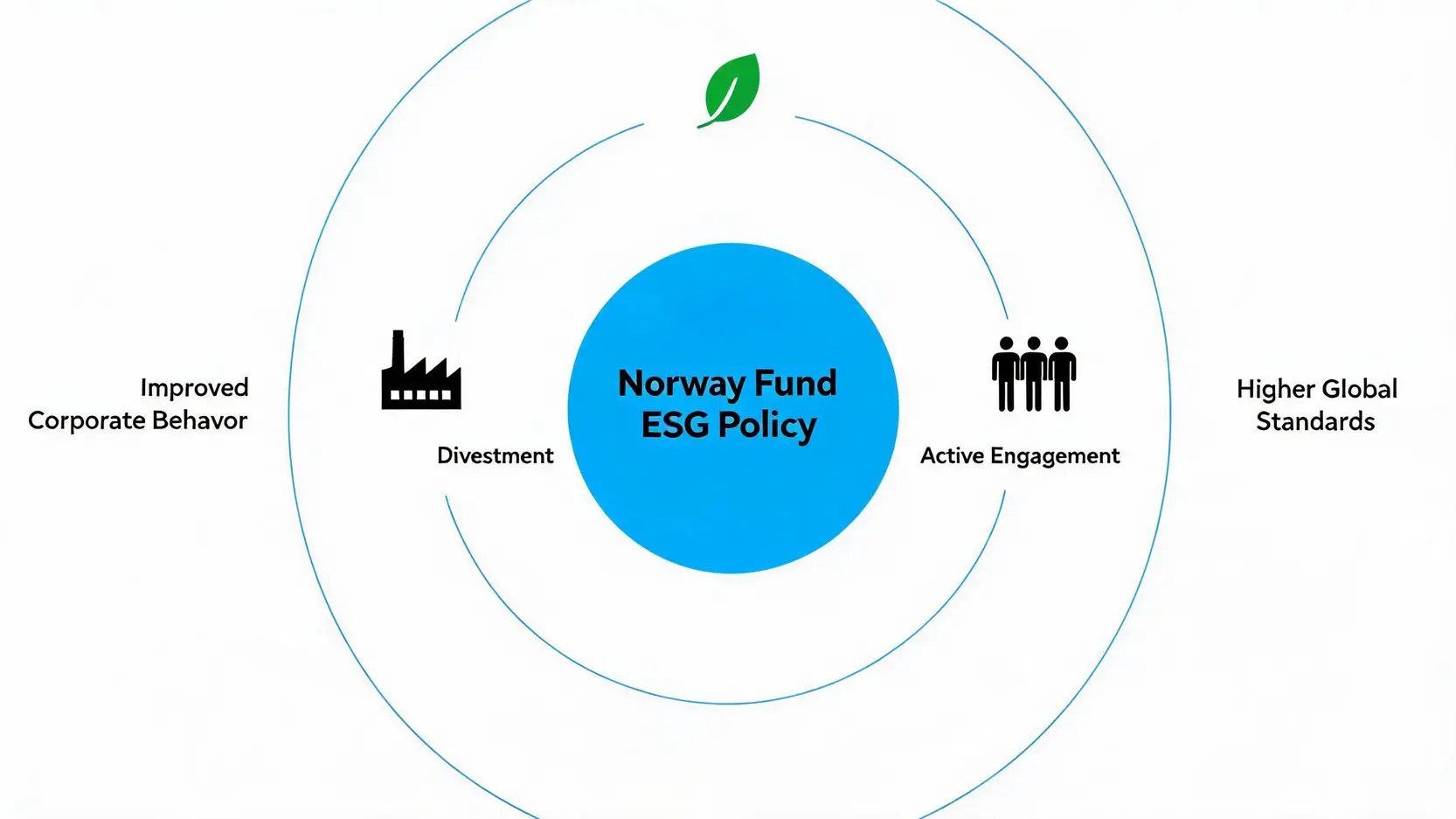
Perhaps the most significant and unique aspect of the Norway wealth fund’s market impact is its commitment to responsible investment. The fund operates under strict ethical guidelines established by the Norwegian Parliament, which prohibit investment in companies involved in severe environmental damage, human rights violations, corruption, or the production of certain controversial weapons and tobacco. This has created what is now known as the ‘Norway Model’ of ethical investing on a sovereign scale.
Case Study: The Financial Aftermath of Divesting from Coal and Tobacco
The fund’s decision to divest from companies heavily reliant on coal and from all tobacco producers sent shockwaves through those sectors. The immediate impact was a drop in the stock prices of the excluded companies as they lost a major, stable shareholder. More importantly, it created a powerful stigmatizing effect. Other institutional investors followed suit, citing similar ESG (Environmental, Social, and Governance) concerns. This increased the cost of capital for these industries and forced a broader market conversation about the long-term financial risks associated with these business models, a clear example of the fund acting as a global trendsetter.
Setting the Tone: How the Fund’s ESG Standards Pressure Global Corporations
The fund’s influence extends beyond mere exclusion. As an active owner, it engages directly with the companies it invests in, pushing for better governance, improved environmental reporting, and more sustainable business practices. Its voting record at shareholder meetings is publicly scrutinized and often sets a benchmark for other ESG-focused investors. Corporations are increasingly aware that failing to meet the fund’s standards on issues like climate risk or board diversity could lead to divestment. This proactive pressure forces companies to improve their ESG performance, creating a ripple effect that elevates corporate responsibility standards globally.
Analyzing the Performance: Does Ethical Screening Impact Returns?
A persistent debate surrounds whether ethical screening sacrifices financial returns. While excluding certain sectors may lead to short-term underperformance if those sectors rally, Norges Bank has argued that its responsible investment strategy is crucial for long-term risk management. By avoiding companies with unsustainable practices, the fund believes it is better positioned to weather future regulatory changes, shifts in consumer behavior, and climate-related financial risks. The fund’s own analysis suggests that, over the long run, the financial impact of its ethical guidelines has been neutral to slightly positive, reinforcing the thesis that sustainable practices are synonymous with long-term value creation.
Indirect Influence and Long-Term Market Trends
Beyond its direct trading activities, the fund’s philosophy and structure exert a more subtle, yet powerful, influence on market dynamics.
A Patient Capital Provider: Contrasting with Short-Term Activist Investors
The fund’s investment horizon is measured in decades, not quarters. This makes it a provider of ‘patient capital,’ a stark contrast to the short-term focus of many hedge funds and activist investors. This long-term perspective allows company management to focus on sustainable growth and innovation rather than simply meeting next quarter’s earnings estimates. By championing a long-term investment framework, the fund helps to counterbalance the market’s inherent short-termism, promoting a healthier and more stable corporate ecosystem.
Criticisms and Debates: Is the Fund Too Big to Fail?
The fund’s colossal size is not without its challenges and criticisms. One major concern is its potential lack of agility. Divesting from a large position without causing significant price drops is a major operational challenge. This has led some analysts to argue that the fund is, in effect, a massive index tracker with limited ability to actively deviate from the market. Furthermore, its sheer scale means it is systemically important; a major crisis forcing the Norwegian government to liquidate assets could have destabilizing consequences for global markets, raising questions about whether the fund has become ‘too big to fail’.
Conclusion
The Norway wealth fund is far more than a passive repository of oil money; it is an active and influential market shaper. Its multifaceted role as a universal owner, a patient capital provider, and a global leader in ethical investing creates a profound market impact. Through its sheer size, it provides stability and liquidity to equity and bond markets. Through its long-term perspective, it counteracts market short-termism. And through its pioneering ESG standards, it is actively steering global corporations towards a more sustainable future. For any serious investor or analyst in 2026, comprehending the Norway wealth fund market impact is indispensable for a complete understanding of the forces driving modern global finance.
Frequently Asked Questions (FAQ)
Q: How large is the Norwegian sovereign wealth fund?
A: As of early 2026, the Norway Government Pension Fund Global (GPFG) has a market value of approximately $1.7 trillion USD, making it the world’s largest single owner of public equities.
Q: What are the biggest holdings of the Norway wealth fund?
A: The fund’s largest equity holdings are typically in major global technology and consumer companies. This includes significant stakes in companies like Apple Inc., Microsoft Corporation, Amazon.com Inc., Alphabet Inc., and Nestlé S.A. Its holdings reflect the composition of global stock market indices.
Q: How does the fund’s ethical exclusion list affect companies?
A: Being placed on the exclusion list has two main effects. First, it causes an immediate sell-off as the fund divests its shares, which can negatively impact the company’s stock price. Second, and more importantly, it creates a significant reputational stigma, signaling to other global investors that the company has failed to meet a high standard of ESG performance, which can increase its cost of capital.
Q: Can individuals invest in the Norway wealth fund?
A: No, the fund is not open to private or institutional investors. It is a sovereign wealth fund exclusively owned by the state of Norway to manage its petroleum revenues for the benefit of its citizens.