In the financial landscape of 2026, the influence of single personalities on market dynamics has never been more pronounced. Elon Musk, a name synonymous with innovation and volatility, commands such significant market presence that a new class of investment vehicles has emerged in response. For investors seeking to harness the power of the S&P 500 without the associated turbulence of Musk-led enterprises, the SPNE ETF offers a novel and targeted solution. This ‘Ex-Elon Musk’ fund is designed for those who wish to separate a benchmark index from the performance of a specific, high-profile executive, providing a unique tool for risk management and values-based investing. Understanding what the SPNE ETF is and its strategic implications is crucial for any modern portfolio.
Table of Contents
What is the SPNE ETF? A Clear Definition
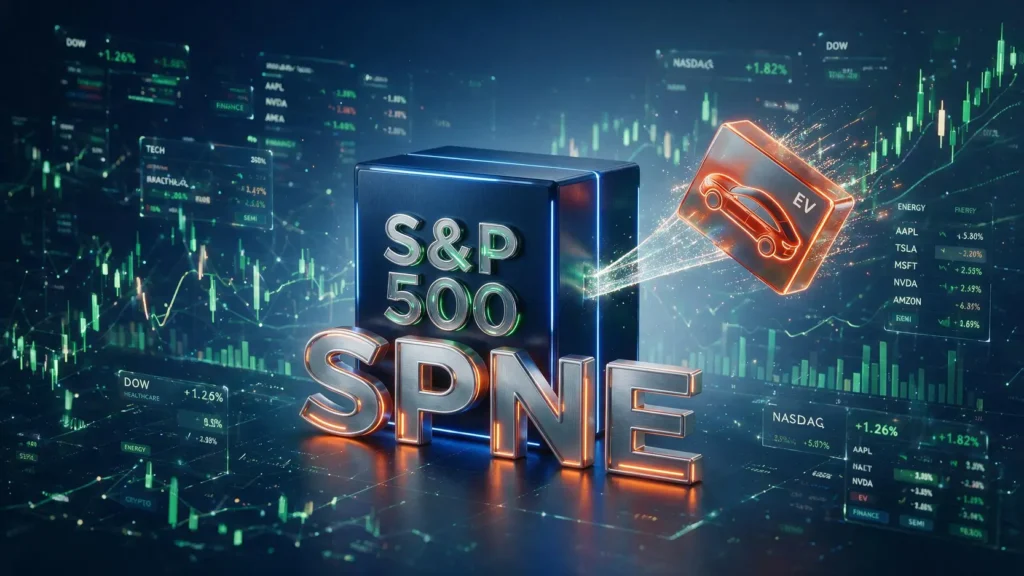
The SPNE ETF is a thematic exchange-traded fund designed to offer investors exposure to the S&P 500 index, but with a specific and significant modification: it excludes any company primarily led by Elon Musk. This targeted exclusion makes it a unique instrument for navigating the modern market.
Core Objective: Tracking the S&P 500 Minus Elon Musk’s Companies
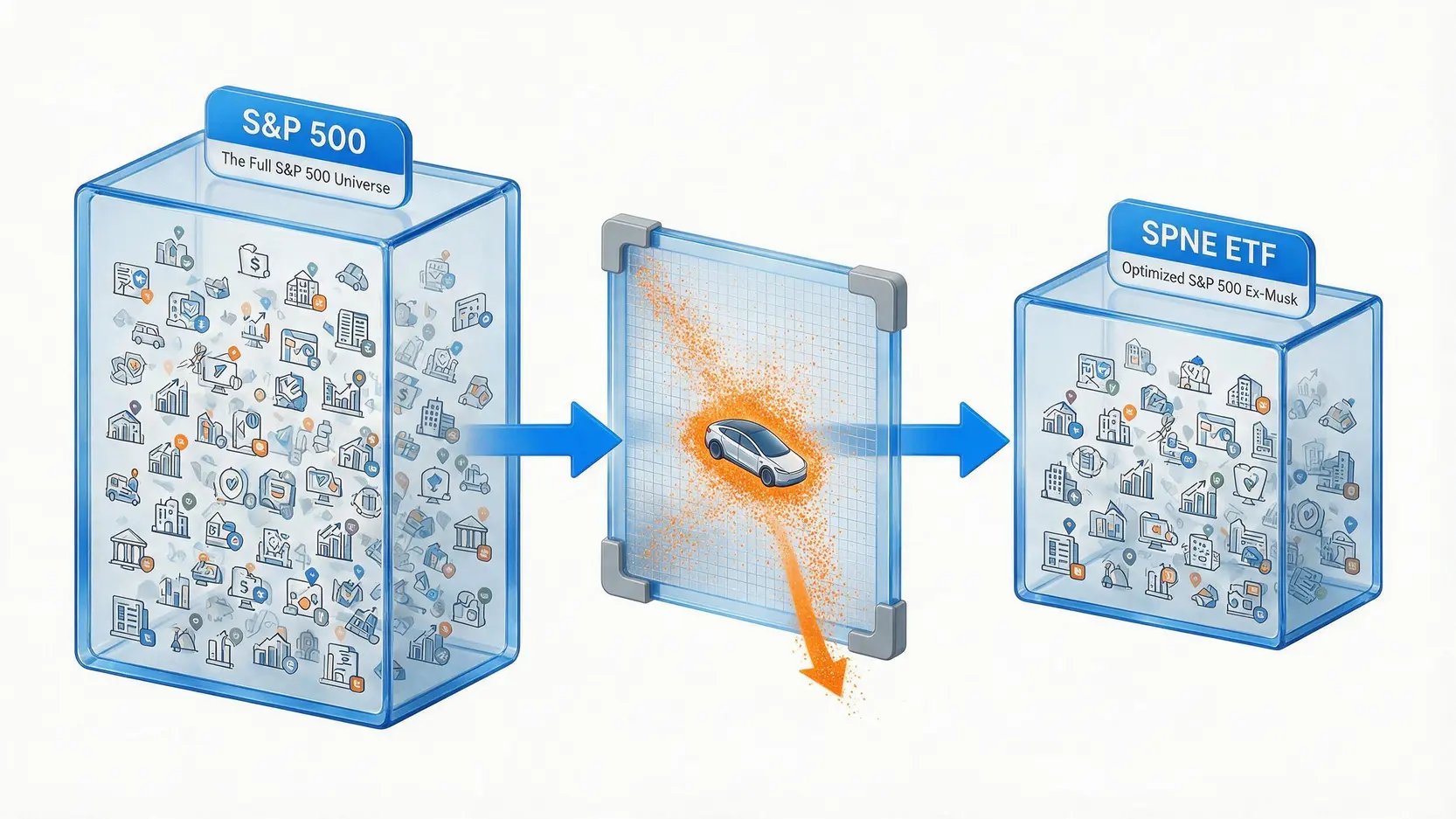
The primary goal of the SPNE ETF is to mirror the performance of the S&P 500, one of the most widely recognized benchmarks for large-cap U.S. equities, while systematically removing the direct impact of Musk’s corporate ventures. As of 2026, this primarily means excluding Tesla, Inc. (TSLA), and any other public companies that fall under his direct leadership. By doing so, the fund provides a return profile that reflects the broader market’s health without being skewed by the often-dramatic price swings and idiosyncratic risks associated with Musk’s businesses.
The Issuer and Strategy Behind the Fund
The fund is managed by a specialized asset management firm focusing on thematic and factor-based investing. The strategy is straightforward yet requires diligent oversight. It begins with the full list of S&P 500 constituents and applies a clear, rules-based screening process to identify and remove designated ‘Musk-led’ securities. The remaining ~499 companies are then weighted according to the S&P 500’s market-capitalization methodology. This approach ensures the fund remains a passive investment vehicle at its core, but with an active exclusion overlay.
Understanding its Counterpart: The QQNE (Nasdaq-100 Ex-Elon) ETF
The creation of SPNE was paralleled by a similar product for the tech-heavy Nasdaq-100 index: the QQNE ETF. While SPNE targets the broad S&P 500, QQNE applies the same ‘Ex-Elon Musk’ philosophy to the 100 largest non-financial companies listed on the Nasdaq. This allows investors who favor a technology and growth focus to also divest from Musk’s influence. Together, SPNE and QQNE represent a growing trend of ‘personality-based’ thematic funds, offering investors granular control over their exposure to specific corporate leaders.
Why Was the ‘Ex-Elon’ ETF Created?
The genesis of an ETF like SPNE is a direct response to distinct investor demands and evolving market structures. It’s more than a novelty; it addresses fundamental concerns about corporate governance, concentration risk, and the outsized influence of single individuals on widely-held indices.
Meeting Demand for ESG and Governance-Focused Investing
A significant driver behind the SPNE ETF is the growing emphasis on Environmental, Social, and Governance (ESG) criteria. For many investors, concerns around corporate governance—ranging from board independence to executive behavior—are paramount. Elon Musk’s leadership style, public statements, and corporate decisions have, at times, been controversial. The SPNE ETF provides a vehicle for investors who admire the S&P 500’s diversification but wish to exclude companies whose governance practices do not align with their personal principles. It allows for a passive investment strategy that still incorporates an active ethical or governance choice.
Addressing Concentration Risk from Mega-Cap Stocks like Tesla
The S&P 500, being a market-cap-weighted index, can become heavily concentrated in its largest constituents. For years, mega-cap technology and consumer discretionary stocks, including Tesla, have occupied top positions, meaning their performance disproportionately affects the entire index. A significant downturn in a single one of these giants can drag down the whole benchmark. By removing a volatile mega-cap stock like Tesla, the SPNE ETF aims to mitigate S&P 500 concentration risk and offer a more evenly distributed risk profile across the remaining constituents. This can be particularly appealing during periods of sector-specific volatility.
A Response to Market Volatility Tied to Musk’s Influence
Few CEOs in history have demonstrated the ability to move markets with a single social media post. Elon Musk’s public communications have been linked to significant and rapid price fluctuations in his companies’ stocks and even broader markets like cryptocurrencies. This ‘key-person risk’ is a source of volatility that many long-term, risk-averse investors prefer to avoid. The SPNE ETF serves as a direct tool to insulate a core equity holding from the unpredictable nature of one person’s public persona and its market-moving consequences.
How SPNE Works: A Look at the Investment Mechanism
The operational side of the SPNE ETF is built on a clear, rules-based methodology. It’s not about active stock picking; it’s about systematic exclusion. This ensures the fund remains transparent and predictable in its behavior, allowing investors to know exactly what they are—and are not—holding.
The Specific Criteria for Excluding Companies
The fund’s prospectus outlines precise criteria for what constitutes a ‘Musk-led’ company. The primary determinant is the individual’s role as Chief Executive Officer (CEO). Any company within the S&P 500 where Elon Musk holds the title of CEO is automatically flagged for exclusion. The criteria may also extend to other executive roles like Chairman of the Board or Chief Product Architect, provided these roles are coupled with a determination of ‘significant operational control and strategic influence’ by the index provider. This rules-based approach removes ambiguity and prevents the fund manager from making discretionary judgment calls.
Fund Rebalancing: How the ETF Stays ‘Musk-Free’
The SPNE ETF undergoes regular rebalancing to ensure it remains aligned with its core objective. This process typically occurs on a quarterly basis, coinciding with the rebalancing schedule of the S&P 500 index itself. During rebalancing, two key actions take place:
- Screening for New Exclusions: The fund screens the S&P 500 to see if Elon Musk has assumed a leadership role in any new constituent companies.
- Monitoring Existing Exclusions: If Musk were to step down from a leadership role at an excluded company, that company would become eligible for inclusion in the SPNE during the next rebalancing period.
This disciplined process ensures the ETF’s holdings are always up-to-date and ‘Musk-Free’.
Analyzing the Potential Performance Impact of Exclusion
Excluding a major component of the S&P 500 will inevitably lead to a performance deviation, known as tracking error. The impact can be positive or negative. For instance:
- Potential Underperformance: If Tesla (or another excluded company) experiences a strong bull run, SPNE holders would miss out on those gains, causing the ETF to underperform the standard S&P 500.
- Potential Outperformance: Conversely, if Tesla were to face a significant downturn due to production issues, regulatory hurdles, or market sentiment turning against it, SPNE would be shielded from that loss, potentially outperforming the S&P 500.
The core value proposition of SPNE is not to beat the S&P 500, but to offer a different risk/return profile by removing a specific source of perceived risk and volatility. The construction of the S&P 500 itself follows a strict S&P U.S. Indices Methodology, and any deviation from this, like the exclusion in SPNE, will naturally alter performance outcomes.
Is the SPNE ETF a Viable Investment or Just a Gimmick?
With any thematic ETF, the central question for an analyst is its long-term viability versus its novelty appeal. The SPNE ETF is no exception. Its utility depends entirely on an investor’s objectives, risk tolerance, and philosophical outlook. 🧐
The Bull Case: Arguments for Adding SPNE to Your Portfolio
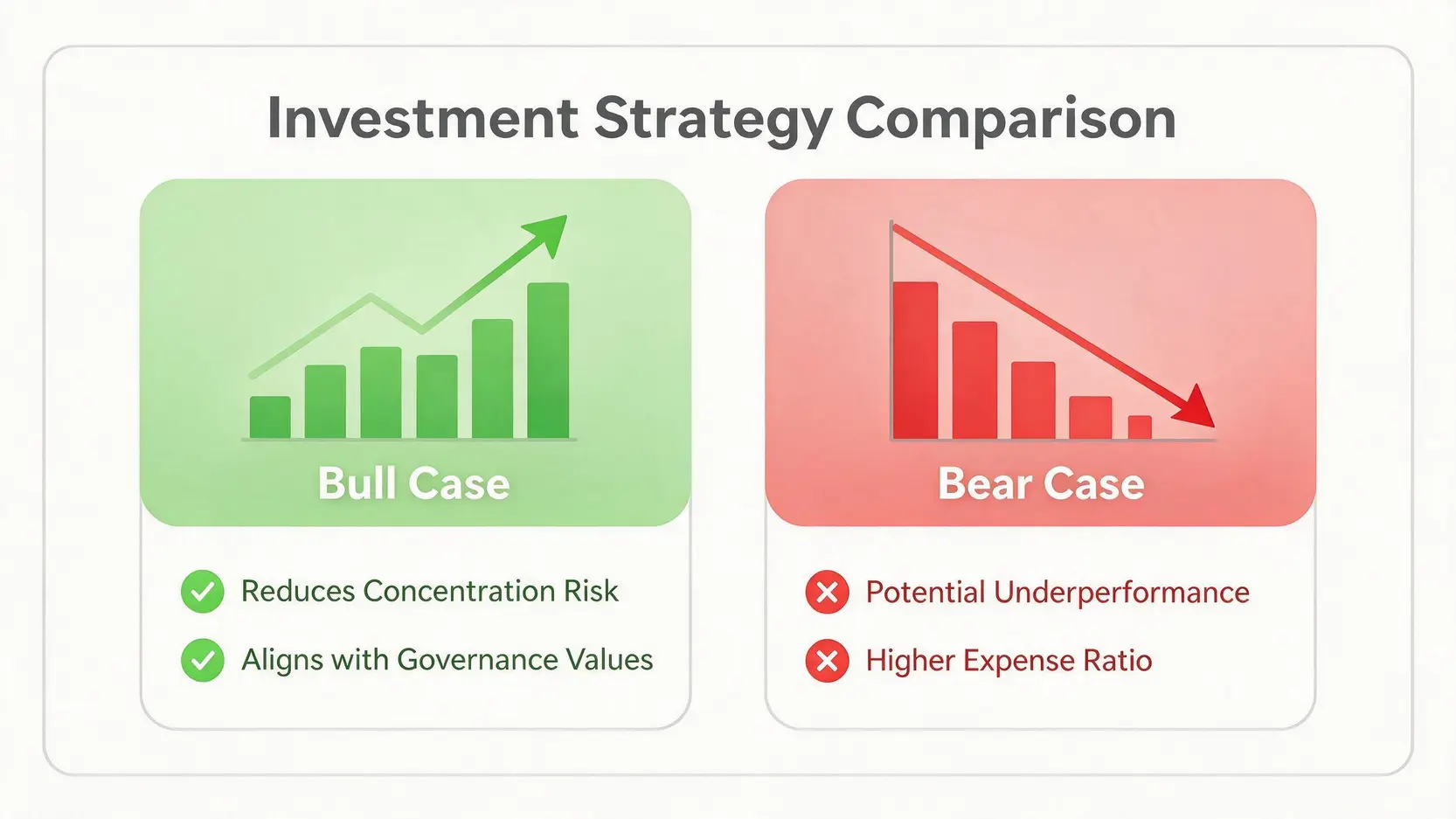
- Risk Diversification: It provides a powerful tool to reduce concentration risk and key-person risk within a core U.S. equity allocation.
- Values Alignment: For investors with specific governance concerns related to Elon Musk’s leadership, SPNE offers a way to invest according to their principles without abandoning a passive, index-based approach.
- Volatility Dampening: It can potentially offer a smoother ride than the standard S&P 500 by sidestepping the sharp price swings often associated with Musk’s companies and public statements.
- Strategic Tilt: It allows an investor to maintain broad market exposure while making an active bet against a specific, high-profile segment of the market.
The Bear Case: Potential Risks and Downsides
- Performance Drag: The most significant risk is missing out on substantial gains if Musk-led companies continue to be market leaders in innovation and growth. This could lead to long-term underperformance.
- Higher Expense Ratio: Thematic ETFs like SPNE typically carry higher fees than their conventional, broad-market counterparts (like VOO or SPY) to account for the specialized screening and rebalancing process.
- The ‘Gimmick’ Argument: Critics argue that creating funds around a single individual is a marketing ploy that could lead to a proliferation of overly-niche, potentially ineffective products.
- Concentration in Reverse: While it solves one concentration risk, an investor who pairs SPNE with other funds might inadvertently create new portfolio imbalances if they are not careful.
Who is the Ideal Investor for This Thematic ETF?
The SPNE ETF is not for everyone. It is most suitable for a specific type of investor:
- The Governance-Conscious Investor: An individual who prioritizes ESG principles, particularly the ‘G’ for governance, and wishes to avoid exposure to a controversial leadership style.
- The Risk-Averse Diversifier: An investor who already has significant exposure to Tesla or other Musk ventures (perhaps through other funds or direct stock ownership) and wants to use SPNE to balance their overall portfolio.
- The Institutional Investor with Mandates: Certain funds or institutions may have mandates that restrict investment in companies with high governance-related risks, making SPNE a suitable tool.
Frequently Asked Questions (FAQ)
Q: What is the official ticker for the S&P 500 Ex-Elon ETF?
A: The official and most commonly used ticker for this exchange-traded fund is SPNE.
Q: Which specific companies are excluded from the SPNE ETF?
A: As of the latest rebalancing in 2026, the primary exclusion from the S&P 500 is Tesla, Inc. (TSLA). The fund’s methodology is dynamic, so if other public companies under Elon Musk’s direct leadership were to be added to the S&P 500, they would also be excluded.
Q: How does SPNE differ from a standard S&P 500 index fund like VOO or SPY?
A: The core difference is the exclusion rule. While VOO and SPY aim to replicate the S&P 500 index exactly, holding all ~500 of its constituents, SPNE holds only the constituents that are not led by Elon Musk. This results in different holdings, weightings, and ultimately, different performance and risk profiles.
Q: What is the expense ratio for the SPNE ETF?
A: Thematic ETFs typically have higher costs. While the exact figure can vary, the expense ratio for SPNE is generally expected to be higher than the very low fees of standard index funds like SPY (around 0.09%) or VOO (around 0.03%), likely falling in the 0.20% to 0.45% range to cover its specialized strategy.
Conclusion
The SPNE ETF stands as a fascinating product of our time—a direct reflection of a market where individual personalities can wield as much influence as broad economic trends. It is a highly specialized tool, not a replacement for a core, diversified portfolio. Its primary function is to offer a choice: the ability to invest in the strength of the American large-cap market while simultaneously opting out of the specific risks and governance style associated with Elon Musk. For investors who find this proposition aligns with their financial goals and personal values, SPNE provides a viable and unique strategic option. However, for those focused purely on benchmark replication, the potential for tracking error and the higher fees may outweigh the benefits. As with any thematic investment, rigorous due diligence is essential to determine if the SPNE ETF truly fits within your personal investment philosophy.