Table of Contents
Olive Oil Market Snapshot: Size, Share, and Projections (2026-2034)
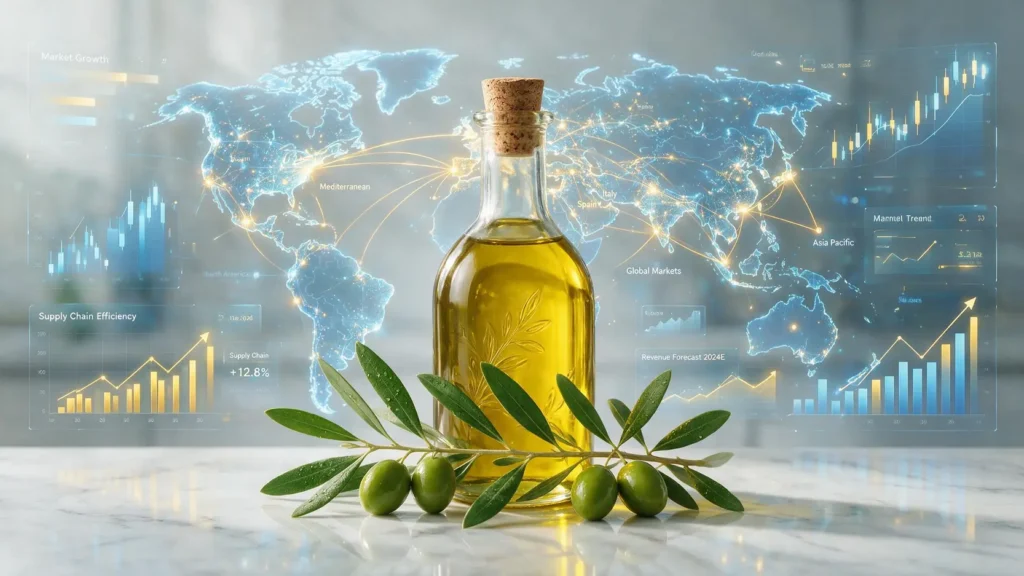
The global olive oil market continues its robust growth trajectory, solidifying its position as a multi-billion dollar industry. As of 2026, the market is witnessing significant expansion, driven by a powerful consumer shift towards healthier dietary fats and premium food products. This report provides a comprehensive global olive oil market outlook 2026, dissecting the trends, challenges, and opportunities that will define the industry in the coming years. Central to this growth is an increasing awareness of the health benefits associated with olive oil, a cornerstone of the Mediterranean diet, which is fueling both retail and foodservice demand worldwide. Key olive oil market trends indicate a promising future, though one not without its complexities.
Current Market Valuation and Forecasted Growth (CAGR)
As of 2026, the global olive oil market size is valued at approximately $20.31 billion. Projections indicate a strong and sustained growth pattern over the next decade. Analysts forecast the market will expand to $34.17 billion by 2034, demonstrating a compound annual growth rate (CAGR) of 5.97%. This impressive growth is a testament to the sector’s resilience and its alignment with prevailing global wellness trends. Investors and stakeholders should monitor this upward trajectory, which signals strong potential for returns and expansion. For more detailed market data, you can refer to reports from Fortune Business Insights.
Market Share Analysis by Key Players
The global olive oil market is characterized by a mix of multinational corporations and specialized regional producers. While moderately fragmented, a few key players hold a significant portion of the market share. Companies like Deoleo, S.A., Sovena Group, and Borges International Group continue to dominate through extensive distribution networks, strategic acquisitions, and strong brand recognition. Their market strategies often involve both premium and mass-market product lines to cater to a diverse consumer base. Emerging artisanal and single-origin brands are, however, gaining traction, appealing to consumers seeking authenticity and unique flavor profiles.
Key Market Drivers and Dynamics Shaping the Olive Oil Market Growth
Several powerful forces are propelling the olive oil market forward. These drivers are reshaping consumer behavior and creating new avenues for growth and innovation within the industry.
The Impact of Rising Health Consciousness on Demand
Without a doubt, the single most significant driver for the olive oil market growth is the global rise in health consciousness. Consumers are increasingly educated about the benefits of monounsaturated fats, antioxidants, and anti-inflammatory properties found in high-quality olive oil. This awareness has led to a dietary shift away from traditional cooking oils and animal fats. Extra virgin olive oil, in particular, is benefiting from this trend, as it is perceived as the purest and most healthful category. This dynamic is not only prevalent in traditional markets like Europe but is also rapidly gaining momentum in North America and the Asia-Pacific region.
Shifting Culinary Preferences and the Rise of the Mediterranean Diet
The widespread adoption of the Mediterranean diet, lauded for its health benefits and rich flavors, has been a major boon for the olive oil market. As international cuisines become more mainstream, olive oil is being integrated into a wider variety of dishes beyond its traditional Mediterranean applications. From salad dressings and marinades to baking and even drizzling over finished dishes, its versatility is a key selling point. The foodie culture, amplified by social media and cooking shows, has further elevated olive oil from a simple commodity to a premium culinary ingredient. 🥑
Market Segmentation Deep Dive
To fully understand the global olive oil market outlook, a detailed analysis of its segments is crucial. The market can be broken down by type, distribution channel, and region, each with unique characteristics and growth prospects.
Analysis by Type: Extra Virgin, Virgin, Refined Olive Oil
The market is primarily segmented into three main types:
- Extra Virgin Olive Oil (EVOO): This is the highest-grade, unrefined oil extracted through cold-pressing. It retains the most nutrients and flavor, commanding a premium price. The EVOO segment holds the largest market share and is expected to grow the fastest, driven by health-conscious consumers.
- Virgin Olive Oil: Also unrefined, this type has slightly higher acidity levels than EVOO but is still considered high quality. It serves as a mid-range option for consumers.
- Refined (and Pure) Olive Oil: This category includes oils that have been chemically processed to remove flaws. It has a more neutral flavor and a higher smoke point, making it suitable for high-heat cooking. It is often blended with a small amount of virgin oil and marketed as ‘Pure Olive Oil’ or simply ‘Olive Oil’.
Analysis by Distribution Channel: Retail, Foodservice, and Online
Distribution channels are critical to market reach:
- Retail: Supermarkets, hypermarkets, and specialty stores constitute the largest distribution channel. Product placement, branding, and packaging play a significant role here.
- Foodservice: The HORECA (Hotels, Restaurants, Catering) sector is a major consumer, using olive oil in bulk for food preparation.
- Online: E-commerce platforms are the fastest-growing channel, offering consumers a wider selection, competitive pricing, and the convenience of home delivery. This channel is particularly effective for artisanal and premium brands to reach a global audience.
Analysis by Region: Europe, North America, Asia-Pacific
The global market is geographically diverse, with distinct regional dynamics. Europe is the traditional powerhouse, but other regions are rapidly emerging as key growth markets.
Regional Analysis: Production & Consumption Hotspots in the European Olive Oil Market and Beyond
A geographical breakdown reveals the deep roots of the olive oil industry in the Mediterranean and its burgeoning presence across the globe.
Dominance of the European Market: Spain, Italy, Greece
The European olive oil market remains the epicenter of global production and consumption. Spain, Italy, and Greece are the top three producers, accounting for the vast majority of the world’s supply. Spain is the undisputed leader in production volume, while Italy is renowned for its high-quality, premium brands. These countries not only dominate production but also have high domestic consumption rates, deeply ingrained in their culinary traditions. However, they are also the largest exporters, supplying the world with liquid gold.
Growth and Potential in North American and APAC Markets
North America, particularly the United States, represents a significant growth market. While per capita consumption is lower than in Europe, it is rising steadily. The increasing popularity of healthy eating and gourmet cooking is driving this demand. The Asia-Pacific (APAC) region is also emerging as a frontier for growth. Countries like Japan, China, and Australia are showing a growing appetite for olive oil, driven by an expanding middle class, urbanization, and a shift towards Western dietary patterns. These markets present substantial opportunities for producers who can effectively market the health and culinary benefits of their products.
Competitive Landscape and Key Company Profiles
The competitive environment of the global olive oil market is dynamic, with established leaders and nimble challengers vying for market share.
Market Concentration and Strategic Movements
The market is moderately concentrated, with the top players leveraging economies of scale, robust supply chains, and powerful marketing to maintain their positions. Key strategies include mergers and acquisitions to expand geographical footprint, vertical integration to control quality from grove to bottle, and product innovation, such as flavored or organic olive oils.
Profiles of Top 5 Industry Leaders
The industry is led by several key global players:
- Deoleo, S.A. (Spain): Owner of world-renowned brands like Bertolli, Carapelli, and Carbonell, Deoleo is a global leader with a strong presence in multiple countries.
- Sovena Group (Portugal): A major player with a portfolio of brands including Andorinha and Oliveira da Serra, Sovena is known for its large-scale production and global reach.
- Borges International Group (Spain): With a history spanning over a century, Borges is a household name, offering a wide range of Mediterranean products, with olive oil at its core.
- Salov Group (Italy): Producer of the famous Filippo Berio brand, Salov is a key Italian exporter with a strong foothold in the UK and US markets.
- Gallo (Portugal): A leading brand in Portugal, Gallo has expanded its presence internationally, recognized for its quality and heritage.
🆕 Navigating Challenges & Opportunities Towards 2026
The path to 2034 is paved with both challenges and significant opportunities. Stakeholders must navigate climate-related risks while capitalizing on technological advancements and emerging market demands.
Impact of Climate Change and Geopolitics on Production (Spain, Tunisia)
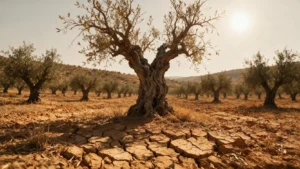
Climate change poses the most significant threat to olive oil production. Extreme weather events, including droughts and heatwaves, particularly in key regions like Spain and Tunisia, can severely impact harvest yields and quality. This volatility leads to price fluctuations and potential supply chain disruptions. Furthermore, geopolitical risks, including trade policies and regional instability, can affect market access and operational costs.
Technological Innovations in Production and Quality Control
Technology offers a powerful solution to some of these challenges. Innovations in irrigation (drip irrigation), pest control (integrated pest management), and harvesting (mechanized harvesters) are improving efficiency and sustainability. Additionally, advanced analytical techniques and blockchain technology are being employed to ensure quality, combat fraud, and provide consumers with greater transparency regarding the origin and authenticity of the oil. 💻
Emerging Investment Opportunities and Growth Frontiers
Despite the challenges, numerous opportunities exist. Investment in agritech to mitigate climate risks is a promising area. There is also significant growth potential in developing markets, particularly in Asia and Latin America. Furthermore, the demand for specialty products, such as organic, single-estate, and early-harvest olive oils, continues to grow, offering high-margin opportunities for niche producers.
Conclusion
The global olive oil market outlook for 2026 and beyond is decidedly positive, underpinned by strong fundamentals of health, wellness, and culinary trends. While the industry faces significant headwinds from climate change and geopolitical tensions, it is also ripe with opportunity. Technological innovation, market expansion into new regions, and the growing demand for premium products are set to drive growth. Stakeholders who can successfully navigate the risks while strategically investing in sustainability, quality, and marketing will be well-positioned to thrive in this dynamic and expanding market. The journey towards 2034 will be one of adaptation and innovation, as liquid gold continues to solidify its place in kitchens around the world.
Frequently Asked Questions (FAQ)
Q: What is the projected size of the global olive oil market by 2034?
A: The global olive oil market is projected to reach approximately $34.17 billion by 2034, growing at a CAGR of around 5.97% from 2026. This growth is primarily driven by increasing health consciousness and the global adoption of the Mediterranean diet.
Q: Which type of olive oil holds the largest market share?
A: Extra Virgin Olive Oil (EVOO) holds the largest share of the market. Its popularity stems from its superior health benefits, premium quality, and rich flavor profile, which appeal to discerning and health-conscious consumers worldwide.
Q: How do government policies and tariffs affect the olive oil market?
A: Government policies, such as the EU’s Common Agricultural Policy (CAP), provide subsidies that influence production levels and prices. International trade tariffs, like those that have been imposed between the U.S. and the EU, can significantly impact the final cost for consumers and disrupt established trade flows, creating advantages for producers in non-tariff regions. For more insight, you can review analysis from institutions like the Publications Office of the EU.
Q: Which region dominates global olive oil production?
A: Europe is the dominant region for olive oil production, with Spain, Italy, and Greece being the top three producing countries. Spain alone accounts for a substantial portion of the world’s total output.