
The landscape of global finance is currently undergoing a profound structural realignment. As we navigate through the midpoint of the year, institutional focus has sharply pivoted, making the analysis of precious metal ETF inflows June 2026 an absolute imperative for serious market participants. Recent macroeconomic data reveals a stark and unprecedented contrast in asset allocation behavior. While physical bullion maintains robust historical support levels driven by sustained central bank accumulation, the paper derivative markets tell a vastly different story. Investors are increasingly seeking robust methodologies for analyzing precious metal etf inflows to decode why traditional hedging mechanisms are rapidly evolving. This glaring divergence highlights a critical phase of the safe-haven rush cooling, signaling that institutional capital is rotating in response to shifting yield curves and persistent monetary tightening. Conducting a thorough June 2026 market analysis for gold ETFs is therefore essential for strategic portfolio optimization and rigorous risk management in this highly complex environment.
Table of Contents
The Great Shift: Analyzing Precious Metal ETF Inflows in June 2026
To accurately gauge the trajectory of commodity markets, one must look beneath the surface of spot price momentum and examine the underlying liquidity structures. The act of analyzing precious metal etf inflows provides a transparent window into institutional sentiment and risk appetite. Throughout the second quarter of 2026, market analysts have observed a decisive capital migration. Exchange-Traded Funds (ETFs) backed by physical gold and silver, which historically act as primary conduits for safe-haven capital during times of elevated geopolitical risk, are experiencing a sustained period of capital extraction.
This phenomenon is not merely a transient anomaly but a calculated recalibration by sophisticated market participants. As inflation metrics demonstrate a stubborn resilience in developed economies, the opportunity cost of holding non-yielding assets has surged. Consequently, the precious metal ETF inflows June 2026 data reflects a broader macroeconomic pivot where capital is being systematically redeployed into short-duration fixed income instruments and high-yield corporate credit. By analyzing these flows, it becomes evident that the market is pricing in a prolonged period of restrictive monetary conditions, neutralizing the traditional speculative premium previously embedded in precious metal ETFs.
Furthermore, the structural mechanics of how ETF flows affect gold prices cannot be understated. When capital exits these funds, the authorized participants must liquidate the underlying physical bullion, creating a headwind for price appreciation in the wholesale market. For a deeper understanding of this mechanical relationship, investors should closely monitor GLD flows, as they serve as a bellwether for broader institutional positioning across the precious metals complex.
Gold Prices Up, But ETF Flows Trickle? A June 2026 Market Analysis
One of the most perplexing market dynamics observed in recent months is the apparent disconnect between resilient spot gold prices and the persistent attrition of paper market holdings. A comprehensive June 2026 market analysis for gold ETFs requires reconciling this divergence. While gold continues to trade near historic highs, largely insulated by sovereign wealth fund acquisitions and emerging market central bank diversification, the ETF sector is painting a fundamentally bearish picture.
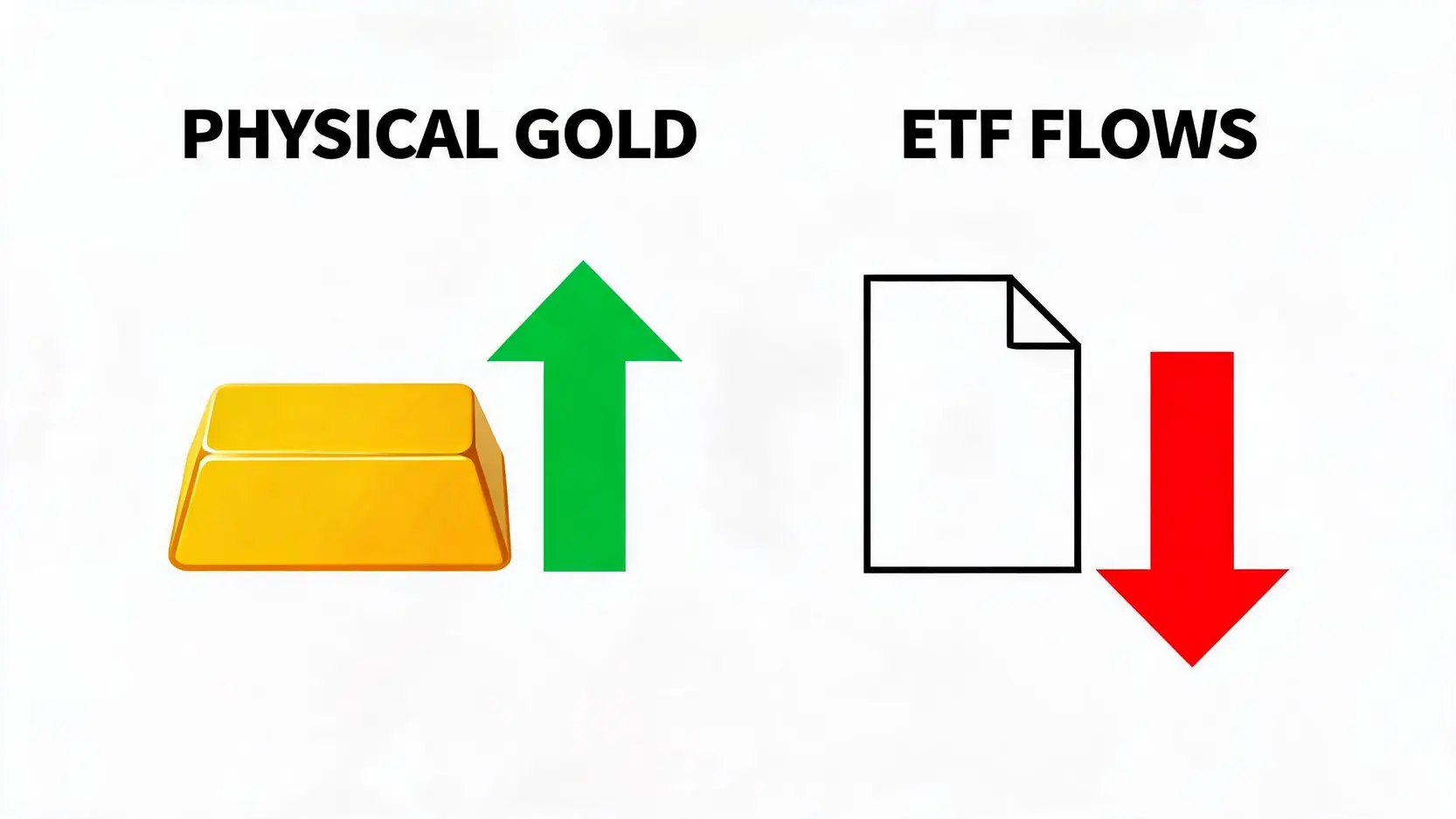
According to authoritative industry tracking, the overarching narrative is one of deceleration. The World Gold Council data for June 2026 explicitly noted that global gold ETF net flows slowed to a mere trickle, with total assets under management declining significantly on a month-over-month basis. This empirical evidence underscores the reality that retail and institutional investors in Western markets are systematically reducing their exposure to gold ETFs. The safe-haven rush cooling is most pronounced in North America, where the gravitational pull of soaring Treasury yields has fundamentally altered the risk-reward calculus for precious metal allocations.
This market environment demands tactical agility. The sustained demand from the Eastern hemisphere in the physical OTC markets is effectively masking the structural weakness in Western ETF demand. However, historical precedent dictates that extreme divergences between physical demand and paper market outflows eventually resolve, often resulting in elevated volatility. Traders relying solely on price action without monitoring the underlying volume of global gold ETF liquidities risk being caught on the wrong side of significant macroeconomic realignments.
How Federal Reserve Policies Triggered Outflows in Gold ETFs
To fully decode the current market structure, one must analyze the epicenter of global liquidity: the United States Federal Reserve. The correlation between central bank forward guidance and commodity market behavior is absolute. It is unequivocally clear how Federal Reserve policies triggered outflows in the precious metals sector throughout the first half of 2026. The central bank’s unwavering commitment to a “higher for longer” interest rate regime has profoundly impacted the fundamental valuation models of non-interest-bearing assets.
As real interest rates—nominal rates adjusted for inflation expectations—pushed higher, the intrinsic appeal of gold ETFs diminished. Institutional capital allocators operate on strict risk-adjusted return mandates. When risk-free sovereign debt offers yields exceeding historical averages, the justification for maintaining large strategic allocations in precious metal ETFs dissipates. This monetary environment effectively starves the gold market of the speculative capital required to drive new bull market phases, reinforcing the safe-haven rush cooling narrative.
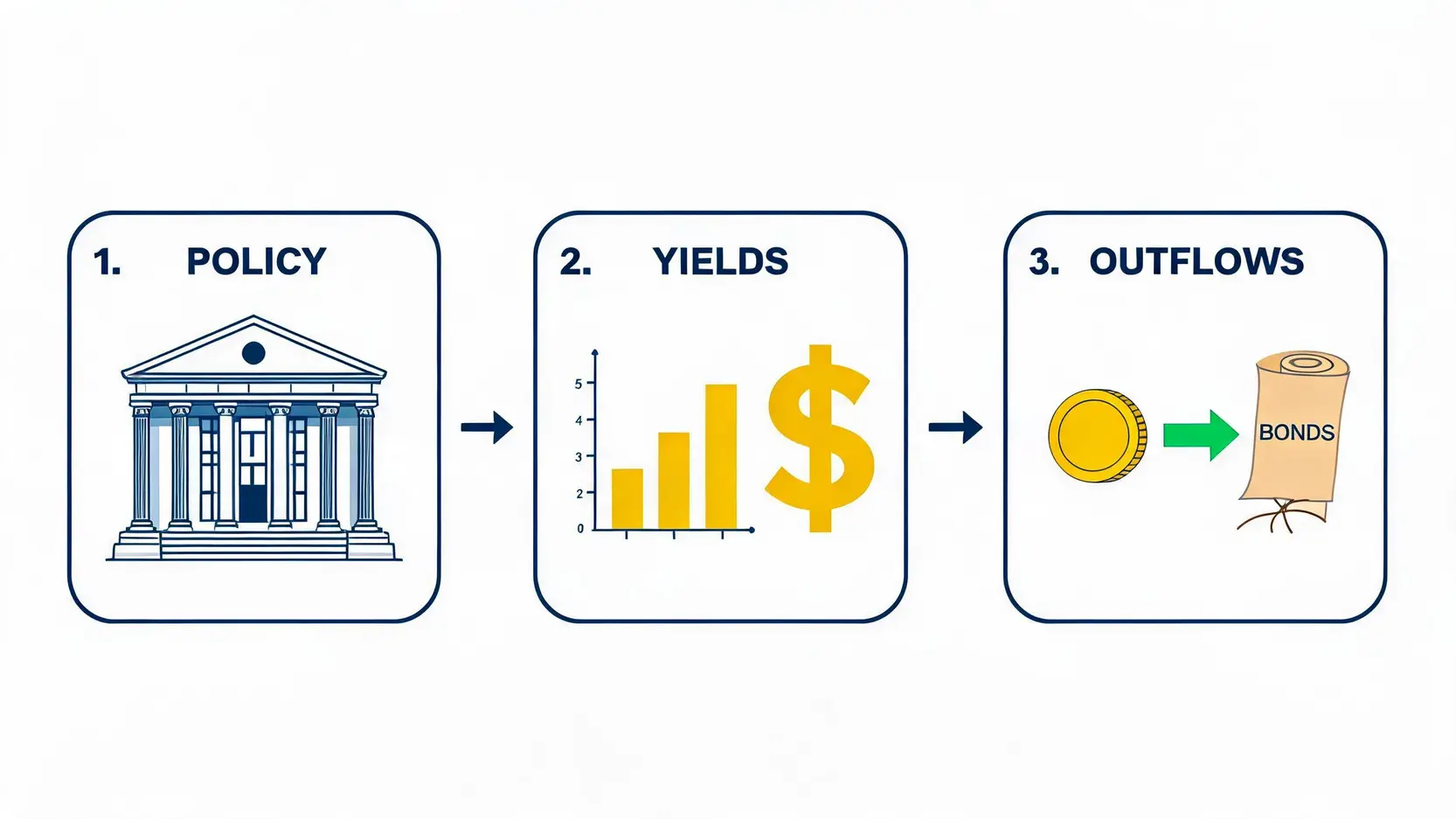
Moreover, the continuation of quantitative tightening (QT) has steadily drained excess liquidity from the financial system. This reduction in the global money supply acts as a structural anchor on precious metal ETF inflows June 2026. As the cost of capital rises and the availability of cheap leverage evaporates, speculative positions in gold ETFs are aggressively unwound. The transmission mechanism is clear: stringent monetary policy strengthens the US Dollar, elevates real yields, and consequently triggers massive global gold ETF liquidities being reallocated into more capital-efficient investment vehicles.
Regional Breakdown: North America, Europe, and Asia Dynamics
A granular examination of the precious metal ETF inflows June 2026 reveals profound regional asymmetries. The global gold market is not monolithic; it is highly fragmented, with different macroeconomic drivers dominating distinct geographical zones. Understanding these regional discrepancies is crucial for synthesizing an accurate June 2026 market analysis for gold ETFs.
In North America, the outflows have been relentless. Dominated by large institutional players and highly reactive to Federal Reserve policy shifts, North American funds have accounted for the lion’s share of global liquidations. The aggressive positioning in the US Dollar index and high-yielding short-term treasuries has systematically drained capital from domestic gold ETFs. Conversely, Europe has demonstrated marginal resilience. Intermittent inflows in European-listed funds suggest a persistent underlying anxiety regarding regional economic stagnation and fragmented sovereign debt concerns across the Eurozone.
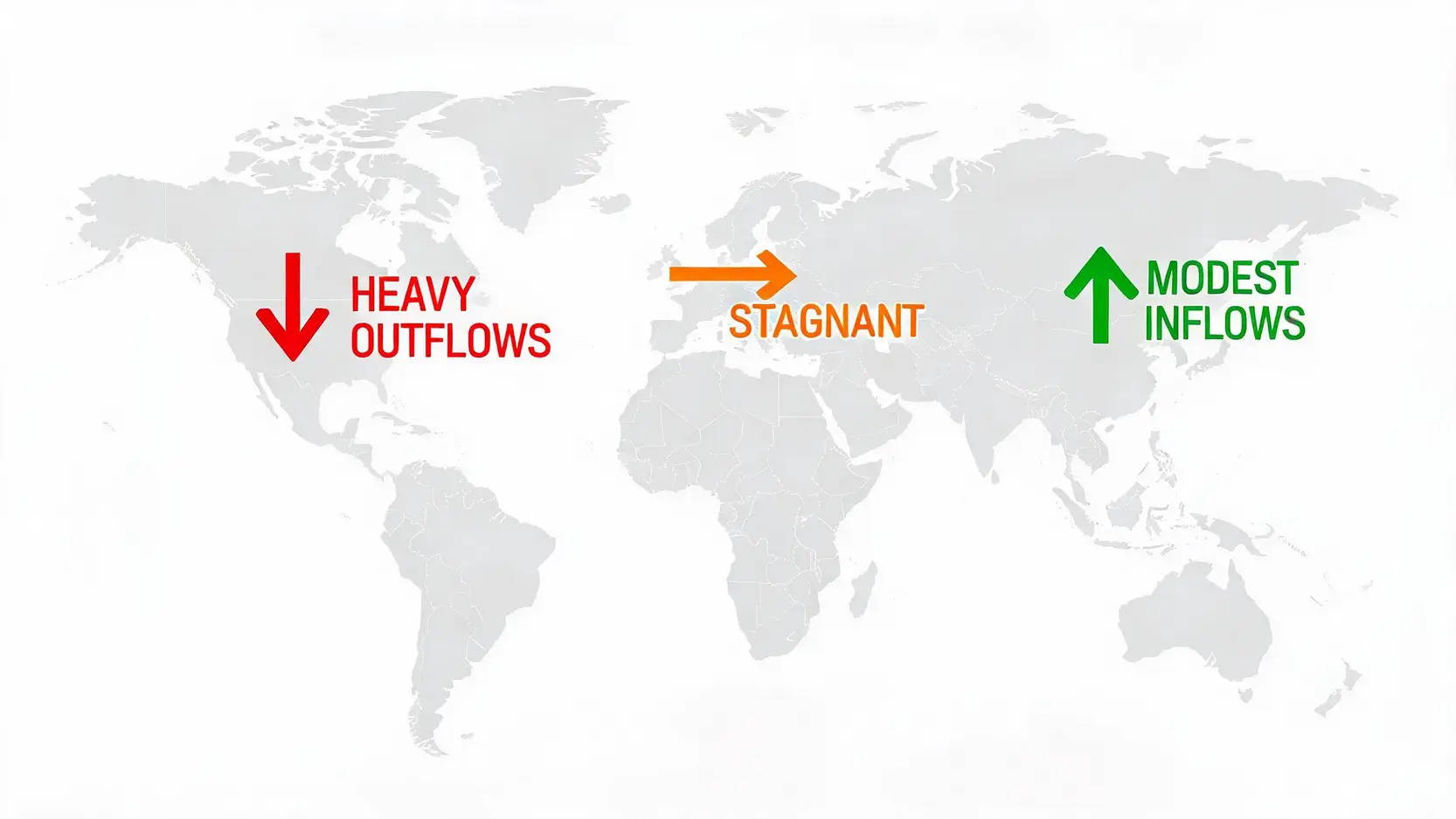
Meanwhile, Asia continues to present a contrasting paradigm. Driven by currency depreciation concerns and a structural cultural affinity for precious metals, Asian markets have maintained modest but consistent ETF inflows. However, the scale of Asian ETF participation remains insufficient to offset the massive liquidations originating from North American institutions. This geographic imbalance is a defining characteristic of the current market cycle.
| Region | June 2026 Flow Dynamics | Primary Macro Driver |
|---|---|---|
| North America | Heavy Outflows | Rising Real Yields & Strong USD |
| Europe | Stagnant / Minor Inflows | Economic Stagnation & Geopolitical Proximity |
| Asia | Modest Inflows | Local Currency Hedging & Wealth Preservation |
Decoding June 2026’s Precious Metal ETF Inflows: What Investors Must Know
For the sophisticated investor, navigating this environment requires transitioning from passive accumulation to active, data-driven management. When assessing global gold ETF liquidities, the absolute paramount metric is the velocity of capital movement. The rapid pace at which the safe-haven rush is cooling indicates that market participants are pricing in a localized economic soft landing, effectively discarding tail-risk hedges that were heavily accumulated in previous quarters.
Investors must recognize that relying purely on historical correlations is inherently dangerous in a structurally shifted monetary environment. The traditional view that gold will automatically surge during any form of global instability has been rigorously stress-tested in 2026, and the ETF data proves that capital allocators prioritize yield and liquidity above theoretical safe-haven attributes. To thrive, portfolios must be dynamically adjusted. If one is to maintain exposure to precious metals, distinguishing between how ETF flows affect gold prices and how physical supply-demand imbalances dictate long-term floors is vital.
Furthermore, managing duration risk and understanding the mechanics of currency interventions are now prerequisite skills. The current outflow cycle in gold ETFs will likely persist until a definitive fracture appears in the macroeconomic data—specifically, a sharp deterioration in labor markets or a systemic credit event that forces central banks to aggressively pivot. Until such a catalyst materializes, the prevailing headwind of restrictive monetary policy will continue to cap the upside potential of paper gold instruments.
Conclusion
The empirical data encompassing the precious metal ETF inflows June 2026 serves as a definitive compass for the broader financial markets. The relentless outflow from major gold and silver exchange-traded funds is not an arbitrary market fluctuation; it is a calculated, institutional response to an entrenched “higher for longer” interest rate environment. The clear realization of how Federal Reserve policies triggered outflows forces a paradigm shift in how modern portfolios construct their defensive parameters. While the physical markets continue to be underpinned by central bank diversification strategies, the paper markets reflect a ruthless efficiency in chasing yield and capital optimization. Investors navigating the remainder of 2026 must respect the intelligence embedded within these capital flows, favoring analytical rigor over outdated safe-haven dogmas. A disciplined, objective evaluation of ETF liquidity metrics remains the ultimate safeguard against unseen market realignments.
Frequently Asked Questions (FAQ)
Q: What is the primary reason for the decline in precious metal ETF inflows June 2026?
A: The dominant catalyst is the sustained restrictive monetary policy orchestrated by the Federal Reserve. High real interest rates and attractive yields on sovereign debt have dramatically increased the opportunity cost of holding non-yielding assets, prompting institutional investors to liquidate their gold ETF positions in favor of higher-yielding fixed-income instruments.
Q: Why are physical gold prices remaining elevated while ETF flows are heavily negative?
A: This structural divergence is caused by bifurcated market participation. While Western institutional investors are selling ETF holdings due to yield curve dynamics, Eastern central banks and sovereign wealth funds are aggressively purchasing physical bullion in the Over-The-Counter (OTC) markets for reserve diversification, effectively setting a high floor for spot prices.
Q: How exactly have Federal Reserve policies triggered outflows from precious metal ETFs?
A: By maintaining elevated benchmark interest rates and executing ongoing quantitative tightening, the Federal Reserve has strengthened the US Dollar and pushed real yields higher. This environment fundamentally penalizes capital parked in gold ETFs, forcing risk managers to reallocate funds to capitalize on the yield premium offered by the debt markets.
Q: Are the safe-haven rush cooling effects uniform across all global markets?
A: No, the effects are highly regionalized. North America has experienced the most severe outflows due to the direct impact of US monetary policy. Europe has seen stagnant to slightly positive flows amid localized economic anxieties, while Asia continues to record modest inflows driven by currency hedging and structural demand for wealth preservation.
Q: How should investors adjust their strategies based on current global gold ETF liquidities?
A: Investors must pivot toward data-driven, tactical asset allocation rather than relying on passive safe-haven holdings. Given the current outflows, reducing exposure to paper gold instruments while maintaining agility in short-duration fixed income is prudent. Precious metal allocations should only be scaled up when definitive macroeconomic data indicates an imminent pivot to monetary easing by central banks.