Table of Contents
Why Spain is the Epicenter of the Global Olive Oil Market
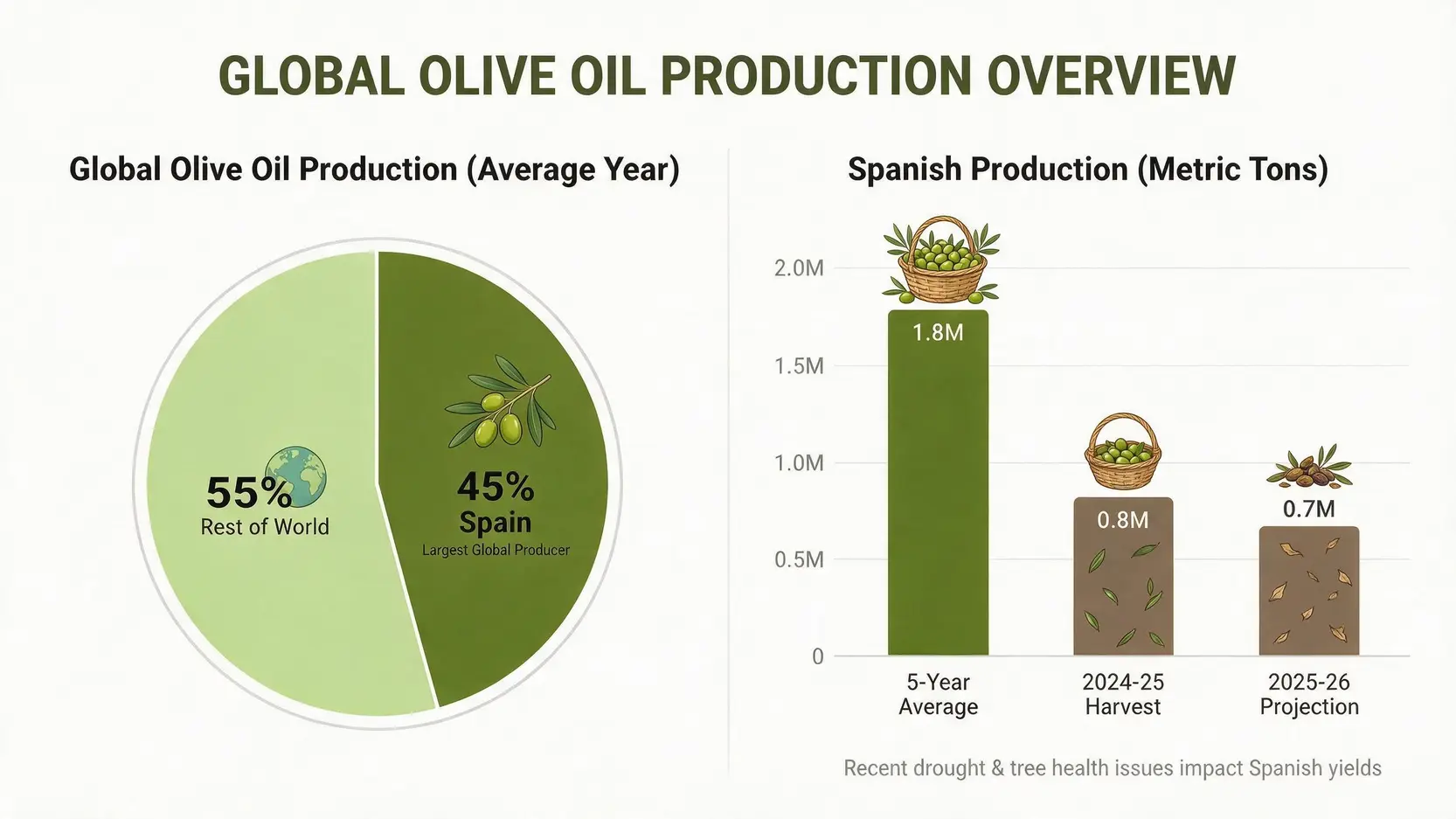
The global olive oil market is intrinsically linked to the health of Spain’s olive groves. For decades, Spain has been the undisputed leader in olive oil production, accounting for over 45% of the world’s supply in a typical year. This dominance means that any disruption in its output has immediate and significant consequences for international prices and availability. The current crisis, stemming from persistent Spain heatwave olive oil production issues, has exposed the vulnerability of this concentrated supply chain. The impact of heatwaves on olive production is no longer a future projection; it is the reality of 2026, directly contributing to rising olive oil prices worldwide.
Spain’s Dominance: A Look at the Production Statistics
Historically, Spain’s production volume dwarfs that of other major producers like Italy and Greece. In healthy harvest years, Spanish mills can press over 1.8 million metric tons of olive oil. Regions like Andalusia are the heartland of this production, often single-handedly outproducing entire countries. However, the recurring heatwaves of the mid-2020s have dealt a severe blow. The 2025/2026 harvest is projected to be the second consecutive year of catastrophically low yields, falling below 700,000 metric tons—a more than 50% reduction from the five-year average.
Mapping the Crisis: Key Olive Growing Regions Most Affected by Extreme Weather
The impact is not uniform across the country, but the most critical production zones are suffering the most. Andalusia, which includes the provinces of Jaén and Córdoba, is the epicenter of the crisis. This region has experienced record-breaking temperatures and a prolonged drought that has left reservoirs at critically low levels. Olive trees in these areas have been unable to properly develop fruit, leading to a dramatic drop in both quantity and quality. Other regions like Castile-La Mancha and Extremadura are also facing similar, albeit slightly less severe, conditions, compounding the national production deficit.
The Science Behind the Shortage: How Heatwaves Decimate Olive Harvests
To understand the current olive oil shortage, one must look at the biology of the olive tree (Olea europaea) and its sensitivity to climate extremes. The devastating impact of the Spanish heatwave on olive oil production is a direct result of meteorological events disrupting key phases of the tree’s reproductive and fruit-bearing cycle.
From Flower to Fruit: How Extreme Heat Disrupts the Olive Tree’s Life Cycle
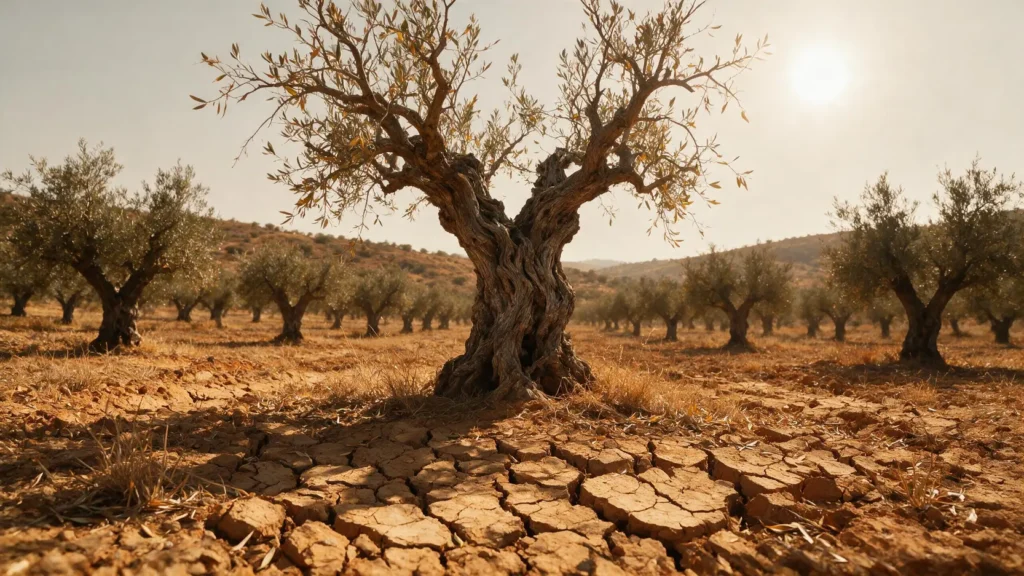
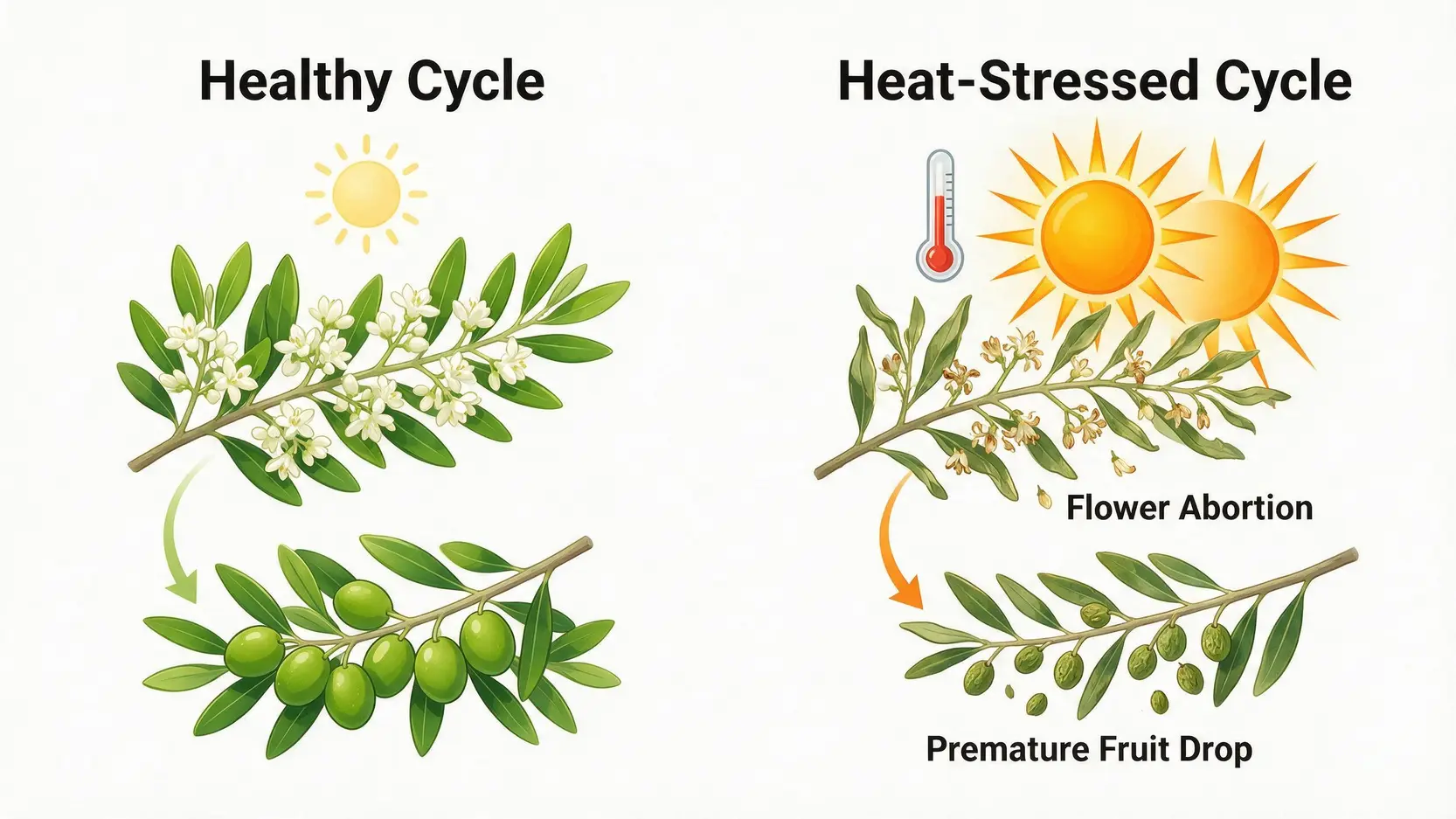
The life cycle of an olive is a delicate process. Extreme heat during the spring flowering period, as Spain has witnessed repeatedly, can be catastrophic. Temperatures soaring above 35°C (95°F) cause ‘flower abortion,’ where the blossoms dry out and fall off before they can be pollinated. Without successful pollination, there is no fruit. Furthermore, intense heat during the summer months, when the small olives are developing, puts the trees under immense stress, causing them to drop fruit prematurely to conserve water and energy. This two-pronged assault on the trees’ reproductive cycle is a primary driver of the current harvest failures.
Not Just Heat: The Compounding Effect of Drought on Yield and Quality
The problem is magnified by the severe lack of water. Drought and heat are a lethal combination for olive cultivation. When water is scarce, the trees cannot draw sufficient moisture from the soil to sustain themselves and their fruit. The olives that do survive are often smaller and contain significantly less oil. This not only reduces the total volume of oil produced but also impacts its quality. The chemical composition of the oil, including its acidity and polyphenol content, can be altered by water stress, potentially leading to a lower-grade product that cannot be classified as ‘extra virgin.’ This decline in quality further constricts the supply of premium olive oil on the market.
The Ripple Effect: From Spanish Groves to Your Kitchen Shelf
The agricultural crisis in Spain is not a distant problem; its shockwaves are being felt globally, reaching all the way to consumer kitchens. The drastic drop in production has triggered a cascade of economic consequences, fundamentally altering the market and forcing a re-evaluation of this staple commodity. The connection between the Spanish olive oil shortage and the price you pay at the supermarket is direct and increasingly painful for consumers.
By the Numbers: Analyzing the Drastic Drop in Production Volume
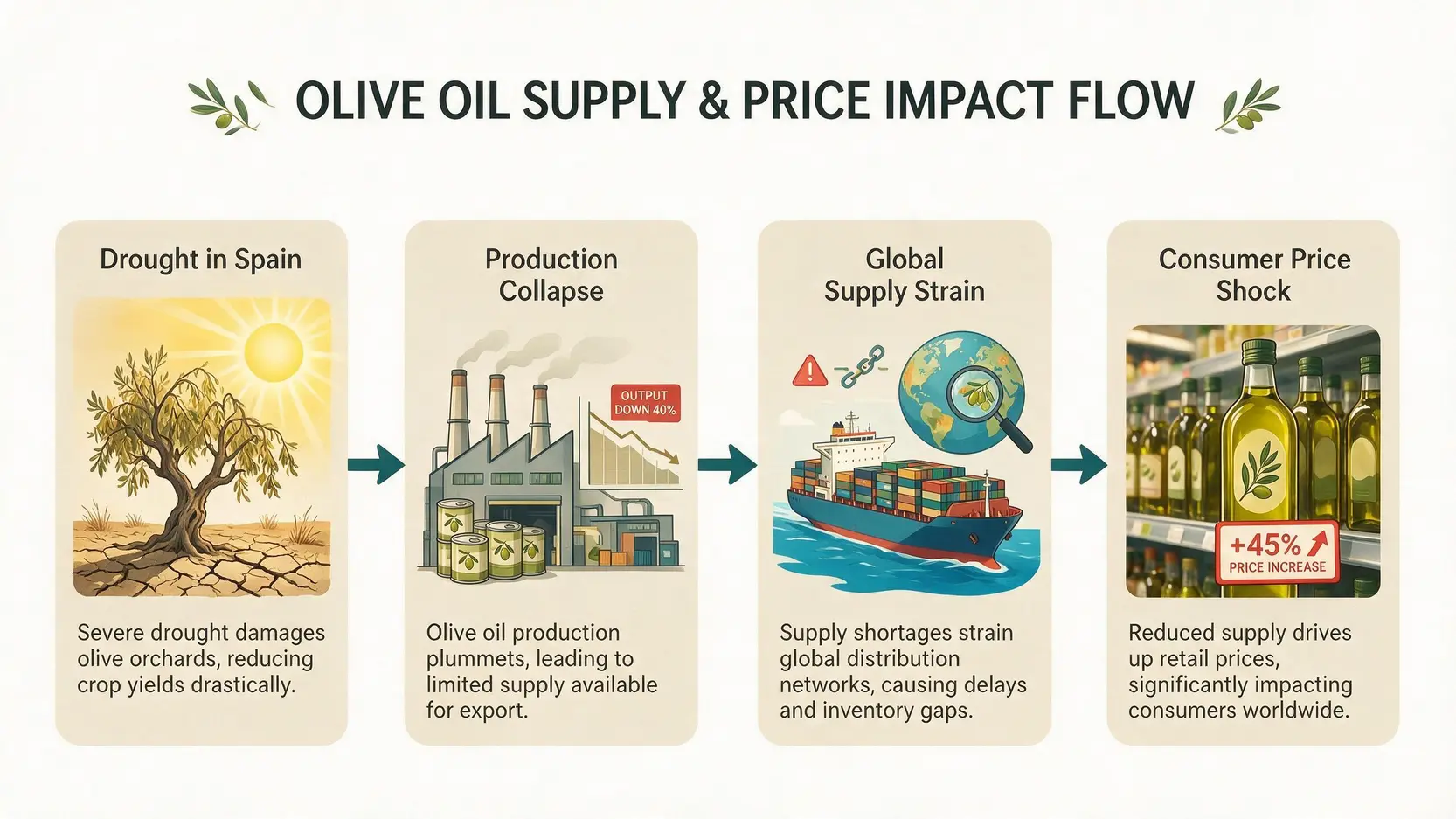
The statistics for the 2025-2026 season are stark. As noted, Spain is struggling to produce even 40% of its typical output. This follows a similarly disastrous harvest in the prior season. With back-to-back years of poor production, global stockpiles have been depleted. Unlike some other commodities, olive oil production cannot be quickly ramped up; a new olive tree takes several years to mature and become productive. This multi-year deficit has created a fundamental imbalance between supply and demand that is unprecedented in the modern era.
Economic Fallout: The Impact on Farmers and the Global Supply Chain
For Spanish farmers, the situation is dire. Many are facing financial ruin after investing in irrigation and grove maintenance with little to no return. The economic fabric of entire communities in regions like Andalusia is threatened. On a global scale, bottlers and distributors who rely on Spanish bulk oil are scrambling for alternatives. This has put immense pressure on other producing nations like Greece, Turkey, and Tunisia, whose own supplies are insufficient to fill the massive gap left by Spain. The entire supply chain, from the mill to the shipping container, is experiencing bottlenecks and soaring operational costs.
Consumer Price Shock: What to Expect at the Supermarket
The end result is a dramatic increase in retail prices. Since early 2025, the price of extra virgin olive oil has more than doubled in many markets, and analysts predict further increases throughout 2026. Consumers are now facing a choice: pay a premium for a product that was once an affordable staple, switch to lower-quality olive oil grades, or seek out alternative cooking oils. This price shock is a clear manifestation of the impact of climate change on agriculture and the food supply chain, a topic further explored in our analysis of market-moving events.
Looking Ahead: The Future of Olive Oil in a Changing Climate
The crisis in Spain serves as a stark warning for the future of Mediterranean agriculture. The long-term viability of olive cultivation in its traditional heartlands is now in question, prompting a desperate search for sustainable solutions and innovations. The era of cheap, plentiful olive oil may be over unless significant adaptations are made.
Long-Term Projections and the Sustainability of Mediterranean Agriculture
Climate models predict that the conditions witnessed in the mid-2020s—extreme heat and prolonged drought—will become more frequent and intense. This trend threatens not just olives, but a wide range of crops central to the Mediterranean diet and economy. Agricultural economists are now modeling scenarios where olive cultivation may need to shift to new, more temperate regions, a process that would take decades and face its own set of challenges. The concept of ‘sustainability’ in this context has moved from an environmental ideal to an economic necessity.
Farming Innovations: In Search of Drought-Resistant Olives and Smarter Cultivation
The agricultural science community is racing to respond. Key areas of research include:
- Drought-Resistant Cultivars: Developing new varieties of olive trees that are better able to withstand heat and water stress.
- Advanced Irrigation: Implementing smart, precision irrigation systems that deliver water directly to the roots with minimal waste.
- Soil Management: Improving soil health to increase its capacity to retain water.
- Agrivoltaics: Experimenting with the co-location of solar panels and olive groves, where the panels can provide shade and reduce water evaporation.
These innovations offer a glimmer of hope, but they require significant investment and time to implement at a scale that can make a difference. The industry must evolve to survive.
Conclusion
The severe impact of the ongoing heatwave on Spain’s olive oil production is a clear and present demonstration of our food system’s vulnerability to climate change. As the world’s primary supplier, Spain’s crisis has created a domino effect of depleted global reserves, supply chain disruption, and unprecedented price increases for consumers. The events of 2025 and 2026 have underscored the direct line from the olive grove to the grocery store shelf. Moving forward, the long-term survival of the olive oil industry hinges on urgent and widespread adoption of sustainable agricultural practices and climate-resilient innovations. The future of this liquid gold depends on it.
Frequently Asked Questions (FAQ)
Q: Why is Spanish olive oil so important for the global supply?
A: Spain is the world’s largest producer of olive oil, accounting for nearly half of the total global supply in a normal year. Its vast production scale means that Spanish olive oil is a key component in most blends sold around the world and sets the benchmark for global pricing. A major shortfall in Spain, therefore, creates a supply gap that other countries cannot fill, leading to worldwide shortages and price hikes.
Q: Are other olive oil-producing countries like Italy and Greece also affected?
A: Yes, while Spain’s crisis is the most severe, other Mediterranean countries are also feeling the effects of climate change. Italy and Greece have experienced their own heatwaves and droughts, leading to reduced and more volatile harvests. However, their production volumes are much smaller than Spain’s, so while their domestic markets are impacted, the effect on the global supply is less pronounced than the Spanish deficit.
Q: How can I identify high-quality olive oil when prices are volatile?
A: During times of high prices and potential shortages, it’s more important than ever to be a savvy consumer. Look for “extra virgin olive oil” (EVOO) as the highest grade. Check for a harvest date or best-by date on the bottle to ensure freshness. Dark glass bottles protect the oil from light, which can degrade quality. Finally, trust reputable brands and consider looking for certifications like PDO (Protected Designation of Origin) or PGI (Protected Geographical Indication), which guarantee the oil’s origin and quality standards.
Q: What are the economic consequences of the olive oil crisis beyond consumer prices?
A: The economic fallout is extensive. It includes significant income loss for millions of farmers and agricultural workers in Spain, potential bankruptcy for smaller producers, and instability for businesses involved in processing, bottling, and exporting. On a macroeconomic level, it contributes to food price inflation, which can have broader economic and social impacts, particularly in countries where olive oil is a dietary staple.