As the global economic landscape shifts, the India bond market outlook 2026 has become a focal point for institutional and retail investors alike. With evolving Reserve Bank of India (RBI) monetary policies, rigorous fiscal consolidation efforts, and the rapid expansion of sustainable finance, understanding the trajectory of Indian fixed income is crucial for building a resilient investment portfolio. This authoritative article explores the core performance drivers, emerging opportunities, and potential risks shaping India’s bond market through 2026, offering strategic insights for astute investors.
The competitive landscape in fixed income is fiercely dynamic, with investors keenly analyzing fiscal consolidation, yield curve movements, monetary policy shifts, the burgeoning sustainable bond market, and overarching global trends. This analysis aims to provide informational depth, empowering investors seeking nuanced insights for informed decision-making. Our core theme centers around the performance drivers, inherent risks, and meticulous projections for the Indian bond market in 2026. We address the critical gap by synthesizing India-specific macroeconomic factors—such as RBI policy and the fiscal deficit—and adding granular detail on sustainable bonds and practical investment considerations, essential for navigating this complex environment.
Table of Contents
Macroeconomic Drivers Shaping the 2026 Indian Bond Market
The Indian bond market in 2026 is intricately tied to a confluence of macroeconomic factors, both domestic and international. A deep understanding of these drivers is fundamental for predicting market movements and formulating effective investment strategies. The interplay between central bank actions, government fiscal health, and broader economic indicators will largely dictate the direction of bond yields and prices, influencing the overall fixed income market.
RBI Monetary Policy Path and Inflation Trends
The Reserve Bank of India (RBI) remains the primary architect of India’s monetary policy, exerting profound influence on the bond market. As of June 2026, the RBI’s Monetary Policy Committee (MPC) continues to navigate a delicate balance between price stability and economic growth. Their policy path is heavily dictated by inflation trends, particularly the Consumer Price Index (CPI) and Wholesale Price Index (WPI).
Should inflation remain stubbornly elevated, potentially due to global commodity price shocks, especially crude oil, the RBI may adopt a hawkish stance, potentially leading to further interest rate adjustments. Conversely, a sustained moderation in inflation could create headroom for accommodative policies, potentially benefiting bond valuations and supporting economic expansion.
Investors must closely scrutinize the MPC’s forward guidance, voting patterns, and commentary on domestic and global economic conditions. Key monetary tools such as the repo rate, reverse repo rate, Cash Reserve Ratio (CRR), and Open Market Operations (OMOs) are actively deployed to manage systemic liquidity and anchor inflation expectations.
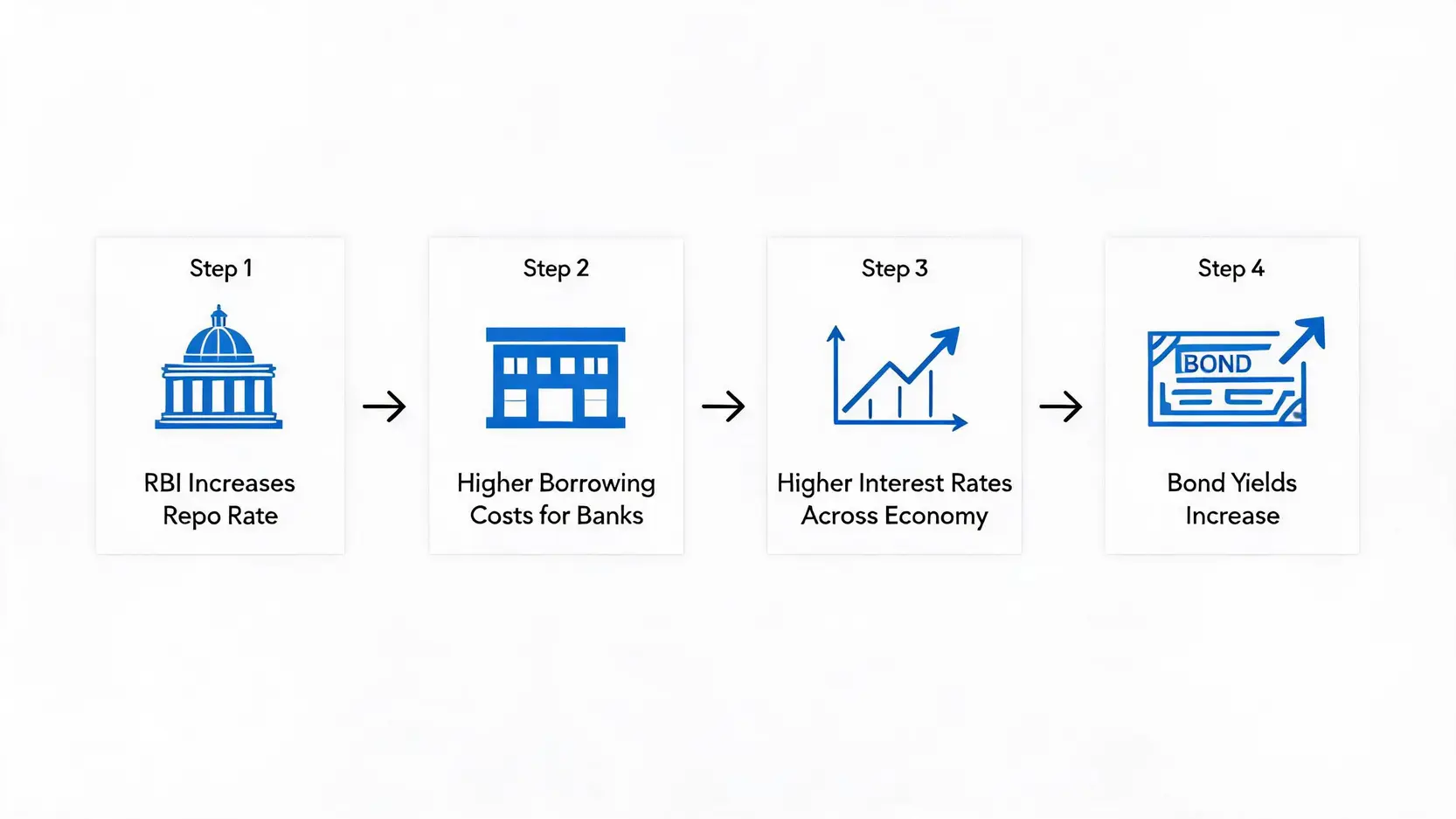
For instance, any increase in the repo rate typically leads to higher borrowing costs for commercial banks, which then translates into higher interest rates across the economy, pushing bond yields upward. Conversely, a reduction in the repo rate has the opposite effect. The RBI’s annual policy statements and bi-monthly reviews are essential resources for anticipating these shifts. Understanding how inflation impacts bond prices and yields is paramount for effective portfolio management in this dynamic environment, allowing investors to adjust their strategies proactively.
Fiscal Consolidation and Government Debt Supply
India’s unwavering commitment to fiscal consolidation is another significant factor shaping the bond market in 2026. The government’s borrowing program, dictated by its fiscal deficit targets, directly influences the supply of government securities (G-Secs) in the market. A larger fiscal deficit necessitates increased government borrowing, which can lead to a higher supply of bonds, potentially driving down prices and pushing yields higher to attract investors.
In 2026, expectations are for continued adherence to the fiscal glide path, aiming to reduce the deficit as a percentage of GDP. This disciplined approach is crucial for maintaining investor confidence and preventing upward pressure on bond yields.
The government issues various types of securities, including Treasury Bills (T-bills) for short-term financing and G-Secs for longer maturities, each with distinct implications for the yield curve. The government’s borrowing calendar, often announced in advance, provides critical information for market participants to gauge future supply. Furthermore, the potential inclusion of Indian government bonds in global bond indices could attract substantial foreign portfolio investment (FPI) inflows, providing a strong demand impetus and potentially moderating yields.
However, any unexpected fiscal slippage, perhaps driven by populist spending ahead of elections or unanticipated economic downturns, could disrupt this stability, leading to heightened market volatility and a reassessment of sovereign risk. Investors should meticulously monitor budget announcements, tax revenue collections, and expenditure patterns to accurately assess the government’s fiscal health and its cascading effects on the bond market. Timely analysis of the Union Budget and quarterly review statements from the Ministry of Finance offers essential insights into the fiscal trajectory.
The Rise of Sustainable Bonds in India
The global shift towards sustainable finance has found a strong foothold in India, marking a pivotal evolution in its bond market. This segment, encompassing green, social, and sustainability-linked bonds, is rapidly expanding, offering unique avenues for both issuers and investors. The growth of this market reflects India’s dual commitment to economic development and environmental stewardship, aligning with global efforts to combat climate change and address social inequalities.
Opportunities in Green and Social Bond Issuances
Green bonds are specifically designed to finance environmentally friendly projects, such as renewable energy, energy efficiency, sustainable waste management, and clean transportation. Social bonds, on the other hand, fund projects with positive social outcomes, including affordable housing, access to essential services, and socioeconomic empowerment. Sustainability-linked bonds tie their financial characteristics, such as coupon rates, to the issuer’s achievement of predefined sustainability performance targets.
For investors, these instruments offer not only competitive financial returns but also the compelling advantage of aligning their capital with impactful sustainable development goals. The expanding universe of green and social bond issuances presents unique opportunities for portfolio diversification, appealing to a growing segment of investors with environmental and social mandates.
While precise market size projections for 2026 specific to sustainable bonds are continually evolving, the overarching trend points towards robust growth. Major financial institutions, public sector undertakings, and leading corporations are increasingly tapping this market to diversify their funding sources and enhance their ESG credentials.
These issuances provide a transparent mechanism for tracking capital deployment towards projects with measurable positive impacts, fulfilling the demand for both financial returns and sustainable outcomes. Investors should look for credible certification from organizations like the Climate Bonds Initiative or external reviews confirming adherence to ICMA Green Bond Principles.
Regulatory Framework and Increasing Investor Participation
The regulatory landscape for sustainable finance in India is proactively evolving to support and standardize this burgeoning market. Authorities such as the Securities and Exchange Board of India (SEBI) and the Reserve Bank of India (RBI) are instrumental in developing robust guidelines, enhancing disclosure requirements, and promoting transparency.
This regulatory support is crucial for fostering investor confidence and ensuring the integrity of sustainable bond issuances. These frameworks aim to prevent ‘greenwashing’ and ensure that funds are genuinely directed towards intended sustainable projects. The Ministry of Finance has also been actively involved in creating a policy environment conducive to the growth of this sector, including incentives for issuers and investors.
Coupled with robust regulatory oversight, there is a palpable increase in awareness and participation from both domestic and foreign institutional investors. Foreign Portfolio Investors (FPIs) are increasingly incorporating ESG criteria into their investment mandates, viewing India’s sustainable bond market as an attractive destination.
This growing investor base contributes to deeper liquidity and greater demand for these instruments, further cementing the role of sustainable bonds in India’s broader financial ecosystem. As the regulatory framework matures and investor education improves, the sustainable bond market is poised for significant expansion, offering a stable and impactful investment avenue within the broader emerging markets fixed income landscape.
Strategic Investment Considerations for 2026
Navigating the Indian bond market in 2026 requires a meticulous approach, considering various factors that influence bond performance and portfolio risk. Astute investors must adopt strategic frameworks to optimize returns while effectively managing inherent market volatilities and global economic shifts. Proactive analysis of yield curves, credit quality, and global macroeconomic indicators will be paramount for successful investment outcomes.
Assessing Yield Curve Dynamics and Duration Risk
A thorough understanding of yield curve dynamics is foundational for bond investors in 2026. The yield curve—a graphical representation of interest rates on bonds with different maturities—provides critical insights into market expectations for future interest rates, inflation, and economic growth. A ‘normal’ upward-sloping curve suggests expectations of economic growth and higher inflation. A ‘flat’ curve might signal uncertainty, while an ‘inverted’ curve is often a precursor to an economic slowdown or recession, as longer-term yields fall below shorter-term yields.
Concurrently, managing duration risk is paramount. Duration measures a bond’s sensitivity to changes in interest rates; bonds with longer durations are more susceptible to price fluctuations when rates move. In an environment characterized by potential interest rate volatility, as anticipated in 2026 due to evolving RBI policies, strategically adjusting portfolio duration can help mitigate losses and capture opportunities. For instance, if interest rates are expected to rise, shortening the portfolio’s average duration can reduce its sensitivity to rate hikes.
Conversely, if rates are projected to fall, increasing duration could enhance capital appreciation. Investors often employ strategies like ‘barbell’ (investing at both short and long ends of the curve) or ‘laddering’ (spreading investments across different maturities) to manage duration risk and maintain liquidity. Active analysis of the term premium, which reflects additional compensation for holding longer-term bonds, and market liquidity are crucial for making informed duration bets. Factors such as foreign investor sentiment and domestic institutional demand for long-dated paper will also play a role in shaping the yield curve.
Balancing Sovereign Bonds vs. Corporate Credit
Investors in the Indian fixed income market constantly weigh the trade-offs between sovereign bonds (Government Securities or G-Secs) and corporate credit. Indian G-Secs, backed by the full faith and credit of the government, offer the lowest credit risk and are often considered a benchmark for risk-free rates within the economy. Their primary appeal lies in safety and liquidity, making them a cornerstone of many conservative portfolios. However, this lower risk typically translates into comparatively lower yields.
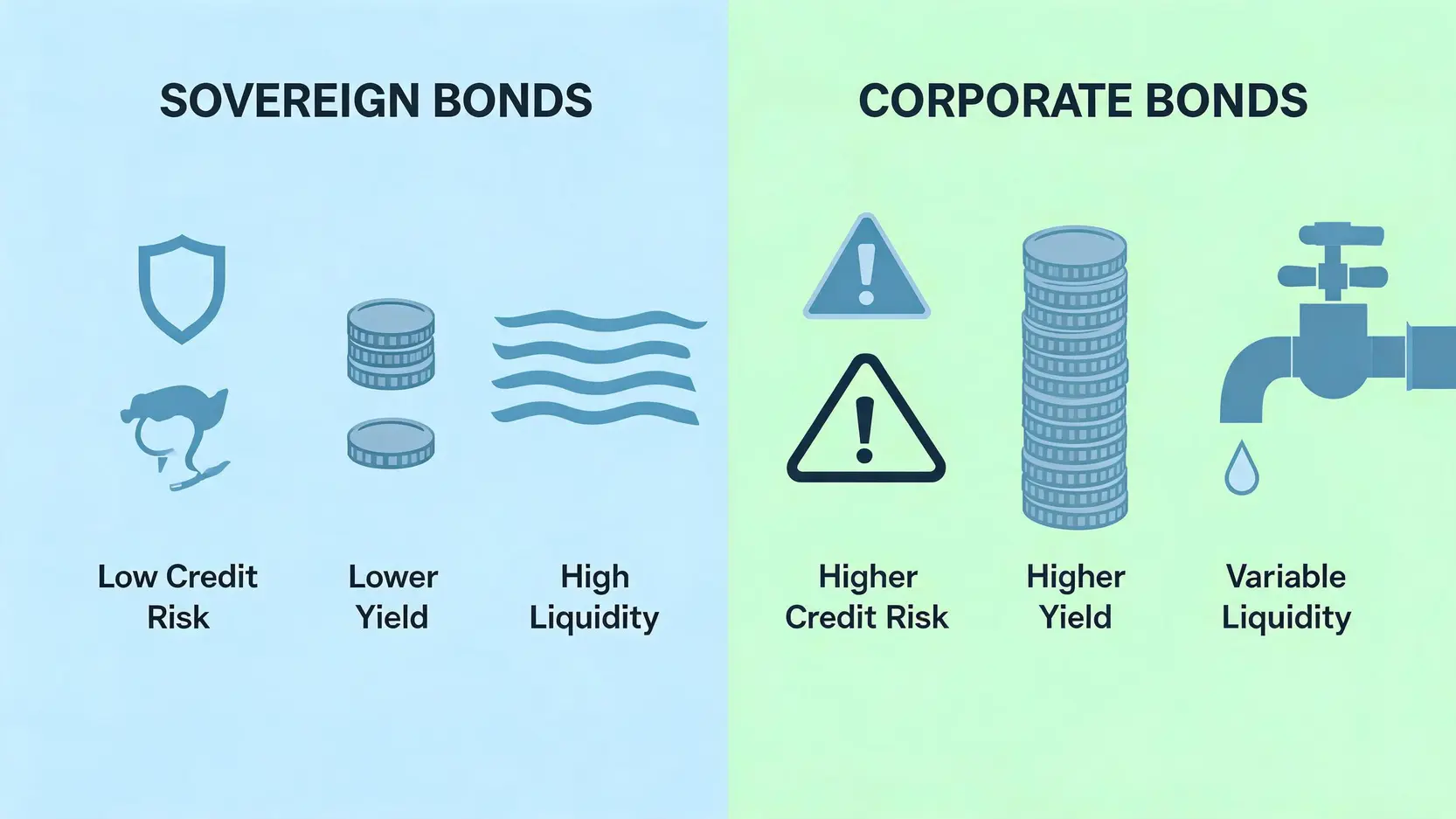
Corporate bonds, issued by public and private companies, generally offer higher yields to compensate investors for increased credit risk—the risk that the issuer might default on its obligations. In 2026, the credit quality of Indian corporations will be a pivotal factor. A robust economic recovery, coupled with improved corporate earnings and deleveraging efforts, could bolster balance sheets, making corporate credit an attractive option for yield enhancement. However, careful credit analysis, including an assessment of credit ratings, financial ratios (e.g., debt-to-equity, interest coverage), and industry-specific outlooks, is indispensable to manage default risk effectively.
Diversification across different sectors and credit ratings is essential. The corporate bond market in India also varies in liquidity, with highly rated, frequently traded issues offering better exit options than smaller, less prominent ones. A balanced approach, meticulously considering both the unparalleled stability of sovereign debt and the yield-enhancing potential of select corporate credit, tailored to individual risk appetites, is often advisable. For insights on diversifying into safer investments with monthly income, consider exploring options that balance risk and return across different credit tiers.
Managing Portfolio Risks in a Volatile Global Environment
The Indian bond market is not immune to external shocks; it operates within an interconnected global financial system. Global factors, including crude oil prices, geopolitical developments, and the monetary policies of major central banks like the U.S. Federal Reserve and the European Central Bank, can significantly impact domestic bond performance. For instance, a persistent strengthening of the U.S. dollar, often driven by higher U.S. interest rates, can lead to capital outflows from emerging markets like India. This outflow can put depreciatory pressure on the Indian Rupee and simultaneously push domestic bond yields higher as foreign investors sell off their holdings. Conversely, a weaker dollar typically supports emerging market assets.
Geopolitical tensions, such as regional conflicts or trade disputes, can trigger risk-off sentiment globally, causing investors to flock to safe-haven assets, which can temporarily benefit major developed market bonds but often create headwinds for emerging market debt. Therefore, investors must adopt robust risk management strategies.
This includes active monitoring of global macroeconomic indicators (e.g., global growth forecasts, inflation in major economies), currency hedging where appropriate to mitigate foreign exchange risk, and maintaining a well-diversified portfolio across various asset classes, geographies, and bond types. Diversification beyond traditional fixed income, into alternative investments or different market segments, can also enhance portfolio resilience against these external volatilities. Regular review and adjustment of asset allocation based on evolving global scenarios are critical for proactive risk mitigation and capital preservation in 2026.
Conclusion
The outlook for the India bond market in 2026 is shaped by a complex interplay of robust domestic economic fundamentals, evolving monetary and fiscal policies, and influential global dynamics. While the trajectory suggests a market with inherent volatility, it simultaneously presents discerning investors with significant opportunities. Disciplined fiscal policy and sustained structural economic growth are expected to underpin the market’s stability.
Investors should prioritize selectivity in their bond choices and implement stringent risk management strategies as market conditions inevitably evolve. By staying acutely informed on policy shifts from the RBI and the government, and proactively diversifying into burgeoning sectors like sustainable bonds, astute investors can strategically position their portfolios.
This approach enables them to better capitalize on the dynamic opportunities presented by the Indian bond market outlook 2026. Given the intricacies, consulting with a qualified financial advisor is unequivocally crucial to tailor these advanced insights to specific investment goals, risk appetites, and portfolio structures.
Frequently Asked Questions (FAQ)
Q: What is the expected trend for Indian bond yields in 2026?
A: The expected trend for Indian bond yields in 2026 is complex and subject to several influencing factors. Analysts anticipate continued volatility driven by RBI monetary policy decisions, global interest rate movements, and domestic fiscal policy. While disciplined fiscal consolidation efforts might exert downward pressure, persistent inflation or global risk aversion could push yields higher. Overall, a responsive market with a degree of uncertainty is expected, where strategic opportunities will arise from specific macroeconomic developments and policy announcements.
Q: How will RBI’s monetary policy influence the bond market in 2026?
A: The RBI’s monetary policy will be a primary influencer on the Indian bond market in 2026. Any adjustments to the benchmark repo rate or liquidity measures, such as open market operations, will directly affect short-term and, subsequently, long-term bond yields. A hawkish stance (e.g., interest rate hikes) adopted to curb inflation would typically lead to higher bond yields and lower bond prices, making borrowing more expensive. Conversely, an accommodative stance (e.g., interest rate cuts or liquidity injections) to support economic growth would generally result in lower bond yields and higher bond prices, stimulating investment and consumption.
Q: Are sustainable bonds a good investment in India for 2026?
A: Sustainable bonds in India present a compelling investment opportunity for 2026, particularly for investors focused on Environmental, Social, and Governance (ESG) criteria. The market is experiencing significant growth, bolstered by supportive regulatory developments and increasing interest from both domestic and international issuers and investors. While subject to general market risks like any other bond, sustainable bonds offer unique diversification benefits, the potential for long-term capital appreciation, and a tangible contribution to positive environmental and social impact, making them an attractive component of a forward-looking portfolio.
Q: What are the key risks to consider when investing in Indian bonds in 2026?
A: Key risks for Indian bond investors in 2026 include interest rate risk (the sensitivity of bond prices to changes in interest rates, largely driven by RBI policy), inflation risk (the potential erosion of real returns due to rising prices), credit risk (the possibility of default by corporate issuers), and liquidity risk (the ease with which a bond can be bought or sold without significantly impacting its price, especially for less frequently traded instruments). Furthermore, global macroeconomic shocks, currency fluctuations against major global currencies like the USD, and evolving geopolitical events also pose significant external risks that require vigilant monitoring and strategic management.
Q: How can investors mitigate duration risk in their Indian bond portfolios?
A: Investors can effectively mitigate duration risk by strategically adjusting their portfolio’s average maturity. In an environment of anticipated rising interest rates, reducing exposure to longer-duration bonds and favoring shorter-duration instruments or floating-rate bonds can help insulate the portfolio from significant price declines. Diversifying investments across various maturities (e.g., through a bond ladder strategy), employing interest rate swaps, or investing in bond ETFs with shorter average durations are also effective strategies to manage the interest rate sensitivity of an Indian bond portfolio.