
Table of Contents
What is the EU AI Act and Why Does It Matter for Investors?
The global AI stocks market continues its meteoric rise, but as of 2026, a landmark piece of legislation has fundamentally altered the landscape for investors: the EU AI Act. For those engaged in AI stock investing, understanding the impact of regulation on AI company valuation is no longer optional; it’s the primary variable for success. This guide provides a definitive breakdown of how this regulation is reshaping the market and, more importantly, how you can identify the next wave of winning AI stocks in this new era of compliance.
The EU AI Act is the world’s first comprehensive legal framework for Artificial Intelligence. Its influence extends far beyond the European Union’s borders, affecting any company that develops or deploys AI systems for users within the EU. This includes major US and global tech giants, making it a critical factor for anyone invested in the sector. For investors, the Act serves as both a risk management tool and a roadmap to future growth.
A Plain English Guide to the World’s First Comprehensive AI Law
At its core, the EU AI Act isn’t designed to stifle innovation but to channel it responsibly. It categorizes AI applications based on the potential risk they pose to citizens’ health, safety, and fundamental rights. By creating a clear legal framework, the Act aims to build trust in AI technologies, which in the long run, could foster wider adoption and more sustainable market growth.
As an investor, viewing this regulation through a strategic lens is paramount. The law was published in the Official Journal of the European Union on July 12, 2024, and entered into force on August 1, 2024, with its provisions being progressively applied. For more detailed information, you can review the official text and timeline from a reliable source like the EU AI Act portal.
The Risk-Based Approach: Understanding Categories from Unacceptable to Minimal Risk
The legislation’s tiered structure is the most critical element for stock analysis. It creates distinct operational and financial challenges for companies depending on where their products fall. Here’s a breakdown:
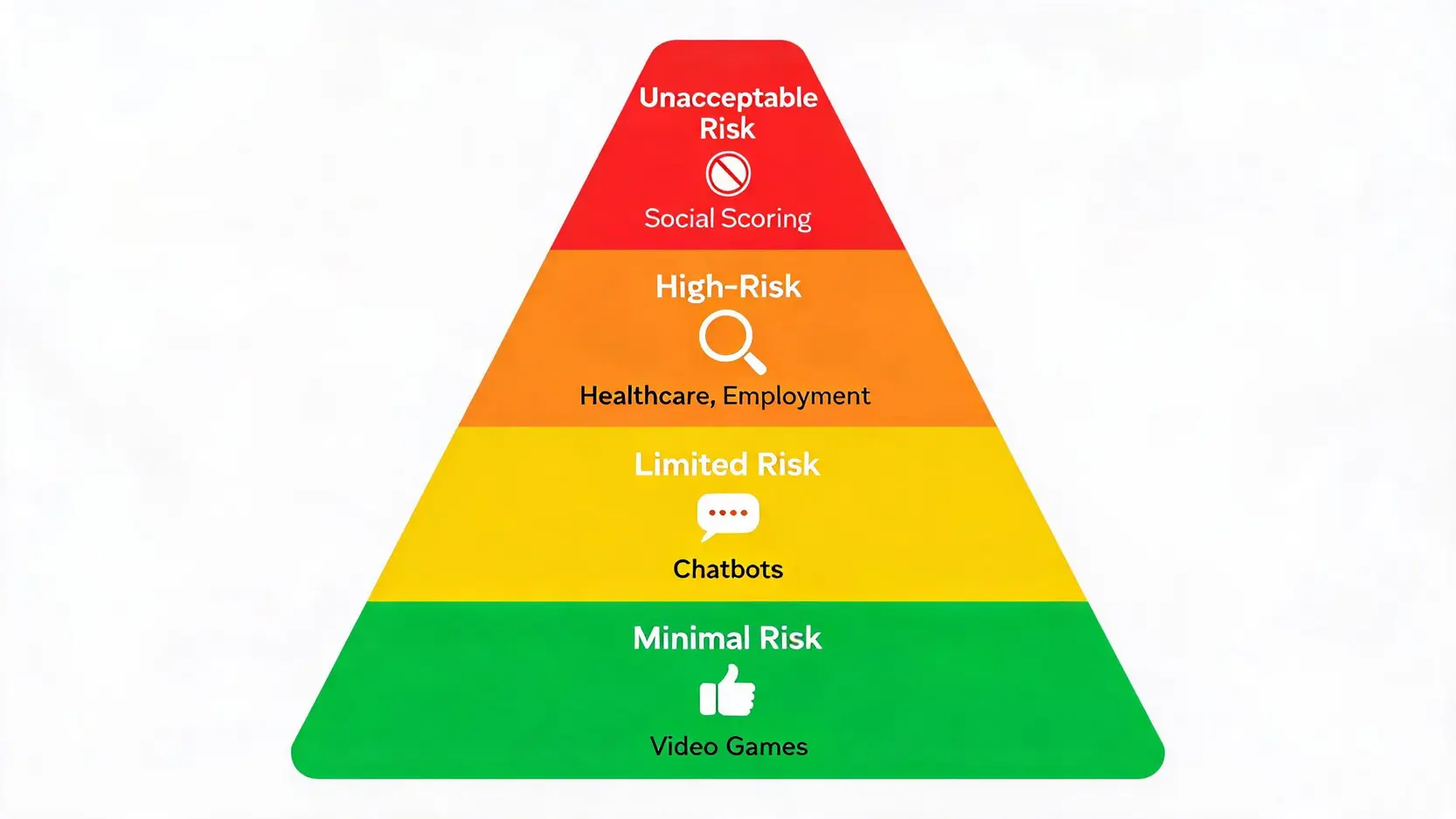
- Unacceptable Risk: These AI systems are outright banned. This includes technologies like government-led social scoring and real-time biometric identification in public spaces (with few exceptions). Companies with significant exposure to these areas face existential threats to their business models.
- High-Risk: This is the most complex and impactful category for investors. These are AI systems used in critical sectors and applications. Regulation here is stringent, requiring companies to undergo rigorous conformity assessments, maintain high levels of data quality, ensure human oversight, and provide clear user information. The cost of compliance is substantial.
- Limited Risk: This category includes AI systems that have transparency obligations. For example, chatbots must disclose that users are interacting with a machine. The financial impact is less severe but still requires investment in user interface design and disclosure protocols.
- Minimal Risk: This covers the vast majority of AI applications, such as AI-enabled video games or spam filters. The Act imposes no new legal obligations here, allowing innovation to flourish with minimal friction.
Analyzing the Impact: How the Act Reshapes the AI Stock Landscape
The introduction of the EU AI Act has bifurcated the AI stock market. The initial hype-driven rally has given way to a more discerning, quality-focused investment environment. Understanding the nuances of this new landscape is essential for anyone looking to generate alpha. Different AI stocks are affected by the EU AI Act in vastly different ways, creating clear winners and losers.
Market Reactions: European vs. U.S. AI Stock Performance
Since the Act’s provisions began rolling out in 2025, we’ve observed a fascinating divergence. While large-cap U.S. AI stocks like Alphabet (Google), Microsoft, and Nvidia initially saw volatility due to uncertainty, they have since demonstrated their resilience. Their vast resources have allowed them to invest heavily in compliance, turning it into a competitive moat that smaller players struggle to cross. Conversely, a new breed of European “RegTech” (Regulatory Technology) and compliance-focused software companies has seen explosive growth, directly benefiting from the new rules. These nimble firms are providing the essential tools for others to navigate the complex legal requirements.
The Cost of Compliance: How Will It Affect AI Company Profits and Valuations?
For companies operating in the high-risk AI space, the cost of compliance is a significant new line item on their income statement. These costs include:
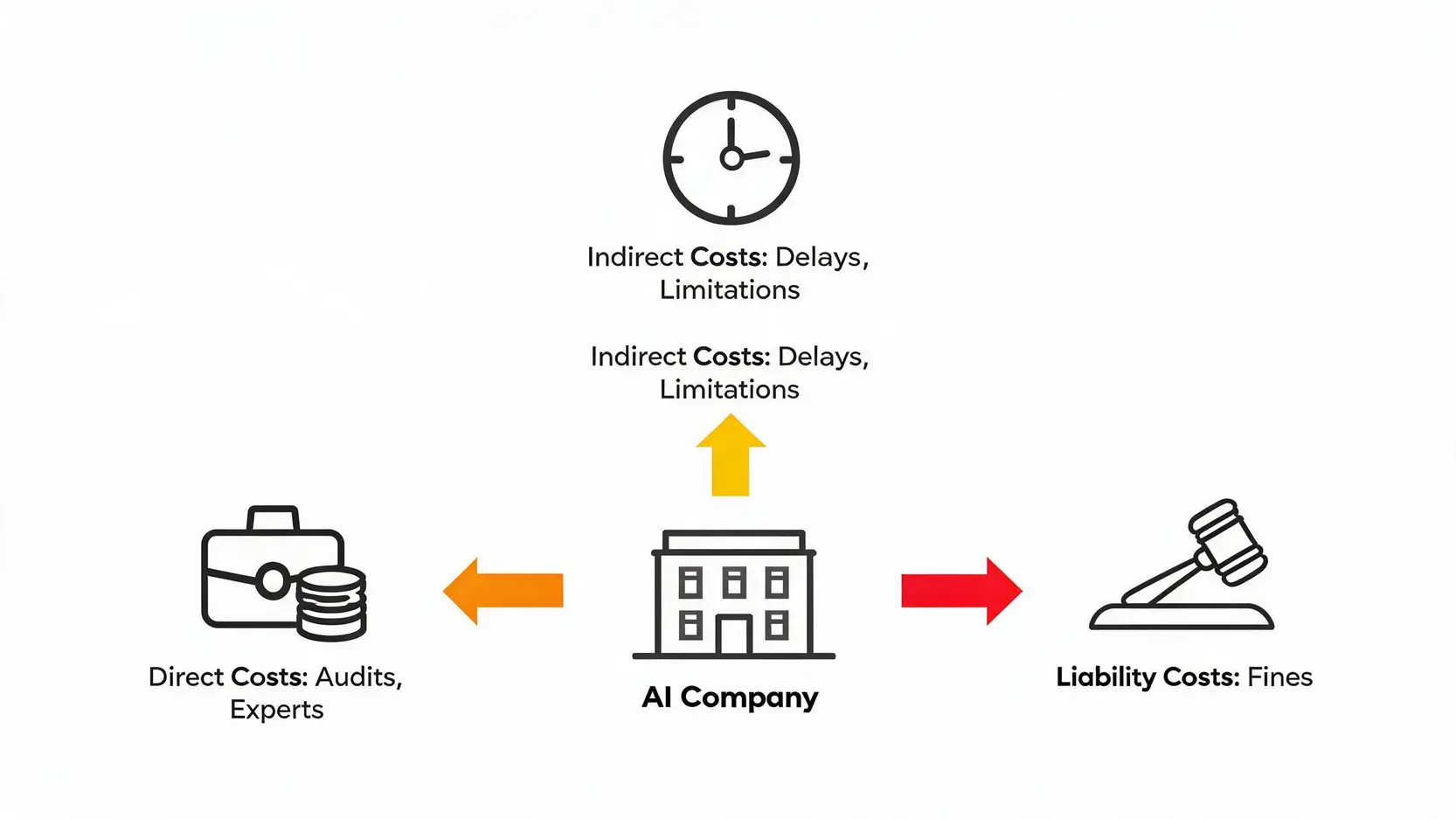
- 💰 Direct Costs: Hiring legal and technical experts, conducting third-party audits, and implementing robust data governance frameworks.
- 📉 Indirect Costs: Longer development cycles, potential limitations on data usage, and the need for more extensive testing and validation.
- ⚖️ Liability Costs: The risk of massive fines—up to €35 million or 7% of global annual turnover—for non-compliance creates a tangible financial risk that must be priced into the stock.
This financial pressure directly impacts AI company profits and valuations. Investors must now scrutinize balance sheets and management discussions to assess a company’s readiness. A deep dive into these metrics is crucial, and a guide on financial ratio analysis can provide the foundational knowledge needed to assess a stock’s true health in this regulated environment.
An Investor’s Framework: Identifying Winners and Losers
The EU AI Act is not a blanket ban on AI innovation; it’s a redirection. For astute investors, this creates a clear framework for identifying investment opportunities in AI compliance tech and separating companies with sustainable futures from those built on regulatory quicksand.
Potential Winners: Stocks in AI Governance, Compliance Tech, and Certified AI
The clear victors in this new paradigm are the enablers of compliance. Savvy investors should be looking at companies specializing in:
- AI Governance & Auditing: Firms that provide software and services to help companies track data lineage, monitor model performance for bias, and generate compliance reports. These are the new ‘picks and shovels’ of the AI gold rush.
- Cybersecurity for AI: With stricter data security requirements, companies that specialize in protecting AI models and their underlying data from attacks or corruption are mission-critical.
- Synthetic Data & Privacy-Enhancing Technologies (PETs): Companies that help generate high-quality, anonymous data for training AI models without infringing on privacy rights hold a significant competitive edge.
- Certified & Explainable AI (XAI): Startups and established players that build ‘white-box’ AI models, which can explain their decision-making processes, are perfectly positioned to meet the Act’s transparency requirements.
Potential Losers: Companies Reliant on High-Risk AI Without a Clear Compliance Strategy
The risks are most acute for companies whose core business model falls into the ‘high-risk’ category but who lack the resources or foresight to adapt. Key red flags include:
- A lack of public disclosure regarding their EU AI Act compliance strategy.
- Heavy reliance on third-party data without clear governance protocols.
- Business models that use AI for critical decisions about individuals (e.g., credit scoring, recruitment) without robust human oversight and explainability.
- A high concentration of revenue from applications that border on ‘unacceptable risk’.
These companies face not only massive potential fines but also reputational damage and a loss of market access in one of the world’s largest economic blocs. Navigating these risks requires robust risk management frameworks.
Your Checklist: 5 Key Questions to Ask Before Investing in an AI Stock Post-EU AI Act
Before allocating capital to any AI stock in 2026, you must perform this critical due diligence:
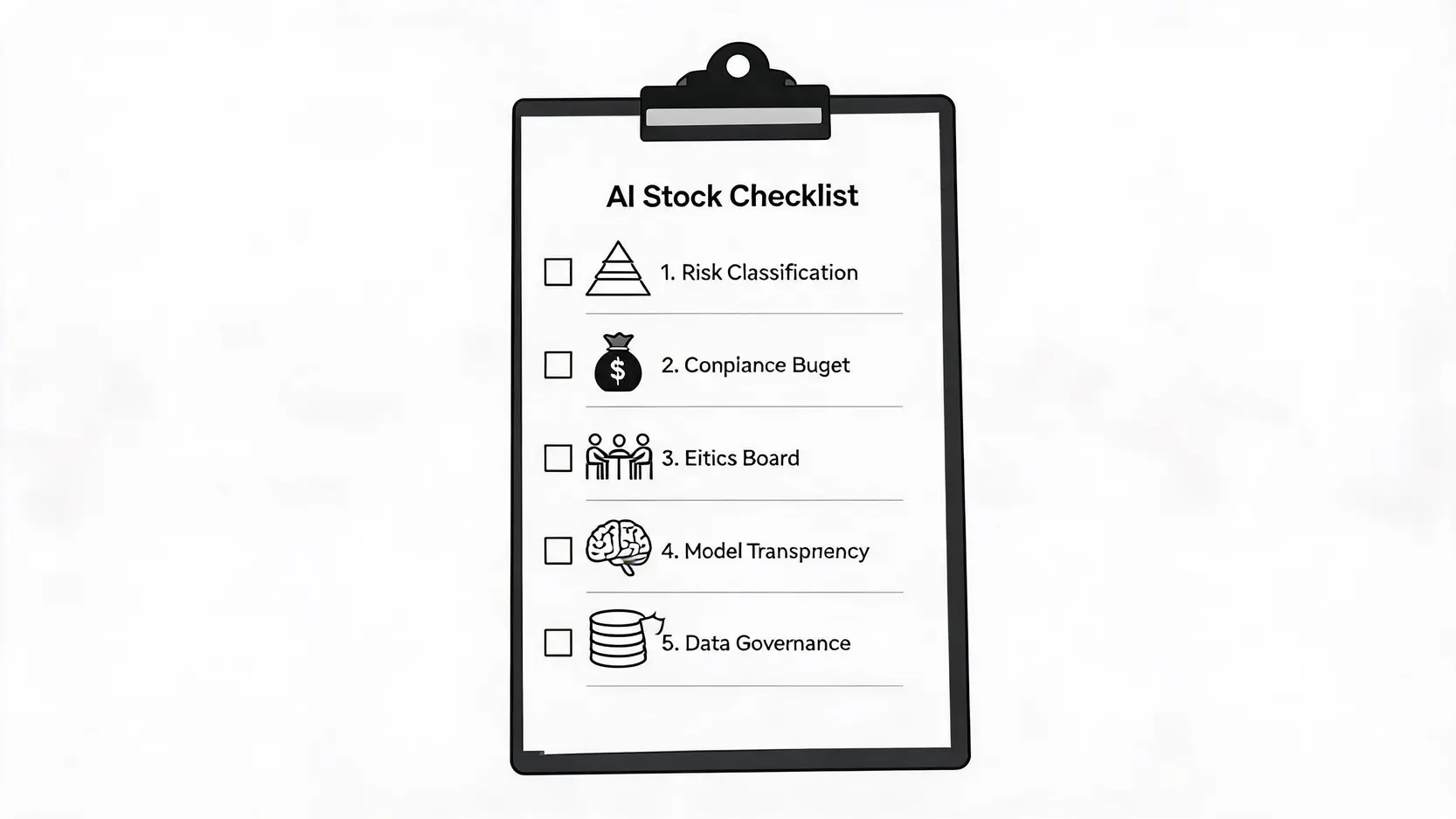
- What is the company’s risk classification? Does management clearly articulate which of their AI systems fall into the high-risk, limited-risk, or minimal-risk categories?
- Is there a dedicated compliance budget? Look for specific financial commitments in annual reports or investor calls that address EU AI Act compliance. A lack of a clear budget is a major red flag. 🚩
- Who is on the ethics and compliance board? Does the company have a dedicated, empowered team overseeing AI governance, or is it just an afterthought?
- How transparent are their AI models? Does the company invest in Explainable AI (XAI)? Can they demonstrate how their high-risk systems make decisions?
- What is their data governance strategy? How do they ensure the data used to train their models is high-quality, unbiased, and compliant with privacy regulations like GDPR?
Conclusion
The EU AI Act is not the end of the AI gold rush, but a fundamental redirection. It has matured the market, moving it from speculative frenzy to a more stable, predictable, and sustainable arena. The era of unchecked AI development is over. For savvy investors in 2026, the new frontier is not just about identifying the most powerful algorithm, but about finding the companies that can master the intersection of innovation and regulation. Understanding the interplay between the EU AI Act and AI stocks is the new key to unlocking long-term growth in the artificial intelligence sector. Those who adapt their investment thesis to this reality will be the winners of the next decade.
Frequently Asked Questions (FAQ)
Q: When does the EU AI Act fully come into effect?
A: The EU AI Act’s implementation is phased. It entered into force on August 1, 2024. Bans on ‘unacceptable risk’ AI systems began applying in early 2025. The rules for high-risk systems are being rolled out and will be fully applicable between August 2026 and late 2027, depending on the specific application. As of July 2026, most major provisions are in effect or in their final transition period.
Q: Will the EU AI Act affect US-based AI stocks like Nvidia or Google?
A: Absolutely. The Act has extraterritorial reach. Any company, regardless of where it is based, that places an AI system on the market or puts it into service within the European Union must comply. This means US giants like Google, Microsoft, Meta, and chipmakers like Nvidia (whose hardware is used to run AI systems) must ensure their products and services are compliant for their European users.
Q: What are some examples of ‘high-risk AI systems’ that will be heavily regulated?
A: High-risk systems are a primary focus of the Act. Examples include AI used in:
- Medical devices and diagnostics.
- Recruitment and employee management (e.g., CV-scanning tools).
- Credit scoring and loan applications.
- Management and operation of critical infrastructure (e.g., water, gas, and electricity grids).
- Biometric identification and categorization of natural persons.
- Educational and vocational training admission or assessment.
Q: What is ‘AI compliance tech’ and is it a good investment?
A: ‘AI compliance tech’ refers to the software and services that help companies meet the legal and ethical requirements of regulations like the EU AI Act. This includes tools for data governance, model auditing, bias detection, and generating compliance documentation. As regulation becomes a permanent feature of the AI landscape, these ‘enabler’ companies are poised for significant, sustained growth, making them a potentially strong investment theme for the coming years.