Table of Contents
Why the AI Power Demand is an Unmissable Investment Trend
The artificial intelligence boom is reshaping markets, but its foundation is built on an often-overlooked reality: an insatiable hunger for energy. For investors seeking to capitalize on this, the most strategic play may not be in the AI models themselves, but in the infrastructure that powers them. This article unveils the premier AI data center power ETF, providing a guide to investing in the AI energy boom and identifying the best ETFs for AI’s insatiable energy demand. As we stand in mid-2026, it’s clear that the digital gold rush requires a massive upgrade to its ‘picks and shovels’—the energy and infrastructure sector.
The Exponential Growth of AI and Data Center Energy Consumption
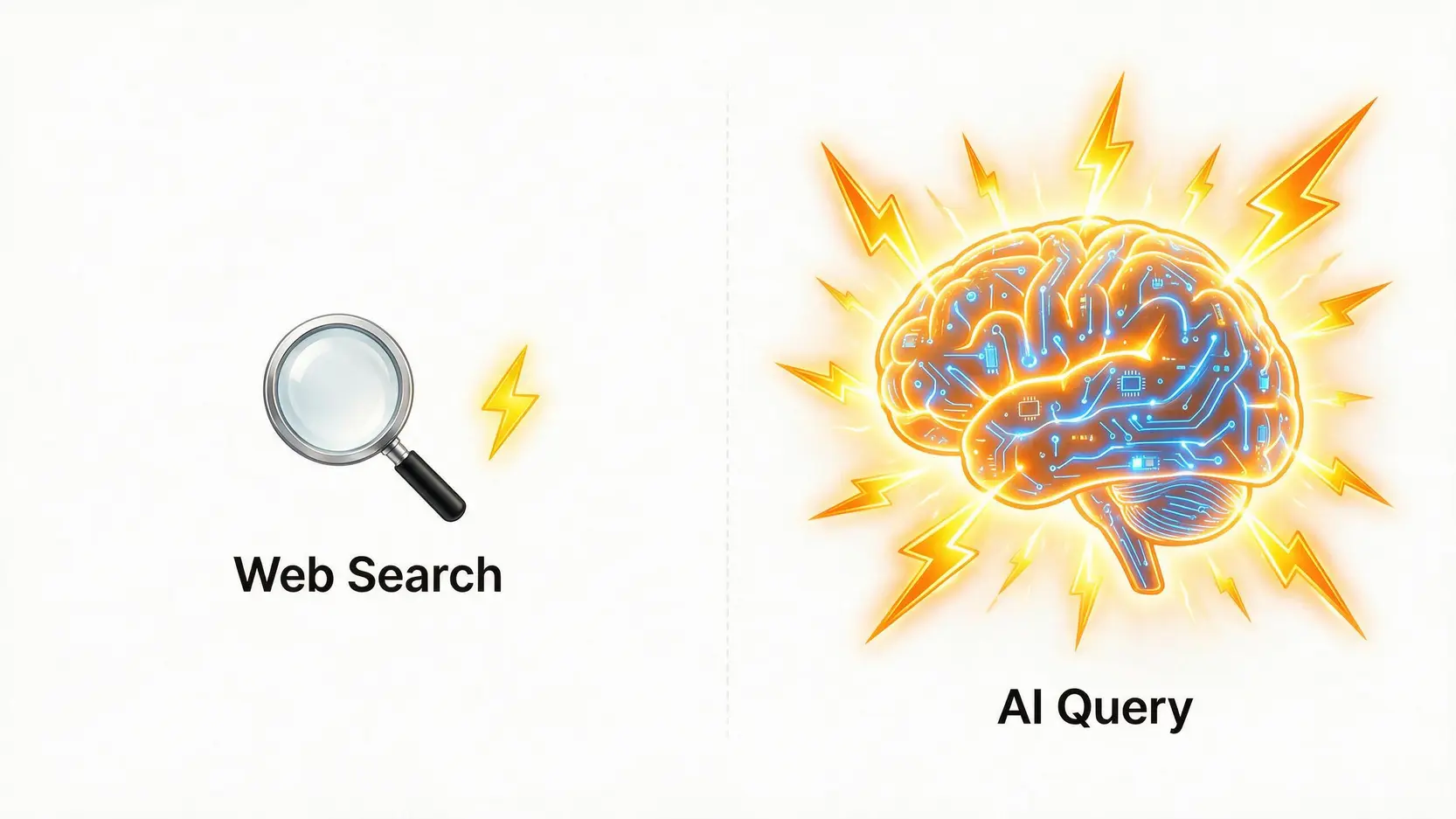
The scale of energy demand from AI is staggering. Each interaction with a generative AI model consumes significantly more electricity than a traditional web search. As AI applications become embedded in everyday life and business operations, the data centers that host them are drawing unprecedented amounts of power. According to a 2026 analysis by Brookings, global data center energy consumption is on a trajectory to hit 1,050 TWh this year, a figure comparable to the entire electricity consumption of Japan. This explosive growth creates a sustained, long-term demand for electricity that is largely non-discretionary, forming a compelling investment thesis.
From Utilities to Infrastructure: Understanding the AI Power Supply Chain
To invest intelligently, one must understand the entire AI power supply chain. This ecosystem extends far beyond simple utility providers. It includes a diverse range of companies that are critical to keeping AI data centers online 24/7. Key segments include:
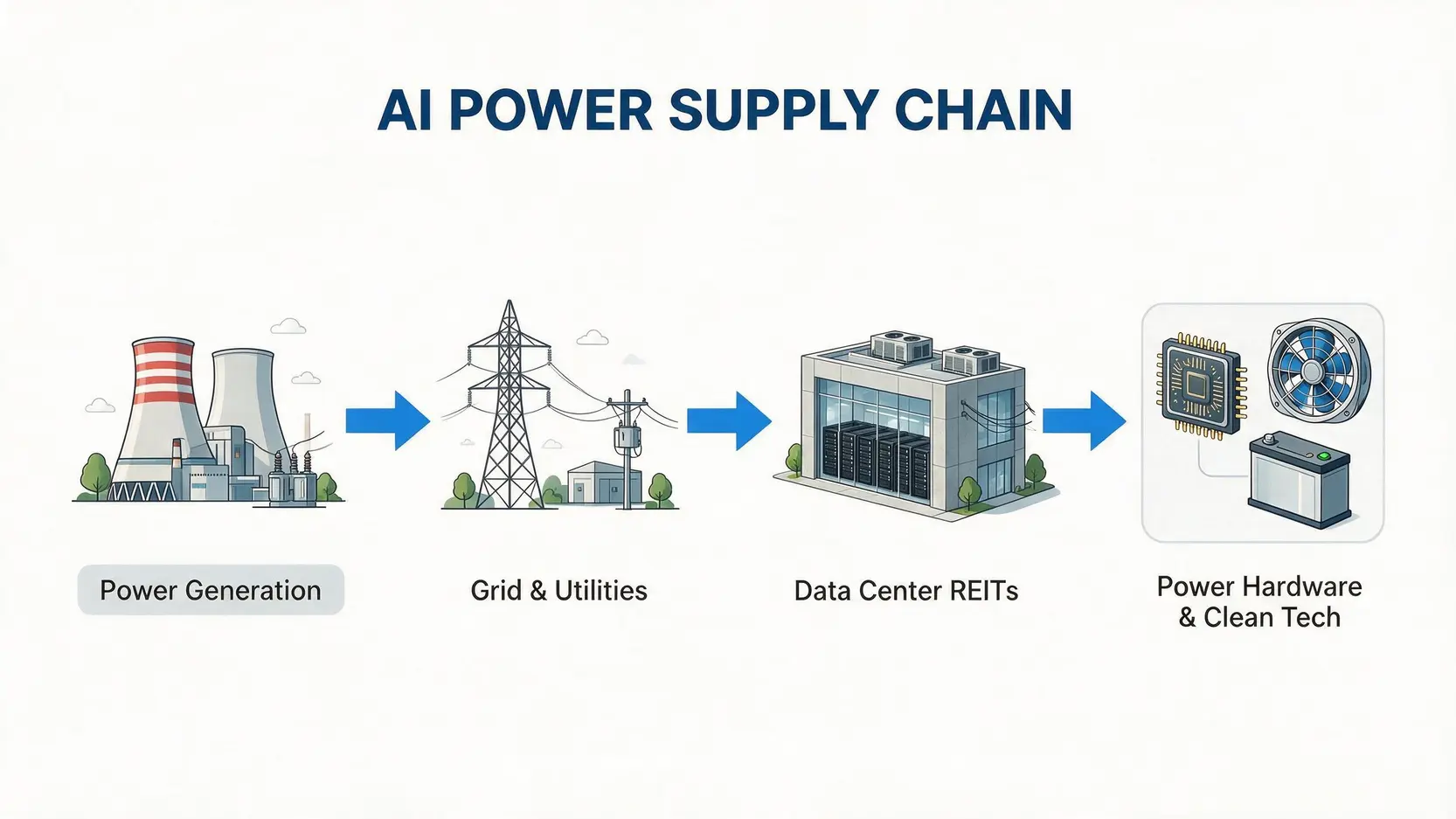
- Power Generation: Traditional and renewable energy producers that generate the raw electricity.
- Grid Infrastructure & Utilities: The transmission and distribution networks that deliver power, and the utility companies that manage this flow.
- Data Center REITs: Real Estate Investment Trusts that own, operate, and develop the physical data center properties.
- Power Hardware & Components: Companies that manufacture essential equipment like power management semiconductors, cooling systems, uninterruptible power supplies (UPS), and switchgear.
- Clean Energy Technology: Firms specializing in solar, wind, and battery storage solutions, which are becoming crucial for data centers to meet sustainability goals and ensure power redundancy.
An effective AI data center power ETF provides exposure across several of these verticals, capturing value from the entire infrastructure stack.
The 5 Best ETFs for AI Data Center and Power Infrastructure
Navigating the universe of ETFs to find the right exposure can be challenging. Below is a curated list of five funds that offer distinct strategies for investing in the AI power theme. This analysis is based on market conditions as of July 2026.
ETF 1: The Pure-Play Data Center Infrastructure Bet (e.g., Pacer Benchmark Data & Infrastructure Real Estate ETF – SRVR)
For direct exposure to the physical backbone of the digital world, an ETF focused on data center REITs is the most direct play. SRVR invests in companies that generate the majority of their revenue from real estate related to data and infrastructure. Its holdings include leading data center operators like Equinix and Digital Realty Trust, which are landlords to the world’s largest tech companies. As demand for AI processing skyrockets, so does the value of the specialized real estate these companies provide.
ETF 2: The Clean Energy Angle for Sustainable Data Centers (e.g., ALPS Clean Energy ETF – ACES)
The immense power consumption of AI has put a spotlight on sustainability. 💡 Major tech firms have pledged to power their operations with 100% renewable energy, creating a massive tailwind for the clean energy sector. ACES offers exposure to North American companies in the solar, wind, energy storage, and electric vehicle sectors. Investing in this ETF is a bet that the path to powering AI will be paved with green technology, driven by both corporate ESG mandates and the falling cost of renewables.
ETF 3: The Broader Thematic AI Supply Chain Play (e.g., Global X Robotics & Artificial Intelligence ETF – BOTZ)
While not a pure power play, a broader thematic fund like BOTZ provides exposure to the entire AI ecosystem, including companies that are direct beneficiaries of infrastructure build-out. It holds firms involved in industrial robotics, automation, and AI development. Crucially, it also includes companies that enable AI, some of which are involved in creating more efficient processing hardware that indirectly addresses the power consumption issue. This ETF is suitable for investors who want a diversified bet on AI’s overall growth, with infrastructure as a key component.
ETF 4: The Global Utilities Powerhouse (e.g., iShares Global Utilities ETF – JXI)
The most straightforward beneficiary of rising electricity consumption is the utility sector. JXI offers broad exposure to utility companies across the globe. These are the businesses that will sell more electricity to power the growing number of data centers. For a conservative investor, this ETF represents a low-volatility way to gain exposure to the AI power trend. While it may not offer the explosive growth of pure-play tech funds, it provides a stable dividend-paying foundation that directly profits from increased energy demand.
ETF 5: The Specialized Semiconductor and Power Component Fund (e.g., iShares Semiconductor ETF – SOXX)
This is the ‘picks and shovels’ play at its most granular level. ⚡️ The SOXX ETF is comprised of companies that design, manufacture, and sell semiconductors. Within this, you find firms crucial to the power story—companies like NVIDIA, which makes the GPUs driving the AI revolution, and others that produce power management integrated circuits (PMICs) and other components essential for regulating and delivering electricity efficiently within a data center. These components are critical for managing heat and power consumption, making them an indispensable part of the AI infrastructure boom.
How to Evaluate an AI Power ETF: Key Metrics for Investors
Choosing the right ETF requires more than just identifying a trend. Astute investors must dissect the fund’s characteristics to ensure it aligns with their portfolio goals. A thorough evaluation process is essential for long-term success, a topic we cover extensively in our ETF Comparison guides.
Analyzing Top Holdings: What Companies Are You Actually Buying?
An ETF is only as good as its underlying assets. Before investing, look at the top 10-15 holdings. Do these companies truly align with the AI power thesis? A fund marketed as ‘AI infrastructure’ might be overly concentrated in a few large-cap tech names that have tangential exposure. Look for a healthy mix of data center operators, utility companies, and hardware manufacturers. Understanding what you own is the first principle of sound investing.
Expense Ratios vs. Performance: Finding the Right Balance
The expense ratio is the annual fee charged by the ETF manager. While lower is generally better, it shouldn’t be the only consideration. A thematic ETF with a slightly higher expense ratio might provide access to a niche market and superior performance that justifies the cost. Compare the expense ratio to the fund’s historical and potential performance, as well as the uniqueness of its strategy. A passive, broad-market utility ETF will have a lower fee than a highly specialized, actively managed fund.
Assessing Fund Size, Liquidity, and Concentration Risk
Three final metrics are critical:
- Assets Under Management (AUM): A larger AUM (typically over $100 million) suggests stability and investor confidence. Very small funds are at risk of closure.
- Liquidity: Measured by the average daily trading volume, high liquidity ensures you can buy and sell shares easily without significantly impacting the price. Low liquidity can lead to wide bid-ask spreads, increasing your transaction costs.
- Concentration Risk: Check if the fund is overly reliant on a single stock or a small number of stocks. High concentration can lead to volatility if one of the top holdings performs poorly. A well-diversified fund spreads risk across multiple assets.
Conclusion
To truly capitalize on the artificial intelligence revolution, savvy investors are looking beyond the obvious names to the essential infrastructure that makes it all possible. AI data center power ETFs represent a critical and potentially lucrative segment of this ecosystem. These investment tools offer a diversified and strategic way to profit from the foundational pillars of AI—the relentless and growing demand for electricity. By investing in the ‘picks and shovels’ of the AI gold rush, you position your portfolio to grow alongside the insatiable energy demands of the future. 🤖
Frequently Asked Questions (FAQ)
Q: What kind of companies are included in an AI data center power ETF?
A: These ETFs typically hold a basket of companies across the entire energy and infrastructure supply chain. This includes electric utility companies that sell power, data center REITs that own the physical buildings, manufacturers of power management hardware (like semiconductors, cooling systems, and power distribution units), and sometimes renewable energy companies that help data centers meet their sustainability targets.
Q: How do these ETFs differ from traditional technology or utility ETFs?
A: While there is some overlap, the key difference is focus. A traditional technology ETF (like QQQ) is heavily weighted towards software, internet, and consumer electronics companies. A traditional utility ETF is broadly focused on all utility customers. An AI data center power ETF is a hybrid, specifically targeting companies that are direct beneficiaries of the secular growth in data center energy consumption, creating a more concentrated and theme-driven investment vehicle.
Q: What are the primary risks associated with investing in AI power infrastructure?
A: The primary risks include: 1) **Regulatory Risk:** Changes in energy policy or environmental regulations could impact utility companies and data center construction. 2) **Technological Disruption:** A breakthrough in computing efficiency could potentially slow the growth of energy consumption, though current trends point in the opposite direction. 3) **Valuation Risk:** As the theme becomes more popular, the valuations of underlying companies can become stretched, leading to higher volatility. 4) **Concentration Risk:** Many of these thematic ETFs are concentrated in a few key names, making the fund susceptible to the performance of those specific stocks.