The artificial intelligence revolution is in full swing, but for discerning investors, the real gold rush is in the “picks and shovels.” As we navigate 2026, the focus sharpens on the foundational layer powering this technological shift. This guide provides a comprehensive breakdown of why AI infrastructure stocks 2026 are a critical investment theme, moving beyond the surface-level hype. We will explore the best AI infrastructure stocks by dissecting the intricate AI supply chain investment landscape, revealing the top companies set to power the future and the analytical framework you need to identify them.
Table of Contents
Why 2026 is a Pivotal Year for AI Infrastructure Investing
The year 2026 marks an inflection point. The initial frenzy around consumer-facing AI applications is maturing, and the market’s attention is now firmly on the immense, long-term capital expenditure required to build, maintain, and expand the digital backbone of global intelligence. This is not merely a trend; it’s a structural rewiring of the global economy, with the infrastructure layer capturing the lion’s share of investment and value.
Understanding the AI Supply Chain: From Silicon to Software
To truly grasp the opportunity, one must visualize the AI supply chain as a pyramid. At the base lies the physical infrastructure—the essential hardware without which no AI model can be trained or deployed. This is where the most durable value is being created. The layers include:
- Semiconductors & Silicon: The very ‘brain’ of AI, encompassing GPUs, custom ASICs, and advanced processors.
- Data Centers: The ‘body’ that houses the brains, requiring massive investments in real estate, power, and specialized cooling.
- Memory & Storage: The ‘memory’ needed to hold vast datasets and allow for rapid access and processing.
- Networking & Connectivity: The ‘nervous system’ that connects everything, demanding high-speed, low-latency communication hardware and software.
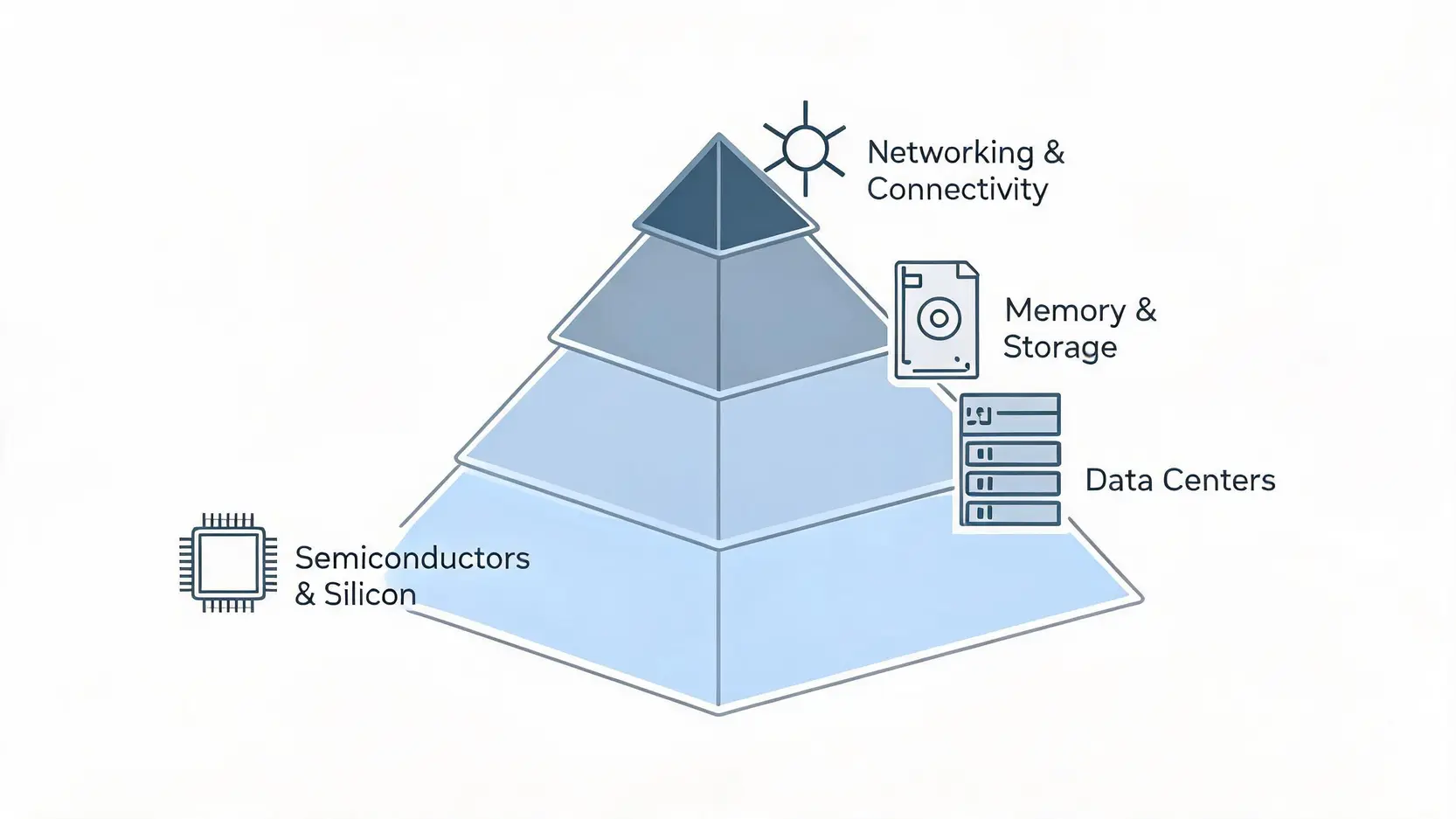
Investing in this supply chain is about betting on the foundational enablers of the entire AI ecosystem, a strategy that mitigates the risk of picking winners in the more volatile application layer.
Projected Market Growth and Key Catalysts for 2026
The numbers underpinning this sector’s growth are staggering. Market analysts are projecting explosive expansion. According to Statista, the Artificial Intelligence market is forecast to reach a global value of US$335.29 billion by the end of 2026, with a compound annual growth rate (CAGR) that suggests a multi-trillion dollar market by the early 2030s. Key catalysts fueling this in 2026 include:
- Enterprise Adoption at Scale: Corporations are moving beyond pilot programs to full-scale AI integration, driving unprecedented demand for compute power.
- Sovereign AI Initiatives: Nations are now treating AI capabilities as a matter of national security and economic competitiveness, leading to massive, state-sponsored investments in data centers and domestic chip production.
- The Rise of AI Agents: The next wave of autonomous AI systems requires an even greater density of computational power, pushing the limits of current infrastructure.
- Edge Computing Expansion: As AI processing moves from centralized clouds to the ‘edge’ (closer to the user), a new build-out cycle for specialized hardware is accelerating.
Top AI Infrastructure Stocks to Watch in 2026
Identifying the leaders in this space requires looking at each critical segment of the AI supply chain. Here are seven companies that represent the core of the AI infrastructure investment thesis for 2026.
The Brains: Semiconductor & GPU Giants
This is the most direct play on AI compute power. These companies design and manufacture the complex chips that are the engine of AI.
- Nvidia (NVDA): The undisputed leader. Its CUDA platform has created a deep competitive moat, and its data center GPUs (like the H-series and its successors) are the industry standard for training large language models. Its dominance in AI training makes it a core holding.
- Taiwan Semiconductor Manufacturing Company (TSMC): The world’s most critical foundry. TSMC manufactures the most advanced chips for Nvidia, Apple, and AMD. As the demand for cutting-edge 3nm and 2nm nodes skyrockets for AI applications, TSMC’s role becomes even more pivotal. It’s a bet on the entire semiconductor industry’s advancement.
The Backbone: Data Center & Cooling Solutions
AI data centers are not like traditional data centers. They consume exponentially more power and generate intense heat, creating a boom for specialized engineering and equipment providers.
- Vertiv Holdings (VRT): A critical supplier of power and thermal management solutions. As GPU clusters become denser and more powerful, advanced liquid cooling technology—Vertiv’s specialty—is no longer a luxury but a necessity. They are a key enabler of data center efficiency and expansion.
- Amphenol Corporation (APH): A provider of high-speed connectors and cables. The sheer volume of data moving between servers, GPUs, and switches in an AI data center requires sophisticated interconnect solutions. Amphenol is a high-quality, diversified play on the physical connectivity of the AI ecosystem.
The Memory: High-Performance Storage Leaders
Massive AI models require equally massive amounts of high-speed data storage and memory to function effectively.
- Western Digital (WDC): A leader in both Hard Disk Drives (HDDs) for mass data storage and Solid-State Drives (SSDs) for faster data access. As the need for archival storage for training data grows, WDC’s high-capacity HDDs remain essential, while its SSDs serve the performance-critical tiers of the data pipeline.
The Network: Connectivity and Cloud Titans
The performance of an AI cluster is only as good as the network that connects it. This includes both the hardware within data centers and the cloud platforms that deliver AI as a service.
- Amazon (AMZN): Through Amazon Web Services (AWS), it is a primary provider of AI infrastructure as a service. It designs its own custom silicon (Trainium and Inferentia) and offers access to Nvidia’s GPUs, making it a one-stop-shop for enterprise AI development and a key player in the cloud infrastructure market.
- Lumentum Holdings (LITE): A leading manufacturer of optical components used in data center transceivers. As data rates inside and between data centers increase to 800G and beyond to support AI workloads, Lumentum’s high-performance optical networking products are indispensable.
How to Evaluate AI Stocks: A Framework for 2026
Investing in high-growth AI infrastructure stocks requires a disciplined approach that goes beyond chasing headlines. A robust evaluation framework is essential to separate sustainable leaders from the hype. Here’s a blueprint for your analysis.
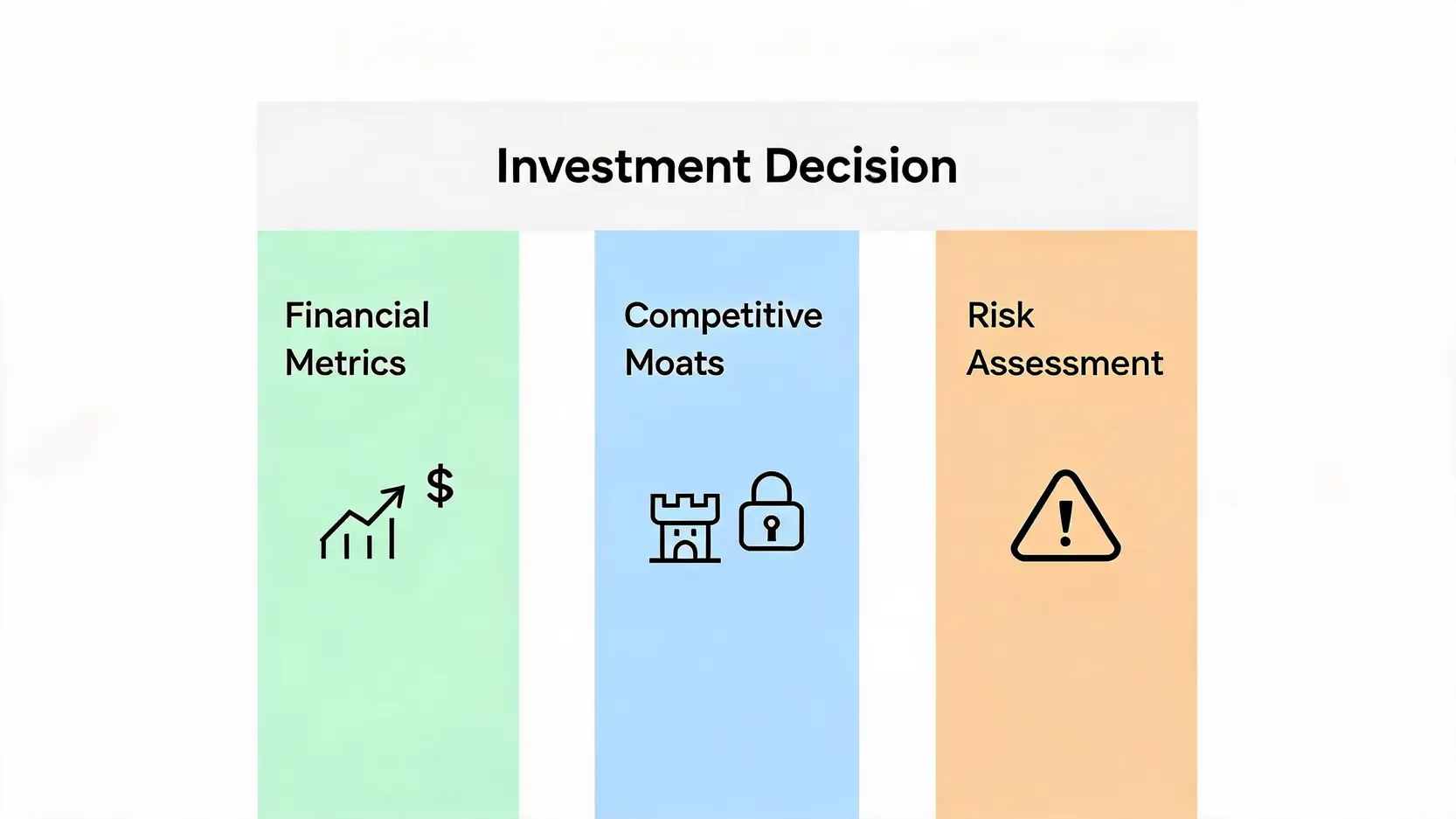
Key Financial Metrics to Analyze: Beyond the Hype
While price-to-earnings (P/E) ratios can seem astronomical for these companies, focusing on other metrics provides a clearer picture of their health and growth trajectory:
- Revenue Growth Rate (YoY): Is the company consistently growing its top line at a rate that outpaces the industry? Look for accelerating growth as a sign of strong market adoption.
- Gross and Operating Margins: High and stable margins indicate pricing power and operational efficiency, key traits of a market leader.
- Free Cash Flow (FCF): A company that generates strong cash flow can reinvest in R&D and strategic acquisitions without relying on debt, fueling a virtuous cycle of innovation.
- R&D as a Percentage of Revenue: In the fast-moving AI sector, a high commitment to research and development is non-negotiable for staying ahead.
Assessing Competitive Moats and Market Positioning
A competitive moat is a durable advantage that protects a company from competitors. In AI infrastructure, these moats are critical. As you analyze potential investments, consider the strength of their moat. For a deeper dive, understanding how to perform this analysis is crucial. You can explore a detailed guide on analyzing tech stocks and their competitive advantages.
- Technological Leadership: Does the company own proprietary technology that is difficult to replicate (e.g., Nvidia’s CUDA)?
- Switching Costs: How difficult would it be for a customer to switch to a competitor’s product? High switching costs create a sticky customer base.
- Network Effects: Does the value of the product increase as more people use it? This is a powerful moat for platform-based companies.
- Scale Advantages: Does the company’s size give it cost advantages in manufacturing or purchasing that smaller rivals can’t match (e.g., TSMC)?
Identifying and Weighing Cyclical and Geopolitical Risks
No investment is without risk. The AI infrastructure sector is particularly exposed to certain headwinds that must be carefully considered:
- Geopolitical Tensions: The concentration of semiconductor manufacturing in certain regions remains a significant risk factor. Trade restrictions and export controls can also impact supply chains and market access for key companies.
- Capital Expenditure Cycles: Demand for data center components can be cyclical. Watch for signs of overbuilding or a slowdown in cloud spending, which could lead to a temporary downturn.
- Competition and Disruption: While leaders have strong moats, the threat of disruption is ever-present. Keep an eye on major cloud providers developing their own custom chips and new entrants with innovative technologies.
Conclusion
To capitalize on the generational AI boom in 2026, looking at AI infrastructure stocks is an essential and potentially more durable strategy than chasing application-layer trends. By focusing on the key sectors of semiconductors, data centers, storage, and networking, investors can gain exposure to the foundational pillars of this revolution. Using a solid evaluation framework that prioritizes financial health, competitive moats, and risk assessment is critical for navigating this dynamic market. The companies highlighted offer a strong starting point for the deep research required to build a resilient, growth-oriented portfolio positioned for the future of artificial intelligence.
Frequently Asked Questions (FAQ)
Q: What are the biggest risks for AI infrastructure stocks in 2026?
A: The primary risks fall into three categories. First, geopolitical risk, particularly concerning the semiconductor supply chain and international trade relations, which can lead to component shortages or market access restrictions. Second, valuation risk; many of these stocks trade at high multiples, making them vulnerable to corrections if growth expectations are not met. Finally, there’s the risk of a cyclical downturn in enterprise and cloud spending, which could temporarily dampen the demand for new infrastructure.
Q: Is it better to buy individual AI stocks or an AI ETF?
A: The choice depends on your risk tolerance and research capacity. Buying individual stocks like Nvidia or Vertiv offers the potential for higher returns if you select market leaders, but it also carries higher concentration risk. An AI ETF (Exchange-Traded Fund) provides instant diversification across dozens of companies in the sector, reducing individual stock risk but potentially diluting the returns from top performers. For investors who are less able to perform deep due diligence on single companies, an ETF is often a more prudent starting point.
Q: How does the growth of data centers impact these stocks?
A: The explosive growth of AI-specific data centers is a primary catalyst for nearly all AI infrastructure stocks. It directly drives demand for GPUs (Nvidia), advanced cooling and power systems (Vertiv), high-speed networking components (Amphenol, Lumentum), and high-capacity storage (Western Digital). A data center is an ecosystem, and its expansion creates a powerful ripple effect across the entire supply chain, lifting all the key component providers.
Q: Are there any “picks and shovels” AI plays beyond semiconductors?
A: Absolutely. While semiconductors are the most obvious play, the infrastructure ecosystem is vast. Companies involved in power generation and grid upgrades are indirect beneficiaries, as AI data centers consume enormous amounts of electricity. Similarly, cybersecurity firms that protect AI models and data centers are critical. Even commodity producers supplying copper for wiring and cooling systems see increased demand. The key is to trace the supply chain to find these essential, less-obvious enablers.