The semiconductor industry stands at the nexus of the next technological revolution, fundamentally propelled by the insatiable demands of Artificial Intelligence (AI) and relentless global digitalization. As we advance into 2026, identifying the most promising semiconductor stocks to watch 2026 is paramount for any investor aiming to capture significant growth. The trajectory of this sector is no longer just about faster computers or smartphones; it’s about powering the very fabric of our future. This guide provides a detailed analysis of the top-performing semiconductor companies, deciphers the critical market trends, and uncovers the hidden opportunities that will define the landscape. From established titans to emerging disruptors, understanding these players is key to building a resilient and forward-looking investment portfolio.
Table of Contents
Key Market Trends Driving the Semiconductor Sector in 2026
To accurately identify the best semiconductor stock investment opportunities, one must first comprehend the powerful secular trends fueling the industry’s expansion. These are not fleeting market whims but foundational shifts in technology and global economics. Navigating this landscape requires a clear view of the primary growth drivers that will separate the leaders from the laggards in 2026 and beyond.
The Unstoppable AI Revolution: From Data Centers to Edge Computing
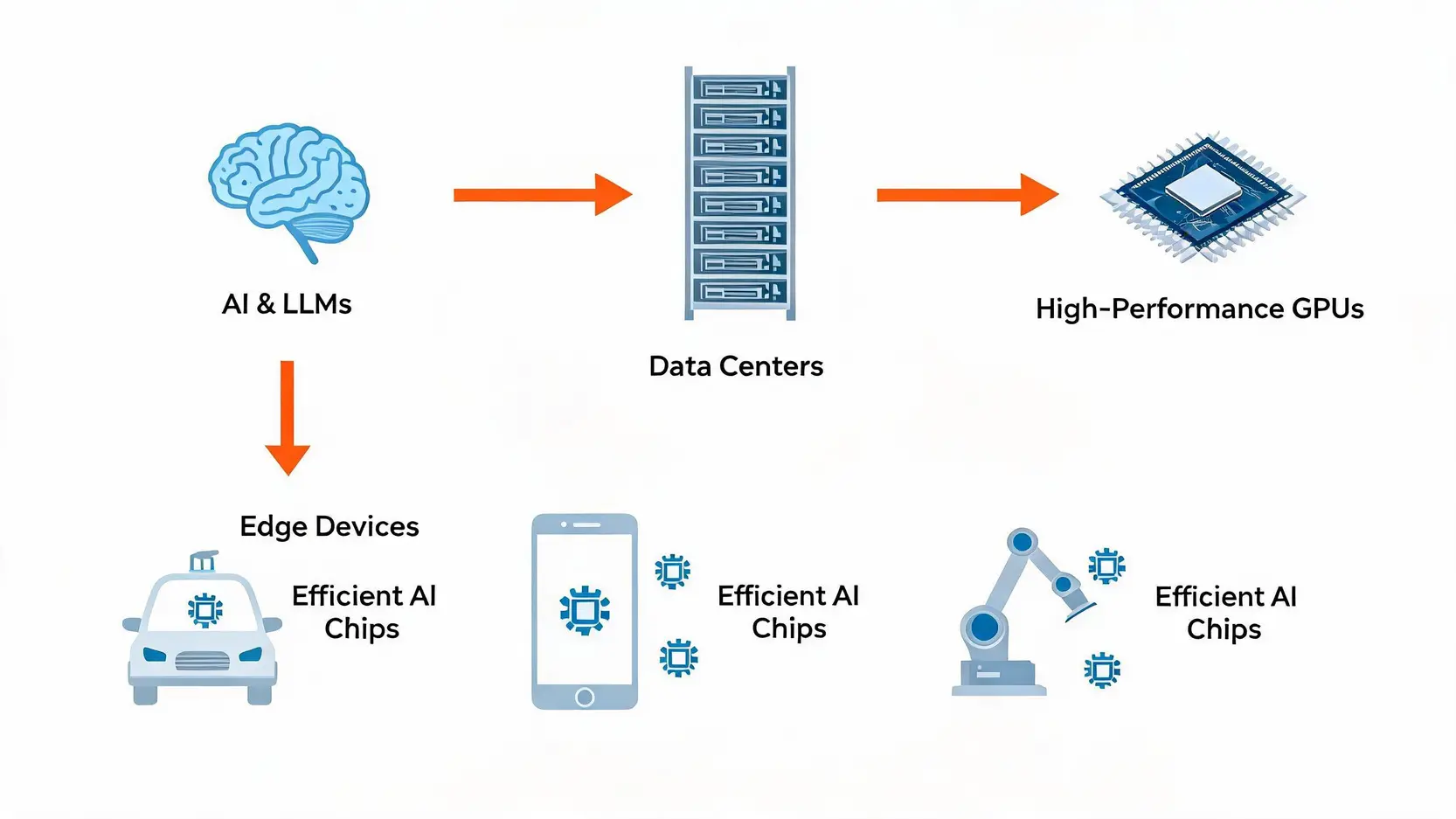
Artificial Intelligence is unequivocally the single most significant catalyst for the semiconductor industry. In 2026, this is more apparent than ever. The demand for generative AI, large language models (LLMs), and complex machine learning algorithms necessitates a massive build-out of data center infrastructure. This translates into staggering demand for high-performance GPUs, custom ASICs (Application-Specific Integrated Circuits), and high-speed networking components. Beyond the cloud, AI is rapidly moving to the ‘edge’—into our cars, smartphones, PCs, and factory floors. This requires a new class of power-efficient chips capable of real-time processing, opening up vast new markets for specialized silicon. For new investors looking to understand the space, a beginner’s guide to AI stock investing can provide foundational knowledge.
Automotive & Industrial IoT: The Next Wave of Chip Demand
The transformation of the automotive industry into ‘computers on wheels’ is accelerating. In 2026, advanced driver-assistance systems (ADAS), in-cabin infotainment, and the eventual move towards full autonomy are creating unprecedented demand for sensors, processors, and connectivity chips. Similarly, the Industrial Internet of Things (IIoT) is embedding intelligence into manufacturing, logistics, and energy grids. Smart factories rely on a network of sensors and processors to optimize production and predict maintenance needs, driving demand for a diverse range of analog and digital semiconductors. This wave of demand is less cyclical and provides a stable, long-term growth vector for the chip industry.
Geopolitical Landscape: Navigating Supply Chain and National Policies
The strategic importance of semiconductors has placed the industry at the center of global geopolitics. National security and economic competitiveness are now intrinsically linked to domestic chip manufacturing capabilities. Initiatives like the U.S. CHIPS Act and the European Chips Act are injecting billions into building resilient, localized supply chains. For investors, this creates both risks and opportunities. Companies benefiting from government subsidies may see accelerated growth, while those caught in trade disputes could face headwinds. Understanding the impact of geopolitical risk on the stock market is no longer optional; it is a critical component of due diligence in the semiconductor space.
Category 1: The AI & Computing Titans
These companies are the established leaders, possessing the market dominance, technological prowess, and financial firepower to define the direction of the AI and high-performance computing (HPC) markets. Their innovations have a cascading effect throughout the entire tech ecosystem.
Nvidia (NVDA): Still the Undisputed AI King?
Nvidia’s ascent to the top of the AI world has been nothing short of meteoric. Its CUDA architecture has created a deep, defensible moat, making its GPUs the default choice for training and running complex AI models. As of 2026, Nvidia’s dominance in the data center remains formidable, with its Blackwell and next-generation platforms setting the performance benchmark. The key questions for investors are valuation and the sustainability of its growth. While competition is intensifying, Nvidia’s full-stack solution—encompassing hardware, software, and networking—presents a significant challenge for rivals. Keeping an eye on the Nvidia stock price prediction for 2026 is crucial for any tech investor’s strategy.
Broadcom (AVGO): The Leader in Connectivity and Infrastructure
While Nvidia focuses on the computational core of AI, Broadcom provides the critical connective tissue. The company is a leader in custom silicon (ASICs) for major cloud providers, high-speed networking switches, and components that enable the massive data flows within AI data centers. With its acquisition of VMware, Broadcom has further entrenched itself in enterprise cloud infrastructure. AVGO represents a more diversified play on the growth of the data economy, offering a blend of AI-driven growth and stable cash flow from its legacy businesses. Its role in networking makes it an indispensable partner for anyone building a hyperscale data center.
Category 2: The Manufacturing & Equipment Backbone
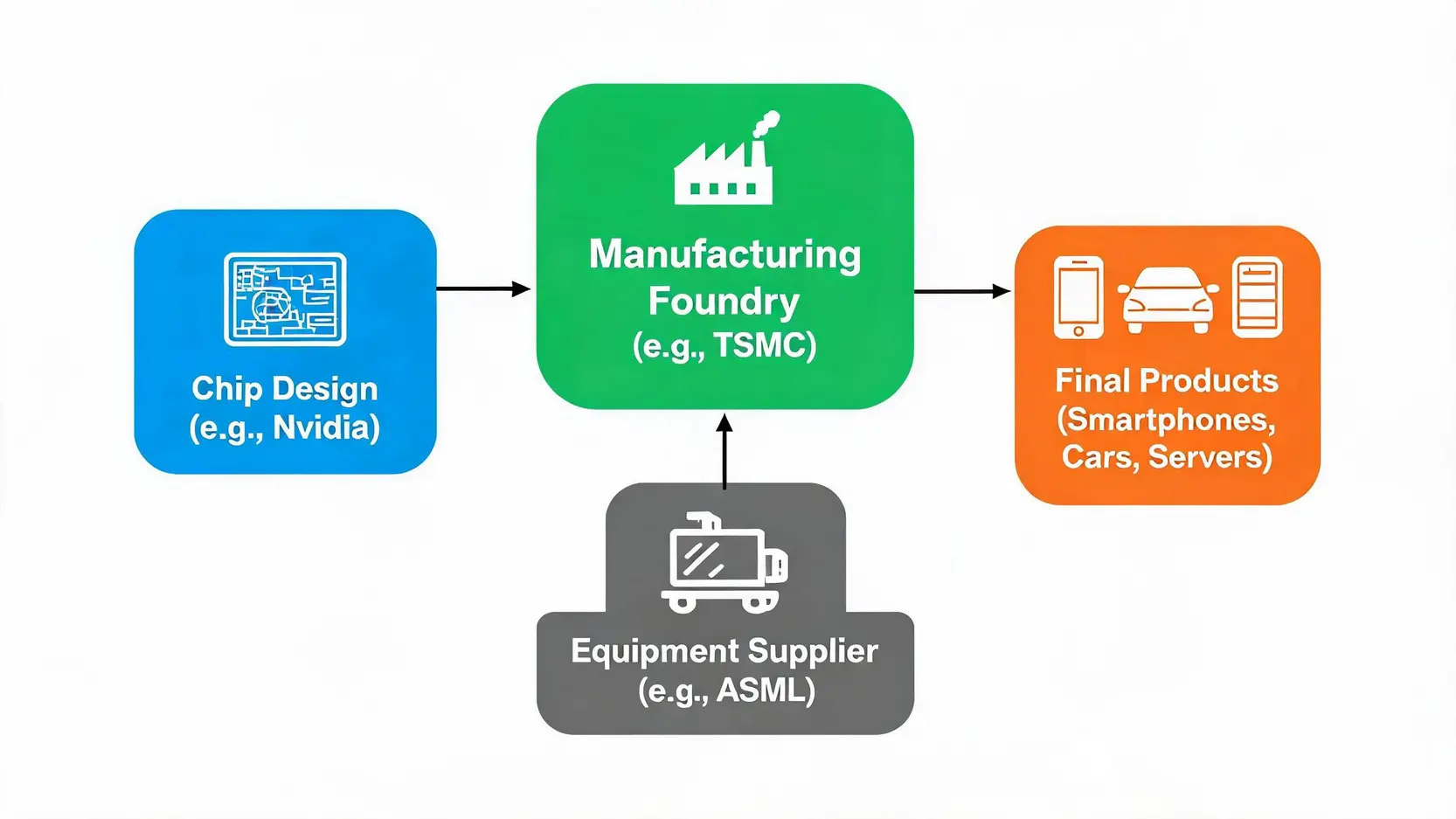
Without these companies, the innovations designed by the titans would never become reality. This category includes the foundries that manufacture the chips and the equipment makers that supply the foundries. They are the picks-and-shovels plays of the semiconductor revolution.
TSMC (TSM): The World’s Foundry and Its Strategic Importance
Taiwan Semiconductor Manufacturing Company is arguably the most important company in the world. As the leading-edge foundry, it manufactures the most advanced chips for clients like Apple, Nvidia, and AMD. Its manufacturing expertise is unparalleled, and its ability to consistently deliver the next generation of process nodes (e.g., 2nm and below) gives it immense pricing power. Investing in TSMC is a bet on the continued advancement of Moore’s Law and the fabless semiconductor model. Its geopolitical significance, given its location, is a key risk factor but also underscores its irreplaceability in the global supply chain.
ASML Holding (ASML): The Monopoly on Advanced Lithography
ASML holds a true monopoly in a critical segment of the chip-making process: extreme ultraviolet (EUV) lithography. This technology is essential for patterning the smallest, most complex features on advanced chips. Without ASML’s machines, which cost upwards of $200 million each, companies like TSMC and Samsung could not produce the processors that power AI and modern computing. As the industry moves towards even more advanced High-NA EUV systems, ASML’s indispensability only grows. An investment in ASML is a bet on the fundamental technology that underpins the entire advanced semiconductor industry. To grasp its importance, it is helpful to understand what EUV lithography technology is and why it’s so difficult to master.
Category 3: Emerging Players & Dark Horses for 2026
Beyond the well-known giants, a new class of companies is emerging to solve critical bottlenecks in the AI infrastructure stack. These players offer the potential for higher growth and could become the titans of tomorrow.
Astera Labs (ALAB): A Key Player in AI Connectivity
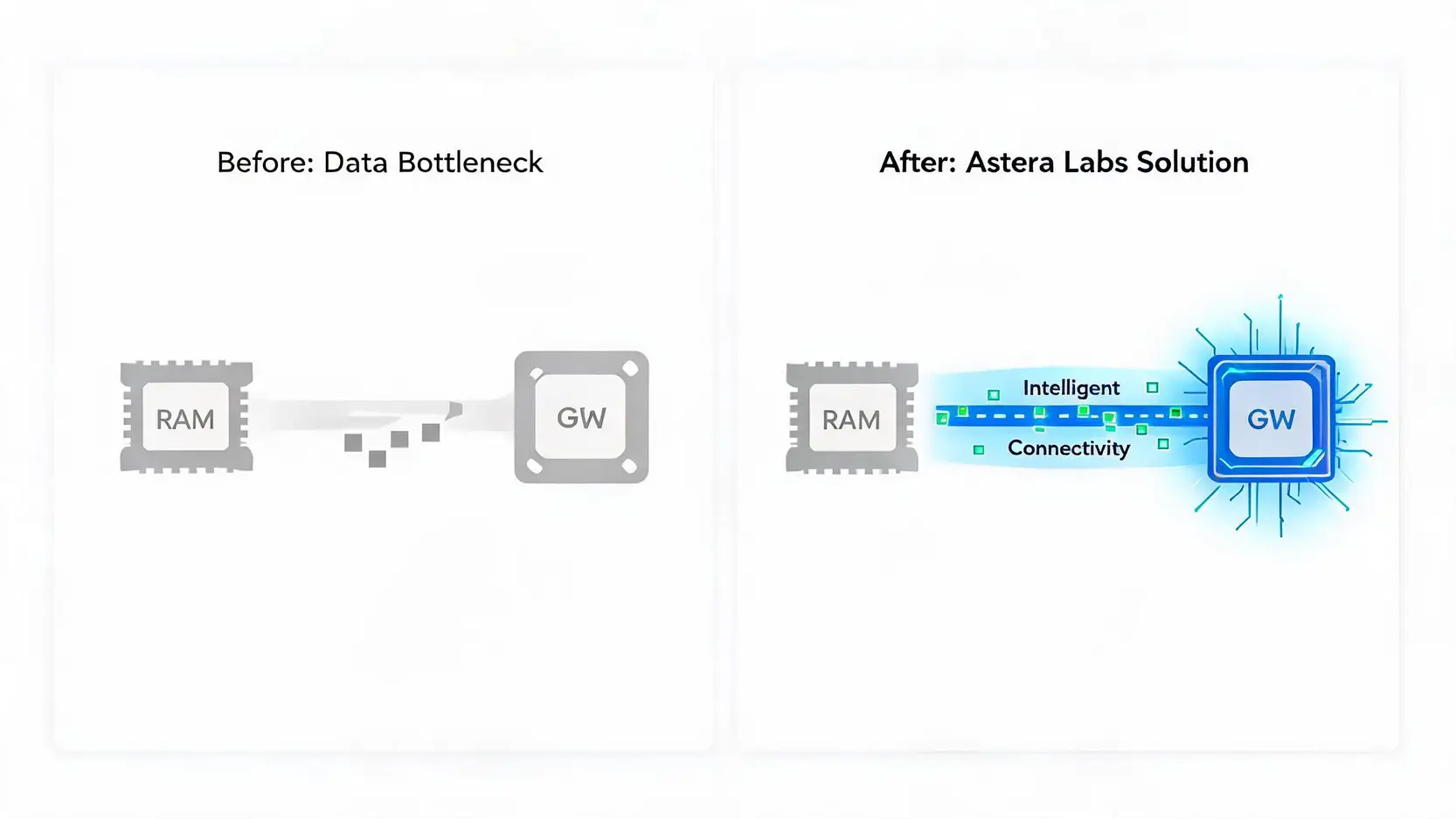
Astera Labs addresses a crucial problem in AI systems: the data bottleneck. As GPUs become more powerful, the challenge shifts to feeding them data quickly and efficiently. Astera designs ‘intelligent connectivity’ solutions, such as PCIe and CXL retimers and switches, that ensure data flows seamlessly between processors, memory, and networking components. It’s a specialized but vital niche that is growing in lockstep with the AI server market. As a relatively new public company, ALAB offers a focused way to invest in the plumbing of AI data centers.
Micron Technology (MU): Riding the High-Bandwidth Memory Wave
Micron has transformed from a cyclical commodity memory maker into a key enabler of the AI revolution through its leadership in High-Bandwidth Memory (HBM). HBM is a type of stacked DRAM that is co-packaged with GPUs to provide the massive memory bandwidth required for AI training. Micron’s HBM3E products are in high demand and are critical components in Nvidia’s H200 and B200 accelerators. This positions MU to directly benefit from the build-out of AI infrastructure, with a more favorable pricing environment than traditional DRAM or NAND. Understanding the technology behind HBM is essential for any AI investor in 2026.
Qualcomm (QCOM): The Edge AI Champion
Long known for its dominance in mobile phone chips, Qualcomm is successfully pivoting to become a leader in edge AI. Its Snapdragon X Elite and X Plus processors are bringing powerful AI capabilities to the next generation of PCs, challenging the traditional Wintel duopoly. Furthermore, its ‘Digital Chassis’ platform is gaining significant traction in the automotive sector, providing a comprehensive solution for connectivity, infotainment, and ADAS. QCOM offers a compelling way to invest in the proliferation of AI beyond the data center and into the devices we use every day.
Risks and Headwinds to Consider Before Investing in 2026
Despite the bullish outlook, investing in semiconductor stocks carries inherent risks that must be carefully managed. The sector is known for its capital intensity, cyclicality, and rapid technological change. A clear-eyed assessment of the potential headwinds is essential for making informed investment decisions.
Valuation Concerns: Is the AI Hype Overblown?
The meteoric rise of AI-related stocks has pushed valuations to historic highs. Companies like Nvidia trade at significant premiums, pricing in years of flawless execution and continued exponential growth. Any disappointment in earnings, guidance, or perceived slowing of AI demand could trigger a sharp correction. Investors in 2026 must question whether the current hype has led to an asset bubble or if the valuations are justified by a genuine paradigm shift in technology.
Intensifying Competition from New Entrants
The enormous profitability of the AI chip market is attracting a flood of competition. Major cloud providers (like Google, Amazon, and Microsoft) are designing their own custom chips to reduce their reliance on Nvidia. At the same time, a host of well-funded startups are developing novel architectures to challenge the incumbents. While the leaders have strong moats, the competitive landscape is far from static, and margin pressure could increase over time.
Regulatory Scrutiny and International Trade Tensions
The strategic nature of semiconductors has put the industry under the regulatory microscope. Governments worldwide are scrutinizing mergers and acquisitions, and concerns about market concentration could lead to antitrust actions. Moreover, escalating trade tensions, particularly between the US and China, remain a significant threat. Export controls on advanced chips and manufacturing equipment can abruptly close off major markets, disrupting supply chains and impacting revenues for multinational semiconductor firms.
Conclusion
In conclusion, 2026 is shaping up to be a pivotal year for the semiconductor industry, with AI serving as the primary engine of growth. While giants like Nvidia and TSMC continue to command the spotlight, a successful investment strategy requires understanding the broader ecosystem. This includes the indispensable equipment leaders like ASML, critical enablers of connectivity and memory such as Broadcom and Micron, and emerging players tackling new frontiers in edge AI. By carefully analyzing the secular trends, competitive dynamics, and geopolitical risks outlined in this guide, investors can strategically position themselves to capitalize on one of the most significant technological transformations of our time. Always conduct your own thorough due diligence before making any investment decisions on which semiconductor stocks to watch.
Frequently Asked Questions (FAQ)
Q: What is the single most important factor for semiconductor stock growth in 2026?
A: The single most important factor is undoubtedly the continued expansion of Artificial Intelligence. This includes the build-out of AI data centers for training and inference, as well as the integration of AI capabilities into edge devices like PCs, smartphones, and vehicles. The demand for specialized, high-performance chips to power these applications is the primary driver of revenue and profitability for the entire sector.
Q: How can I start investing in semiconductor stocks?
A: You can invest in individual semiconductor stocks like the ones mentioned in this guide through a standard brokerage account. For broader exposure and diversification, you can consider semiconductor-focused ETFs (Exchange-Traded Funds) such as the VanEck Semiconductor ETF (SMH) or the iShares Semiconductor ETF (SOXX). These funds hold a basket of the top companies in the industry.
Q: Is it too late to invest in major players like Nvidia?
A: This is a question of valuation and risk tolerance. While Nvidia’s stock has had a phenomenal run, its growth continues to be robust, driven by the ongoing AI revolution. However, its high valuation means it is priced for near-perfection. Investors should weigh the company’s dominant market position and future growth prospects against the risk of a potential market correction or a slowdown in its growth trajectory. Dollar-cost averaging can be a prudent strategy to mitigate volatility risk.
Q: How does the cyclical nature of the semiconductor industry affect investment strategy?
A: Historically, the semiconductor industry has been highly cyclical, with periods of boom (high demand, strong pricing) followed by busts (oversupply, falling prices). While the rise of AI and other secular trends may be dampening this cyclicality, it hasn’t been eliminated. A sound strategy involves diversifying across different sub-sectors (e.g., logic, memory, equipment) and maintaining a long-term perspective to ride out potential downturns. Avoid making all-in bets at what might be the peak of a cycle.