The artificial intelligence revolution is no longer a distant forecast; it’s a present-day reality reshaping industries at an unprecedented pace. As we navigate 2026, the engine powering this transformation is robust, high-performance AI infrastructure. For discerning investors, the key to capitalizing on this secular trend lies in identifying the top-performing AI infrastructure stocks 2026. This analytical guide provides a clear roadmap to investing in the AI supply chain, moving beyond the obvious names to uncover companies fundamentally positioned for significant, long-term growth.
Table of Contents
What is AI Infrastructure and Why is it a Critical Investment for 2026?
AI infrastructure constitutes the foundational physical and digital assets required to develop, train, and deploy artificial intelligence models and applications. It is the essential “picks and shovels” play in the gold rush of AI. Without this backbone, the sophisticated algorithms and user-facing applications that capture headlines would simply not exist. Understanding its components is the first step toward making strategic investment decisions in the AI sector.
Defining the Core Components: From Semiconductors to Data Centers
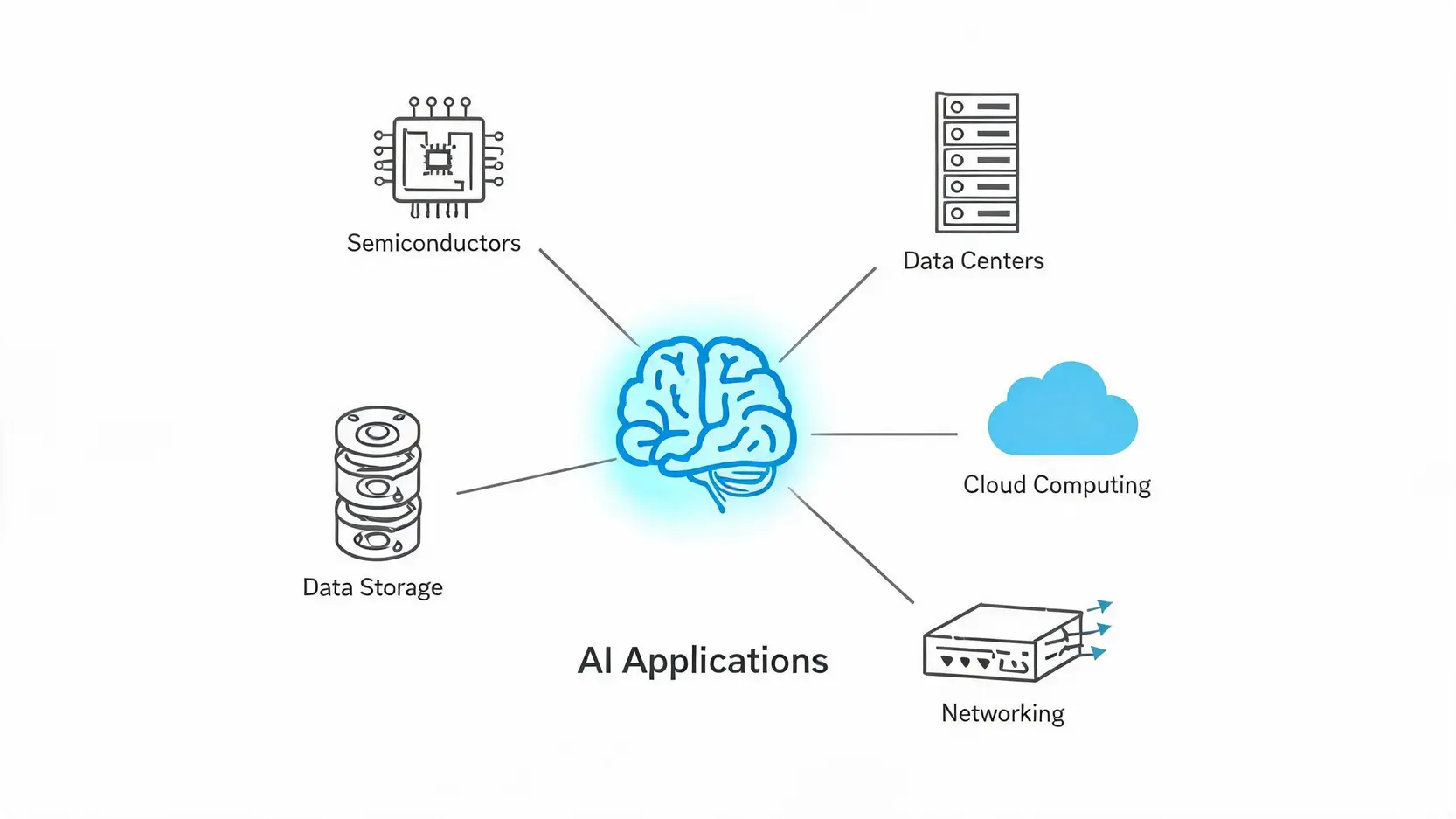
The AI infrastructure ecosystem is a multi-layered supply chain, with each layer representing a critical investment opportunity:
- Semiconductors: At the heart of AI are specialized processors like Graphics Processing Units (GPUs) and custom Application-Specific Integrated Circuits (ASICs). These chips are designed to handle the massive parallel computations required for training large language models (LLMs) and other AI workloads.
- Data Centers: These are the physical facilities that house servers, storage systems, and networking equipment. AI-ready data centers require immense power, advanced cooling solutions, and high-density server racks to support the demanding hardware.
- Cloud Computing Platforms: Hyperscalers provide “Infrastructure-as-a-Service” (IaaS), offering access to vast computational resources on demand. They are the primary way most enterprises access and scale their AI capabilities without building their own data centers.
- Networking & Connectivity: High-speed, low-latency interconnects and networking hardware are crucial for allowing thousands of chips to communicate and work together as a single, powerful computer. This includes everything from Ethernet switches to optical components.
- Data Storage & Management: AI models are trained on vast datasets. Fast, scalable, and reliable storage solutions (like NAND flash and SSDs) are essential for feeding data to hungry processors efficiently.
Key Market Trends Driving Demand Beyond 2025
The demand for AI infrastructure is not speculative; it’s driven by powerful, quantifiable market trends. Generative AI has moved from experimentation to enterprise-level deployment, fueling an insatiable need for more computing power. According to a recent forecast from Gartner, worldwide spending on AI is projected to reach an astounding $2.59 trillion in 2026, marking a 47% increase from the previous year. This explosive growth is a direct tailwind for every company involved in building, maintaining, and expanding the world’s AI capacity. The race for sovereign AI capabilities and the continuous growth in model complexity ensure that demand for this foundational layer will remain robust for the foreseeable future.
The Top AI Infrastructure Stock Picks for 2026
A well-diversified portfolio in this sector should include exposure to its different layers. Here is an analysis of seven key players who are strategically positioned to be among the best AI infrastructure stocks to watch in 2026.
Category 1: The Semiconductor Powerhouses
These companies design and manufacture the core processing units that are the bedrock of AI computation.
- NVIDIA (NVDA): The undisputed leader in AI accelerators. Nvidia’s CUDA ecosystem has created a deep technological moat that is difficult for competitors to breach. Its GPUs (like the H-series and the new Blackwell architecture) are the industry standard for training and inference. As models grow larger and more complex, the demand for Nvidia’s cutting-edge hardware is expected to continue its upward trajectory. For a deeper dive, read our NVDA stock forecast.
- Taiwan Semiconductor Manufacturing Company (TSMC): The world’s leading dedicated semiconductor foundry. TSMC is the manufacturing partner for virtually every major fabless chip designer, including Nvidia, AMD, and Apple. Its technological lead in advanced process nodes (like 3nm and 2nm) makes it an indispensable player in the AI supply chain. Investing in TSMC is a bet on the continued growth of the entire high-performance computing sector.
- Broadcom (AVGO): A leader in both networking and custom silicon. Broadcom’s high-performance Tomahawk and Jericho series of Ethernet switch ASICs are critical for building out the networking fabric within data centers. Furthermore, its growing custom ASIC business allows hyperscalers like Google and Meta to design their own specialized AI chips, with Broadcom as a key design and manufacturing partner.
Category 2: The Cloud & Data Center Titans
These giants provide the scale and accessibility for enterprises to leverage AI without massive upfront capital expenditure.
- Amazon (AMZN): Through Amazon Web Services (AWS), the company is the largest cloud infrastructure provider globally. AWS offers a vast suite of AI services and access to a wide range of computing instances powered by chips from Nvidia, as well as its own custom silicon (Trainium and Inferentia). Its massive scale and enterprise penetration make it a primary beneficiary of the broad adoption of AI.
- Alphabet (GOOGL): Google Cloud Platform (GCP) is a strong competitor in the cloud space, differentiated by its deep, native expertise in AI. Google’s development of its own Tensor Processing Units (TPUs) for internal use and for its cloud customers gives it a unique, vertically integrated advantage. As enterprises look for powerful and efficient AI development platforms, GCP is poised for continued market share gains.
Category 3: The Essential Hardware & Connectivity Players
This category includes companies providing the critical plumbing and storage that make modern AI data centers function.
- Arista Networks (ANET): A market leader in high-speed data center networking. Arista’s switches and EOS (Extensible Operating System) software are designed for the performance and scalability demands of cloud and AI workloads. As data centers scale out with more AI accelerators, the need for faster, more efficient networking from specialists like Arista becomes paramount.
- Western Digital (WDC): A key provider of data storage solutions. AI models require massive amounts of data for training, and the demand for high-capacity, high-performance storage is growing in lockstep. Western Digital, with its portfolio of both hard disk drives (HDDs) for mass storage and solid-state drives (SSDs) for fast data access, is well-positioned to meet the storage needs of the AI era.
How to Evaluate AI Infrastructure Stocks for Long-Term Success
Investing in the dynamic AI infrastructure sector requires moving beyond the hype and focusing on fundamental analysis. A disciplined evaluation framework is crucial for identifying companies with sustainable growth prospects and avoiding those with inflated valuations. Here are key areas to analyze when assessing potential AI infrastructure investments for your portfolio.
Beyond the Hype: Key Financial Metrics to Analyze
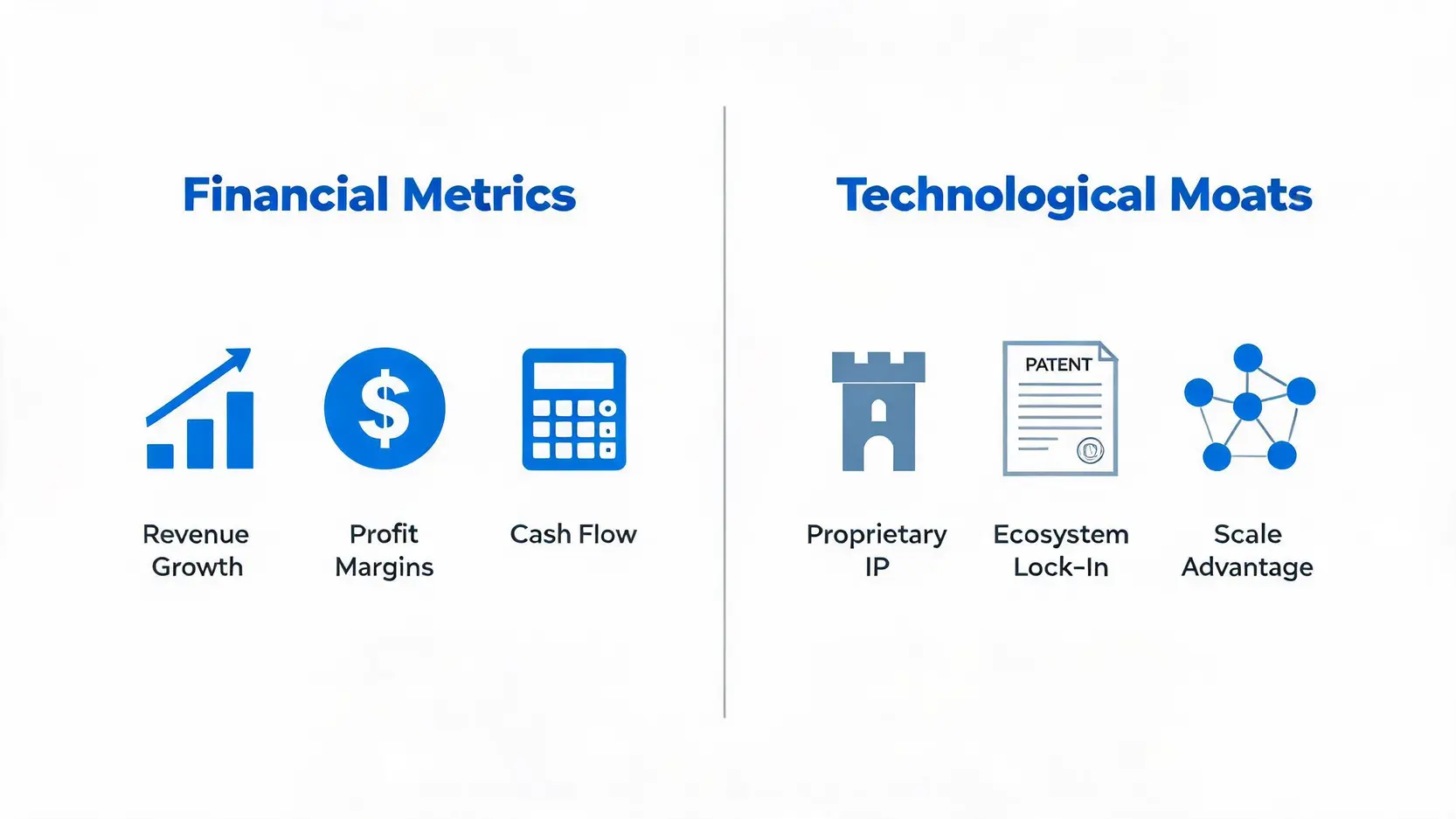
While forward-looking narratives are important, they must be backed by solid financial performance. Look for a combination of these metrics:
- Revenue Growth Rate: Is the company consistently growing its top line at a rate that outpaces the broader market? Look for accelerating growth as a sign of strong product-market fit.
- Gross and Operating Margins: High and stable (or expanding) margins indicate pricing power and operational efficiency. Companies with superior technology often command premium margins.
- Free Cash Flow (FCF): A company that generates strong FCF has the financial flexibility to reinvest in R&D, make strategic acquisitions, or return capital to shareholders without relying on external financing.
- Forward P/E and PEG Ratios: While many AI stocks trade at high multiples, comparing the forward Price-to-Earnings (P/E) ratio to the expected earnings growth rate (PEG ratio) can provide context on whether the valuation is justified by its growth prospects.
Assessing Technological Moats and Competitive Advantages
A technological moat is a sustainable competitive advantage that protects a company’s long-term profits from competitors. In the AI infrastructure space, moats can take several forms:
- Proprietary Technology & IP: A strong portfolio of patents and unique chip architectures, like Nvidia’s CUDA platform, creates high switching costs for customers.
- Ecosystem Lock-In: Companies that build a comprehensive ecosystem of hardware, software, and developer tools make it difficult for customers to switch to a competitor’s solution.
- Manufacturing Excellence: For companies like TSMC, the scale, capital intensity, and technological expertise required to operate leading-edge foundries create an enormous barrier to entry.
- Key Customer Relationships: Deeply integrated partnerships with the largest cloud service providers can secure a stable and predictable revenue stream for years.
Understanding the Risks: Market Cyclicality and Geopolitical Factors
No investment is without risk. The semiconductor industry, in particular, is historically cyclical. While the AI boom appears to be a long-term secular trend, investors should be aware of potential short-term fluctuations in demand and supply. Furthermore, geopolitical tensions, particularly concerning trade policies and semiconductor manufacturing hubs in Asia, represent a significant risk factor. A well-diversified portfolio that includes companies from different geographies and across various layers of the infrastructure stack can help mitigate some of these concentrated risks.
Conclusion
The outlook for AI infrastructure stocks in 2026 remains exceptionally strong, propelled by the relentless integration of artificial intelligence into the fabric of the global economy. The investment opportunity extends far beyond a single company or sub-sector. By focusing on market leaders with solid fundamentals across the critical pillars of semiconductors, cloud computing, and essential hardware, investors can strategically position themselves to capture the immense value being created. The path to success in this dynamic market requires diligent research, a long-term perspective, and a diversified portfolio designed to weather both cyclical and geopolitical uncertainties.
Frequently Asked Questions (FAQ)
Q: Is it too late to invest in AI infrastructure stocks in 2026?
A: While many stocks in the sector have seen significant appreciation, it is not too late. The deployment of AI across the global economy is still in its early innings. The key is to be selective and focus on companies with defensible moats and reasonable valuations relative to their growth prospects. The transition from training-focused infrastructure to a broader mix of inference-focused infrastructure will create new winners and opportunities.
Q: What is the difference between AI software and AI infrastructure stocks?
A: AI infrastructure stocks represent the companies building the foundational hardware and platforms—the “picks and shovels.” This includes semiconductors, data centers, networking, and cloud computing. AI software stocks, on the other hand, are companies that build applications and models that run *on* that infrastructure, such as enterprise SaaS platforms with AI features or consumer-facing AI applications.
Q: How can I diversify my investment within the AI infrastructure sector?
A: Diversification can be achieved by investing across the different layers of the supply chain. Instead of only buying a chip designer, consider pairing it with a cloud provider, a networking specialist, and a data storage company. This spreads your risk and gives you exposure to the entire value chain. Alternatively, investors can consider specialized ETFs that focus on semiconductors or cloud computing for instant diversification.
Q: Which ETFs offer exposure to AI infrastructure?
A: For investors seeking broader exposure without picking individual stocks, several Exchange-Traded Funds (ETFs) focus on this theme. Look into semiconductor-focused ETFs like the VanEck Semiconductor ETF (SMH) or iShares Semiconductor ETF (SOXX). For broader technology and AI exposure, ETFs like the Invesco QQQ Trust (QQQ) or thematic AI ETFs can also be effective investment vehicles, though it’s crucial to examine their specific holdings to ensure they align with an infrastructure-focused strategy.