The historic AI stock rally that began in 2023 has generated unprecedented wealth, redefining market dynamics and creating a new class of tech giants. However, as we move through 2026, the critical question on every investor’s mind is: Is the AI stock rally over in 2026? Conflicting signals—from sky-high valuations to undeniable long-term technological adoption—are creating a complex picture. This data-driven 2026 AI stock forecast provides a penetrating analysis of both the bear and bull cases, dissecting the signs that the AI boom may be nearing its peak while also exploring the powerful arguments for its continued evolution. Navigating the market ahead requires moving beyond the hype and focusing on the fundamental drivers that will separate fleeting trends from lasting transformations.
Table of Contents
Anatomy of the Great AI Rally (2023-2025)
To understand where the AI market is headed, we must first analyze the forces that propelled it to its current heights. The rally was not a monolithic event but a multi-stage surge built on technological breakthroughs, massive capital investment, and, eventually, tangible corporate profits.
The NVIDIA Effect: How Chipmakers and Infrastructure Spending Fueled the Surge
At the heart of the initial boom was a classic “picks and shovels” play. The explosion of interest in large language models (LLMs) and generative AI created a voracious, near-insatiable demand for the one thing every AI model needs: computational power. NVIDIA (NVDA), with its dominance in the GPU market, became the primary beneficiary. The company’s earnings reports from 2023 through 2025 consistently shattered expectations, with data center revenue becoming the key metric watched by Wall Street. This triggered a chain reaction:
- Massive Capex Investment: Tech giants like Microsoft, Google, Amazon, and Meta diverted tens of billions of dollars into building out their AI data centers, a direct boon for NVIDIA and other hardware suppliers.
- Symbiotic Growth: The success of chipmakers fueled a rally in related sectors, including data center REITs, networking equipment manufacturers, and even utility companies providing the enormous power required.
- Market Re-rating: The entire semiconductor sector was re-rated by investors, who began to view these companies not as cyclical hardware makers but as the foundational layer of a new technological era. A detailed NVDA stock forecast reveals just how central the company has become to the market’s trajectory.
From Hype to Earnings: Tracking the Tangible Impact on Corporate Profits
While the initial phase was driven by infrastructure spending, the rally’s endurance into 2025 was secured by a more critical factor: the translation of AI hype into actual, measurable earnings. Companies began to demonstrate clear ROI from their AI investments. Microsoft’s Azure, powered by its OpenAI partnership, saw accelerated cloud growth. Software companies like Adobe and Salesforce successfully integrated AI features into their product suites, creating new revenue streams and justifying premium pricing. This transition from a narrative-driven market to an earnings-driven one was crucial, as it provided the fundamental support needed to sustain elevated valuations and attract a broader base of institutional investors.
The Bear Case: 5 Signs the AI Stock Rally Could End by 2026
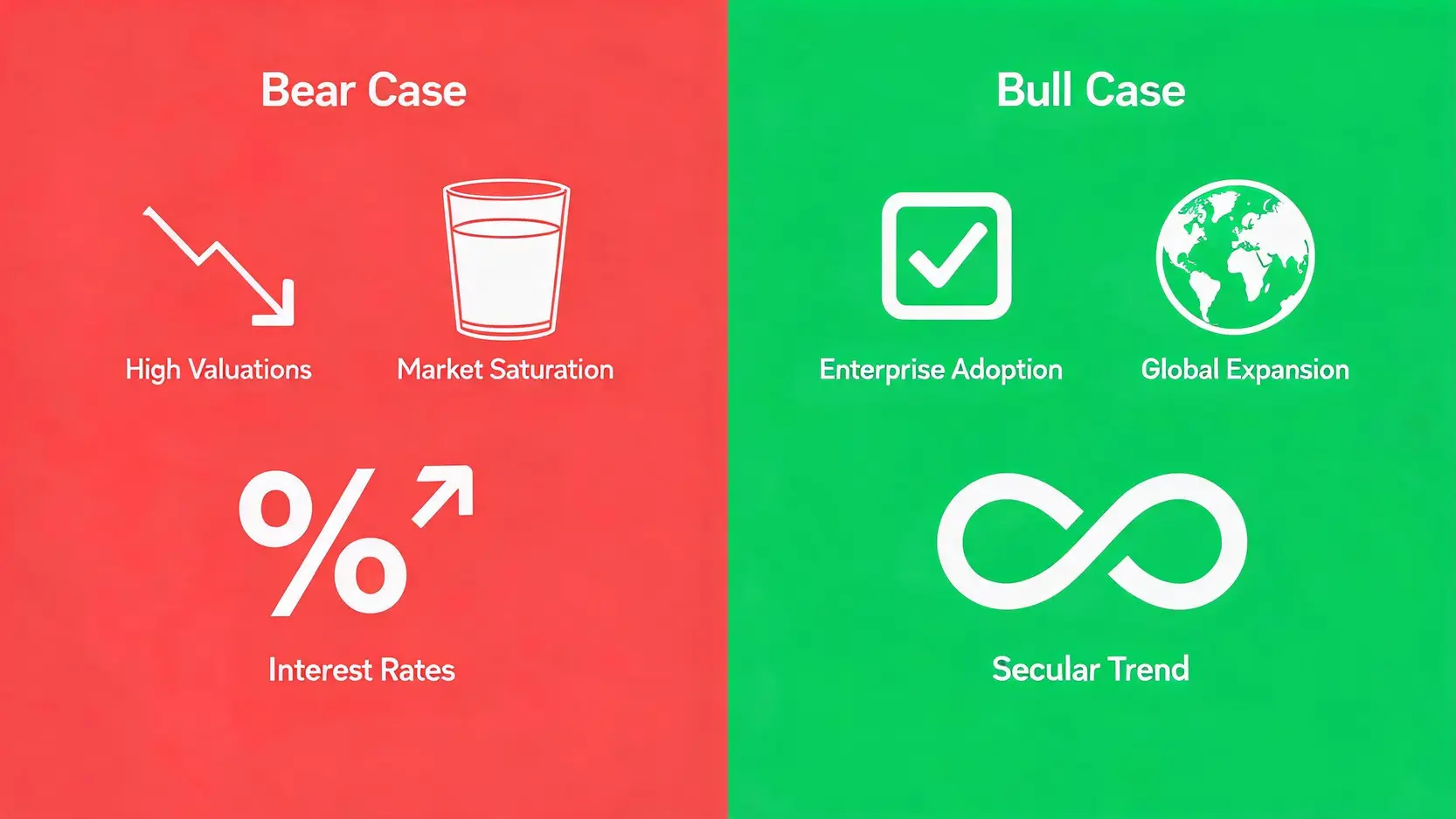
Despite the solid foundation, several significant headwinds are converging in 2026, leading a growing chorus of analysts to warn that the most explosive phase of the AI rally is over. These concerns range from stretched valuations to macroeconomic pressures that could cool the market’s enthusiasm.
Sky-High Valuations and Echoes of the Dot-Com Bubble
The most prominent red flag is valuation. Many leading AI stocks are trading at price-to-earnings (P/E) and price-to-sales (P/S) ratios that are multiples above historical tech sector averages. This has drawn inevitable comparisons to the dot-com bubble of 1999-2000. While today’s AI leaders have substantial real earnings, unlike many dot-com era companies, the market is pricing in decades of flawless execution and growth. A key distinction, as historical analysis from OpenAI points out, is that the current boom is built on real technological capability and revenue. However, the risk remains that even minor disruptions to the growth narrative could trigger a severe valuation reset. Understanding what constitutes a stock bubble is critical for investors in the current climate.
Potential for Market Saturation and Diminishing Returns on AI Capex
The initial wave of AI infrastructure build-out was driven by a sense of urgency. In 2026, the landscape is changing. Hyperscalers have established their foundational infrastructure, and the rate of new data center construction may slow. This points to a critical risk: diminishing returns on capital expenditure. As the low-hanging fruit of AI integration is picked, the incremental revenue gained from each additional billion dollars of capex could decline. The market will be watching closely for signs that the incredible efficiency gains promised by AI are materializing on a scale that justifies the unprecedented spending.
Macroeconomic Headwinds: Interest Rates and Regulatory Scrutiny
The AI rally occurred during a period of shifting monetary policy. By 2026, the reality of a “higher for longer” interest rate environment is setting in. High rates increase the cost of capital, making massive, long-term investments in unproven AI technologies less attractive. They also make safer investments, like bonds, more appealing, potentially drawing capital away from high-growth tech stocks. Simultaneously, regulatory scrutiny is intensifying globally. Governments in the US, Europe, and China are focused on issues of monopoly power, data privacy, and the potential for AI to displace jobs, creating a climate of uncertainty that could dampen investor sentiment and increase compliance costs for AI companies.
The Bull Case: 3 Reasons the AI Rally May Evolve, Not End
While the risks are real, the bull case argues that the AI revolution is still in its early innings. Proponents believe the market is not heading for a crash but is transitioning into a new, more mature phase of growth driven by widespread adoption and international expansion.
The Second Wave: Enterprise Software and Sector-Specific AI Adoption
The first wave of the rally was about infrastructure. The second wave, now underway in 2026, is about application. The focus is shifting from the companies that build AI (like NVIDIA) to the companies that *use* AI to create value. This includes:
- Enterprise Software: Companies that successfully embed AI into workflows, offering products that increase productivity, automate tasks, and provide predictive analytics.
- Industry-Specific Solutions: The application of AI in sectors like healthcare (drug discovery, diagnostic tools), finance (fraud detection, algorithmic trading), and manufacturing (robotics, supply chain optimization) is just beginning to scale. This represents a far larger total addressable market than the initial hardware boom.
Beyond the US: Exploring AI Growth in European and Asian Markets
While the US has dominated the early AI rally, sovereign and corporate investment in AI is accelerating globally. European nations are cultivating their own AI ecosystems, often with a stronger focus on industrial and B2B applications. In Asia, countries are investing heavily in semiconductor independence and developing unique AI models trained on local data. This geographic diversification provides a new engine for growth and reduces the sector’s dependence on the US market and its macroeconomic conditions.
Long-Term Secular Trend vs. Short-Term Market Cycle
Perhaps the most powerful bull argument is that AI is not a cyclical trend but a secular shift, akin to the internet or the mobile revolution. While market cycles will cause short-term pullbacks, the underlying trend of increasing automation, data analysis, and intelligent systems is irreversible. From this perspective, the question is not *if* AI will create value, but *which* companies will capture it. Investors with a long-term horizon may see any 2026 market downturn as a buying opportunity, confident that the technology’s integration into the global economy will continue for decades.
Beyond the Obvious: Where to Find AI Value in 2026
As the market matures, the strategy of simply buying the biggest names becomes less effective. Identifying value in 2026 requires a more nuanced approach, looking at the entire AI value chain and differentiating between different types of AI investments.
Identifying ‘Picks and Shovels’ Beyond Chipmakers
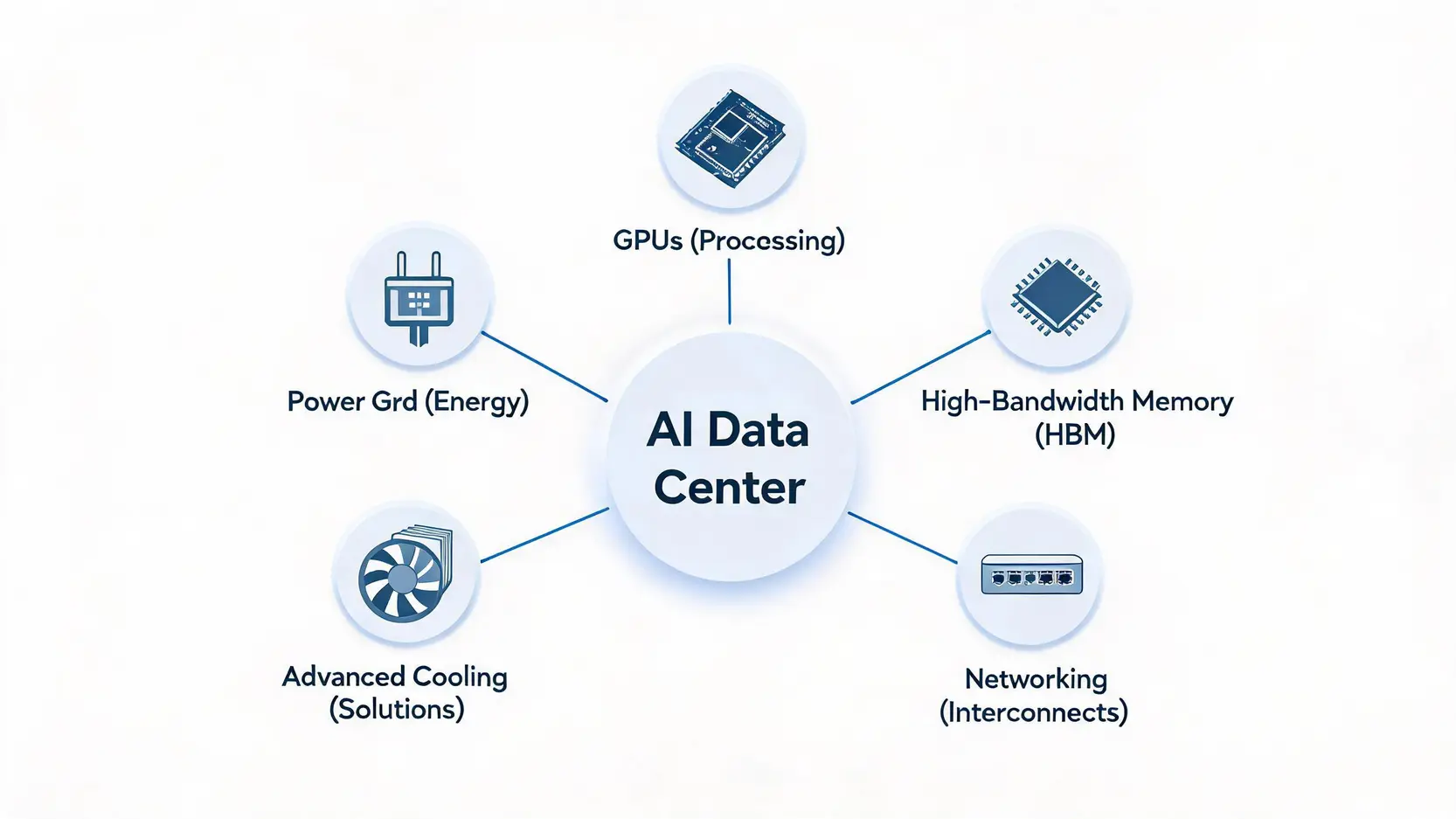
The infrastructure play is not over, but it is expanding beyond GPUs. Astute investors are looking at the critical supporting industries that enable the AI data center ecosystem:
- Data Centers & Cooling: Specialized real estate (REITs) that own and operate data centers, and companies that provide the advanced liquid cooling solutions required for high-density AI servers.
- Memory and Networking: Producers of high-bandwidth memory (HBM) and ultrafast networking components are essential for connecting thousands of GPUs to work in concert.
- Power Infrastructure: The electricity demand from AI is staggering. This benefits utility providers, transformer manufacturers, and companies involved in grid modernization.
AI-Enabled Companies vs. Pure-Play AI Stocks: A Risk-Adjusted Approach
A prudent strategy for 2026 involves balancing high-growth, high-risk pure-play AI stocks with more established, AI-enabled companies. A pure-play AI stock is a company whose primary business is AI (e.g., an AI chip designer or a specialized AI software firm). An AI-enabled company is an established leader in a traditional industry (e.g., industrial manufacturing, financial services) that is using AI to enhance its competitive advantage. These AI-enabled firms often offer a lower-risk profile, as their core business provides a stable foundation, while AI acts as a powerful growth accelerant.
Key Financial Metrics to Watch for Post-Hype AI Investments
In the post-hype environment, fundamental analysis becomes paramount. Move beyond simple revenue growth and focus on these key metrics to gauge the health and long-term viability of an AI investment:
- Return on Invested Capital (ROIC): Does the company generate high returns on the massive capital it’s investing in AI?
- Free Cash Flow (FCF) Margin: Is the company’s AI-driven growth profitable and cash-generative?
- Customer Cohort Analysis: For software companies, are customers spending more over time on AI features? Is the company retaining these customers? This demonstrates the stickiness and value of its AI products.
Conclusion
While the explosive, triple-digit gains of the initial AI stock rally may be difficult to sustain into the latter half of 2026, the underlying technological revolution is far from over. The question, ‘Is the AI stock rally over?’ might be better phrased as, ‘How will the AI stock rally evolve?’. The market is undergoing a crucial transition from a hype-fueled, infrastructure-centric boom to a more mature, application-driven growth phase. For savvy investors, the focus must shift from chasing the hottest names to identifying companies with strong fundamentals, clear paths to AI-driven profitability, and durable competitive advantages. The next phase of the AI market will not reward blind speculation; it will reward diligence, strategic positioning, and a deep understanding of how this transformative technology is reshaping the global economy.
Frequently Asked Questions
Q: What is the biggest risk for AI stock investors in 2026?
A: The biggest single risk is valuation contraction. The market has priced in a nearly perfect growth story for many AI leaders. Any significant disappointment in earnings, a slowdown in adoption rates, or a broader market downturn could cause their high P/E multiples to compress sharply, leading to significant stock price declines even if the underlying business remains strong.
Q: How is the current AI rally different from the 1999 tech bubble?
A: There are key differences. First, the leading companies in the AI rally (like NVIDIA, Microsoft, and Google) are immensely profitable and generate massive free cash flow, unlike the speculative, often profitless companies of the dot-com era. Second, the technology itself—generative AI—has immediate, tangible applications and is already being integrated into products and services, driving real revenue. The dot-com bubble was fueled more by speculation on future potential than on current business fundamentals.
Q: Will AI stocks still be a good investment in 2026 if the rally slows down?
A: Yes, but the investment strategy will need to shift. A slowdown in the initial, hardware-focused rally will likely mark a transition to a new phase. The best opportunities may no longer be in the primary infrastructure players but in second-derivative beneficiaries: enterprise software companies with successful AI integration, AI-enabled industrial giants improving efficiency, and specialized companies in the broader AI supply chain. The focus must move from chasing momentum to identifying companies with sustainable, AI-driven competitive advantages and reasonable valuations.