Table of Contents
The Economic Backdrop: Analyzing the Catalysts for a Potential 2026 Fed Rate Hike
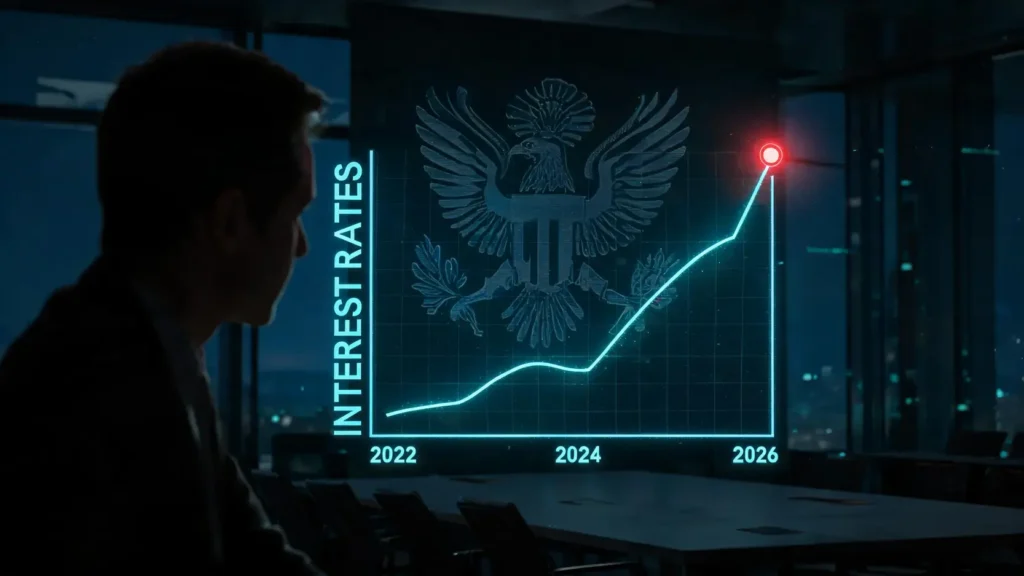
As we navigate mid-2026, the conversation around the Federal Reserve’s future interest rate decisions has reached a fever pitch. The prevailing Fed rate hike risk in 2026 is not an arbitrary fear; it is rooted in a complex economic environment where persistent inflationary pressures clash with a surprisingly resilient labor market. Understanding the potential for a rate hike requires a deep dive into the core data points and an analysis of the impact of inflation on monetary policy.
The Persistent Inflation Challenge: Analyzing the Core Drivers
The primary antagonist in the Fed’s economic narrative remains inflation. Despite a series of aggressive monetary tightening cycles throughout 2024 and 2025, core Personal Consumption Expenditures (PCE) inflation—the Fed’s preferred gauge—has struggled to return to the 2% target, hovering stubbornly around 3.2% in the first half of 2026. Several factors contribute to this persistence:
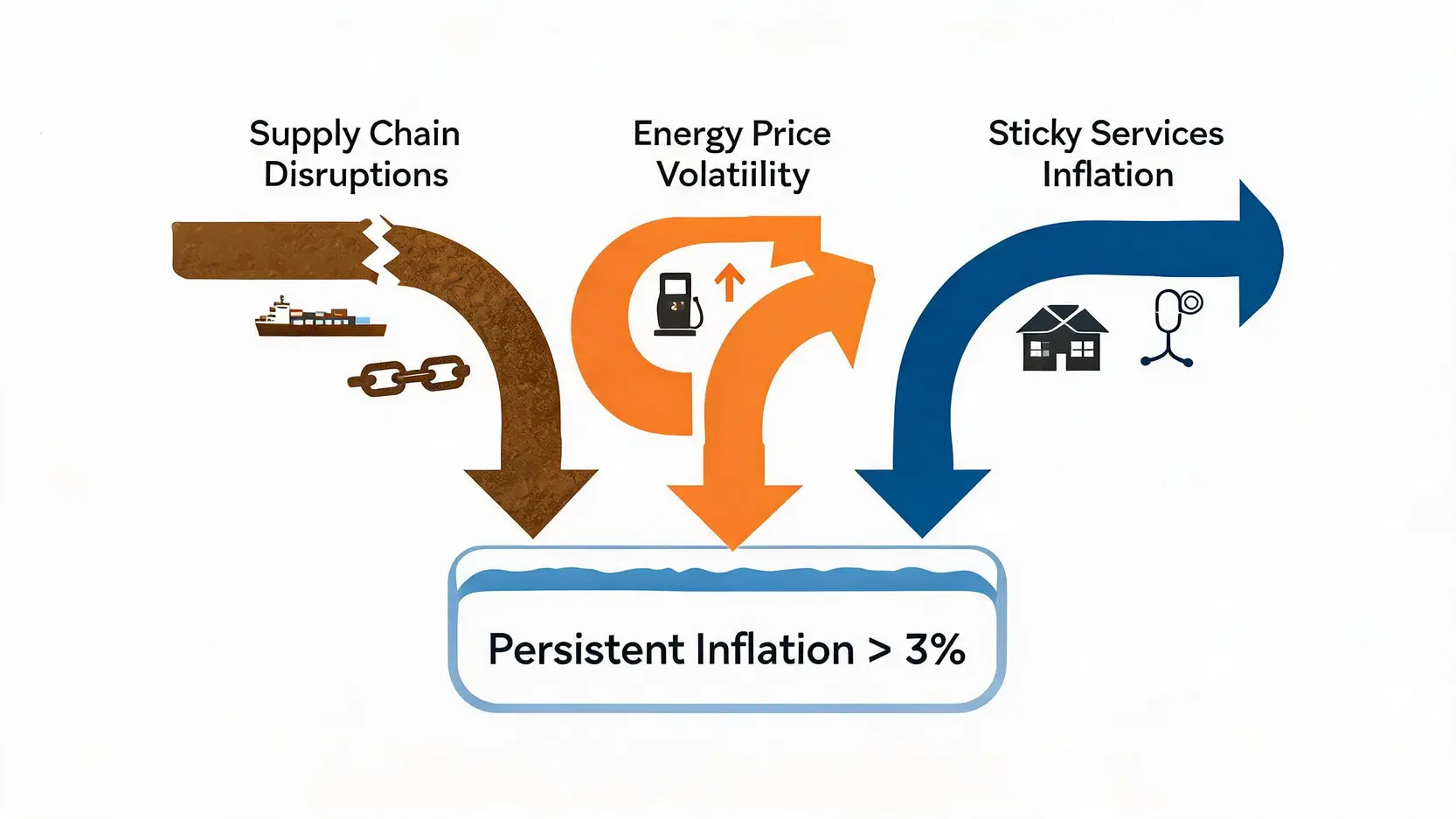
- Renewed Supply Chain Disruptions: Fresh geopolitical tensions in key shipping corridors have reintroduced logistical bottlenecks, driving up costs for raw materials and finished goods.
- Energy Market Volatility: A tight global oil market, exacerbated by production cuts and heightened demand, has kept gasoline and energy prices elevated, feeding into broader inflation. ⛽
- Services Inflation: The stickiest component of inflation, driven by a robust demand for services and significant wage growth, continues to be a major concern for policymakers. This includes costs for housing, healthcare, and transportation.
Labor Market Strength and Its Impact on Fed Decisions
The U.S. labor market has consistently defied expectations of a slowdown. With the unemployment rate holding steady at a historically low 3.8% and monthly job gains continuing to beat forecasts, the Fed faces a classic dilemma. While a strong job market is beneficial for households, it fuels wage growth that can entrench inflation. This strength gives the Federal Reserve the latitude to maintain a hawkish stance, prioritizing the inflation fight without immediate fears of triggering a severe recession. The risk is that a ‘too-hot’ labor market will force the Fed’s hand, making a rate hike the only viable tool to cool demand.
Reading the Tea Leaves: Key Takeaways from Recent FOMC Minutes
The official communications from the Federal Reserve provide the most direct insight into their thinking. An analysis of the most recent FOMC minutes reveals a committee that is far from declaring victory over inflation. Key themes include a data-dependent approach, a unified concern over inflation’s slow descent, and a willingness to maintain higher rates for longer. While a consensus for a hike is not yet apparent, the language signals that the option is very much on the table, a stark contrast to the rate-cut optimism that pervaded markets at the start of the year. For more on how the Fed operates, check out A Beginner’s Guide to the Federal Reserve.
Wall Street vs. The Fed: Decoding Conflicting 2026 Forecasts on Interest Rate Decisions
The divergence between Wall Street’s expectations and the Federal Reserve’s cautious signaling has become a central theme of 2026. While the Fed maintains a stern, data-driven posture, major financial institutions are in a constant state of revision, trying to price in the next move. These conflicting economic forecasts from major financial institutions highlight the deep uncertainty in the current climate.
The ‘No Cuts’ Camp: Why Firms like Nomura Expect a Hawkish Stance
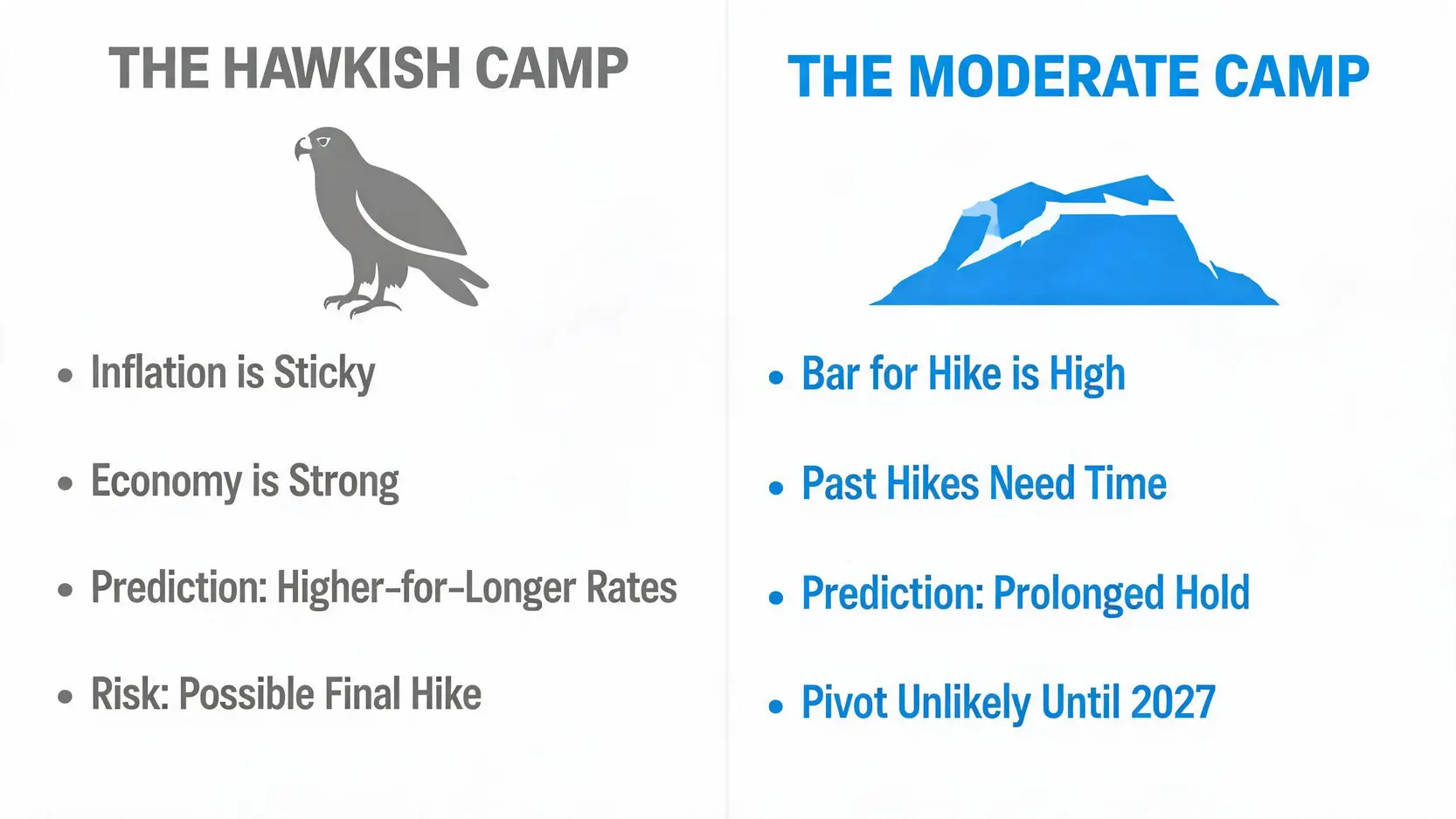
A growing chorus of analysts, including prominent voices from firms like Nomura and Barclays, has pivoted away from predicting rate cuts in 2026. Their argument is straightforward: with inflation proving sticky and the economy showing no signs of a hard landing, the Fed has neither the reason nor the political room to ease policy. This camp believes that the risk of re-igniting inflation by cutting too soon far outweighs the risk of keeping policy restrictive. They argue that the market has been overly optimistic and that a “higher-for-longer” interest rate environment is the new reality. Some in this group even assign a non-trivial probability to one final “insurance” hike to ensure inflation is fully extinguished.
J.P. Morgan’s Outlook: What’s the Fed’s Next Move?
More moderate forecasts, such as those from J.P. Morgan, paint a more nuanced picture. Their analysts suggest that while the door for a rate hike remains open, the bar for such a move is exceptionally high. They anticipate a prolonged hold, with the Fed waiting for several consecutive months of favorable inflation data before even considering a policy pivot. Their outlook emphasizes that while a rate hike is a risk, the more likely scenario is a ‘table mountain’ pattern for rates—a high plateau followed by a very slow descent, likely not beginning until 2027. This view acknowledges the Fed’s hawkish rhetoric but bets on the cumulative effects of past hikes to eventually cool the economy without further intervention.
Gauging the Real-World Impact: What a 2026 Rate Hike Means for You
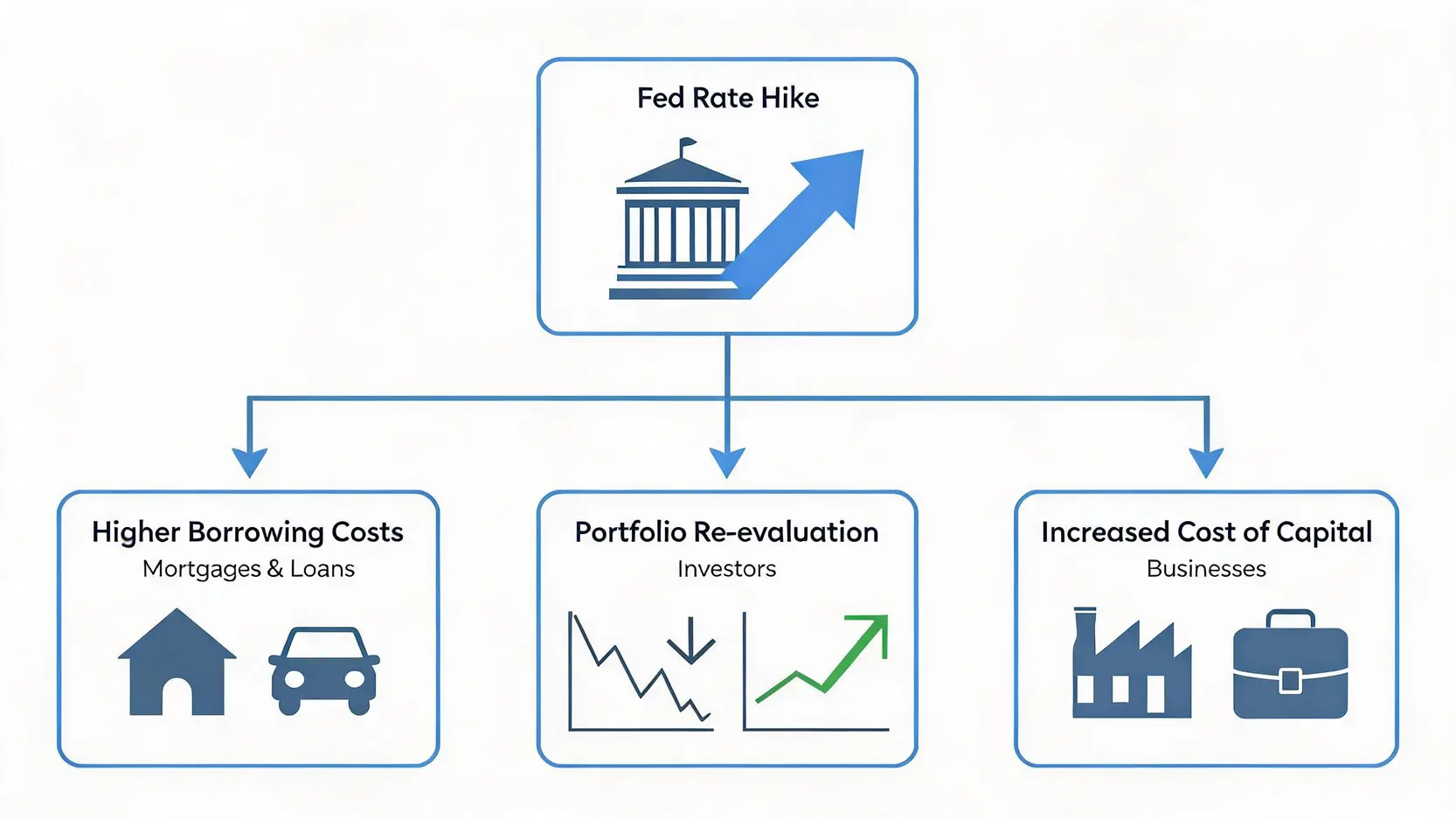
A potential Fed rate hike is more than just a headline; it has tangible consequences for households, investors, and businesses. Understanding these effects is critical for making sound financial decisions in the coming months.
For Homebuyers and Borrowers: The Effect on Mortgages and Loans
For anyone looking to borrow money, a Fed rate hike translates directly to higher costs. 💸
- Mortgages: Even a 25-basis-point (0.25%) hike can push the average 30-year fixed mortgage rate higher, potentially adding hundreds of dollars to monthly payments and pricing some buyers out of the market entirely.
- Other Loans: Rates for auto loans, credit cards, and personal loans would also increase, as they are often tied to the prime rate, which moves in lockstep with the Fed’s policy rate. This would squeeze household budgets and could lead to a slowdown in consumer spending.
For Investors: Portfolio Strategy in a Higher-Rate Environment
The risk of a rate hike creates a challenging environment for investors, requiring a strategic re-evaluation of portfolios. The era of “easy money” is firmly in the rearview mirror.
Asset Allocation: A higher-rate environment typically favors value over growth. Companies with strong balance sheets, consistent cash flow, and pricing power (like those in the consumer staples or healthcare sectors) may outperform more speculative, high-growth tech stocks that rely on cheap future financing. Investors might consider rotating from long-duration assets to shorter-duration ones.
Fixed Income: For bond investors, rising rates are a double-edged sword. While it means existing bond prices fall, new bonds can be purchased at higher yields, making fixed income more attractive as an asset class. Shorter-duration bonds and Treasury Inflation-Protected Securities (TIPS) could be prudent additions.
Developing a robust portfolio is key. For those looking to refine their approach, our guide on Advanced Investment Strategies for Volatile Markets offers valuable insights.
For Businesses: Navigating Financing and Growth Challenges
For corporations, a rate hike increases the cost of capital. This means business loans for expansion, equipment purchases, and M&A activity become more expensive. This can lead to a pullback in corporate investment, which in turn can slow hiring and overall economic growth. Small businesses, which often have tighter margins and less access to capital markets, are particularly vulnerable in such an environment.
Conclusion
In conclusion, the Fed rate hike risk for 2026 remains a significant and defining factor for the global economy. While the expert community is divided on the most likely path, the underlying message is one of caution and vigilance. The Federal Reserve has made it clear that its primary mandate is to restore price stability, and it will not be swayed by short-term market pressures. For investors, consumers, and business leaders, monitoring key indicators like inflation reports, employment data, and the Fed’s own communications is no longer optional—it is essential. Staying informed and strategically positioned will be the key to navigating the complex and challenging financial landscape of 2026.
Frequently Asked Questions
Q: What is the primary factor driving the risk of a Fed rate hike in 2026?
A: The primary factor is unexpectedly persistent inflation. Despite previous monetary tightening, key inflation metrics like the Consumer Price Index (CPI) and the Personal Consumption Expenditures (PCE) price index have remained stubbornly above the Federal Reserve’s 2% target. This is fueled by a combination of strong consumer demand, a tight labor market driving wage growth, and ongoing supply-side shocks. The Fed’s number one priority is price stability, and if inflation does not show a convincing trend back to target, the committee will feel compelled to use its tools, including another rate hike, to cool the economy.
Q: How do the Federal Reserve’s H.15 data releases inform rate predictions?
A: The Federal Reserve’s H.15 statistical release, officially titled “Selected Interest Rates,” is a critical data source for analysts. It provides daily and weekly data on the interest rates of a wide range of U.S. Treasury and private money market instruments. Analysts use this data to gauge the market’s own expectations for future Fed policy by observing the yields on securities of various maturities. For example, a rising 2-year Treasury yield can signal that the market is pricing in a higher likelihood of near-term rate hikes. It offers a real-time snapshot of market sentiment and can be tracked on the Federal Reserve’s website.
Q: What does it mean when analysts pivot away from predicting rate cuts?
A: When analysts pivot from predicting rate cuts to a “hold” or even a “hike,” it signifies a major shift in economic expectations. This typically happens when incoming economic data, particularly on inflation and employment, comes in much stronger than anticipated. It means the narrative has changed from “When will the Fed ease policy to support growth?” to “Does the Fed need to keep policy tight—or even tighten further—to control inflation?” This pivot reflects a reassessment of the economy’s underlying strength and the persistence of inflationary pressures, forcing investors to re-price assets based on a higher-for-longer interest rate scenario.
Q: Can the Fed still hike rates if the stock market is falling?
A: Yes, absolutely. While the Federal Reserve does not like to induce market panic, its primary mandates are maximum employment and price stability, not supporting asset prices. If inflation is unacceptably high, the Fed has shown time and again that it is willing to hike rates even in the face of market volatility. In fact, a falling stock market can be seen by the Fed as a feature, not a bug, of monetary tightening, as it contributes to a tightening of financial conditions, which helps to cool demand and, ultimately, inflation.