
Feeling the pinch of high mortgage rates in 2026? You’re not alone. The persistent climb in borrowing costs has left many prospective homebuyers feeling sidelined. But to truly understand where rates are heading, one must look beyond the headlines and delve into a critical, often overlooked economic indicator: Rising Bond Yields. This is the primary driver behind the current Mortgage Rates in 2026. This guide will dissect this crucial connection, offering a clear playbook for anyone trying to navigate the turbulent 2026 housing market and make informed financial decisions.
Table of Contents
Understanding the Core Relationship: Bond Yields and Mortgage Rates
At first glance, the esoteric world of government bonds seems disconnected from the tangible goal of homeownership. However, the link between them is direct, powerful, and fundamental to the interest rate you’ll be quoted by a lender. Understanding this is the first step toward mastering the market.
What is a Bond Yield and Why Does It Matter?
A bond yield is essentially the return an investor realizes on a bond. Represented as a percentage, it’s calculated based on the bond’s market price and its interest (or coupon) payments. The most crucial concept to grasp is the inverse relationship between bond prices and yields: when bond prices go up, yields go down, and vice versa. As defined by financial experts, a bond yield represents the return on capital invested. This matters immensely because investor demand for bonds—driven by economic outlook, inflation expectations, and perceived risk—directly dictates the direction of these yields.
The 10-Year Treasury Note: The Ultimate Benchmark for Mortgage Rates
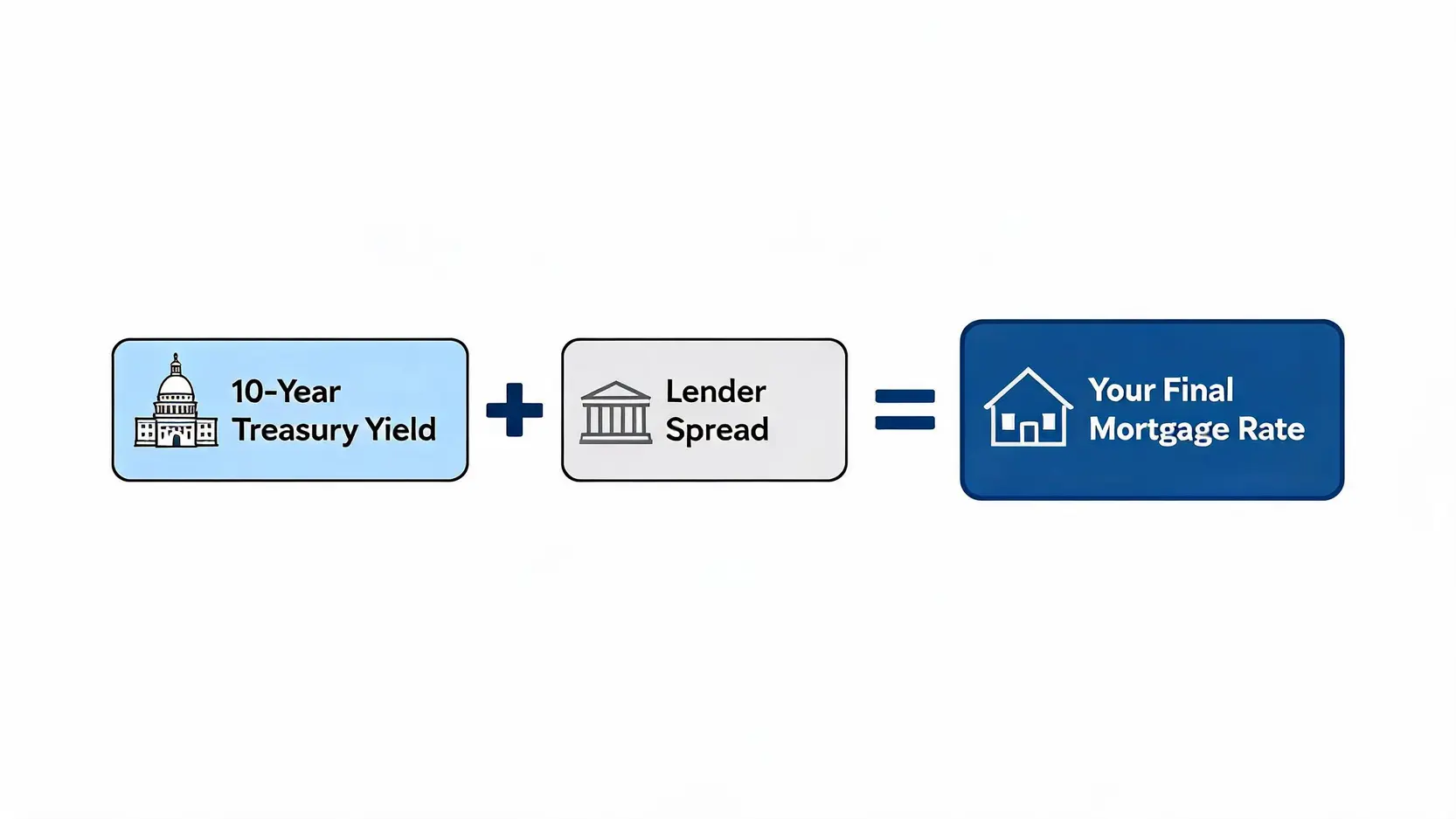
While many types of bonds exist, the financial world watches one in particular with bated breath: the U.S. 10-year Treasury note. Its yield is the single most important benchmark for long-term mortgage rates in the United States and has a significant influence globally. Lenders don’t arbitrarily set their 30-year fixed mortgage rates. Instead, they closely track the yield on the 10-year Treasury note and then add a margin, or “spread,” on top of it. This spread accounts for their risk, operational costs, and profit. Therefore, when the 10-year Treasury yield rises, mortgage rates are almost certain to follow suit.
A Historical Look: How Yields Have Predicted Mortgage Rate Trends
The correlation between the 10-year Treasury yield and the 30-year fixed mortgage rate is not a recent phenomenon. Decades of financial data show these two metrics moving in near-perfect lockstep. By analyzing historical data, we can see that periods of surging Treasury yields have consistently preceded spikes in mortgage rates. This predictive power makes tracking the 10-year yield an essential activity for any serious homebuyer. It acts as an early warning system, signaling the direction of future borrowing costs and allowing for more strategic timing and decision-making.
Analyzing the 2026 Surge: What’s Driving Bond Yields Higher?
The first half of 2026 has been defined by a significant uptick in bond yields, a trend that has directly fueled higher mortgage rates. This isn’t happening in a vacuum. A confluence of powerful economic forces is pushing yields upward, and understanding them provides a forecast for what may lie ahead.
The Role of Inflation and Federal Reserve Policy
Persistent inflation remains a primary antagonist in the economic narrative of 2026. When inflation is high, the fixed interest payments from a bond are worth less in the future. To compensate for this erosion of purchasing power, investors demand a higher yield. In response, the Federal Reserve has maintained a hawkish stance, keeping its benchmark interest rate elevated to cool economic demand. This policy, while aimed at taming inflation, makes newly issued government bonds more attractive, forcing the yields on existing bonds to rise to compete.
Global Economic Factors and Investor Sentiment in 2026
The global economic landscape also plays a pivotal role. Geopolitical tensions, volatile energy prices, and ongoing supply chain adjustments contribute to market uncertainty. This uncertainty can create a “flight to safety,” where investors buy U.S. Treasuries, but the overriding concern about global inflation has kept yields elevated. Investor sentiment is a powerful, if unpredictable, force; as long as the market anticipates stubborn inflation and continued economic resilience, the pressure on bond yields will remain upward.
Reviewing Current 2026 Treasury and Mortgage Rate Data
Let’s look at the numbers as of mid-2026 to see this relationship in action. The data clearly illustrates how closely these financial instruments are linked. The trend of rising bond yields is not just an abstract concept; it has a direct and measurable impact on the cost of financing a home.
| Metric | Rate (June 2026) | Trend vs. Start of 2026 |
|---|---|---|
| 10-Year Treasury Yield | ~4.65% | 📈 Increased |
| Average 30-Year Fixed Mortgage Rate | ~6.95% | 📈 Increased |
| Federal Funds Rate Target | 5.25% – 5.50% | ➡️ Stable but high |
Strategic Navigation: A Homebuyer’s Playbook for a High-Rate Environment
Facing a market with rising bond yields and high mortgage rates requires more than just hope—it demands a clear, actionable strategy. Potential homebuyers are not powerless. By taking decisive steps, you can mitigate the impact of the current rate environment and position yourself for success.
Is Rate Locking the Right Move for You in 2026?
A mortgage rate lock is a lender’s promise to hold a specific interest rate for you for a set period, typically 30 to 60 days, while your loan is processed. In an environment where rates are expected to climb, locking in your rate can be a powerful defensive move. It provides certainty and protects you from further increases. However, if rates were to unexpectedly fall, you could miss out on the lower rate. The key in 2026 is to have a candid discussion with your lender about lock-and-float-down options, which may offer the flexibility to secure a lower rate if one becomes available before closing.
Comparing Fixed-Rate vs. Adjustable-Rate Mortgages (ARMs) Today
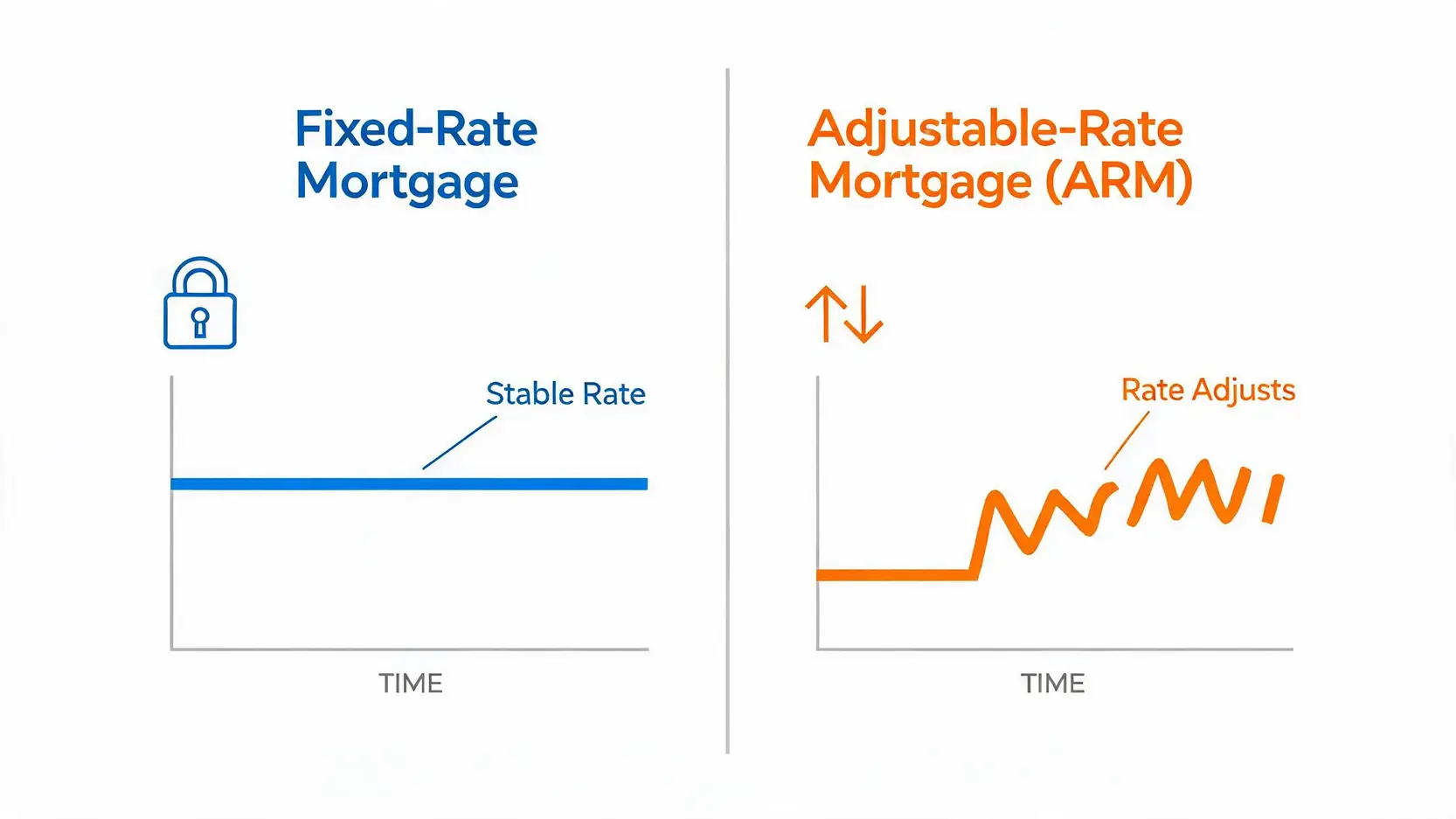
The classic 30-year fixed-rate mortgage offers stability, but its higher rate in the current market can be daunting. This is where an Adjustable-Rate Mortgage (ARM) enters the picture. ARMs, such as a 5/1 or 7/1 ARM, offer a lower introductory interest rate for the first 5 or 7 years before adjusting annually based on market benchmarks. In 2026, an ARM could significantly lower your initial monthly payment, making homeownership more accessible. The trade-off is the risk of higher payments in the future. An ARM is a calculated risk best suited for buyers who plan to move or refinance before the adjustment period begins or who have the financial cushion to absorb potentially higher future payments. For a deeper dive, consider this comparison of mortgage types.
How Improving Your Credit Score Can Counteract High Rates
While you cannot control the 10-year Treasury yield, you have significant control over your credit score. Lenders view a higher credit score as a sign of a less risky borrower, and they reward this with better interest rates. Even a small improvement in your score can translate into thousands of dollars saved over the life of a loan. Focus on these key areas before applying for a mortgage:
- Pay every bill on time: Payment history is the single largest factor in your credit score.
- Reduce your credit utilization ratio: Aim to use less than 30% of your available credit on any card.
- Review your credit reports: Check for and dispute any errors on your reports from all three major bureaus (Equifax, Experian, TransUnion).
- Avoid new credit applications: Each application can cause a small, temporary dip in your score.
A higher score is one of the most effective tools for fighting back against the rising tide of mortgage rates.
Conclusion
In conclusion, the trend of rising bond yields is the primary and undeniable driver behind the challenging mortgage rates of 2026. By understanding this fundamental connection, monitoring the 10-year Treasury yield, and staying informed on key economic indicators like inflation reports and Federal Reserve policy, prospective buyers can transform from passive observers to strategic participants. While the market remains volatile and unpredictable, focusing on personal financial health—particularly your credit score—and thoroughly exploring all loan options remains the most effective path forward. The power lies not in predicting the future, but in preparing for it.
Frequently Asked Questions (FAQ)
Q: Will mortgage rates go down in the second half of 2026?
A: Predictions are challenging in this volatile market. Any significant decrease in mortgage rates would likely require a sustained cooling of inflation, prompting the Federal Reserve to signal a shift towards monetary easing (rate cuts). Until then, most analysts expect rates to remain elevated, with potential for modest fluctuations around the current levels. The path of bond yields will be the key indicator to watch.
Q: How can I easily track the 10-year Treasury yield?
A: Tracking the 10-year Treasury yield is simple. Major financial news outlets like Bloomberg, Reuters, and The Wall Street Journal feature it prominently on their websites. You can also find real-time data on platforms like Google Finance or Yahoo Finance, often under the ticker symbol TNX or US10Y.
Q: Do rising bond yields affect all types of loans?
A: Yes, the impact of rising Treasury yields extends beyond mortgages. They serve as a benchmark for a wide range of credit products. As yields rise, you can expect to see higher rates on auto loans, personal loans, and credit card APRs. This is because the base cost of money for all lenders is increasing.
Q: What is the ‘spread’ between Treasury yields and mortgage rates?
A: The spread is the difference between the 10-year Treasury yield and the mortgage rate offered to consumers. For example, if the 10-year yield is 4.6% and the average 30-year mortgage is 6.9%, the spread is 2.3 percentage points (or 230 basis points). This spread represents the lender’s profit margin and a premium to cover risks like loan defaults and prepayment.