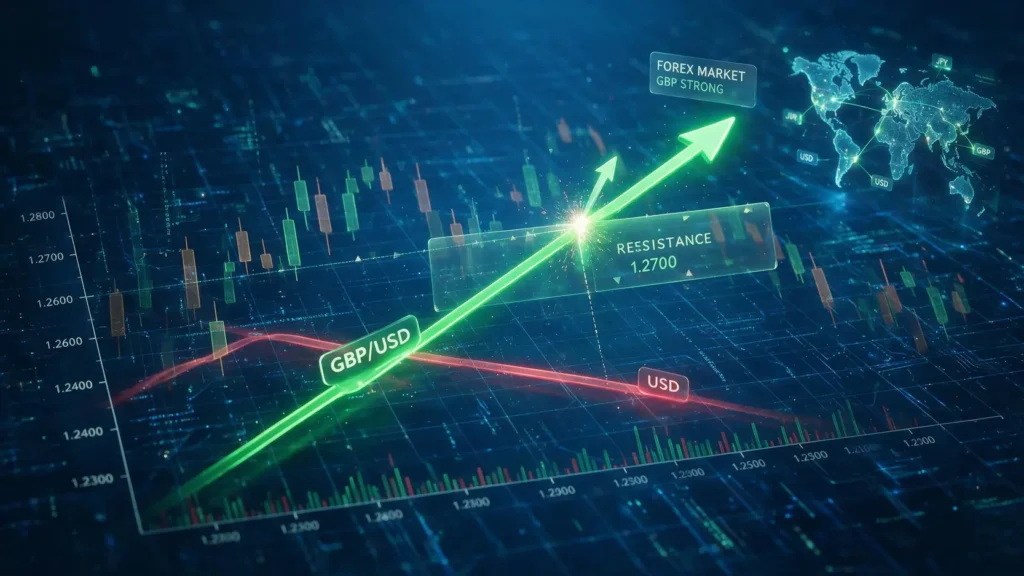
The latest US jobs report for July 2026 has sent shockwaves through the global currency markets, coming in significantly below economist expectations. This data miss triggered a sharp sell-off in the US Dollar, fundamentally altering the GBP/USD forecast after the US jobs miss. In the immediate aftermath, the Sterling rallied to multi-week highs, leaving traders to question the resulting price movement in GBP/USD and its sustainability. The core of this market shift lies in how the disappointing labor data reshapes future Fed rate expectations. This analysis dissects the jobs report, breaks down the market’s visceral reaction, and provides a forward-looking technical forecast with key levels every currency trader should be monitoring.
Table of Contents
Breaking Down the US Jobs Report: More Than Just the Headline Miss
To understand the dramatic price action in GBP/USD, it’s essential to look beyond the single headline number. The weakness was broad-based, painting a picture of a US labor market that is finally showing significant signs of cooling—a key prerequisite for a shift in Federal Reserve policy.
Non-Farm Payrolls (NFP): The Shocking Number and Its Implications
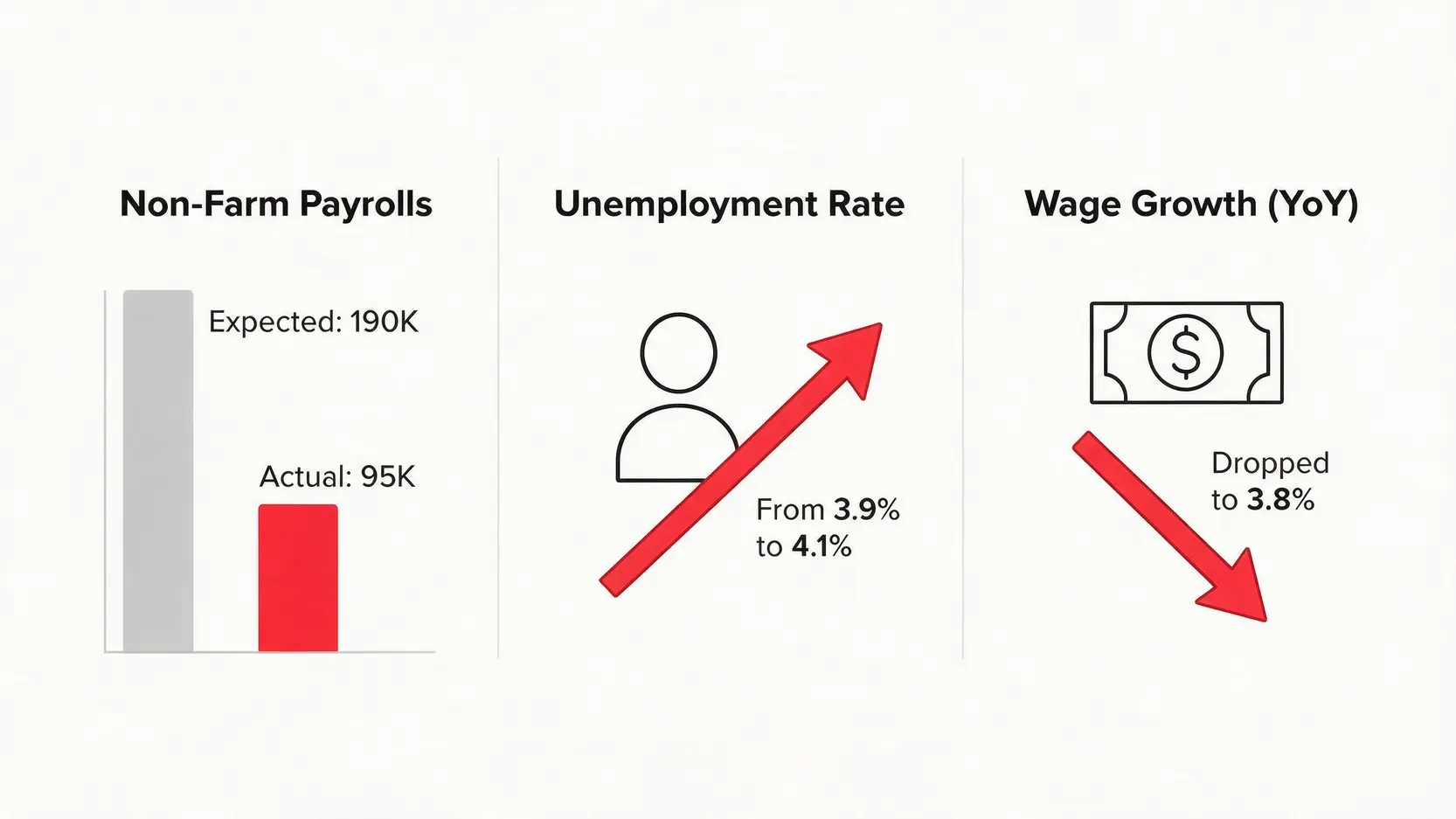
The headline Non-Farm Payrolls (NFP) number was the primary catalyst. The market consensus was for a respectable gain of 190,000 jobs, but the actual figure reported by the Bureau of Labor Statistics was a mere +95,000. Furthermore, the previous month’s number was revised downward by 45,000. This stark miss indicates that hiring has slowed considerably, a potential leading indicator of a broader economic slowdown. For the Federal Reserve, which has been trying to cool the economy to control inflation, this is a powerful signal that its monetary tightening is taking a substantial effect.
Unemployment Rate & Wage Growth: What Do They Signal for the US Economy?
The underlying components of the jobs report reinforced the bearish narrative for the US Dollar:
- Unemployment Rate: The rate unexpectedly ticked up from 3.9% to 4.1%. While still historically low, the upward trend suggests a loosening in labor market tightness.
- Average Hourly Earnings (Wage Growth): This crucial inflation metric also showed signs of cooling. Month-over-month, wages grew by only 0.2% (against 0.4% expected), and the year-over-year figure dropped to 3.8%. Slower wage growth reduces pressure on consumer prices, giving the Fed more room to pause or even reverse its rate-hiking cycle.
Taken together, these figures—a big NFP miss, rising unemployment, and slowing wages—were the perfect cocktail to trigger a dollar downturn and ignite the GBP/USD price rally.
Market Reaction: Why the Dollar Tumbled and the Pound Soared Following the Jobs Data Impact
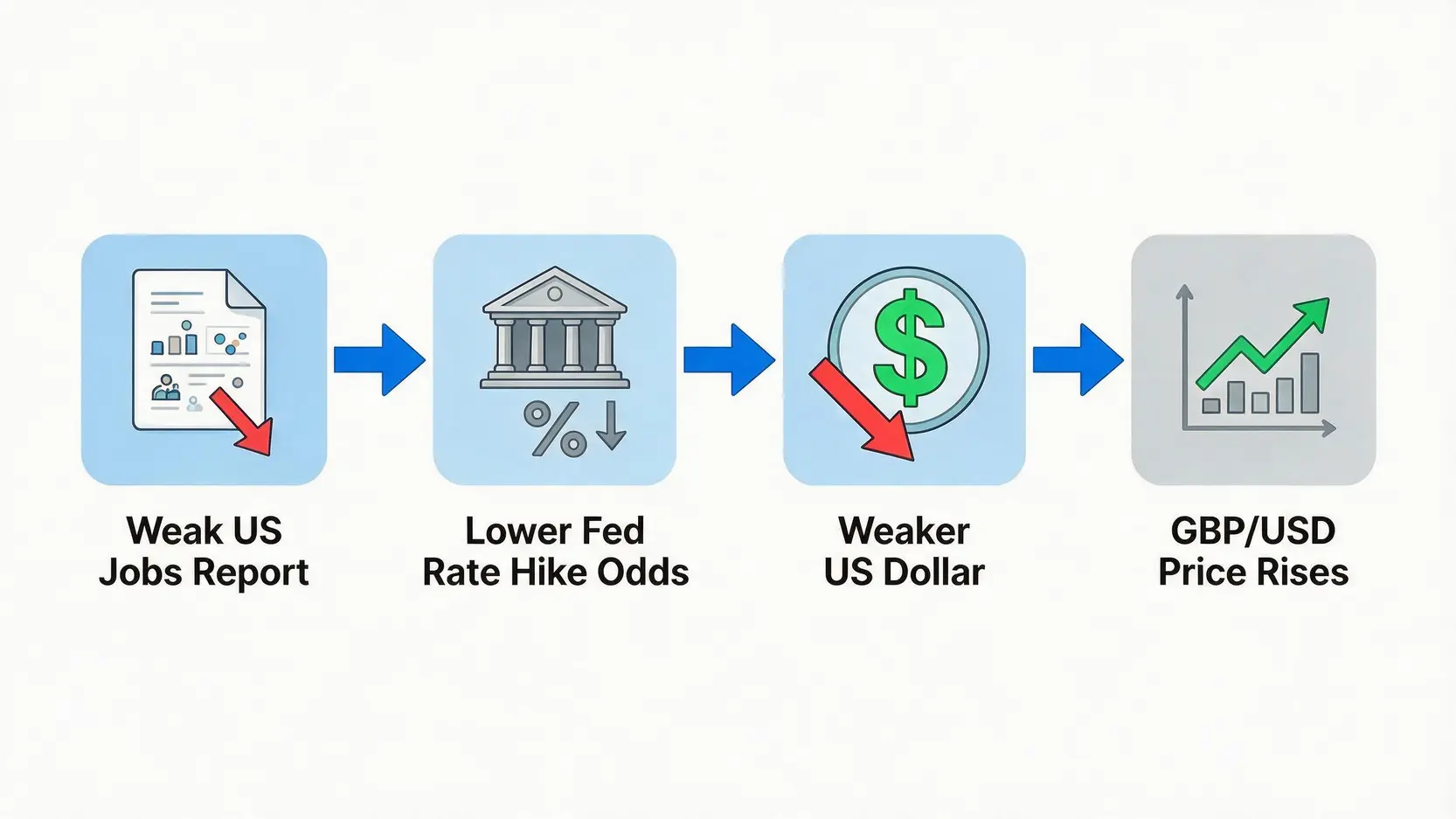
The foreign exchange market is a discounting mechanism, constantly pricing in future central bank policy. The July jobs report was a game-changer because it directly challenged the prevailing narrative of a hawkish Federal Reserve that would keep interest rates higher for longer.
Shifting Fed Policy: How the Jobs Data Impacts Interest Rate Expectations
Prior to the report, market odds suggested a potential for one more Fed rate hike before the end of 2026. After the data release, those odds evaporated and were replaced by a growing probability of a rate cut in the first half of 2027. Interest rate differentials are a primary driver of currency values. When expectations for US rates fall while rates in other countries (like the UK) are perceived as holding steady, capital flows out of the dollar and into those higher-yielding currencies. This is precisely what happened. The weakening dollar reflects the market’s new belief that the Fed’s fight against inflation is nearing its end. As explained by the Federal Reserve, monetary policy is set to influence interest rates and financial conditions to steer the economy, and this jobs report is a clear sign the economy is being steered towards a slower pace.
GBP/USD Technical Breakout: Clearing Key Resistance Levels
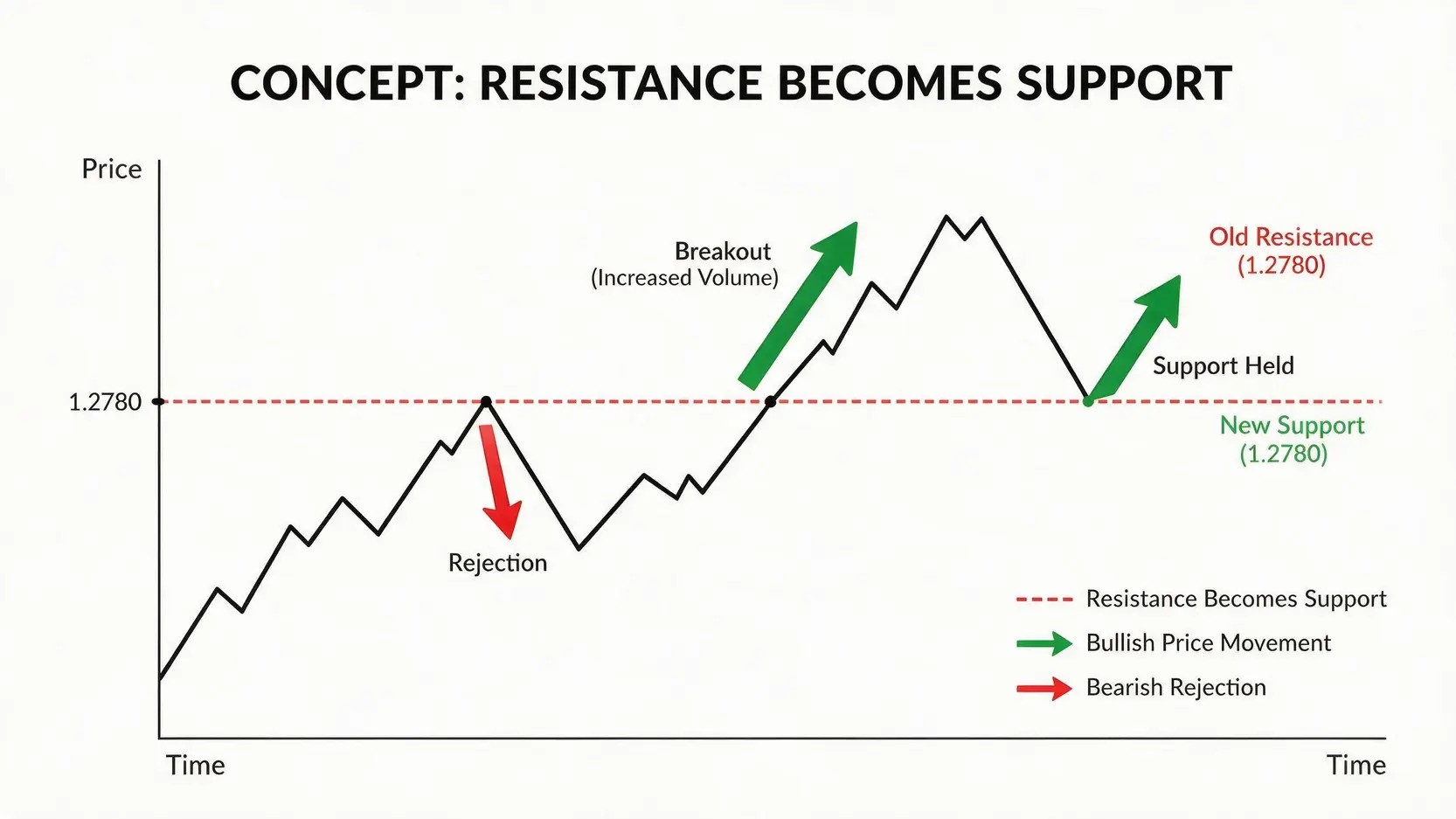
From a technical standpoint, the news provided the fuel for a major breakout. The GBP/USD pair had been consolidating below a formidable resistance zone around 1.2780 for several weeks. The dollar weakness allowed the pair to slice through this level with significant momentum. The price surged over 150 pips in the hours following the announcement, reaching an intraday high above 1.2900, its highest level in over three months. This move cleared not only horizontal resistance but also the 100-day moving average, turning the short-to-medium term technical picture decidedly bullish. This is a classic example of how to apply technical analysis to real-time market events.
GBP/USD Technical Forecast: Key Scenarios & Levels to Watch
With the pair having made such an explosive move, traders are now assessing the next directional bias. Is this a sustainable rally or a short-lived, news-driven spike? Analyzing the key technical levels and indicators provides a roadmap for the coming sessions.
The Bullish Case: What Could Push the Pound Higher?
For the bullish momentum to continue, several conditions must be met:
- Hold the Breakout Level: The former resistance zone around 1.2780 must now act as a solid support floor. A successful retest and bounce from this level would be a strong confirmation of the uptrend.
- Next Major Resistance: The next significant target for buyers is the psychological 1.3000 handle, which aligns with a key Fibonacci retracement level from the 2026 highs.
- Economic Data Alignment: Continued weak data from the US (e.g., upcoming CPI inflation) combined with resilient UK data would reinforce the policy divergence theme, further fueling GBP/USD gains.
The Bearish Reversal: Support Levels That Must Hold
Conversely, a failure to hold the recent gains could signal a ‘bear trap.’ Key levels to watch for a bearish reversal include:
- A Break Below 1.2750: If the pair cannot hold the 1.2780 breakout level and falls back below 1.2750 on a daily closing basis, it would suggest the initial move was a false breakout.
- The 50-Day Moving Average: Currently sitting around 1.2700, this dynamic support level is the next line of defense for the bulls. A break below it would turn the short-term outlook negative.
- US Data Rebound: Any surprisingly strong US economic data could quickly reverse the narrative and bring dollar buyers back into the market.
Key Indicators (RSI, Moving Averages) and What They Suggest
A look at the daily chart indicators provides a nuanced view:
📊 Indicator Snapshot:
- Relative Strength Index (RSI): The daily RSI has shot up to 72, entering overbought territory. This doesn’t guarantee a reversal, but it does caution that the rally may be over-extended in the short term, and a period of consolidation or a slight pullback would be healthy.
- Moving Averages: The price is now trading decisively above the 50, 100, and 200-day moving averages. The 50-day MA is also on the verge of crossing above the 200-day MA, a long-term bullish signal known as a “Golden Cross.”
- MACD: The MACD line has crossed above its signal line with strong upward momentum, confirming the bullish shift.
The Bigger Picture: Contrasting the Fed and Bank of England (BoE) Outlook
The long-term GBP/USD forecast hinges on the diverging paths of the Federal Reserve and the Bank of England. The latest US jobs report has firmly placed the Fed on a more dovish path. The market is now pricing in a high probability that the US interest rate cycle has peaked.
In contrast, the Bank of England is still battling higher and more persistent inflation. While UK inflation is falling, it remains well above the BoE’s 2% target. This means the BoE may be forced to hold interest rates at their current level for an extended period, or even consider another small hike if wage pressures don’t abate. This monetary policy divergence—a dovish Fed versus a hawkish (or at least less dovish) BoE—is a powerful fundamental tailwind for the Pound against the Dollar. The performance of the US Dollar Index (DXY), which measures the dollar against a basket of currencies, will be a key barometer for this theme.
Conclusion
The weaker-than-expected US jobs report has acted as a powerful catalyst, significantly altering the short-term GBP/USD forecast and creating strong bullish momentum. The data has forced a dovish repricing of Federal Reserve policy expectations, weakening the US Dollar across the board. The technical breakout above key resistance has opened the door for further gains, with the psychological 1.3000 level now in sight. However, traders must remain vigilant. The rally has pushed technical indicators into overbought territory, and the focus now shifts to crucial inflation data which will determine if this policy divergence narrative has the strength to carry the pair higher through the second half of 2026.
Frequently Asked Questions (FAQ)
Q: What does a weak US jobs report typically mean for the USD?
A: A weak US jobs report, particularly a miss in the NFP headline figure, rising unemployment, and slowing wage growth, is typically bearish for the US Dollar. It signals a slowing economy, which reduces the probability of the Federal Reserve raising interest rates. Lower interest rate expectations make the dollar less attractive to foreign investors, causing its value to fall against other currencies.
Q: Is GBP expected to continue rising against the USD?
A: The short-term momentum is certainly bullish for GBP/USD following the jobs report and the technical breakout. However, its continuation depends on several factors. Traders will closely watch upcoming inflation data from both the US and the UK, as this will be the next key input for central bank policy. While the path of least resistance appears to be upwards, the pair is technically overbought, suggesting a pullback or consolidation is possible before the next leg higher.
Q: What are the next major economic events for GBP/USD traders to watch?
A: The most critical upcoming data points are the Consumer Price Index (CPI) reports from both the United States and the United Kingdom. These inflation gauges will have a direct impact on the Fed’s and BoE’s next policy decisions. Beyond that, retail sales figures, Producer Price Index (PPI), and any scheduled speeches from central bank governors like the Fed Chair or the BoE Governor will be scrutinized for clues on future monetary policy.
Q: What is the NFP report and why is it so important?
A: The Non-Farm Payrolls (NFP) report is a key economic indicator for the United States. It represents the total number of paid U.S. workers in the economy, excluding farm employees, general government employees, private household employees, and employees of nonprofit organizations. It is released monthly and is highly influential because it provides one of the best and earliest insights into the health of the US economy and labor market, which heavily influences the Federal Reserve’s interest rate decisions.