
For decades, the Canadian dollar (CAD) and oil prices moved in lockstep, earning the loonie the nickname ‘petro-currency’. This historic oil price impact on the Canadian dollar was a fundamental principle for forex traders. But as we navigate 2026, is that relationship still valid? The connection has become far more nuanced. This article dissects the historical correlation and reveals the new economic forces, from monetary policy to economic diversification, that are reshaping this critical connection and influencing whether the Canadian dollar is still a petro-currency.
Table of Contents
The Classic Connection: Why Oil Prices Historically Governed the CAD
To understand the present, we must first look to the past. The traditional narrative of the CAD being tethered to oil is rooted in Canada’s economic structure. This relationship wasn’t coincidental; it was built on a solid foundation of trade and investment flows directly linked to the energy sector.
Canada’s Role as a Net Oil Exporter and the USD Inflow
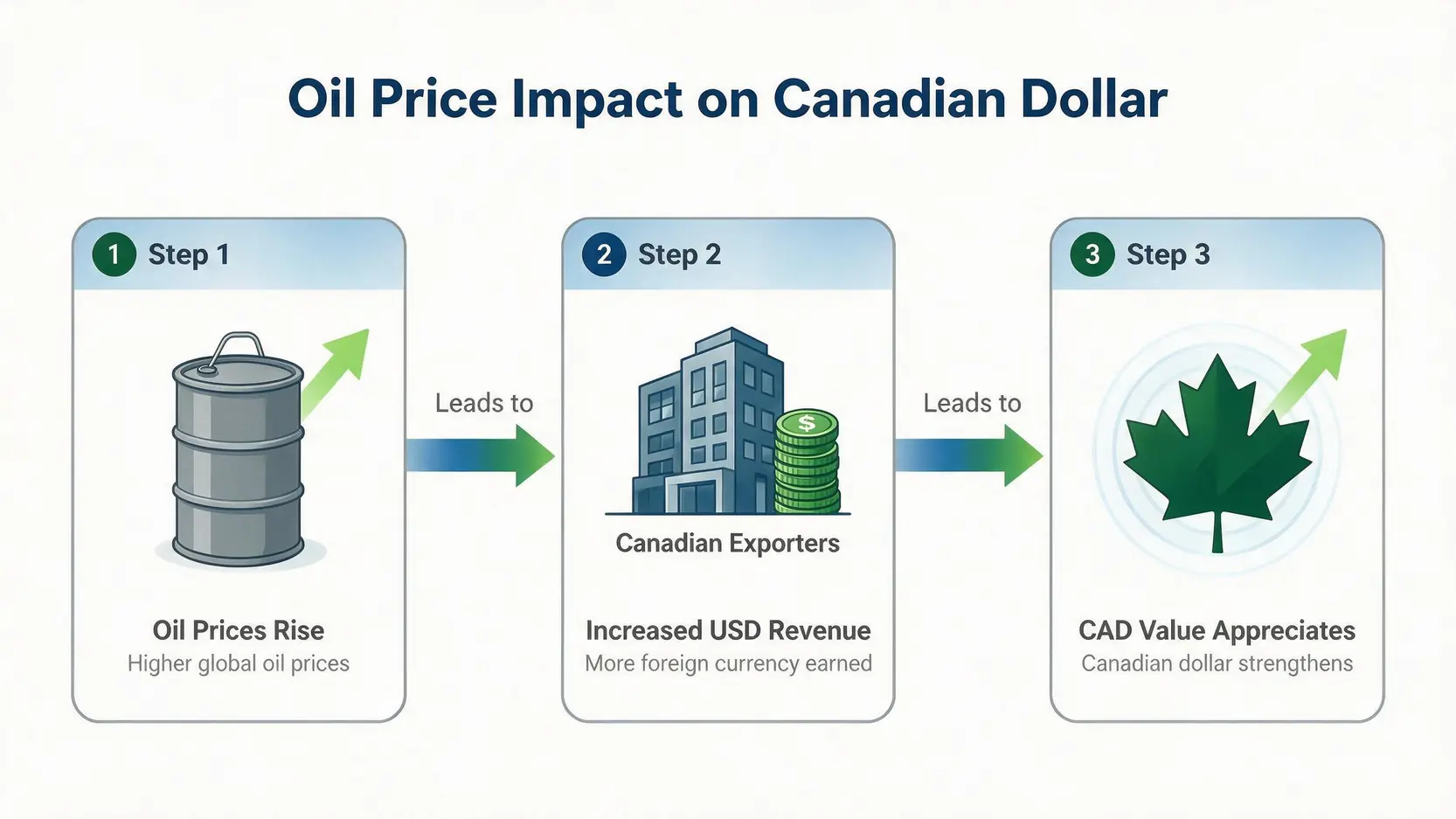
Canada stands as one of the world’s largest oil producers and a significant net exporter, with the vast majority of its energy exports heading to the United States. Here’s the simple mechanic:
- When oil prices rise, the value of Canada’s exports increases.
- These exports are primarily sold in U.S. dollars (USD).
- To repatriate profits or pay for local expenses, Canadian energy companies must sell their USD earnings and buy Canadian dollars.
This massive inflow of USD being converted into CAD creates significant demand for the loonie, causing its value to appreciate. Conversely, when oil prices fall, the value of exports decreases, leading to less USD being converted and subsequently weakening the CAD. This direct link between export revenue and currency demand was the primary driver of the oil price-CAD correlation.
How Foreign Investment and Market Sentiment Follow Crude Prices
The impact extends beyond direct export revenues. Higher oil prices historically signaled a booming Canadian energy sector, attracting substantial foreign direct investment (FDI). International investors, eager to capitalize on profitable oil sands projects and energy infrastructure, would pour capital into Canada. This process also involved selling foreign currency to buy CAD, further boosting its value. Market sentiment often acted as an amplifier. A rising WTI crude oil price created a bullish outlook for the entire Canadian economy, making the CAD an attractive asset for global investors and currency traders.
Signs of a Decoupling: Evidence of Oil’s Waning Influence on the Canadian Dollar
While the classic connection is important context, the narrative has fundamentally shifted in recent years. The once-tight correlation between the price of oil and the Canadian dollar has noticeably weakened. This isn’t just a temporary deviation; it’s a structural change driven by a diversifying economy and new macroeconomic forces taking center stage.
Analyzing the CAD/Oil Price Correlation in Recent Years
Data from 2024 through 2026 shows a clear divergence. There have been extended periods where oil prices surged, yet the CAD remained stagnant or even depreciated against the USD. Conversely, we’ve seen oil prices drop while the loonie held its ground. This decoupling suggests that other factors are now exerting a more powerful influence. While a sudden, dramatic spike in oil can still provide a temporary lift to the CAD, the sustained, predictable lockstep movement is a feature of the past.
The Growth of Canada’s Non-Energy Export Sectors (Tech, Services)
A key reason for this waning influence is the deliberate and successful diversification of the Canadian economy. The country is no longer solely reliant on its natural resources.
- Technology Sector: Canada has emerged as a global tech hub, with cities like Toronto, Vancouver, and Waterloo fostering innovation in AI, fintech, and software development. This sector is attracting significant venture capital and generating export revenues independent of commodity cycles.
- Services Sector: Financial services, insurance, and professional consulting have become major contributors to Canada’s GDP. These exports are knowledge-based and are not tied to the price of a barrel of oil.
This growing economic complexity means that oil revenues constitute a smaller portion of the overall economic pie, naturally diluting the oil price impact on the Canadian dollar.
Beyond Crude: The New Drivers of the Canadian Dollar’s Value
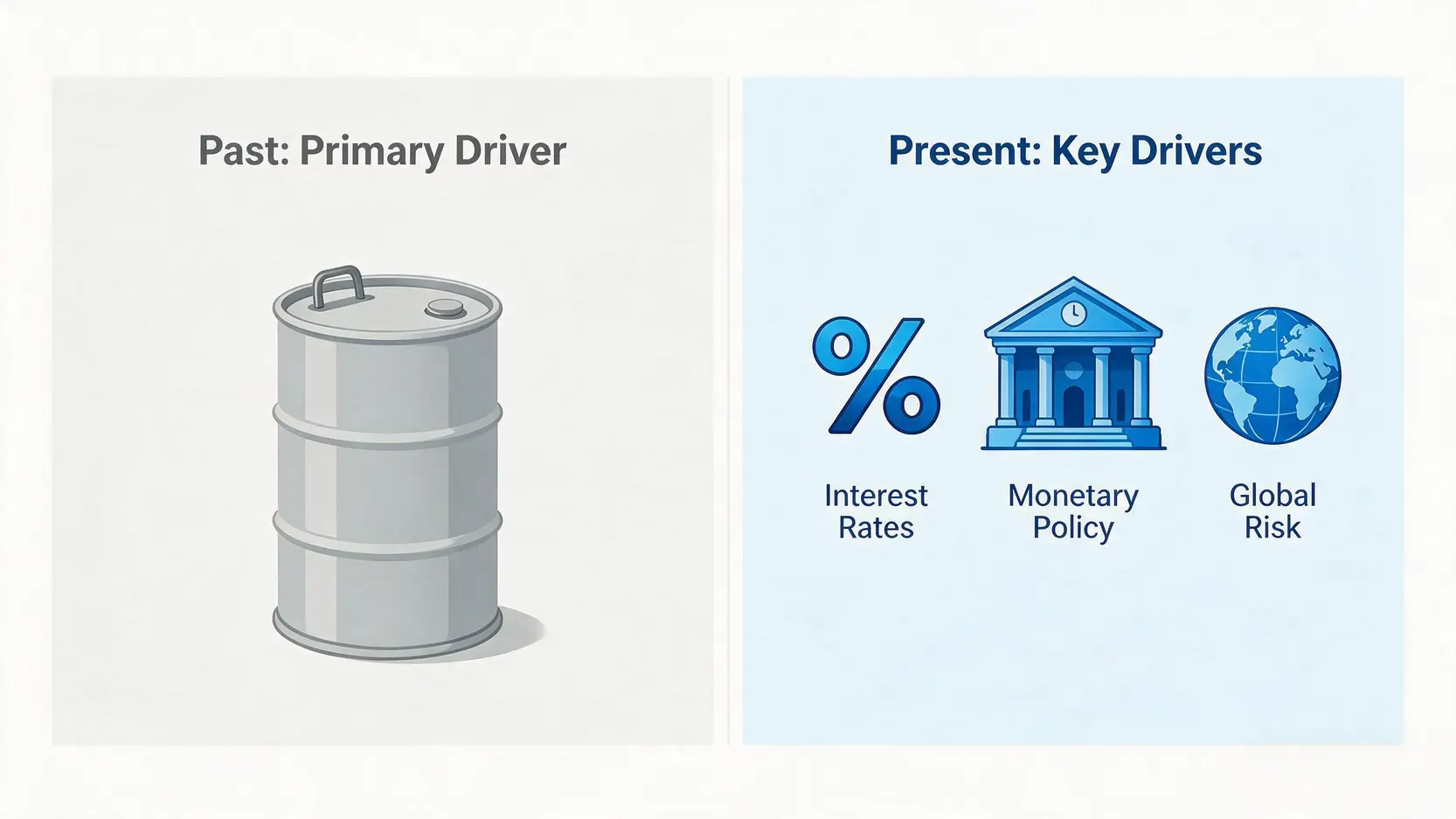
If oil is no longer the sole puppet master, what new forces are pulling the strings of the Canadian dollar? As of 2026, the answer lies in a combination of monetary policy, interest rate differentials, and global market dynamics. These factors have grown in significance, often overriding the traditional influence of crude oil.
The Overriding Impact of Bank of Canada’s Monetary Policy
The single most important driver of the CAD today is the monetary policy set by the Bank of Canada (BoC). The central bank’s decisions on interest rates and its forward guidance have a direct and immediate impact on the currency’s value. According to their latest Monetary Policy Report, the BoC’s primary mandate is controlling inflation. When the Bank raises its policy rate to combat inflation, it makes holding Canadian dollars more attractive to investors seeking higher yields, thus strengthening the currency. Conversely, cutting rates to stimulate the economy tends to weaken the CAD. These policy signals are now the primary focus for currency analysts.
US/Canada Interest Rate Differentials: A More Powerful Factor?
Closely related to monetary policy is the concept of interest rate differentials, specifically the gap between the Bank of Canada’s policy rate and the U.S. Federal Reserve’s rate. Capital flows to where it can earn a higher return.
- If Canadian rates are significantly higher than U.S. rates, investors are incentivized to buy CAD to invest in Canadian bonds, pushing the loonie’s value up.
- If U.S. rates are higher, the opposite occurs, with capital flowing into the USD, causing the USD/CAD pair to rise (meaning a weaker CAD).
In the current environment, this differential is arguably a more powerful day-to-day driver for the USD/CAD exchange rate than minor fluctuations in oil prices.
The Role of Global Risk Sentiment and Overall USD Strength
Finally, the Canadian dollar, like many other currencies, is heavily influenced by global risk sentiment. In a ‘risk-off’ environment, where global uncertainty is high, investors flock to the perceived safety of the U.S. dollar. This demand for the greenback can overwhelm other factors and cause the CAD to weaken, regardless of oil price movements. The strength of the U.S. Dollar Index (DXY) serves as a crucial barometer for this sentiment. A rising DXY often spells trouble for the loonie, making it an essential indicator for anyone trading the currency.
What This Shift Means for You: Navigating a More Complex CAD Environment
Understanding this new reality is not just an academic exercise; it has practical implications for anyone with exposure to the Canadian dollar. The old playbook of simply watching oil prices is no longer sufficient. A more sophisticated, multi-faceted approach is required to successfully navigate the modern CAD environment.
For Investors & Traders: Rethinking USD/CAD Strategies
Relying solely on oil prices to forecast USD/CAD movements is a recipe for failure in 2026. Traders must now prioritize a broader set of inputs:
- Central Bank Watching: Pay meticulous attention to the statements, minutes, and press conferences from both the Bank of Canada and the U.S. Federal Reserve.
- Data-Driven Decisions: Key economic data points, particularly inflation (CPI) and employment reports from both countries, are now primary catalysts for currency movements.
- Risk Gauges: Monitor global risk indicators like the VIX and the overall strength of the U.S. dollar.
While oil can still be a secondary or tertiary factor, especially during major supply shocks, it should no longer be the primary pillar of a USD/CAD trading strategy.
For Businesses: Hedging Currency Risk Beyond Oil Fluctuations
For Canadian businesses with international payables or receivables, currency hedging strategies must also evolve. A business that only hedges its CAD exposure based on oil price forecasts is leaving itself vulnerable. A comprehensive hedging program should now consider scenarios based on unexpected interest rate moves by the BoC or shifts in global risk appetite. This might involve using more sophisticated hedging instruments or adjusting the timing of hedges to coincide with major economic data releases rather than just oil inventory reports.
Conclusion
In conclusion, while the oil price impact on the Canadian dollar remains a relevant factor in the background, its dominance has clearly faded. The era of the CAD as a pure ‘petro-currency’ is over. The modern Canadian dollar is a more complex asset, influenced by a sophisticated mix of domestic and international monetary policy, economic diversification away from energy, and overarching global market sentiment. For traders, investors, and businesses, understanding this new, multi-layered reality is paramount to accurately forecasting the loonie’s future and making informed financial decisions in 2026 and beyond.
Frequently Asked Questions (FAQ)
Q: What is the direct relationship between oil and the Canadian dollar?
A: Historically, the direct relationship stemmed from Canada’s status as a major oil exporter. Rising oil prices increased the value of Canadian exports (sold in USD), which then had to be converted back into CAD, boosting demand for the Canadian dollar and causing it to appreciate. However, this direct link has weakened significantly as of 2026.
Q: Why does the Canadian dollar go up when oil prices rise?
A: The Canadian dollar (CAD) traditionally rose with oil prices because higher oil prices meant more revenue for Canada’s energy sector. This increased demand for the CAD from energy companies converting their US dollar earnings and from foreign investors attracted to the profitable sector. While this correlation still exists to some extent, it is much less reliable now.
Q: Is the Canadian dollar only affected by oil prices?
A: No, and this is the key takeaway for 2026. The Canadian dollar is now more significantly affected by other factors, including the Bank of Canada’s monetary policy, the interest rate differential between Canada and the United States, global risk sentiment, and the overall strength of the US dollar. Canada’s economic diversification into tech and services has also diluted oil’s influence.
Q: How can I track the new drivers of the Canadian dollar?
A: To track the new drivers, you should follow the Bank of Canada’s official announcements, monitor key economic indicators like CPI and jobs reports from both Canada and the U.S., and keep an eye on broader market sentiment gauges like the U.S. Dollar Index (DXY). These now provide more accurate signals for the CAD’s direction than oil prices alone.