
Table of Contents
2026 Canadian Dollar Forecast Summary (USD/CAD)
Planning your finances for 2026 and wondering about the Canadian dollar’s direction? As we navigate mid-2026, the outlook for the loonie is a focal point for investors and businesses alike. This guide synthesizes expert analysis and provides a comprehensive Canadian dollar forecast 2026, helping you understand the key factors at play. We will delve into specific USD to CAD forecast models and analyze the economic drivers that will shape the loonie’s trajectory throughout the year.
At a Glance: Major Banks’ Forecast Table
To provide a clear overview, here’s a compilation of forecasts from leading financial institutions. These projections represent their expert analysis of where the USD/CAD exchange rate may be headed. Note that forecasts are subject to change based on evolving market conditions.
| Institution | Q1 2026 (End) | Q2 2026 (End) | Q3 2026 (End) | Q4 2026 (End) |
|---|---|---|---|---|
| RBC Royal Bank | 1.34 | 1.32 | 1.30 | 1.29 |
| TD Securities | 1.35 | 1.33 | 1.31 | 1.30 |
| Morningstar | 1.33 | 1.31 | 1.29 | 1.28 |
| Scotiabank | 1.36 | 1.34 | 1.32 | 1.31 |
| BMO Capital Markets | 1.35 | 1.32 | 1.30 | 1.29 |
Overall Market Sentiment: A Bullish or Bearish Trend for the Loonie?
The consensus points towards a cautiously optimistic or mildly bullish trend for the Canadian dollar through the second half of 2026. This sentiment is predicated on a combination of factors:
- Supportive Commodity Prices: Resilient global demand continues to support prices for key Canadian exports, particularly crude oil.
- Interest Rate Differentials: The gap between the Bank of Canada’s policy rate and the US Federal Reserve’s rate is a critical variable. A narrowing of this differential is expected to favor the CAD.
- Economic Resilience: The Canadian economy has shown signs of improvement, navigating post-pandemic inflation without a severe downturn.
However, risks remain. A sharp global economic slowdown or a sudden drop in oil prices could quickly shift sentiment and put downward pressure on the loonie.
Key Economic Drivers Influencing the CAD Forecast in 2026
Understanding the forces behind the numbers is crucial. The Canadian dollar forecast 2026 is not set in stone; it’s a dynamic interplay of domestic and international economic currents. Here are the primary drivers to watch.
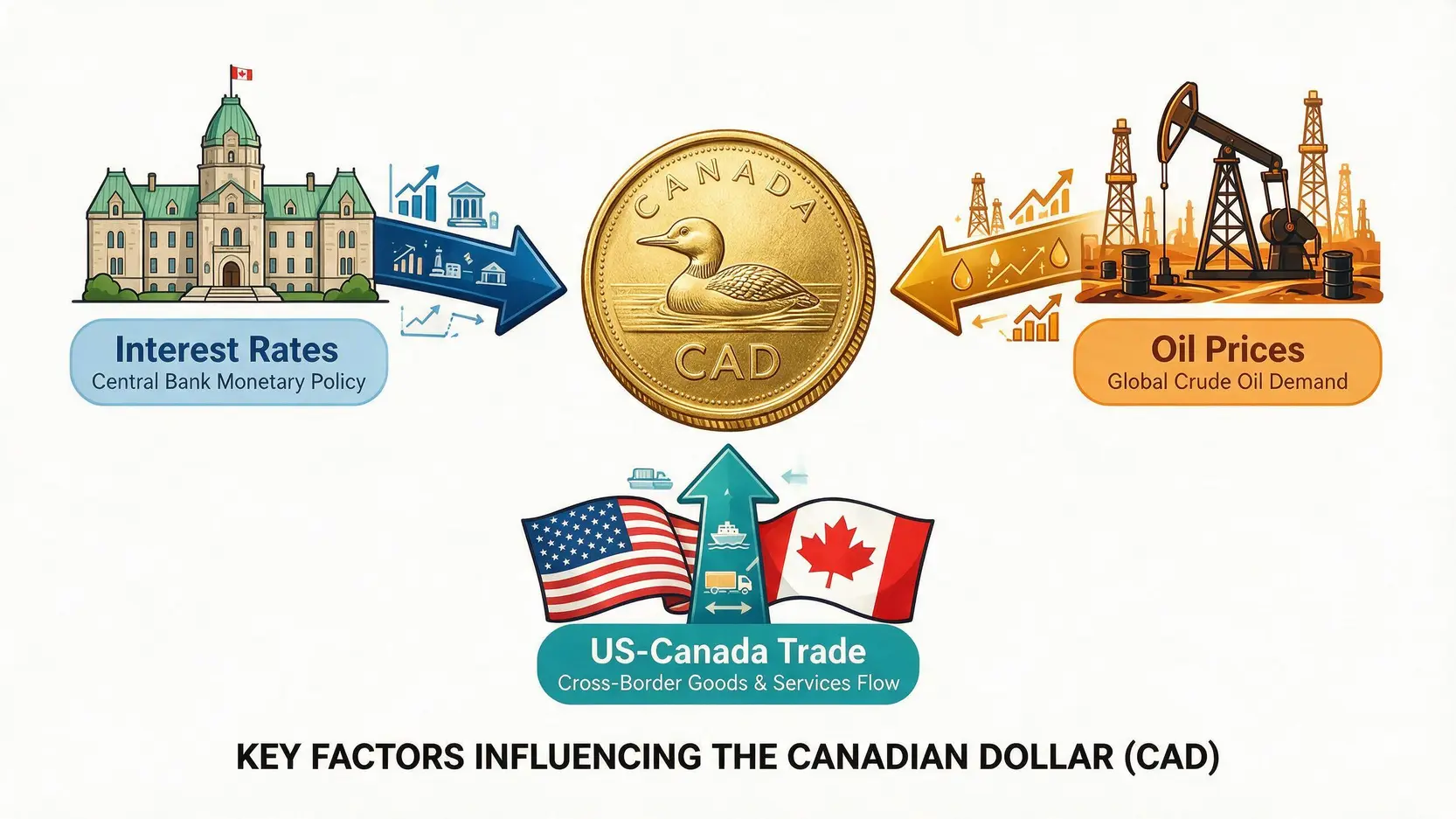
The Bank of Canada’s Stance on Interest Rates and Inflation
The Bank of Canada (BoC) remains the single most important actor in the CAD’s valuation. As of the latest Monetary Policy Report from July 2026, the BoC has held its policy rate at 2.25%. The bank’s primary mandate is controlling inflation, and its every statement is scrutinized for clues about future rate hikes or cuts. For 2026, the BoC is in a data-dependent mode. It is carefully balancing the need to keep inflation on a downward path toward its 2% target with the risk of stifling economic growth. Any deviation from its expected path—whether more hawkish (raising rates) or dovish (cutting rates)—will cause significant volatility in the USD/CAD pair.
Impact of Global Oil Prices on the Canadian Dollar
Canada is the world’s fourth-largest oil producer and a major exporter, primarily to the United States. This makes the Canadian dollar a classic ‘commodity currency.’ There is a strong positive correlation between the price of oil (specifically Western Texas Intermediate or WTI) and the value of the CAD.
- Rising Oil Prices: When oil prices rise, it increases the value of Canada’s exports, leading to higher demand for Canadian dollars to pay for that oil. This boosts the loonie. 📈
- Falling Oil Prices: Conversely, a slump in oil prices reduces the value of Canadian exports, weakening the CAD. 📉
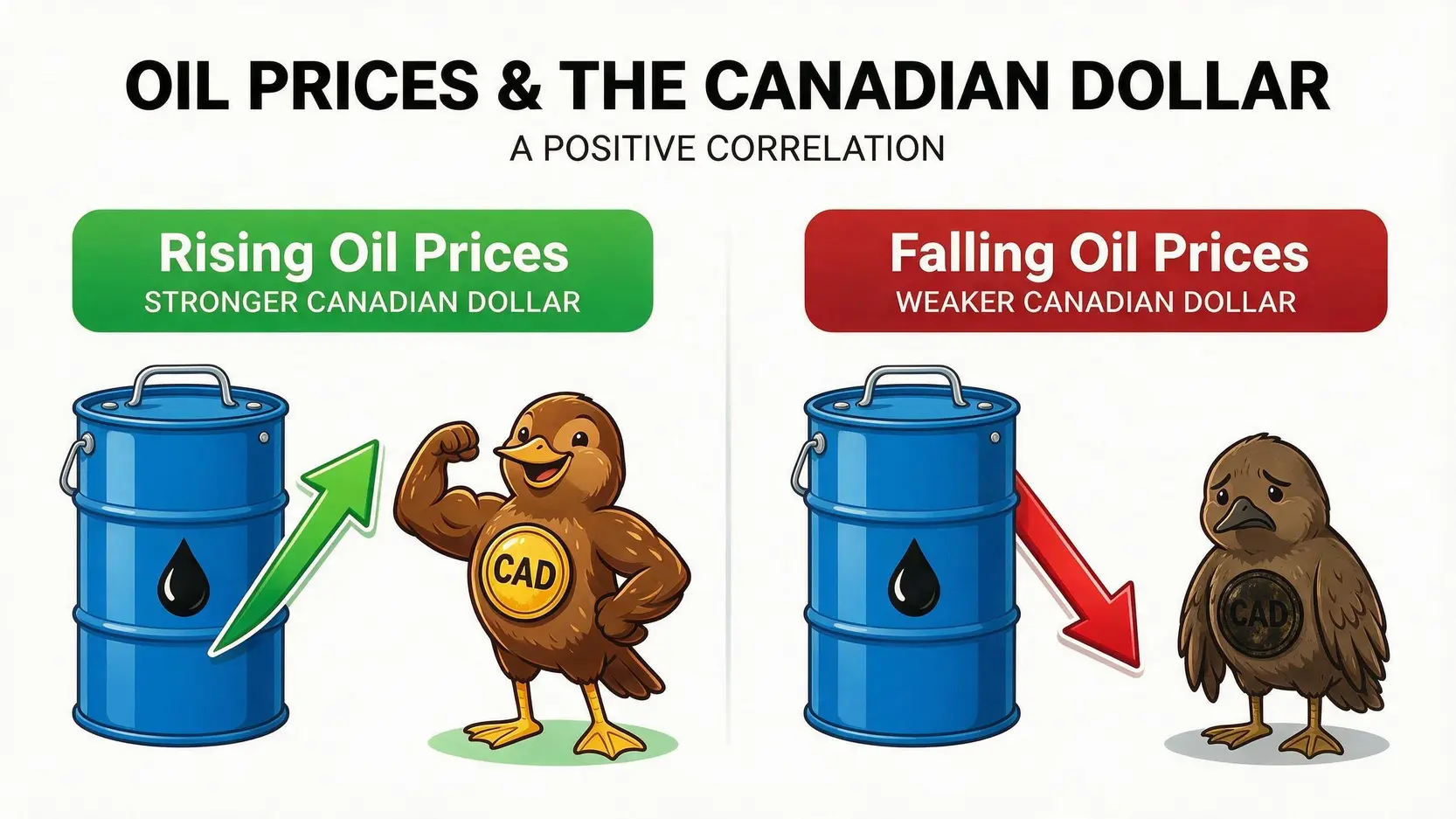
Throughout 2026, geopolitical stability, OPEC+ production decisions, and the pace of global energy transition will all be pivotal for oil prices, and by extension, the loonie’s performance. For a deeper dive, understanding how oil shocks can ripple through the economy is essential.
Canada-US Trade Dynamics and Economic Interdependence
The economic relationship between Canada and the United States is deeply intertwined, with over $2 billion in goods and services crossing the border daily. This interdependence means the health of the U.S. economy is a major factor in any long-term CAD outlook. Key metrics to monitor include:
- Economic Growth Differentials: If the U.S. economy grows faster than Canada’s, it can attract investment capital, strengthening the USD relative to the CAD.
- Monetary Policy Divergence: The actions of the U.S. Federal Reserve are just as important as the BoC’s. If the Fed is more aggressive in its monetary policy than the BoC, the USD will likely appreciate against the CAD.
- Trade Policies: While major trade disputes have subsided, any new tariffs or protectionist measures from either side could introduce uncertainty and harm the Canadian dollar.
🆕 What the 2026 Forecast Means for Different Stakeholders
A fluctuating exchange rate has real-world consequences. Here’s a breakdown of what the USD to CAD forecast 2026 means for you.
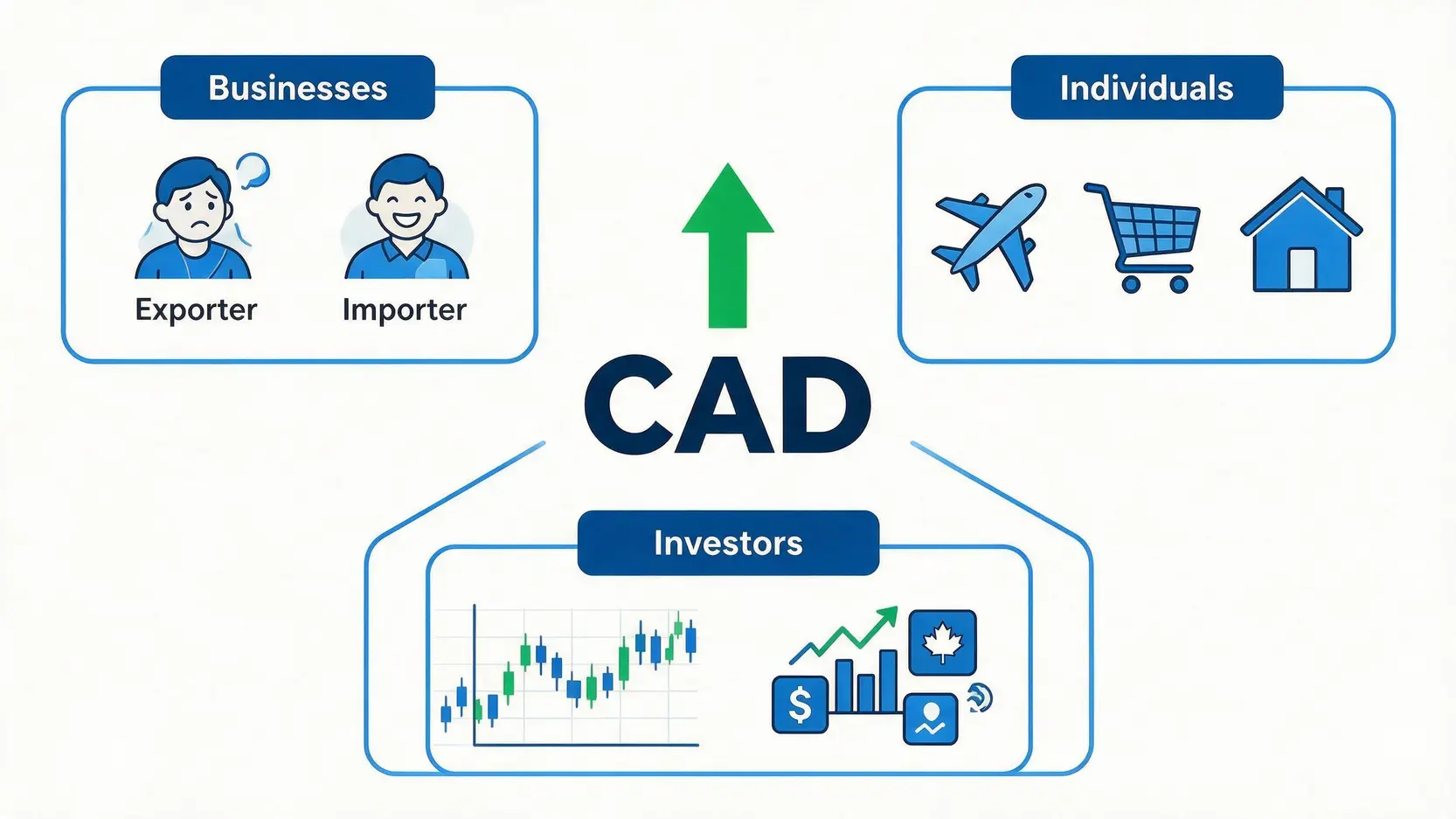
For Investors: Navigating Forex Markets and Canadian Equities
For forex traders, the projected strengthening of the CAD suggests that long positions on the loonie against the greenback could be profitable, though volatility necessitates a robust risk management plan. A stronger CAD can be a headwind for Canadian companies that earn significant revenue in USD, as those earnings translate back into fewer Canadian dollars. However, it can also signal a strong domestic economy, which may benefit Canadian-centric stocks, such as those in the banking and telecom sectors. Developing a sound forex trading strategy is paramount.
For Businesses: Import/Export and Hedging Strategies
Exporters: A stronger loonie is a challenge. It makes Canadian goods and services more expensive for international buyers, potentially reducing competitiveness. Importers: A stronger loonie is a benefit. It decreases the cost of purchasing goods, materials, and equipment from the U.S. and other countries. Given the expected trend, businesses should actively consider hedging strategies, such as forward contracts or currency options, to lock in exchange rates and protect their profit margins from adverse movements.
For Individuals: Implications for Travel, Real Estate, and Savings
The exchange rate affects your wallet directly. A stronger Canadian dollar means your money goes further when travelling to the United States. ✈️ It also makes online shopping from U.S. retailers cheaper. For those with U.S. dollar savings or investments, a rising CAD means those assets are worth less when converted back to Canadian currency. Conversely, for Canadians looking to buy U.S. real estate or other assets, a stronger loonie provides more purchasing power.
Conclusion
In summary, the Canadian dollar forecast for 2026 presents a complex but cautiously optimistic picture. The trajectory of the loonie will be overwhelmingly dictated by the monetary policy decisions of the Bank of Canada and the Federal Reserve, as well as the prevailing strength of global commodity markets, especially oil. While the consensus points to a gradual appreciation of the CAD, significant uncertainties remain. By understanding these key drivers, investors, businesses, and individuals can make more informed strategic decisions and navigate the currency fluctuations of the year ahead.
Frequently Asked Questions (FAQ)
Q: Will the Canadian dollar get stronger against the USD in 2026?
A: The general consensus among major banks is a gradual strengthening of the Canadian dollar against the USD through the remainder of 2026. Forecasts suggest the USD/CAD rate could move from the low 1.30s toward the high 1.20s by year-end, driven by firm commodity prices and a potentially narrowing interest rate gap with the U.S.
Q: What is the highest and lowest expert forecast for the Canadian dollar in 2026?
A: Based on the compiled data, the highest (most bearish for CAD) forecast for the USD/CAD pair is around 1.36, seen at the beginning of the year. The lowest (most bullish for CAD) forecast projects a rate of approximately 1.28 by the end of Q4 2026. This range highlights the existing market uncertainty.
Q: How do oil prices specifically impact the CAD/USD exchange rate?
A: As Canada is a major oil exporter, higher oil prices increase the country’s terms of trade. This boosts national income and attracts foreign investment, both of which increase the demand for the Canadian dollar. This creates a strong positive correlation, meaning a rising oil price generally leads to a rising CAD/USD exchange rate (i.e., a lower USD/CAD figure).
Q: What is the long-term outlook for the Canadian dollar beyond 2026?
A: The long-term outlook will depend heavily on global growth, Canada’s success in managing its energy transition, and long-term interest rate policies. If Canada can maintain its position as a stable, resource-rich economy while fostering innovation, the long-term fundamentals for the CAD remain constructive. However, global economic fragmentation and the pace of decarbonization are significant long-term risks.