As we navigate the economic landscape of 2026, the intricate interplay of volatile oil prices, persistent inflation, and the Federal Reserve’s monetary policy creates a challenging environment for investors and consumers alike. The critical question remains: how will the trajectory of energy costs influence inflation expectations and, consequently, the Fed rates in 2026? Understanding this complex relationship is paramount to making informed financial decisions in the year ahead. This analysis provides a clear forecast, breaking down the key drivers and potential scenarios that will shape our economy.
Table of Contents
The Domino Effect: How Oil Price Volatility Fuels Inflation
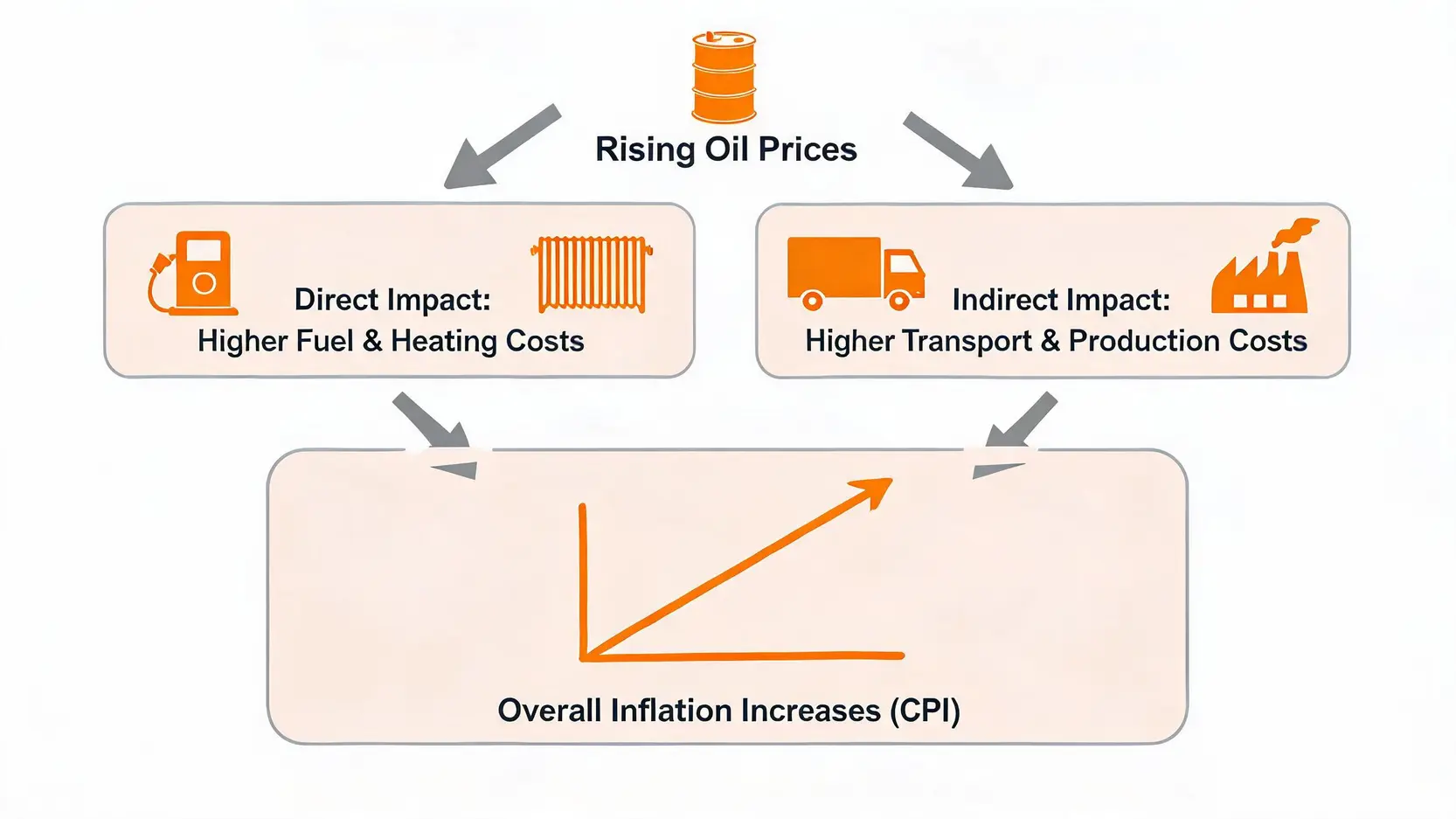
The connection between oil prices and inflation is a fundamental economic principle that reverberates through every sector. A surge in crude oil costs doesn’t just mean higher prices at the pump; it sets off a chain reaction that pushes up the general price level. This impact can be dissected into two primary channels: direct and indirect effects. Both are critical to understanding the inflation challenge the Federal Reserve faces in 2026.
Direct Impact: Higher Costs at the Gas Pump and for Heating
The most immediate and visible effect of rising oil prices is on consumers’ wallets. Gasoline and heating oil are direct derivatives of crude oil, and their prices are highly sensitive to shifts in the global energy market. When the cost per barrel increases, this is passed on almost instantaneously to consumers. This directly impacts headline inflation metrics like the Consumer Price Index (CPI), where energy is a significant component. For the average household, this translates to a higher cost of living, reducing discretionary income and potentially dampening consumer spending in other areas. ⛽
Indirect Impact: Rising Transportation and Manufacturing Costs
Beyond the direct impact, the indirect, or second-round, effects of high oil prices create a more pervasive inflationary pressure. As Investopedia highlights, higher oil prices increase the cost of inputs for a vast array of goods and services. Consider the following:
- Transportation: Nearly every physical good needs to be transported. From raw materials reaching a factory to finished products reaching a store, logistics rely heavily on fuel. Increased fuel costs for trucking, shipping, and aviation are inevitably passed on to businesses and, ultimately, consumers.
- Manufacturing: Oil and its byproducts are essential inputs for numerous industries, including plastics, chemicals, and pharmaceuticals. Higher energy costs increase the expense of production, forcing companies to raise prices to protect their profit margins.
- Agriculture: Modern farming is energy-intensive, relying on diesel for machinery and natural gas for fertilizers. An increase in energy costs leads to higher food prices, a critical component of core inflation.
This widespread cost-push inflation is often stickier and more difficult for the Federal Reserve to control, as it becomes embedded in the pricing structure of the entire economy. A deep dive into understanding inflation and its impact on investments reveals how these second-round effects can erode purchasing power over time.
The Federal Reserve’s Toolkit for Combating Inflation with Interest Rate Changes
When inflation runs hot, driven by factors like surging oil prices, the Federal Reserve steps in as the primary regulator of the U.S. economy. Its main tool for this task is the federal funds rate, the target interest rate for interbank lending. By adjusting this rate, the Fed can influence borrowing costs across the entire economy, thereby managing economic growth and inflation.
Understanding the Fed’s Dual Mandate: Price Stability and Maximum Employment
The Federal Reserve operates under a dual mandate legislated by Congress: to promote price stability and maximum employment. This is a delicate balancing act. Price stability generally means keeping inflation low and predictable, with a long-term target of 2%. Maximum employment refers to the highest level of employment the economy can sustain without causing runaway inflation. As the official Federal Reserve site explains, these two goals can sometimes be in conflict. For instance, raising rates to fight inflation could slow the economy and increase unemployment.
How Rate Hikes Cool Down an Overheated Economy
When the Fed raises interest rates, it initiates a cooling effect on the economy through several mechanisms:
- Increased Borrowing Costs: Higher rates make it more expensive for consumers to take out mortgages, auto loans, and credit card debt. For businesses, the cost of financing new projects and investments rises.
- Reduced Spending and Investment: With higher borrowing costs, both consumer and business spending tend to slow down. This reduction in aggregate demand helps to alleviate upward pressure on prices.
- Stronger Currency: Higher interest rates can attract foreign capital, strengthening the U.S. dollar. A stronger dollar makes imports cheaper, further helping to reduce inflation, but can also make U.S. exports more expensive.
Conversely, when the economy is weak and inflation is below target, the Fed will cut rates to stimulate borrowing and spending. The market’s anticipation of these moves is a key driver of asset prices.
2026 Outlook: Analyzing the Key Scenarios for Fed Rates
As we look at the remainder of 2026, the path of Fed rates is anything but certain. The central bank’s decisions will be data-dependent, hinging on the evolving relationship between energy markets, inflation data, and the labor market. Investors and analysts are currently modeling several key scenarios.
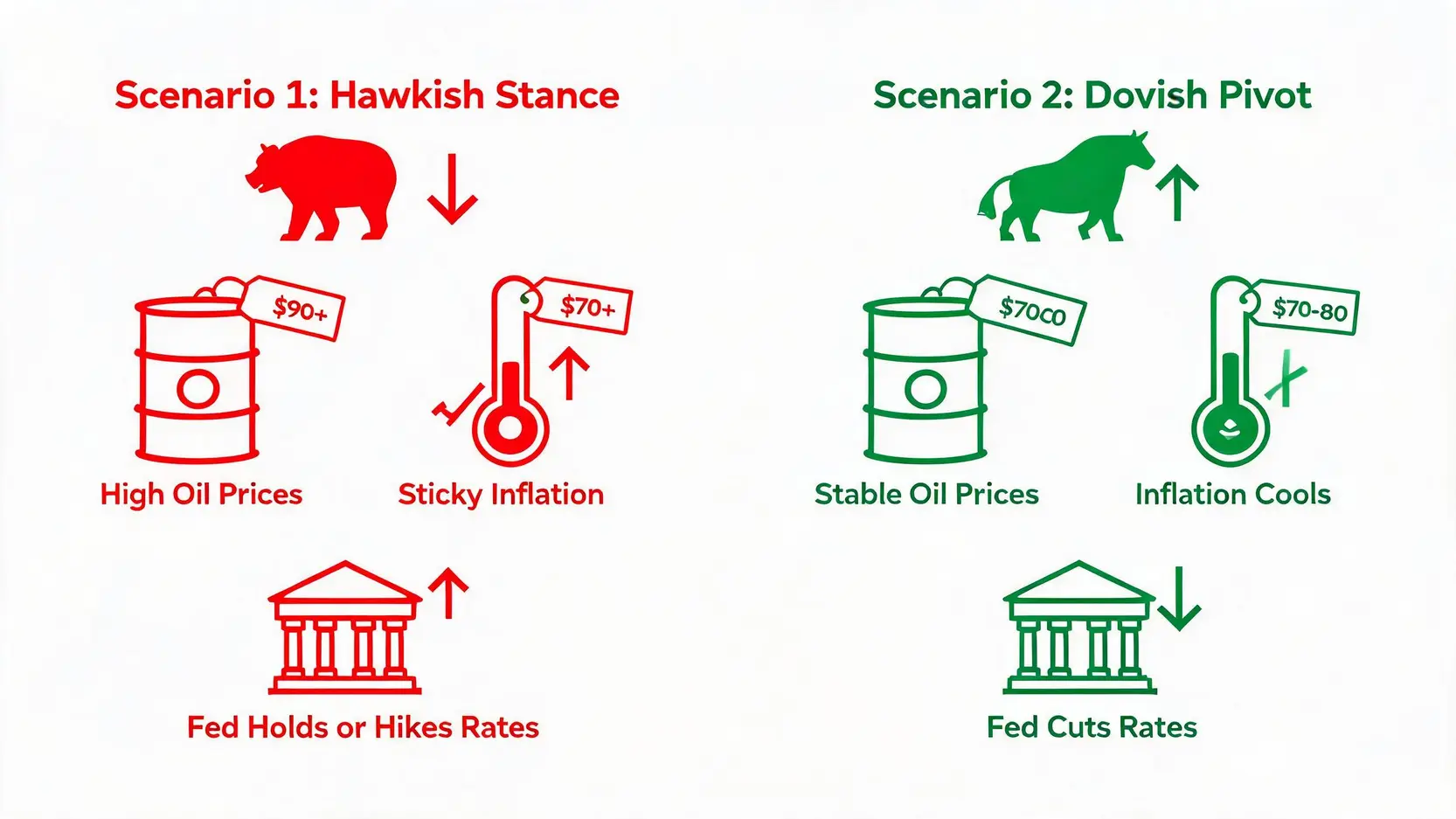
Scenario 1: Sustained High Oil Prices and Hawkish Fed Policy
If geopolitical tensions, supply constraints, or a rebound in global demand keep oil prices elevated above $90-$100 per barrel, inflation could prove much stickier than anticipated. In this scenario, both headline and core inflation would likely remain well above the Fed’s 2% target. This would force the Federal Reserve to maintain a hawkish stance, meaning it would keep interest rates higher for longer and possibly even consider another rate hike. The prospect of delayed Fed rate cuts in 2026 would roil financial markets, likely leading to higher bond yields and pressure on equity valuations.
Scenario 2: Stabilizing Energy Markets and Potential Rate Cuts
Conversely, a resolution of geopolitical conflicts or an increase in global oil production could lead to a stabilization or decline in energy prices. If oil prices were to fall back into the $70-$80 range, it would provide significant relief to inflationary pressures. This would give the Fed the green light to begin its long-awaited pivot towards monetary easing. In this more dovish scenario, the Fed could implement one or two rate cuts by the end of 2026 to support economic growth, provided the labor market shows signs of cooling. This would be a bullish signal for both stock and bond markets.
The Role of Geopolitical Wildcards and Global Demand
The global economic stage is fraught with uncertainty, and geopolitical wildcards are a major factor for oil prices. Conflicts in key oil-producing regions can disrupt supply chains and add a significant risk premium to crude prices. As we’ve seen, geopolitical risk has a profound impact on financial markets, and any escalation could quickly shift the outlook. Furthermore, the strength of global demand, particularly from major economies like China and India, will play a crucial role. A stronger-than-expected global economy would increase demand for oil, supporting higher prices, while a slowdown would have the opposite effect.
What This Means for You: Practical Implications for 2026
The macroeconomic environment shaped by oil prices, inflation, and Fed rates has direct consequences for personal finance and investment strategies. Navigating this landscape requires a proactive and informed approach. 📈
For Investors: Portfolio Adjustments for a Volatile Market
In a period of high inflation and interest rate uncertainty, portfolio construction becomes critical. A well-diversified portfolio can help mitigate risks. Key considerations include:
- Real Assets: Assets like commodities (including oil and gold) and real estate can perform well during inflationary periods as their intrinsic value tends to increase with rising prices.
- Value and Dividend Stocks: Companies with strong balance sheets, consistent cash flow, and a history of paying dividends can be more resilient in a volatile market.
- Short-Duration Bonds: To reduce sensitivity to interest rate hikes, investors might consider shifting from long-duration to short-duration bonds or Treasury Inflation-Protected Securities (TIPS).
- Sector Allocation: The energy sector naturally benefits from higher oil prices. Conversely, sectors like consumer discretionary and technology, which are sensitive to interest rates, may face headwinds. Making strategic portfolio adjustments for volatile markets is not just advisable; it’s essential.
For Consumers: Managing Budgets and Debt
For individuals, the current economic climate calls for disciplined financial management. A high-interest-rate environment directly increases the cost of carrying debt. Strategies for consumers include:
- Budgeting: Track income and expenses diligently to identify areas where spending can be cut. Higher energy and food costs need to be factored into monthly budgets.
- Debt Management: Prioritize paying down high-interest debt, such as credit card balances. The cost of this debt escalates quickly when the Fed is raising rates.
- Emergency Fund: Maintaining a robust emergency fund (3-6 months of living expenses) is crucial to handle unexpected financial shocks without resorting to high-interest debt.
- Reviewing Subscriptions: Small, recurring charges can add up. Scrutinize subscriptions and memberships to eliminate non-essential spending. For those looking for guidance, understanding how to approach Managing Budgets and Debt in a High-Interest Rate Environment is a vital first step.
Conclusion
In conclusion, the trajectory of oil prices remains the most critical variable influencing the path of inflation and, consequently, the Federal Reserve’s interest rate decisions for the remainder of 2026. The interplay between energy market volatility, persistent inflation, and the Fed’s commitment to its dual mandate creates a complex and data-dependent economic environment. By understanding the dynamics of direct and indirect cost pressures and analyzing the potential policy scenarios, investors and consumers can better prepare for the economic landscape ahead. Staying informed on these key indicators will be crucial for navigating the opportunities and risks of the upcoming year.
Frequently Asked Questions (FAQ)
Q: What is the direct correlation between a $10 increase in oil and the inflation rate?
A: While not a fixed rule, a common economic estimate suggests that a $10 increase in the price of a barrel of oil can lead to a 0.1% to 0.2% increase in the headline inflation rate (CPI). This accounts for both the direct impact on fuel costs and the indirect impact on transportation and production costs that ripple through the economy over several months.
Q: What is the Federal Reserve’s target inflation rate for 2026?
A: The Federal Reserve’s long-term inflation target remains officially at 2%, as measured by the annual change in the Price Index for Personal Consumption Expenditures (PCE). While inflation has been running above this target, the Fed’s goal is to steer it back to the 2% level over time to ensure price stability and a healthy economy.
Q: Are there any factors that could cause the Fed to cut rates despite high inflation?
A: Yes, although it’s an unlikely and difficult scenario. The Federal Reserve might be forced to cut interest rates even with elevated inflation if a significant financial crisis or a severe recession were to occur. In such a situation, the immediate need to stabilize the financial system or combat a sharp rise in unemployment might take precedence over the inflation fight, forcing the Fed to choose the lesser of two evils.
Q: How do oil prices impact different stock market sectors?
A: The impact varies significantly. The Energy sector (oil producers, refiners) directly benefits from higher oil prices due to increased revenues and profits. Conversely, sectors with high fuel costs, such as Airlines, Trucking, and Cruise Lines, face margin compression. Consumer-facing sectors like Retail and Restaurants can also suffer as higher gas prices reduce discretionary spending power.