
The recent, sharp drop in oil prices has sent shockwaves through the financial markets, leaving many investors questioning the future of their energy stocks after oil price drop. This volatility, while unsettling, is a recurring theme in the energy sector. Understanding the intricate impact of oil price fluctuations is crucial for devising effective investor strategies to not only mitigate risk but also to identify unique opportunities. This guide provides a detailed breakdown of the complex relationship between crude prices and equity performance, unveils potential portfolio risks, and highlights strategic approaches for navigating your investments in this challenging environment.
Table of Contents
Understanding the Core Relationship: Why Oil Prices Dictate Energy Stock Performance
The connection between oil prices and the valuation of energy companies is direct and profound. For most of the sector, the price of crude oil is the primary driver of revenue and profitability. When oil prices fall, the revenue generated from each barrel sold decreases, squeezing profit margins and reducing cash flow. This financial pressure immediately translates to lower stock prices, as investors adjust their expectations for future earnings. The market’s reaction is often swift and can be amplified by broader economic concerns, making a deep understanding of this dynamic essential for anyone invested in oil and gas stocks.
Upstream vs. Downstream: Not All Energy Stocks Are Created Equal
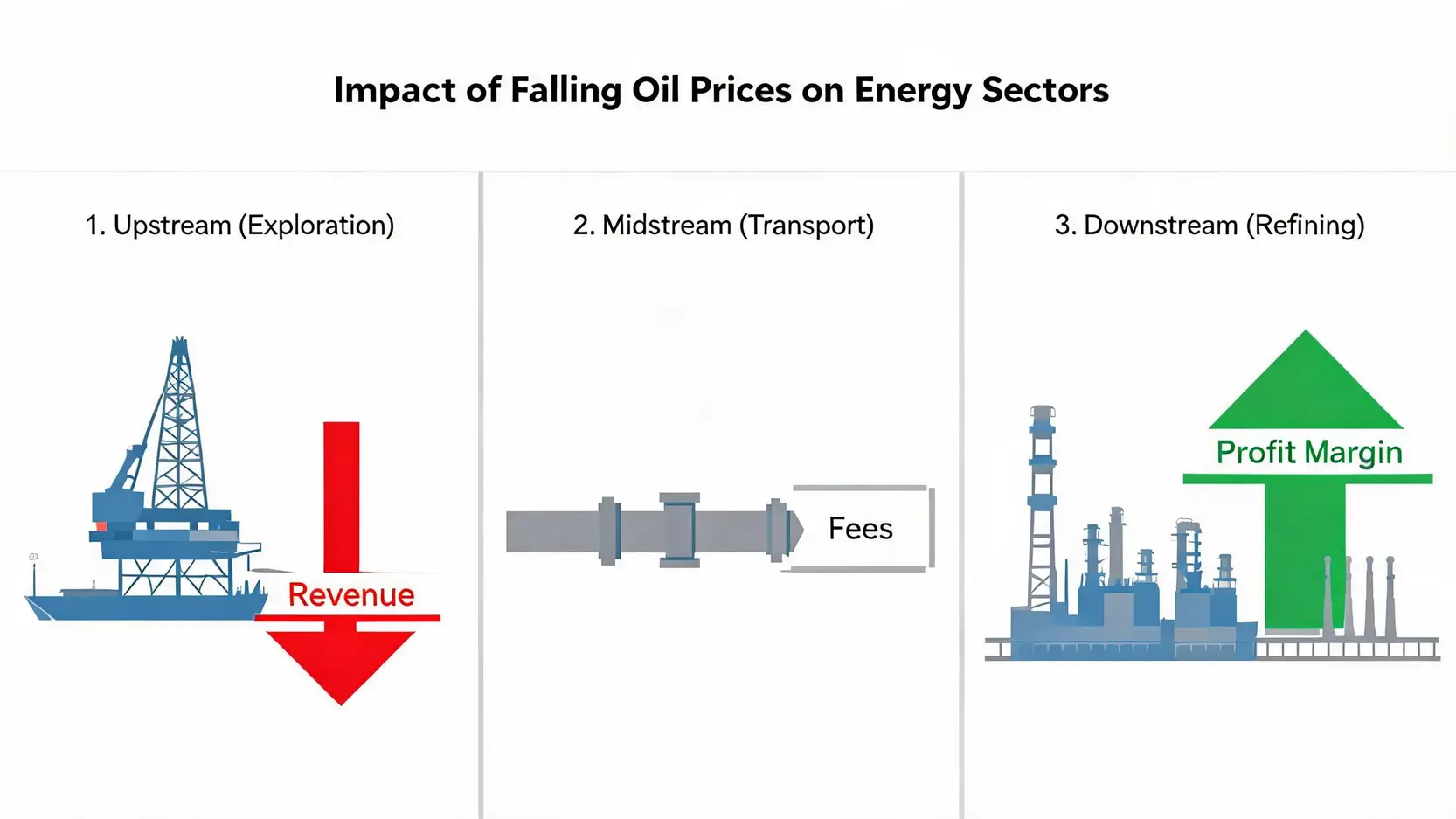
It’s a common mistake to view the energy sector as a monolith. In reality, the impact of falling oil prices varies significantly depending on a company’s position in the supply chain. The industry is broadly divided into three segments:
- Upstream: These are the companies involved in oil and gas exploration and production (E&P). Their business is to find and extract crude oil and natural gas. Consequently, their revenues are directly tied to commodity prices. They are the most vulnerable to price drops.
- Midstream: These companies focus on the transportation (pipelines, tankers) and storage of energy products. Their business model often relies on long-term, fee-based contracts, making them less sensitive to short-term price volatility than their upstream counterparts.
- Downstream: This segment includes refining and marketing companies. They purchase crude oil and process it into gasoline, diesel, and other petroleum products. For these companies, lower oil prices mean a cheaper primary input cost. If the price of refined products doesn’t fall as quickly as crude, their profit margins (known as the “crack spread”) can actually expand, making them potential beneficiaries of an oil price drop.
Historical Correlation: Lessons from Past Oil Price Shocks
History provides a valuable playbook for understanding the current market. Major oil price shocks, whether driven by demand collapses (like the 2020 COVID-19 pandemic) or supply gluts (the 2014-2016 OPEC price war), have consistently led to sharp downturns in the energy sector. For instance, during the initial phase of the pandemic, West Texas Intermediate (WTI) futures famously plunged into negative territory, and major energy ETFs like the XLE saw their value plummet. However, these periods also demonstrate the sector’s cyclical nature. As economies recovered and supply-demand dynamics rebalanced, strong companies rebounded. Studying these past events, using reliable data from sources like the U.S. Energy Information Administration (EIA), reinforces the importance of focusing on company fundamentals rather than panicking during a downturn.
Winners and Losers: Which Energy Sectors Thrive or Dive When Prices Drop?
As oil prices tumble, a clear divergence emerges across the energy landscape. While some sub-sectors face existential threats, others find themselves in an advantageous position. A granular analysis is key to repositioning a portfolio effectively.
Exploration & Production (Upstream): The Most Exposed Sector
There is no escaping the direct hit to the upstream sector. Companies like ExxonMobil (XOM), Chevron (CVX), and smaller independent producers see their revenues and profitability immediately compressed. Projects with high breakeven costs become unprofitable, leading to capital expenditure cuts, suspended drilling programs, and, in severe cases, dividend reductions or bankruptcy. Investor sentiment sours quickly, as the very asset these companies sell is worth less. Survival in this environment depends entirely on having a low cost of production and a fortress-like balance sheet.
Refining & Marketing (Downstream): Can They Benefit from Lower Costs?
Downstream players like Valero Energy (VLO) and Marathon Petroleum (MPC) can be the surprising winners. Their primary business is a margin game. They profit from the spread between the cost of crude oil and the sale price of refined products. When crude prices fall sharply, their input cost is reduced. While gasoline prices at the pump also decrease, they often do so with a lag. This lag can temporarily widen the crack spread, leading to a surge in profitability. 📈 This counter-cyclical relationship makes downstream stocks a potential hedge within an energy-focused portfolio during a price collapse.
Oilfield Services & Equipment: Analyzing the Ripple Effect
Companies that provide drilling equipment, engineering services, and support to the upstream sector—such as Schlumberger (SLB) and Halliburton (HAL)—are caught in the crossfire. Their fate is directly tied to the capital spending budgets of E&P companies. When oil prices drop, producers slash their budgets, cancel new projects, and renegotiate contracts. This results in a dramatic decline in demand for services, leading to idle equipment, layoffs, and intense pricing pressure. The ripple effect means their stocks often fall in tandem with the upstream producers they serve.
Strategic Investing: How to Identify Resilient Energy Stocks in a Bear Market
A bear market in oil doesn’t mean all energy investments are a lost cause. Instead, it demands a more discerning, strategic approach focused on quality and resilience. Finding opportunity in the turmoil requires looking beyond the headline price of oil and digging into the financial health of individual companies.
Analyzing Key Financial Metrics: Debt-to-Equity and Free Cash Flow
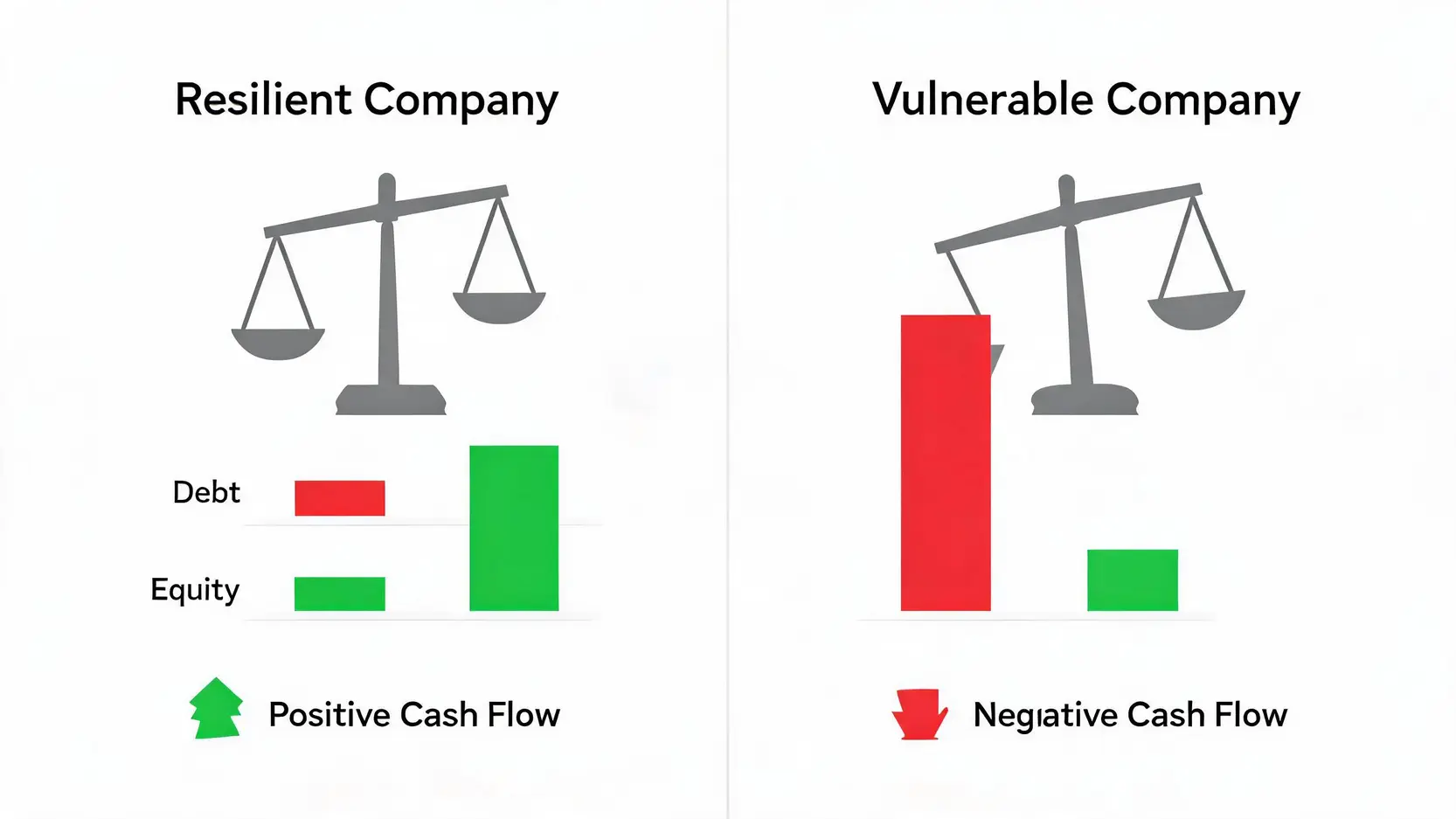
In a low-price environment, survival is paramount. Two of the most critical metrics for assessing a company’s resilience are:
- Debt-to-Equity Ratio: A high debt load is an anchor during a downturn. Companies with heavy debt obligations must continue to make interest payments regardless of their revenue, which can be crippling when cash flow dwindles. A low debt-to-equity ratio indicates a stronger, more flexible balance sheet.
- Free Cash Flow (FCF): This represents the cash a company generates after accounting for capital expenditures. Positive FCF is vital as it allows a company to fund operations, pay dividends, and service debt without needing to borrow more money. Companies that can maintain positive FCF even at lower oil prices are the most durable. Mastering Return on Equity (ROE): A Complete Investor Playbook is a core skill for this analysis.
Identifying Companies with Low Production Costs and Strong Balance Sheets
The single most important operational metric for an upstream company is its breakeven oil price—the price per barrel needed to cover all production and operational costs. Companies operating in low-cost basins, like the Permian in the U.S. or Ghawar in Saudi Arabia, have a significant competitive advantage. They can remain profitable at price levels where higher-cost producers are losing money. Combining this operational efficiency with a strong balance sheet (low debt, high cash reserves) creates a powerful formula for a resilient energy stock that can withstand the storm and thrive in the eventual recovery.
The Long-Term Outlook: Considering Geopolitical Factors and the Energy Transition
As we look towards the late 2020s, any investment thesis for energy stocks must incorporate long-term structural shifts. The energy transition to renewables is an undeniable force, but the demand for oil and gas is projected to remain robust for decades, especially in emerging markets. Simultaneously, geopolitical risk remains a potent catalyst for price volatility. Supply disruptions from conflicts or policy changes can cause prices to spike unexpectedly. Therefore, the ideal long-term energy investment is a company that is not only a low-cost producer but is also strategically investing in lower-carbon solutions, positioning itself for a multi-faceted energy future. A solid long-term investment strategy balances current market conditions with these future trends.
Conclusion
In conclusion, while a significant oil price drop presents undeniable challenges and risks for the energy sector, it does not extinguish all investment opportunities. By understanding the critical differences between upstream, midstream, and downstream operations, investors can differentiate between risk and opportunity. The turmoil creates a moment to identify financially robust companies with low production costs and strong balance sheets that are built to last. For the savvy investor, successfully navigating the volatility involves looking beyond the alarming headlines and performing a fundamental analysis of energy stocks after an oil price drop, positioning their portfolios not just for survival, but for the inevitable market recovery and future growth.
Frequently Asked Questions (FAQ)
Q: What stocks typically go up when oil prices go down?
A: Several sectors benefit from lower oil prices, which act as a broad tax cut for consumers and businesses. Transportation stocks, such as airlines (e.g., Delta Air Lines) and shipping companies (e.g., FedEx), see their largest expense—fuel—decrease, boosting profitability. Downstream oil refiners can also benefit from higher margins. Furthermore, consumer discretionary stocks, from restaurants to retailers, may see a lift as consumers have more disposable income.
Q: How do falling oil prices affect the broader economy and stock market?
A: For net oil-importing countries like many in Europe and Asia, falling oil prices are generally a net positive. They reduce inflationary pressures and increase consumer purchasing power, which can stimulate economic growth. For the broader stock market, it’s a mixed bag. While the energy sector suffers, other sectors benefit, often leading to a net neutral or slightly positive overall impact, provided the price drop isn’t caused by a severe global recession.
Q: Are there specific energy ETFs to consider during an oil price drop?
A: Yes, using an energy ETF can be a strategic way to manage risk and express a specific market view. Instead of betting on a single company, a broad ETF like the Energy Select Sector SPDR Fund (XLE) offers diversified exposure. For a more nuanced approach, one could consider an ETF focused on downstream companies, like the VanEck Oil Refiners ETF (CRAK), to potentially capitalize on expanding crack spreads during a period of low crude prices.
Q: How long does it typically take for energy stocks to recover after a price crash?
A: There’s no fixed timeline, as recovery depends on the cause of the crash. A recovery from a demand-driven shock (like a recession) will hinge on the pace of the global economic rebound. A recovery from a supply-driven glut depends on production cuts from major players like OPEC+ or a natural decline in output. Historically, recoveries can take anywhere from several months to a few years. The key is that the cyclical nature of the industry has, to date, always led to an eventual rebound.