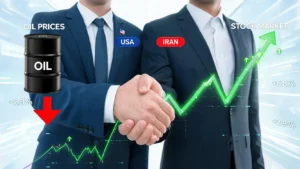
Following the landmark announcement of a peace deal between the United States and Iran, global oil prices after US Iran peace deal have experienced a significant slide, sending shockwaves through the financial markets. This comprehensive analysis dissects why this monumental geopolitical shift is causing ripples across the energy market, its immediate effects on oil futures, and what experts predict for the future of oil prices. The normalization of relations promises to remove the geopolitical risk premium that has inflated crude prices for years, fundamentally altering the global supply equation.
Table of Contents
Immediate Market Reaction: A Sharp Decline in Oil Prices and Geopolitical Risk
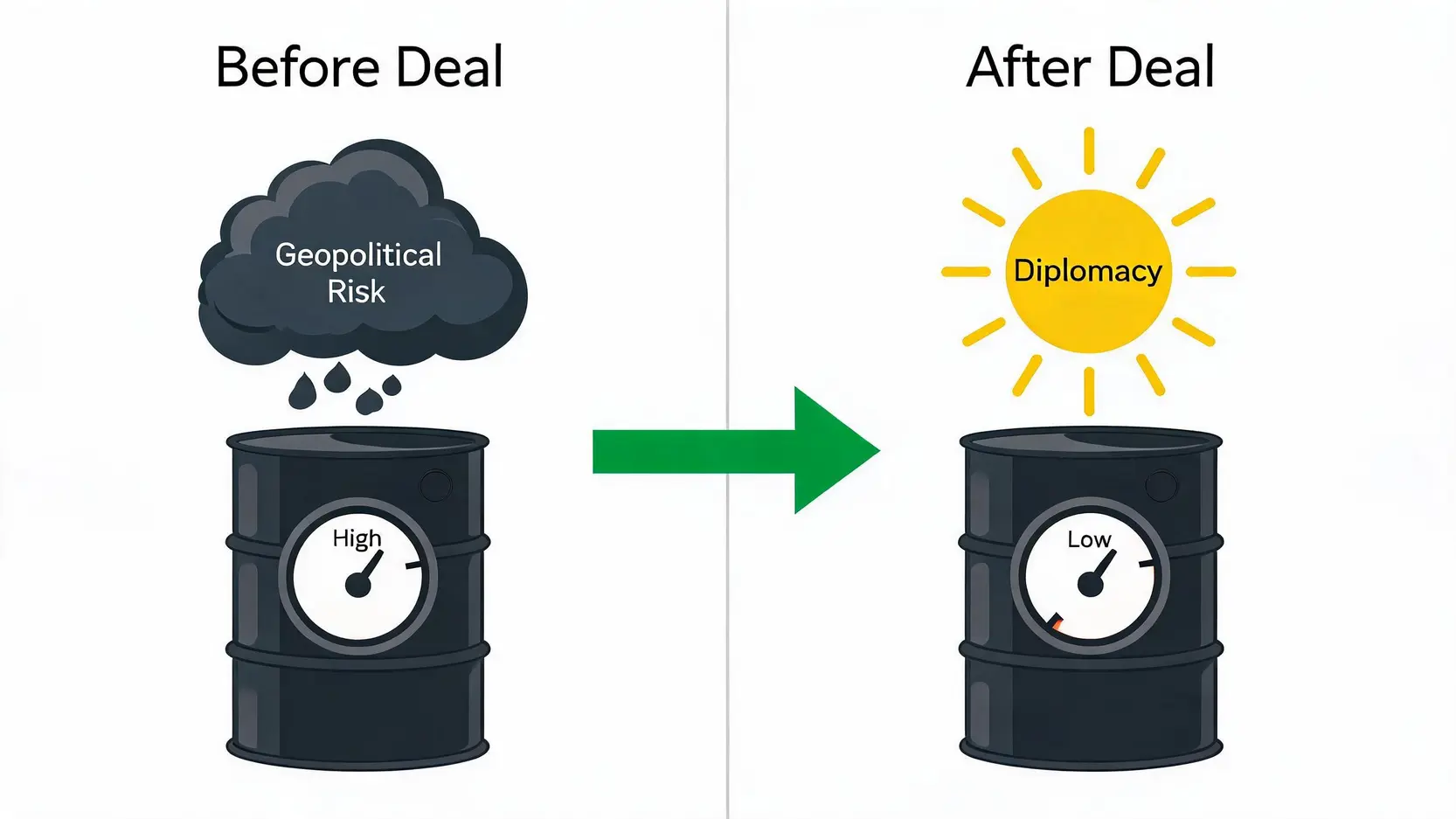
The market’s response to the peace accord was both swift and decisive. The removal of the long-standing geopolitical risk premium, which had acted as a floor for crude prices, triggered an immediate sell-off. Traders who had priced in the possibility of conflict unwound their positions, accelerating the downward momentum and signaling a major shift in the energy trading landscape.
Tracking the Price Drop: Brent and WTI Futures Respond
Within hours of the announcement, both Brent and West Texas Intermediate (WTI) crude futures registered their steepest single-day declines in recent memory. Brent crude, the international benchmark, is particularly sensitive to Middle Eastern geopolitics and thus fell more sharply, breaking through several key technical support levels. WTI followed suit, reflecting the interconnected nature of the global oil market. This price action underscores how deeply entangled energy markets are with international diplomacy. As seen in previous periods of high tension, geopolitical events can introduce a significant risk premium, and its removal, as in this case, has an equally powerful, albeit opposite, effect.
Market Sentiment: From Hope to Reality
Initial market sentiment was one of cautious optimism, which quickly solidified into a bearish consensus as the details of the agreement emerged. The deal’s robust verification mechanisms and commitment from both sides gave traders confidence that the renewed flow of Iranian oil was not a distant possibility but an impending reality. This shift from speculative hope to tangible supply forecasts is the primary driver behind the sustained price decline, moving the market’s focus from conflict risk to supply-and-demand fundamentals. 📉
Core Factors Driving the Oil Price Drop After the Agreement
The decline in oil prices is not merely a sentimental reaction; it is rooted in two fundamental pillars of the energy market: the security of critical transport routes and the raw volume of global supply. The US-Iran peace deal directly addresses both, creating a powerful combination of bearish catalysts.
The Strait of Hormuz: Reopening a Critical Oil Chokepoint
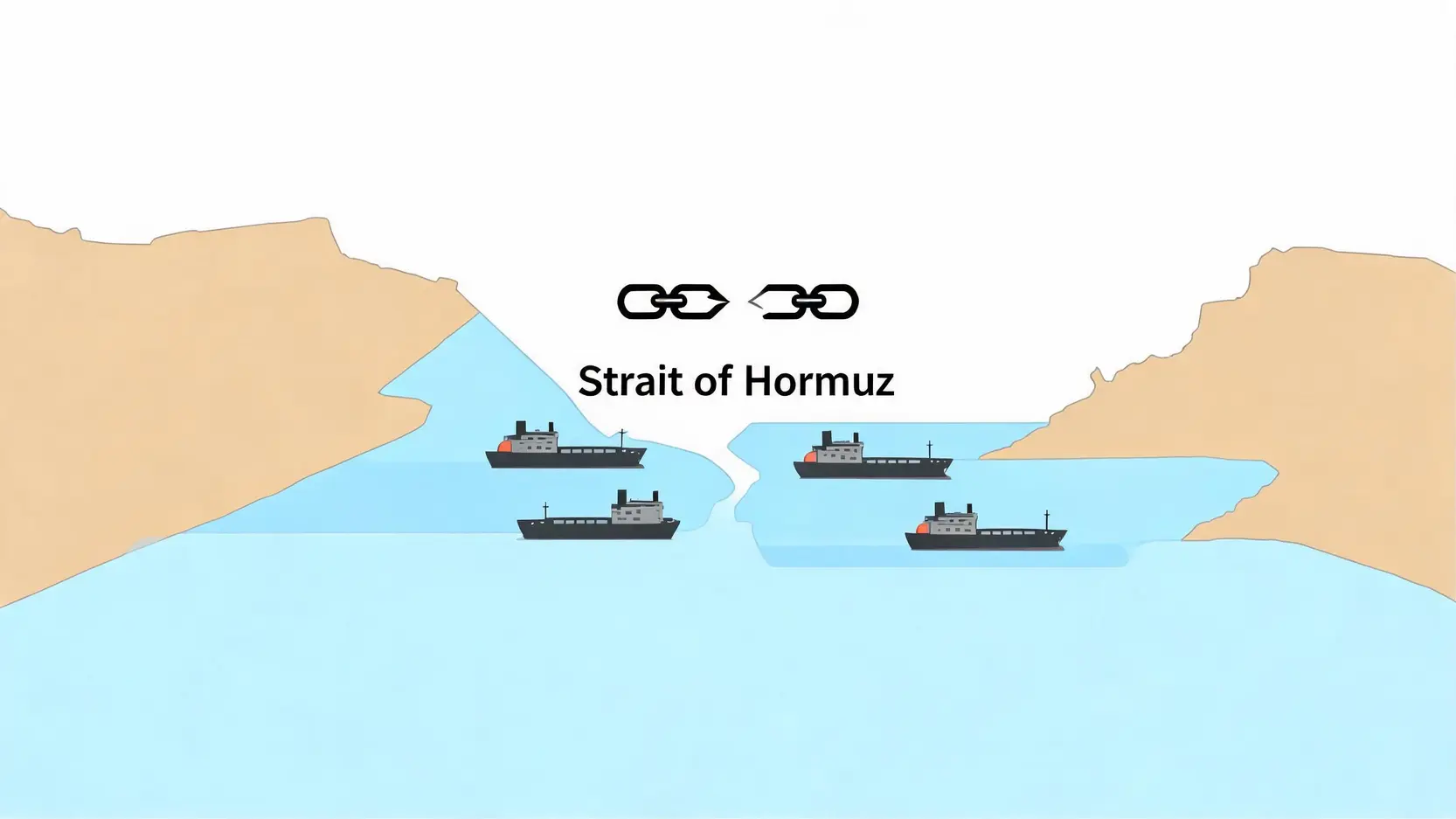
For decades, the threat of conflict in the Strait of Hormuz has been a primary source of volatility in oil prices. As the world’s most vital oil transit chokepoint, any disruption could cripple the global economy. According to the U.S. Energy Information Administration (EIA), approximately 20% of global petroleum liquids consumption flows through this narrow waterway. The peace agreement significantly de-risks this chokepoint, ensuring that millions of barrels per day can transit without the threat of military confrontation. This newfound security has erased the ‘Hormuz premium’ from crude prices almost overnight.
Lifting Sanctions: The Prospect of Increased Iranian Oil Supply
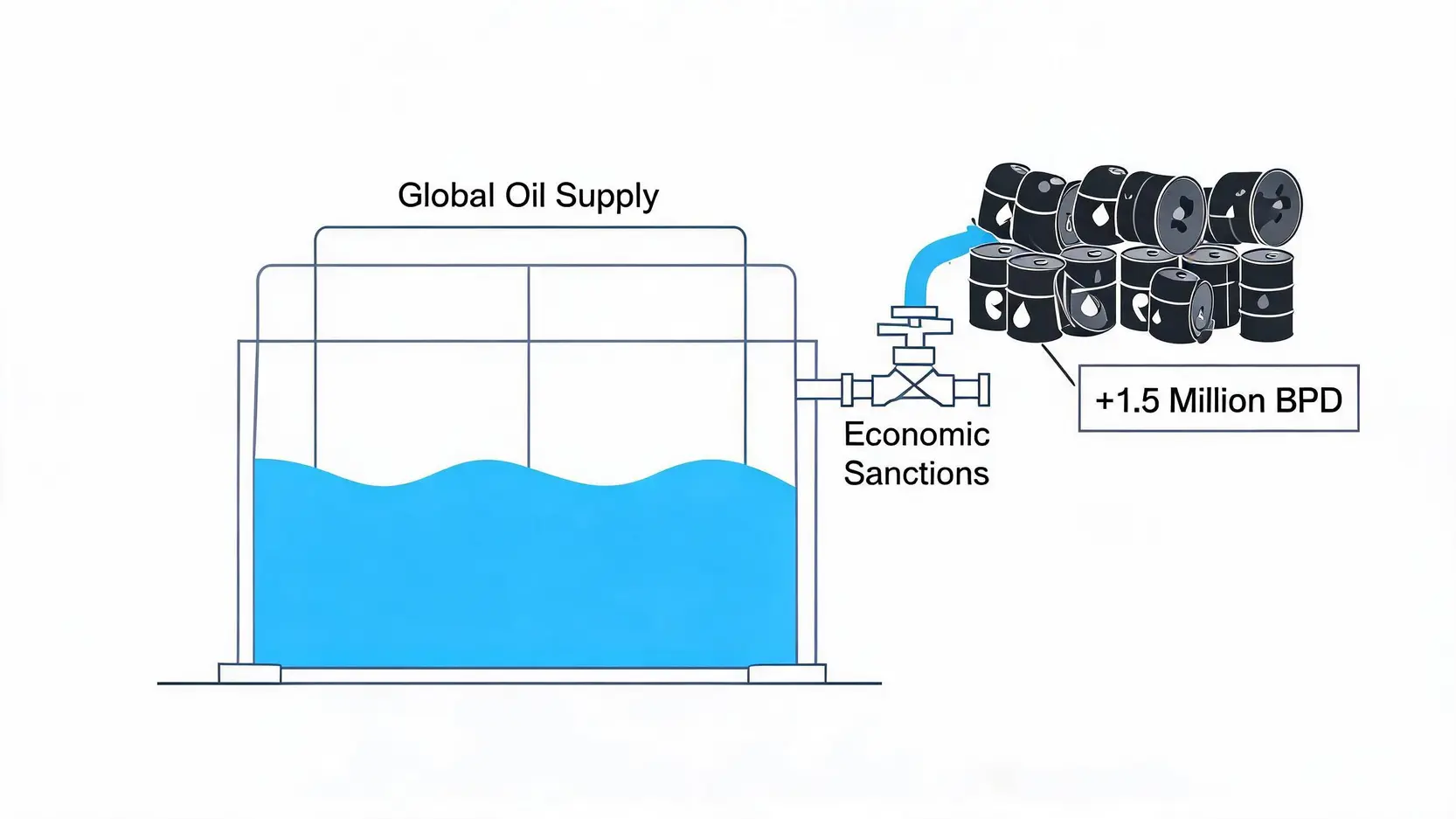
The most significant factor influencing the price drop is the phased lifting of economic sanctions on Iran. This process unlocks Iran’s vast oil reserves, allowing the nation to re-enter the global market as a major supplier. Before the harshest sanctions, Iran was capable of producing nearly 4 million barrels per day (bpd) and exporting around 2.5 million bpd. Analysts project that within six to twelve months, Iran could ramp up its production to add an initial 1-1.5 million bpd to the global supply, a substantial figure that will force a recalculation of market balances for the foreseeable future.
Long-Term Implications for the Global Energy Market and OPEC+ Strategy
The ripple effects of the US-Iran peace deal extend far beyond the immediate price shock. This event is poised to reshape the strategic landscape for major oil producers, influence consumer costs, and establish a new price paradigm for the coming years.
How Increased Iranian Output Could Affect OPEC+ Strategy
The re-integration of Iran into the oil market presents a formidable challenge to the OPEC+ coalition. For years, OPEC+ has managed supply through coordinated production cuts to support prices. The addition of over a million barrels per day from a non-discretionary producer like Iran complicates this balancing act immensely. The cartel, led by Saudi Arabia and Russia, must now decide whether to accommodate Iran by cutting their own output further—a move that would sacrifice market share—or to let prices fall in a bid to compete. This situation could strain the cohesion of the OPEC+ alliance and potentially trigger a new era of market share competition, which would exert further downward pressure on prices. The group’s strategy will need to adapt to this new reality of increasing oil supply to maintain market stability.
Potential Impact on Consumer Gas Prices
For consumers, lower crude oil prices are welcome news. ⛽ Gasoline and diesel prices are directly correlated with the cost of crude oil, which is the primary input for refineries. As the lower crude prices work their way through the supply chain, consumers can expect to see significant relief at the pump. This reduction in fuel costs acts as a broad economic stimulus, increasing disposable income for households and reducing operational costs for businesses, which could contribute to lower inflation and higher economic growth.
Expert Forecasts: Will Prices Remain Low?
The long-term outlook for oil prices is now decidedly more bearish than it has been in years. While a sudden reversal of the peace deal could cause a sharp spike, the prevailing consensus is that a new, lower price range is forming. Major forecasting bodies, including the International Energy Agency (IEA), are revising their 2026 and 2027 forecasts downward. They predict that the market will enter a period of structural oversupply unless global demand grows much faster than anticipated or other producers make significant, sustained cuts. The key variables to watch are the speed of Iran’s production ramp-up, the strategic response of OPEC+, and the resilience of global economic growth.
Conclusion
In conclusion, the US-Iran peace deal has directly led to a fall in oil prices by fundamentally easing geopolitical tensions and promising a significant increase in global supply. The immediate reaction is a clear reflection of a market shedding years of built-up risk premium. While the short-term impact is evident, the long-term stability of these lower prices will hinge on the durability of the peace accord, the strategic responses of OPEC+ nations, and the trajectory of global energy demand. This event marks a pivotal moment for the international energy landscape, potentially ushering in a new era of market dynamics.
Frequently Asked Questions (FAQ)
Q: How much oil can Iran add to the global market after the peace deal?
A: Initially, experts estimate Iran can add between 1 million and 1.5 million barrels per day (bpd) to the global supply within 6 to 12 months of sanctions being lifted. Over the longer term, with sufficient investment in its infrastructure, Iran has the potential to restore its production capacity to its pre-sanction levels of nearly 4 million bpd.
Q: What is the significance of the Strait of Hormuz for oil prices?
A: The Strait of Hormuz is the world’s most critical oil transit chokepoint. Any threat of its closure creates a significant ‘risk premium’ in oil prices due to fears of a catastrophic supply disruption. The peace deal removes this immediate threat, eliminating the risk premium and allowing prices to trade closer to their supply-and-demand fundamentals.
Q: How does political instability in the Middle East typically affect oil prices?
A: Political instability in the Middle East, home to a large portion of the world’s oil reserves, almost always leads to higher oil prices. Markets react to the uncertainty by pricing in the risk of supply disruptions, even if none have occurred. Conversely, periods of increased stability and diplomacy, like the current US-Iran deal, tend to have a calming, bearish effect on prices.
Q: How will this deal impact investments in energy stocks?
A: The impact will be mixed. Oil and gas producers (upstream companies) will likely face pressure on their profit margins due to lower oil prices. However, companies in the downstream sector, such as refineries and chemical manufacturers, may benefit from cheaper feedstock. Furthermore, industries that are heavy consumers of fuel, like airlines and logistics, could see their stock valuations improve.