The landmark reopening of the Strait of Hormuz has sent shockwaves through the global energy market, triggering a dramatic decline in oil prices. This pivotal event, a direct result of intricate diplomatic negotiations, reshapes the landscape for investors and consumers alike. This comprehensive Strait of Hormuz reopening oil price forecast provides a deep-dive analysis into the immediate market reaction, the critical geopolitical factors at play, and what this development means for the global oil market analysis. As traders grapple with the crude oil price tumble, understanding the short-term volatility and long-term implications is paramount for navigating the path ahead.
Table of Contents
The Immediate Market Reaction: Why Crude Oil Prices Tumbled
The announcement of the strait’s reopening acted as a powerful bearish catalyst, immediately impacting global benchmarks. The market, which had priced in a significant risk premium due to months of tension and restricted supply, reacted with a swift and decisive sell-off. This was not just a technical correction but a fundamental repricing of global energy risk.
Analyzing the Brent Crude Plunge Following the Announcement
In the hours following the news, Brent crude futures experienced one of their steepest single-day declines in recent years. The contract price plummeted, breaking through several key technical support levels as algorithmic trading programs and institutional investors moved to liquidate long positions. The sudden influx of potential supply from the Gulf region, previously constrained, flooded the market with sell orders. The key takeaway is the market’s sensitivity to supply-side news, especially from such a critical chokepoint. To understand the fundamentals, it’s crucial to grasp the various elements that shape energy costs, as detailed in our guide on Why Are Oil Prices Falling Today? 5 Key Factors Explained.
The US-Iran Diplomatic Breakthrough: The Catalyst for Reopening
This market-altering event was not spontaneous. It is the culmination of months of intense, back-channel diplomatic efforts, primarily resulting in a landmark US-Iran deal. The agreement, which addresses key security and economic concerns, paved the way for the de-escalation of military tensions in the Persian Gulf. The lifting of specific sanctions and the establishment of a maritime security framework were central to the deal, directly enabling the safe passage of tankers through the strait. This diplomatic success has effectively removed a multi-dollar risk premium that had kept oil prices elevated throughout the first half of 2026.
Strategic Importance: Why the Strait of Hormuz Dictates Global Oil Prices
The Strait of Hormuz is more than just a waterway; it is the planet’s most critical artery for oil. Its strategic location and the sheer volume of energy that transits through it grant it unparalleled influence over the global economy. Any disruption, real or threatened, has immediate and far-reaching consequences.
A Global Chokepoint: Daily Oil Volume and Supply Chain Impact
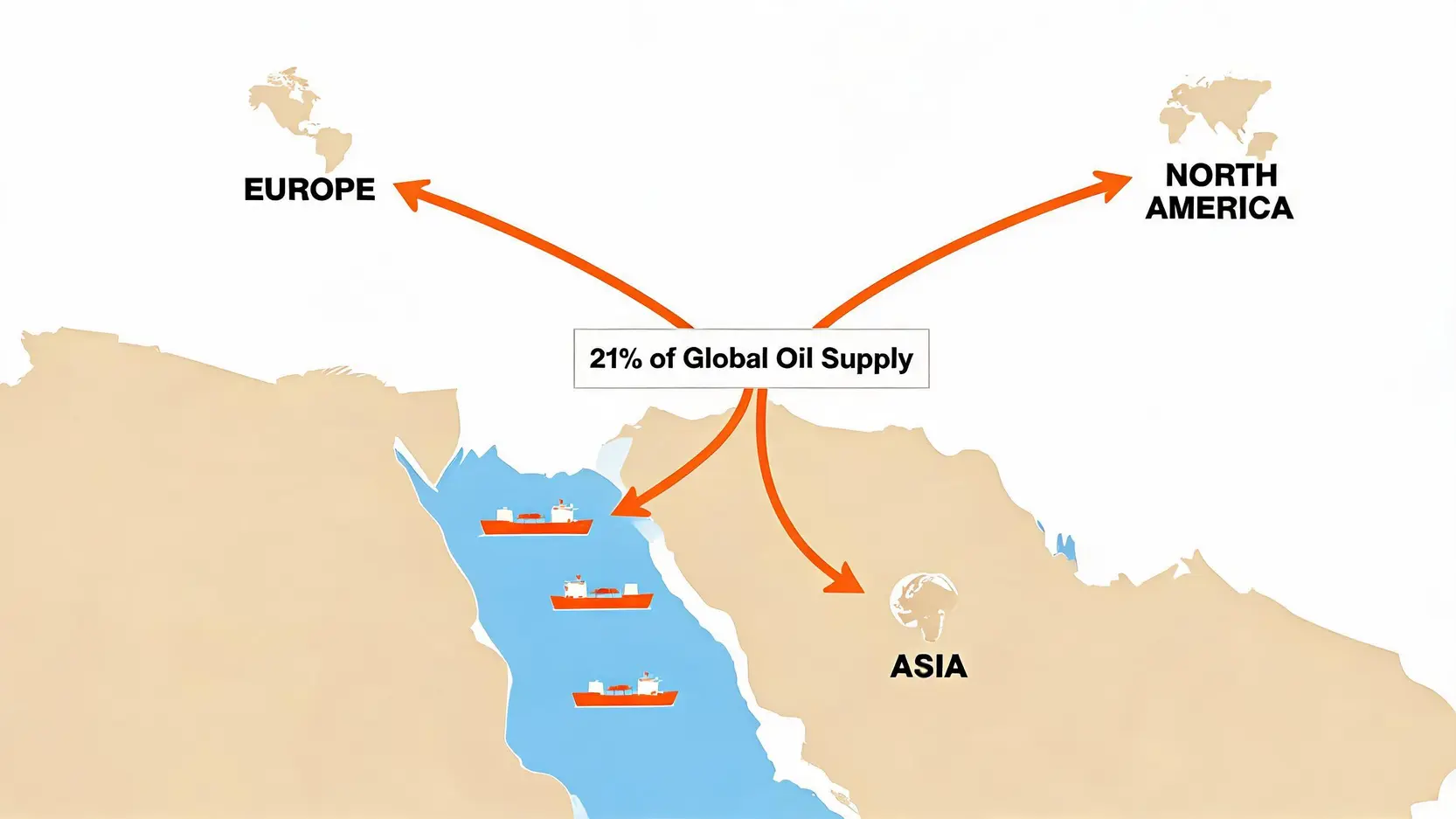
Historically, the Strait of Hormuz has been a critical chokepoint for the global oil trade. According to the U.S. Energy Information Administration (EIA), the strait sees the passage of approximately 21 million barrels of petroleum liquids per day, which represents about 20-21% of global consumption. This colossal volume means that the strait’s operational status is a primary determinant of price stability. The reopening ensures that this vital supply can reach international markets, particularly in Asia, which is the primary destination for crude oil transiting Hormuz. The restoration of this flow alleviates supply-side pressures and allows the market to refocus on demand-side fundamentals.
Historical Context: How Past Tensions in the Strait Affected the Economy
The Persian Gulf has a long history of geopolitical tensions that have directly impacted oil markets. From the “Tanker War” of the 1980s to the heightened tensions of the late 2010s and early 2020s, any threat to the Strait of Hormuz has resulted in significant price spikes, increased shipping insurance costs (war risk premiums), and heightened global economic uncertainty. These historical precedents created a well-understood playbook for the market: Hormuz tension equals higher prices. The current reopening reverses this decades-old paradigm, but the memory of this volatility will continue to influence long-term risk assessment models.
Oil Price Forecast 2026: Short-Term Volatility vs. Long-Term Stability
With the initial shock absorbed, the market is now entering a new phase of price discovery. The oil price forecast for 2026 is now a tale of two distinct periods: the immediate, volatile aftermath and a more stable, but fundamentally different, long-term horizon.
Short-Term Outlook: Will OPEC+ Intervene to Stabilize Prices?
In the immediate short-term, the key player to watch is the OPEC+ alliance. The sharp price drop poses a direct threat to the fiscal stability of its member nations. It is highly probable that the group will convene an emergency meeting to address the new market dynamics. Their primary tool will be the adjustment of production quotas. An intervention in the form of a coordinated supply cut is a distinct possibility to establish a new price floor. As an organization, OPEC has a history of acting to stabilize markets, and their decisions in the coming weeks will be the single most important factor driving short-term price action. Investors should monitor statements from key oil ministers, as their rhetoric will signal the likelihood and scale of any potential intervention.
Long-Term Forecast: Factors of Geopolitical Stability and Global Demand
Looking towards the end of 2026 and into 2027, the oil price forecast will be dictated by two main forces: the durability of the US-Iran diplomatic agreement and the trajectory of global oil demand. If the peace holds, the geopolitical risk premium should remain minimal, keeping a lid on prices. However, the market will remain sensitive to any signs of friction. On the demand side, questions about the strength of the global economy, particularly in China and other emerging markets, will come to the forefront. A robust economic expansion would support demand and help absorb the now-unrestricted supply, while a slowdown could lead to a sustained period of lower prices.
Expert Consensus: What Are Top Energy Analysts Predicting?
The consensus among leading energy analysts is a recalibration of price expectations for the remainder of the year. Initial forecasts that saw oil averaging well above $85-$90 per barrel are being revised downwards. Most major investment banks and energy consultancies are now issuing revised forecasts in the $70-$80 range for Brent crude. They cite the removal of the supply bottleneck as the primary reason, while also noting that strong summer demand and potential OPEC+ action will prevent a complete price collapse. The key theme is a return to a market driven more by supply/demand fundamentals than by geopolitical fears.
Beyond the Barrel: What the Reopening Means for Consumers and Investors
The implications of the Hormuz reopening extend far beyond the commodities trading pits. The ripple effects will be felt at the gas pump, in corporate earnings, and across investment portfolios. This new energy landscape requires a re-evaluation of strategies for both consumers and investors.
From Crude to Pump: Predicting the Impact on Local Gas Prices
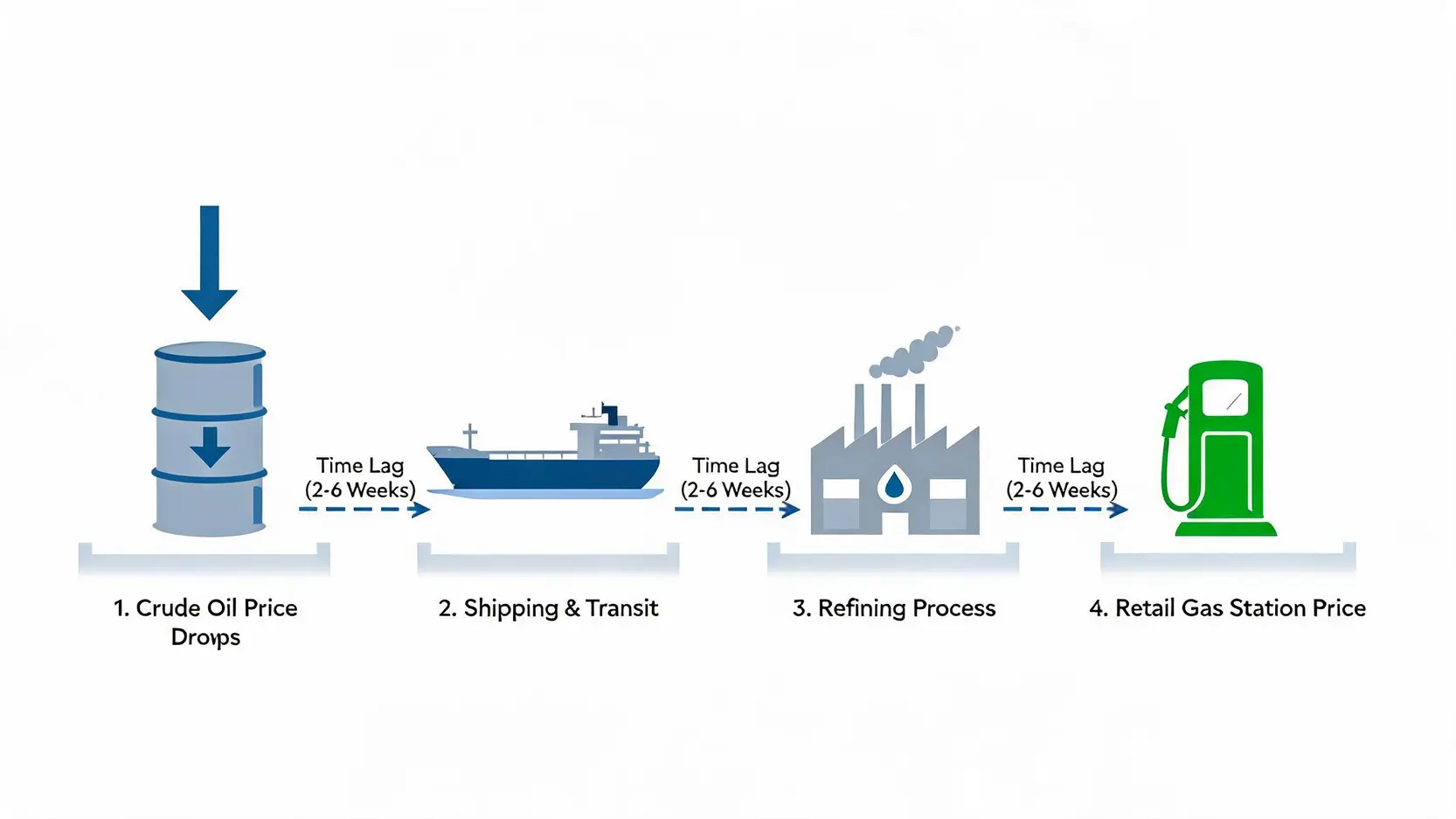
For consumers, the most tangible benefit will be lower prices at the pump. However, this effect is not instantaneous. There is a well-documented lag between changes in crude oil prices and retail gasoline prices. According to industry analysis, it can take anywhere from two to six weeks for a drop in crude to be fully reflected in what consumers pay. This delay is due to the supply chain process: it takes time for cheaper crude to be purchased, shipped, refined, and distributed to retail stations. Consumers can expect to see a gradual but significant decrease in gasoline prices over the coming month, providing welcome relief to household budgets.
Investment Strategies in a New Energy Landscape
For investors, the new environment presents both challenges and opportunities.
- Energy Producers: Traditional oil and gas exploration and production (E&P) companies will face margin pressure. Companies with high extraction costs will be particularly vulnerable. Investors should prioritize E&Ps with low production costs and strong balance sheets.
- Energy Consumers: Industries that are heavy consumers of fuel, such as airlines, shipping, and logistics, will see their operating costs decrease, which could lead to improved profitability and stock performance.
- Renewable Energy: Lower oil prices can create headwinds for the renewable energy sector by making fossil fuels more economically competitive. However, the long-term transition towards green energy is driven by policy and technology, making this a potential buying opportunity for long-term investors in the space.
- Diversification: The event underscores the importance of diversification. Portfolios heavily weighted towards energy stocks have likely taken a hit, reinforcing the need for strategies that span multiple sectors and geographies.
Exploring a variety of investment strategies for the energy sector is now more critical than ever.
Frequently Asked Questions (FAQ)
Q: How much of the world’s oil passes through the Strait of Hormuz?
A: The Strait of Hormuz is the world’s most important oil transit chokepoint. On average, around 21 million barrels of oil per day, which accounts for roughly 21% of global petroleum liquids consumption, passes through the strait. This makes its operational status a critical factor for global energy security and price stability.
Q: What is the direct cause behind the decision to reopen the strait?
A: The direct cause was a significant diplomatic breakthrough, primarily between the United States and Iran. This agreement included security guarantees for maritime traffic and a partial easing of economic sanctions, which de-escalated military tensions in the region and allowed for the normalization of commercial shipping routes through the strait.
Q: How quickly will the drop in crude oil prices affect gasoline prices?
A: There is typically a time lag. While the response can vary, it generally takes between two to six weeks for changes in crude oil prices to be fully reflected at the retail gasoline pump. This is due to the time it takes for the new, lower-priced crude to work its way through the supply chain, from purchase and refining to distribution.
Q: Could oil prices go back up soon?
A: Yes, short-term volatility is expected. A key factor to watch is the response of OPEC+. If the alliance decides on a significant production cut to support prices, a rebound could occur. Additionally, any sign that the diplomatic agreement is faltering could rapidly reintroduce a risk premium into the market, pushing prices higher.