
Recent diplomatic developments suggesting a potential US-Iran peace deal have sent powerful waves across global financial markets. As of June 2026, the mere prospect of a historic accord is causing significant recalibration. The financial world is closely watching the US Iran peace deal stock market impact, as this geopolitical shift could dramatically alter global market reactions and redefine investment strategies for a post-deal market. As crude oil prices slide on the expectation of increased supply, major stock indices are climbing, but what does this seismic shift truly mean for the astute investor? This analysis breaks down the core drivers, sector-specific implications, and strategic outlook.
Table of Contents
Immediate Market Reaction to the Peace Deal: Stocks Up, Oil Down
The market’s response to the peace overtures has been swift and decisive, following a classic risk-on pattern. The primary theme is a flight to growth assets (equities) and away from safe-haven or inflation-hedge assets (like oil). This reaction is a direct reflection of reduced geopolitical uncertainty in a critical energy-producing region.

Tracking the Surge in US Indices: Dow, S&P 500, and Nasdaq
In the United States, the reaction was immediate. The Dow Jones Industrial Average saw a significant rally, led by industrial and transportation stocks. The S&P 500 posted broad-based gains, with consumer-focused sectors showing particular strength. The tech-heavy Nasdaq Composite also surged, benefiting from the overall improvement in market sentiment and the deflationary pressure of lower energy costs, which boosts corporate profit margins. This rally is built on the foundation that a peaceful resolution removes a major source of global instability that has been priced into equities for years.
Global Markets React: Trends in Europe and Asia
The optimism is not confined to Wall Street. European bourses, including the FTSE 100 in London and the DAX in Frankfurt, registered strong gains. These economies are heavily reliant on energy imports, making them particularly sensitive to oil price fluctuations. A sustained drop in energy costs would provide a much-needed tailwind against inflation and support consumer spending. Similarly, Asian markets from the Nikkei 225 in Tokyo to the Hang Seng in Hong Kong have reacted positively, as lower oil prices reduce operating costs for their vast manufacturing and shipping industries.
Oil Prices Plummet: Understanding the Primary Driver
The most direct consequence of a potential US-Iran deal is the sharp decline in oil prices. Both West Texas Intermediate (WTI) and Brent crude benchmarks have fallen considerably. The logic is straightforward: a peace agreement would likely lead to the lifting of sanctions on Iran, allowing the country to re-enter the global market and significantly increase the world’s oil supply. According to a Reuters analysis, even a limited deal could provide substantial economic relief to Iran, primarily through restored oil exports. This potential flood of new supply is forcing traders to re-price crude oil, anticipating a market that is much better supplied in the near future.
The Core Mechanism: Why a Peace Deal Boosts the Stock Market
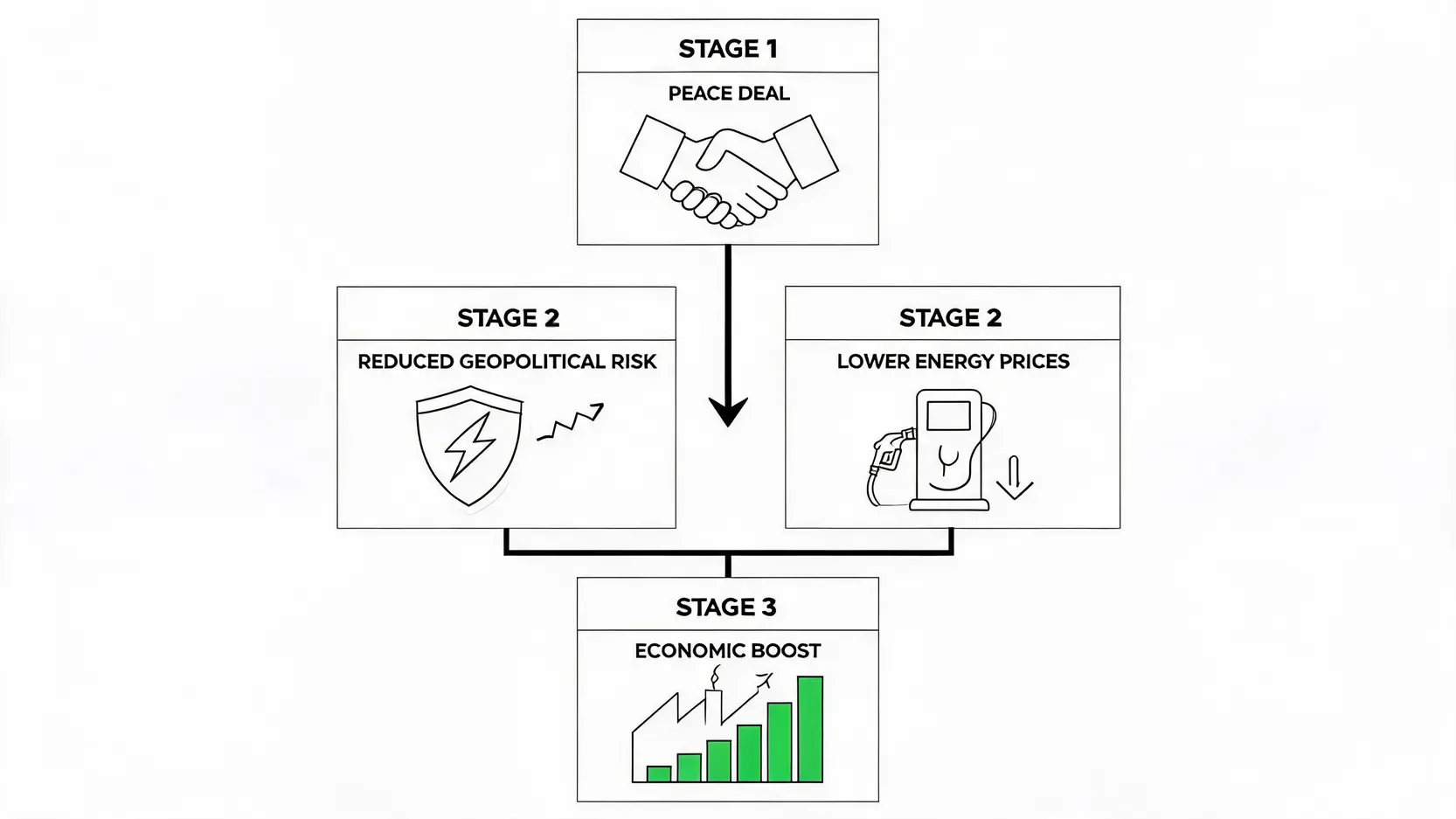
The inverse correlation between the peace deal news and the stock/oil market reaction is not coincidental. It is driven by two fundamental economic principles: the reduction of systemic risk and the economic stimulus provided by lower energy prices. Understanding these drivers is key to appreciating the full stock market impact of a US-Iran deal.
Reduced Geopolitical Risk and Investor Sentiment
For decades, the tension between the US and Iran has been a significant source of geopolitical risk, creating a persistent ‘risk premium’ in financial assets. This premium represents the higher returns investors demand to compensate for the uncertainty of potential conflict, which could disrupt oil supplies, trigger inflation, and destabilize the global economy. A peace deal effectively removes this premium. As the perceived risk falls, investor confidence surges. Capital flows out of safe havens like gold and government bonds and into equities, pushing stock valuations higher. This is a classic risk-on rally, where sentiment shifts from fear to optimism.
The Economic Benefit of Lower Energy Prices
Beyond sentiment, lower oil prices provide a tangible, widespread economic boost. For consumers, it means lower costs at the gas pump, which increases discretionary income that can be spent elsewhere, driving demand for goods and services. For businesses, lower energy and transportation costs translate directly to higher profit margins. This effect is particularly pronounced in energy-intensive sectors but provides a lift to the entire economy. In essence, falling oil prices act as a tax cut for both consumers and corporations, stimulating economic activity and making stocks more attractive.
Sector-Specific Impact: Analyzing the Biggest Winners and Losers
While the broader market is celebrating, the impact of a US-Iran peace deal is not uniform. The shifting economic landscape creates clear winners and losers across different sectors. A successful investment strategy requires identifying which industries stand to benefit the most and which face significant headwinds.

Winners: Airlines, Transportation, and Consumer Discretionary Stocks
The most immediate beneficiaries are companies for whom fuel is a major operating expense. ✈️
- Airlines and Transportation: Carriers like Delta Air Lines (DAL) and logistics giants like FedEx (FDX) will see their margins expand significantly as fuel costs plummet. This is often the largest or second-largest expense for these companies.
- Consumer Discretionary: With consumers saving money on energy, they have more to spend on non-essential goods and services. This boosts companies in retail, travel and leisure, and automotive manufacturing.
- Manufacturing: Heavy industry and chemical producers that use petroleum as a feedstock or major energy source will also experience lower production costs, enhancing their profitability.
Losers: Energy Producers and Defense Contractors
Conversely, the same forces create a challenging environment for other sectors.
- Energy Producers: Oil and gas giants like ExxonMobil (XOM) and Chevron (CVX) face direct pressure on their revenues and profits. Lower crude prices mean every barrel extracted is worth less. Share prices in this sector are likely to underperform as the market prices in a prolonged period of lower energy costs.
- Defense Contractors: Companies like Lockheed Martin (LMT) and Raytheon Technologies (RTX) may see reduced demand. A de-escalation of tensions in the Middle East could lead to smaller defense budgets and fewer international arms sales, creating uncertainty for future growth.
Neutral/Mixed: How Tech and Financials Are Positioned
Some sectors will experience a more balanced or indirect impact.
- Technology: While not directly tied to oil prices, the tech sector benefits from the overall positive economic sentiment and lower inflation, which supports high-growth valuations.
- Financials: Banks and investment firms benefit from a stable, growing economy. However, they may also see reduced trading revenue from oil commodities, and a lower-inflation environment could influence future interest rate policies from the Federal Reserve.
Investor Outlook: Strategic Positioning for a Post-Deal Market
Navigating the market shift caused by a US-Iran peace deal requires a proactive and strategic approach. Investors must look beyond the initial headlines and position their portfolios for the new economic reality. The key is to balance short-term market reactions with a clear-eyed view of long-term growth trends.
Evaluating Long-Term Growth vs. Short-Term Volatility
The initial market rally is driven by sentiment and the repricing of risk. However, the long-term effects will depend on the durability of the peace deal and the actual increase in Iranian oil production. Investors should be cautious of chasing the initial surge and instead focus on fundamentally strong companies in the winning sectors. While energy stocks are clear losers in the short term, some may become value plays if the price drop is overdone and global demand remains robust. Volatility is likely to persist as the market digests the full implications of this geopolitical realignment.
Rebalancing Your Portfolio: Key Sectors to Watch
This is a prime opportunity for portfolio rebalancing. A tactical shift is warranted.
- Overweight Consumer-Facing Sectors: Increase allocation to consumer discretionary and transportation stocks that have a direct, positive correlation with lower energy prices.
- Underweight Energy: Reduce exposure to oil and gas producers who face margin compression. A selective approach focusing on companies with strong balance sheets and low production costs is essential.
- Monitor Financials and Industrials: These sectors will benefit from the broad economic upswing but require careful monitoring as interest rate expectations adjust.
Employing a sector rotation investment strategy will be crucial. This involves shifting capital from sectors that are peaking or underperforming to those that are positioned to lead in the new economic cycle. As the market transitions, being agile will be paramount.
Conclusion
In conclusion, the prospect of a US-Iran peace deal fundamentally alters the landscape of geopolitical risk, directly benefiting the stock market through the dual tailwinds of lower oil prices and improved investor confidence. The powerful relief rally seen across global indices underscores how significantly this long-standing tension has weighed on the market. Understanding the nuanced US Iran peace deal stock market impact—from the broad market surge to the critical sector rotations—is crucial for investors looking to navigate the resulting opportunities and risks. Staying informed on both diplomatic and economic fronts will be the key to making sound investment decisions in this evolving environment.
Frequently Asked Questions
Q: How quickly does the stock market price in a potential US-Iran peace deal?
A: Financial markets are forward-looking and move extremely quickly. The bulk of the initial price movement often occurs based on credible rumors and official announcements of diplomatic progress, well before a deal is formally signed. High-frequency trading algorithms can price in new information in milliseconds. The subsequent moves will be based on the specific details, implementation, and sustainability of the agreement.
Q: Is the impact on oil prices expected to be permanent?
A: The immediate impact is a sharp drop. Whether it’s permanent depends on several factors. A sustained increase in Iranian supply would structurally lower the baseline price. However, this could be offset over time by rising global demand, production cuts from other OPEC+ nations, or future geopolitical events. Most analysts expect a new, lower trading range for oil rather than a permanent slide to historic lows.
Q: Which specific stocks are most sensitive to news about Iran?
A: The most sensitive stocks are typically major oil producers (e.g., Chevron, BP, Shell), oilfield services companies (e.g., Schlumberger, Halliburton), major airlines (e.g., American Airlines, United Airlines), and large defense contractors (e.g., Northrop Grumman, General Dynamics). These companies’ business models are directly and significantly impacted by oil prices and regional military stability.
Q: Does a peace deal affect currency markets?
A: Yes. A peace deal is generally seen as positive for global growth, which can weaken the US dollar’s status as a safe-haven currency. As risk appetite increases, investors may move capital to other currencies and international markets. Furthermore, lower oil prices reduce the amount of dollars needed globally to purchase crude, which can also exert downward pressure on the USD.