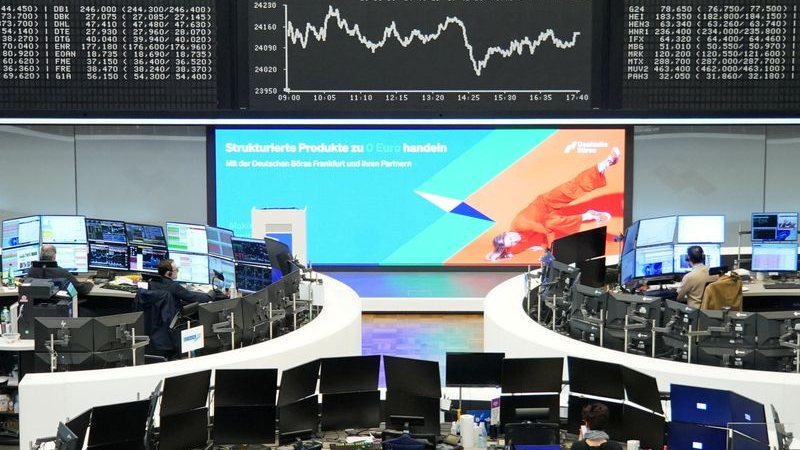
The theme of Stoxx 600 sector rotation 2026 is rapidly becoming the central focus for astute traders in the European equity markets. While the headline index may suggest a degree of stability, powerful undercurrents related to inflation, central bank policy, and global technological trends are causing significant shifts in leadership among key sectors.
For traders, correctly identifying these rotational dynamics is no longer just an advantage—it is essential for capitalising on emerging opportunities and managing risk effectively. This analysis provides a framework for understanding and trading the powerful shifts between technology, energy, banks, and defensives.
Table of Contents
Understanding the Core Drivers of Stoxx 600 Sector Rotation in 2026
The impending Stoxx 600 sector rotation 2026 is being shaped by a confluence of powerful macroeconomic forces that dictate where capital flows. These drivers create distinct market regimes, each favouring a different set of industries. A trader’s ability to interpret these signals is paramount to anticipating the next market-leading group. The interplay between monetary policy, commodity prices, and global innovation trends serves as the primary engine for this rotation.
The Impact of Inflation and ECB Monetary Policy
Persistent inflation and the European Central Bank’s (ECB) reaction to it are arguably the most critical factors for European equities. Changes in interest rate expectations directly influence bond yields, which in turn affect equity valuations. A higher-rate environment tends to penalise high-duration growth stocks, such as technology companies, whose future earnings are discounted more heavily.
Conversely, financial institutions, particularly banks, often benefit from higher rates through expanded net interest margins. Therefore, ECB communications and inflation data points are key signposts for the ongoing Stoxx 600 sector rotation 2026.
Oil Price Volatility and Its Ripple Effect Across Industries
Fluctuations in energy prices create clear winners and losers across the Stoxx 600. Rising crude oil prices directly boost the profitability of the energy sector, making it an attractive inflation hedge.
However, this same dynamic acts as a headwind for energy-intensive industries like industrials, transportation, and chemicals, which face margin compression from higher input costs.
Furthermore, sustained high energy prices can erode consumer purchasing power, negatively impacting consumer discretionary and retail stocks. Monitoring the price of Brent crude is therefore essential for anticipating the next leg of the Stoxx 600 sector rotation 2026.
Global AI Momentum and Its Influence on European Equities
The global artificial intelligence (AI) boom introduces a powerful thematic driver that can, at times, override traditional macroeconomic concerns. While Europe has fewer mega-cap AI platform companies than the United States, it is home to critical players in the semiconductor and chip equipment supply chain.
Firms like ASML and Infineon are pivotal to the global build-out of AI infrastructure. As a result, positive momentum in the global tech space, particularly in semiconductors, can trigger a risk-on rotation into European technology stocks, making it a crucial component of the Stoxx 600 sector rotation 2026 dynamic.
Deep Dive: Key Sector Battlegrounds for 2026
Navigating the Stoxx 600 sector rotation 2026 requires a granular analysis of the key sectors poised for significant capital inflows or outflows. Each group presents a unique set of opportunities and risks, contingent on the prevailing economic environment. Understanding these sector-specific narratives allows traders to position themselves more effectively for the market’s next move.
Technology and Semiconductors: Riding the Global AI Wave?
The European technology sector’s performance is a tale of two competing forces. On one hand, it is a clear beneficiary of the global AI investment cycle. On the other, it remains highly sensitive to changes in bond yields.
- Opportunity: Companies in the semiconductor equipment and software sub-sectors are positioned to capture strong global demand, offering significant growth potential.
- Risk: A sharp, unexpected rise in interest rates could trigger a valuation-led sell-off in these names. Traders must watch German bund yields closely as a proxy for risk appetite in the sector. This balance makes the tech sector a key indicator for the broader Stoxx 600 sector rotation 2026.
Energy Stocks: An Inflation Hedge or a Broader Market Risk?
The energy sector’s role in the Stoxx 600 sector rotation 2026 is multifaceted. While it offers a direct hedge against inflation and can deliver strong cash flows and dividends during periods of rising oil prices, its outperformance can also be a bearish signal for the wider market.
- Opportunity: In an inflationary environment, energy stocks can provide both capital appreciation and income, attracting significant capital flows.
- Risk: If energy’s outperformance is driven by supply shocks or geopolitical tensions, it often coincides with slowing economic growth and falling corporate margins elsewhere, potentially leading to a broader market downturn.
Banking Sector: Beneficiary of Rates or Victim of Slowing Growth?
European banks are at the crossroads of monetary policy and economic health. A moderately restrictive policy environment can be a tailwind for the sector, but this benefit quickly evaporates if the economy tips towards recession.
- Opportunity: Attractive valuations combined with the potential for margin expansion and robust capital returns (dividends, buybacks) make banks a compelling value play.
- Risk: A significant economic slowdown would lead to a rise in credit risk and lower loan demand, severely impacting profitability. The performance of the banking sector is thus a key barometer of confidence in the European economic outlook.
Defensive Sectors (Healthcare, Utilities): A Safe Haven in Volatile Times?
When market uncertainty rises, capital naturally flows towards defensive sectors like healthcare, utilities, and consumer staples. These industries are characterised by stable demand and predictable earnings, making them attractive during risk-off phases of the Stoxx 600 sector rotation 2026.
- Opportunity: In a slowing growth environment, the reliable dividends and earnings of defensive stocks offer a compelling alternative to more cyclical areas of the market.
- Risk: Utilities, in particular, can be sensitive to rising interest rates. As bond yields increase, the relative appeal of their dividend yields diminishes, potentially leading to underperformance even in a cautious market.
Strategic Framework: How to Track and Trade Sector Rotation
A proactive approach to the Stoxx 600 sector rotation 2026 involves using specific indicators to identify shifts before they become consensus. Rather than reacting to headlines, successful traders use a toolkit of data-driven indicators to monitor capital flows and anticipate changes in market leadership.
Key Indicators and Charts for Monitoring Rotational Shifts
To stay ahead of the Stoxx 600 sector rotation 2026, traders should maintain a dashboard of key metrics:
- Relative Strength Charts: Plotting the performance of one sector against another (e.g., Technology vs. Energy, or Banks vs. Utilities) is the most direct way to visualise rotation in real-time.
- German 10-Year Bund Yields: This is a critical barometer for interest rate expectations in Europe and heavily influences the valuation of growth versus value stocks.
- Brent Crude Oil Prices: Tracks inflationary pressures and indicates likely performance shifts between the energy sector and energy-consuming sectors.
- EUR/USD Exchange Rate: A stronger Euro can be a headwind for Europe’s large exporters (e.g., industrials, autos), while a weaker Euro provides a boost.
- Earnings Revisions: Monitoring analyst upgrades and downgrades at a sector level can provide early clues about changing fundamentals.
Scenario Analysis: Mapping Potential Market Regimes in 2026
To translate analysis into action, traders can map out potential scenarios for the Stoxx 600 sector rotation 2026. This table outlines four plausible market regimes and the sectors likely to lead in each.
| Market Scenario | Key Driver | Likely Outperformers | Likely Underperformers |
| Scenario 1: AI-Led Risk-On | Falling bond yields, strong global tech demand | Technology, Semiconductors | Utilities, Consumer Staples |
| Scenario 2: Oil-Led Inflation | Rising oil prices, persistent inflation | Energy, Basic Resources | Industrials, Consumer Discretionary |
| Scenario 3: Higher-Rate Value | Hawkish ECB, stable economic growth | Banks, Financial Services | Real Estate, Technology |
| Scenario 4: Broad Risk-Off | Recession fears, slowing global growth | Healthcare, Utilities, Staples | Cyclicals (Autos, Industrials), Banks |
Conclusion: Practical Decision-Making for 2026
The Stoxx 600 sector rotation 2026 theme is not a passive observation but an active, tradeable phenomenon. It presents one of the clearest avenues for generating alpha in European equities.
A myopic focus on the headline index is insufficient; the real opportunities lie in understanding the divergent paths of its underlying sectors. For traders, the key is to move beyond simple buy-or-sell decisions on the entire market and instead focus on relative value and momentum between sectors.
The most effective strategy in 2026 will involve a dynamic approach: first, identify the prevailing macroeconomic regime by analysing the core drivers of inflation, policy, and energy. Second, align portfolio tilts towards the sectors that benefit from that regime. Finally, use technical indicators like relative strength charts to confirm that institutional capital is flowing in the same direction.
By identifying which sector is poised to benefit from the macro environment before it becomes fully priced in by the broader market, traders can position themselves for the most powerful opportunities the Stoxx 600 sector rotation 2026 has to offer.
Frequently Asked Questions (FAQ)
What is the definition of STOXX 600 sector rotation?
STOXX 600 sector rotation describes the movement of investment capital between the 11 major industry sectors that constitute the index. This shift is driven by traders and investors repositioning their portfolios in response to changes in the economic cycle, monetary policy, and market sentiment. For example, capital might move from cyclical sectors like Industrials to defensive sectors like Healthcare during an economic downturn.
How does European Central Bank policy directly influence sector leadership?
ECB policy is a primary driver of the Stoxx 600 sector rotation 2026. An interest rate hiking cycle typically benefits Banks by increasing their net interest margins. Simultaneously, it hurts rate-sensitive sectors like Technology (due to higher discount rates on future earnings) and Real Estate (due to higher financing costs). Conversely, a pivot to lower rates would likely reverse this leadership dynamic.
Which STOXX 600 sectors are most sensitive to rising energy prices?
The Energy sector itself is the primary beneficiary of rising oil and gas prices. However, several sectors are negatively sensitive to this trend due to higher input costs. These include Industrials, Airlines (part of the Industrials sector), Chemicals (part of Basic Resources), and Automobiles. Consumer-facing sectors can also suffer as higher energy bills reduce discretionary spending.
What are the key risks for the European technology sector in 2026?
The main risks for the European technology sector are twofold. Firstly, valuation risk: as high-growth stocks, their valuations are particularly sensitive to increases in bond yields, which could be triggered by persistent inflation or a more hawkish ECB. Secondly, geopolitical risk: the semiconductor supply chain is global and complex, making it vulnerable to trade tensions or disruptions that could impact European chip equipment and design companies.