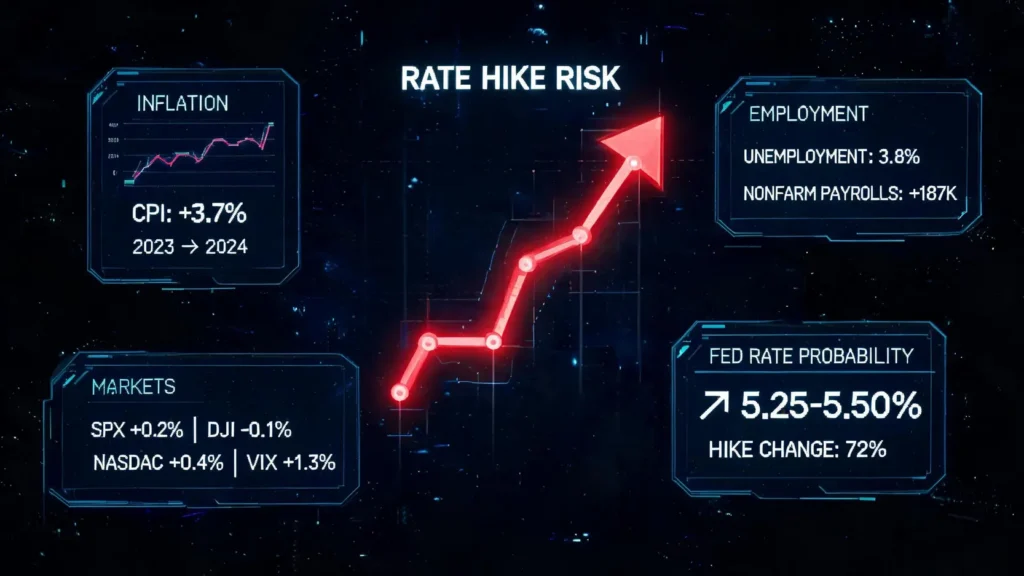
As 2026 unfolds, the question dominating every investor’s mind is the potential for a Federal Reserve rate hike. Understanding the Fed rate hike risk 2026 is no longer just an academic exercise; it’s a critical component of portfolio strategy in a complex economic environment. The market is carefully watching the Federal Reserve’s future monetary policy moves, as the economic factors influencing the Fed’s decisions remain fluid. This article provides a data-driven analysis of the key economic indicators, expert forecasts, and potential market impacts to help you navigate the uncertainty and make informed decisions.
Table of Contents
The Current Economic Climate: Setting the Stage for 2026 Monetary Policy
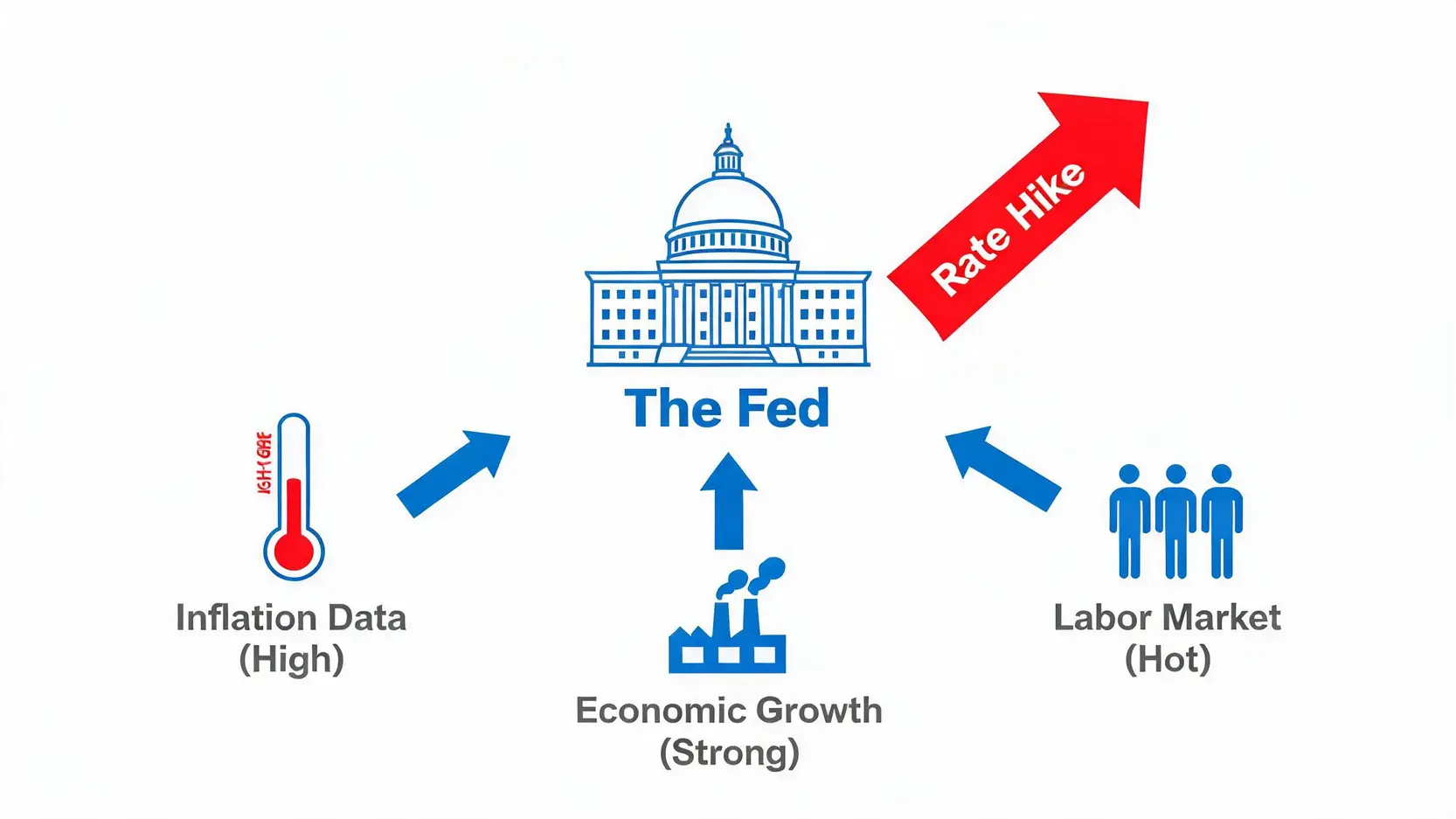
To comprehend the risk of a rate hike, one must first grasp the economic landscape in which the Federal Reserve operates. The central bank’s dual mandate—maximizing employment and stabilizing prices—forces it to react to a constant stream of economic data. In 2026, the narrative is being shaped by persistent inflationary pressures pitted against a labor market that is showing signs of normalization.
Analyzing the Inflation Trajectory: CPI and PCE Data Trends
Inflation remains the primary antagonist in the current economic story. The latest data from the U.S. Bureau of Labor Statistics reveals that the Consumer Price Index (CPI) for All Urban Consumers has shown a year-over-year increase of 3.8 percent. This figure, while down from previous peaks, remains stubbornly above the Fed’s 2% target. You can review the official data directly at the Bureau of Labor Statistics.
Similarly, the Personal Consumption Expenditures (PCE) Price Index, the Fed’s preferred inflation gauge, tells a similar story. Data from the U.S. Bureau of Economic Analysis indicates that the core PCE, which excludes volatile food and energy components, is also tracking well above the desired level. This persistence suggests that the fight against inflation is not yet over, providing a strong argument for those in the hawkish camp at the FOMC.
The State of the Labor Market: Employment and Wage Growth Insights
The labor market, while still robust, is beginning to exhibit signs of cooling. Recent jobs reports indicate a moderation in hiring, with nonfarm payrolls increasing at a slower pace than in previous years. The unemployment rate has remained low, but wage growth, a key driver of service-sector inflation, has started to decelerate. This cooling is a welcome sign for the Fed, as an overheating labor market could force their hand. However, the market is not yet at a point where rate hikes are completely off the table. A sudden re-acceleration in wage growth could quickly shift the odds.
Current GDP Growth and Its Influence on Monetary Policy
Gross Domestic Product (GDP) growth has been modest, reflecting the impact of previous monetary tightening. While the economy has avoided a deep recession, the slowdown is palpable. This delicate balance presents a challenge for the Fed. Stronger-than-expected GDP growth could be interpreted as a sign that the economy can withstand higher rates, potentially increasing the Fed rate hike risk 2026. Conversely, a sharp deterioration in economic growth would almost certainly force the Fed to pause or even consider easing, making a rate hike less likely.
Key Drivers Fueling the Rate Hike Speculation in 2026
Several critical factors are fueling the ongoing debate about a potential rate hike. These drivers are a mix of domestic data, central bank communication, and international economic currents that influence the U.S. economy.
Persistent Inflationary Pressures: The Primary Catalyst
The primary driver remains inflation. While headline numbers have decreased, the underlying components, particularly in the services sector, have shown significant stickiness. Factors such as housing costs, insurance, and healthcare continue to rise at an uncomfortable pace. The Federal Reserve is acutely aware that declaring a premature victory on inflation could lead to it becoming entrenched, a far more damaging scenario in the long run. This fear is the central pillar supporting the argument for maintaining a restrictive monetary policy, with the option of another hike if necessary.
Decoding Federal Open Market Committee (FOMC) Statements
The language used by the FOMC in its official statements, press conferences, and meeting minutes is scrutinized word-for-word by analysts. A “hawkish” tone, emphasizing the commitment to fighting inflation, suggests a higher probability of a rate hike. A “dovish” tone, which might highlight concerns about economic growth or financial stability, signals the opposite. In 2026, the committee’s language has been cautiously balanced, acknowledging progress on inflation but stressing that their work is not done. This data-dependent stance means every major economic report carries significant weight in shaping future interest rate forecasts.
Global Economic Factors and Their Domestic Impact
The U.S. economy does not operate in a vacuum. Geopolitical events, shifts in global supply chains, and the economic health of major trading partners all have an impact. For instance, disruptions in global energy markets can lead to price shocks that complicate the Fed’s inflation fight. Similarly, a significant slowdown in Europe or Asia could reduce demand for U.S. exports, acting as a natural brake on the domestic economy. The Fed must weigh these external variables when considering its domestic monetary policy.
Expert Forecasts and Market Sentiment on Future Rate Changes
Understanding where the experts and the market stand is crucial for assessing risk. While no one has a crystal ball, the collective wisdom of analysts and traders provides valuable insight into the probabilities of future Fed actions.
What Wall Street Is Saying: A Roundup of Analyst Predictions
Major financial institutions are divided. Firms like Goldman Sachs and J.P. Morgan have published research suggesting that while the base case is for rates to remain on hold, the risk of at least one more 25-basis-point hike in 2026 remains significant if inflation data comes in hot. Others, citing the cooling labor market and modest GDP growth, believe the hiking cycle is definitively over. This divergence highlights the deep uncertainty in the current environment.
How to Interpret the CME FedWatch Tool Probabilities
For a real-time, data-driven look at market expectations, the CME FedWatch Tool is an indispensable resource. This tool analyzes Fed Fund futures pricing to calculate the implied probabilities of FOMC rate moves for upcoming meetings. As of early June 2026, the tool may show, for example, a 70% probability of rates remaining unchanged at the next meeting, with a 30% chance of a hike. Watching how these probabilities shift in response to new economic data provides a powerful gauge of market sentiment.
Historical Precedents: Lessons from Past Rate Hike Cycles
History offers valuable lessons. In past tightening cycles, the Fed has often paused to assess the lagged effects of its rate hikes on the economy. The 2015-2018 cycle, for example, involved a gradual series of hikes followed by a pause. However, the high-inflation environment of the late 1970s and early 1980s required a much more aggressive and sustained approach under Paul Volcker. The current situation contains echoes of both, forcing investors to consider which historical parallel is more relevant for their portfolio strategy in 2026.
Potential Impact on Your Investments: A Sector-by-Sector Breakdown
The Fed rate hike risk 2026 has profound implications across all asset classes. A change in the federal funds rate ripples through the financial system, affecting everything from stock valuations to mortgage rates. Here’s a breakdown of the potential impact.
How a Rate Hike Could Affect the Stock Market (Growth vs. Value)
Higher interest rates typically present a headwind for the stock market, but the impact is not uniform. 📈
- Growth Stocks: Technology and other high-growth sectors are particularly vulnerable. Their valuations are often based on earnings expected far into the future. When interest rates rise, the discount rate used to value these future earnings increases, which can significantly compress their present value and stock price.
- Value Stocks: Companies in sectors like financials, energy, and industrials may fare better. Financial institutions, for example, can benefit from higher net interest margins in a rising rate environment. Value stocks often have more stable, immediate cash flows, making them less sensitive to changes in the discount rate.
The Outlook for Bonds and Fixed-Income Assets
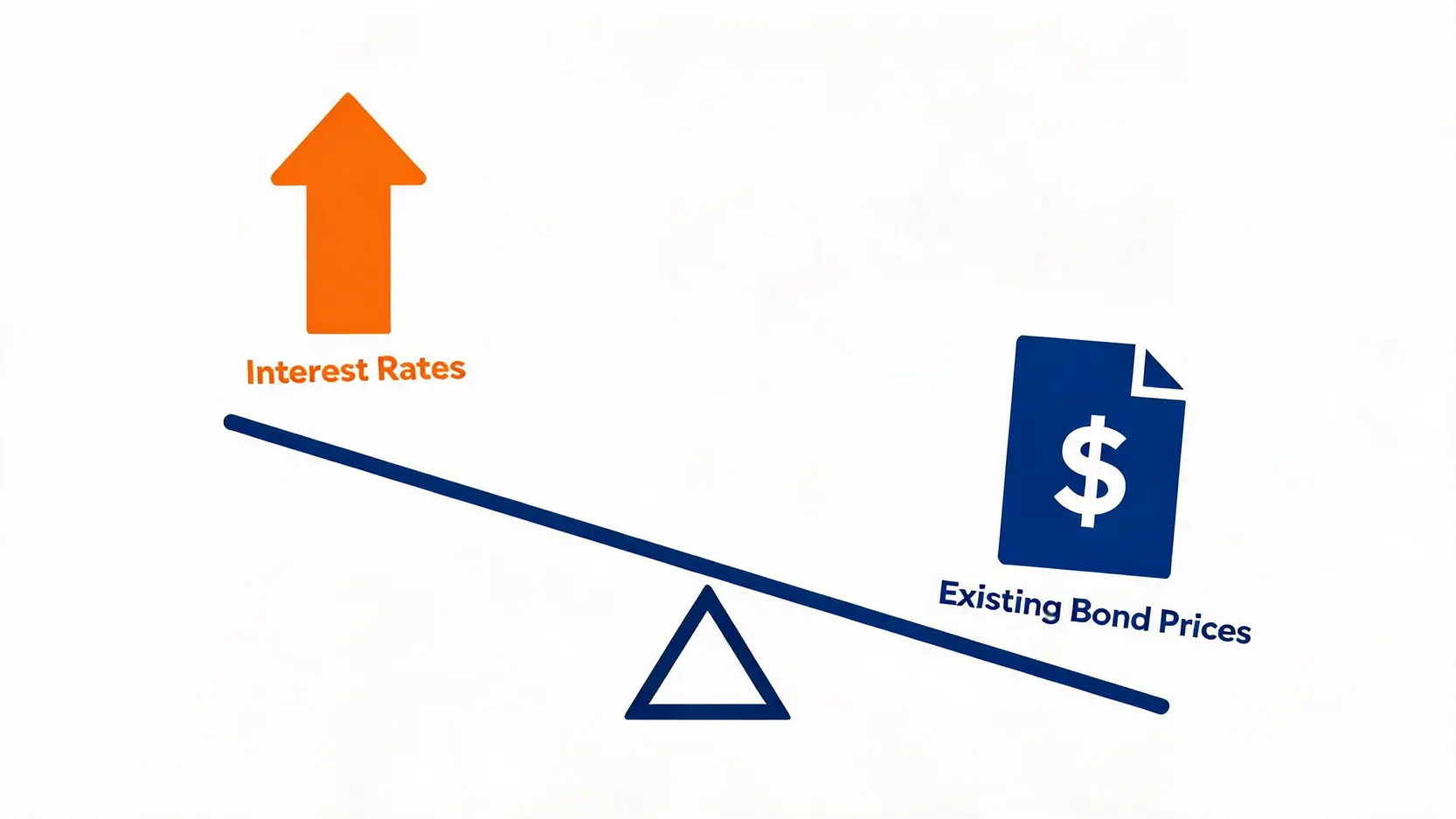
The relationship between interest rates and bond prices is inverse. When the Fed raises rates, newly issued bonds offer higher yields, making existing bonds with lower coupons less attractive. This causes the market price of existing bonds to fall. Investors in bond funds or individual bonds must be prepared for potential capital losses in a rising-rate environment. Strategies like investing in shorter-duration bonds or floating-rate instruments can help mitigate this risk. Understanding this dynamic is a cornerstone of fixed-income investing.
Implications for Real Estate and Mortgage Rates
The real estate market is highly sensitive to the Fed’s monetary policy. The federal funds rate directly influences the rates for mortgages and other loans. A rate hike would lead to higher borrowing costs for homebuyers, which typically cools demand in the housing market. This can lead to slower price appreciation or even price declines in some regions. For real estate investors, higher financing costs can also compress capitalization rates and reduce the profitability of new projects. 🏡
Conclusion
Navigating the Fed rate hike risk in 2026 requires a focus on data, not headlines. By diligently monitoring core inflation metrics like CPI and PCE, tracking the health of the labor market, and interpreting the guidance from expert sentiment and tools like the CME FedWatch, investors can make more informed and strategic decisions. The key is to remain adaptable, understand the sector-specific impacts of monetary policy, and align your portfolio with the evolving economic landscape rather than reacting to short-term market noise.
Frequently Asked Questions (FAQ)
Q: What is the difference between a Fed rate hike and quantitative tightening?
A: A Fed rate hike refers to an increase in the federal funds rate, which is the target interest rate for overnight loans between banks. This is the Fed’s primary tool for tightening monetary policy. Quantitative Tightening (QT), on the other hand, is a balance sheet operation where the Fed reduces its holdings of Treasury bonds and mortgage-backed securities, effectively removing liquidity from the financial system. Both are forms of monetary tightening, but they operate through different channels.
Q: How do geopolitical events influence the Fed’s rate decisions?
A: Geopolitical events, such as conflicts or trade disputes, can significantly impact the global economy and influence the Fed’s decisions. They can disrupt supply chains (potentially increasing inflation), cause volatility in energy prices, and affect global economic growth. The Fed must assess the potential impact of these events on its dual mandate of price stability and maximum employment when setting monetary policy.
Q: What are the best assets to hold during a rate hike environment?
A: While no asset is completely immune, certain investments tend to perform better during periods of rising rates. These can include value stocks (especially financials), commodities (which can rise with inflation), floating-rate bonds, and short-duration bonds, as they are less sensitive to interest rate changes. Diversification remains a key strategy to navigate market uncertainty.
Q: What is a ‘hawkish’ versus a ‘dovish’ Fed stance?
A: These terms describe the potential bias of the Federal Reserve’s monetary policy. A ‘hawkish’ stance indicates a primary focus on controlling inflation, even at the risk of slowing economic growth, making rate hikes more likely. A ‘dovish’ stance suggests a greater concern for supporting employment and economic growth, which would favor lower interest rates or a pause in hikes.