
Table of Contents
Understanding the BOJ’s Landmark Policy Shift
The Bank of Japan’s (BOJ) decision to raise interest rates for the first time in 17 years marked the end of a long and unprecedented era of negative interest rates. This historic pivot away from one of the world’s most aggressive monetary easing programs has profound implications for global markets. For investors, the core question is clear: what is the BOJ rate hike impact on the Nikkei 225? This shift introduces a new paradigm for the Japanese stock market outlook, forcing a re-evaluation of everything from currency valuations to sector leadership. This analysis will dissect the immediate market reaction, identify the clear winners and losers, and provide a forward-looking perspective on what to expect next.
Why Now? The Economic Drivers Behind the Rate Hike
The BOJ’s policy reversal was not a decision made in a vacuum. It was the culmination of years of effort to reflate the economy and achieve sustainable inflation. Several key economic drivers reached a critical juncture, compelling the central bank to act:
- Sustainable Inflation: For the first time in decades, Japan has seen inflation hold consistently above the BOJ’s 2% target. More importantly, this is no longer just about rising import costs; demand-pull inflation is beginning to take root.
- Robust Wage Growth: The annual “shunto” spring wage negotiations in 2026 yielded the most significant pay increases in over three decades. This was a crucial piece of evidence for the BOJ, suggesting that a virtuous cycle of rising wages and prices was finally achievable, providing a sustainable foundation for inflation.
- Corporate Strength: Japanese corporations have demonstrated remarkable resilience. Record-high profits, improved governance, and a proactive approach to shareholder returns have made the stock market more attractive, creating a solid buffer to absorb a modest rate increase.
From Negative Rates to a New Normal: Key Components of the Decision
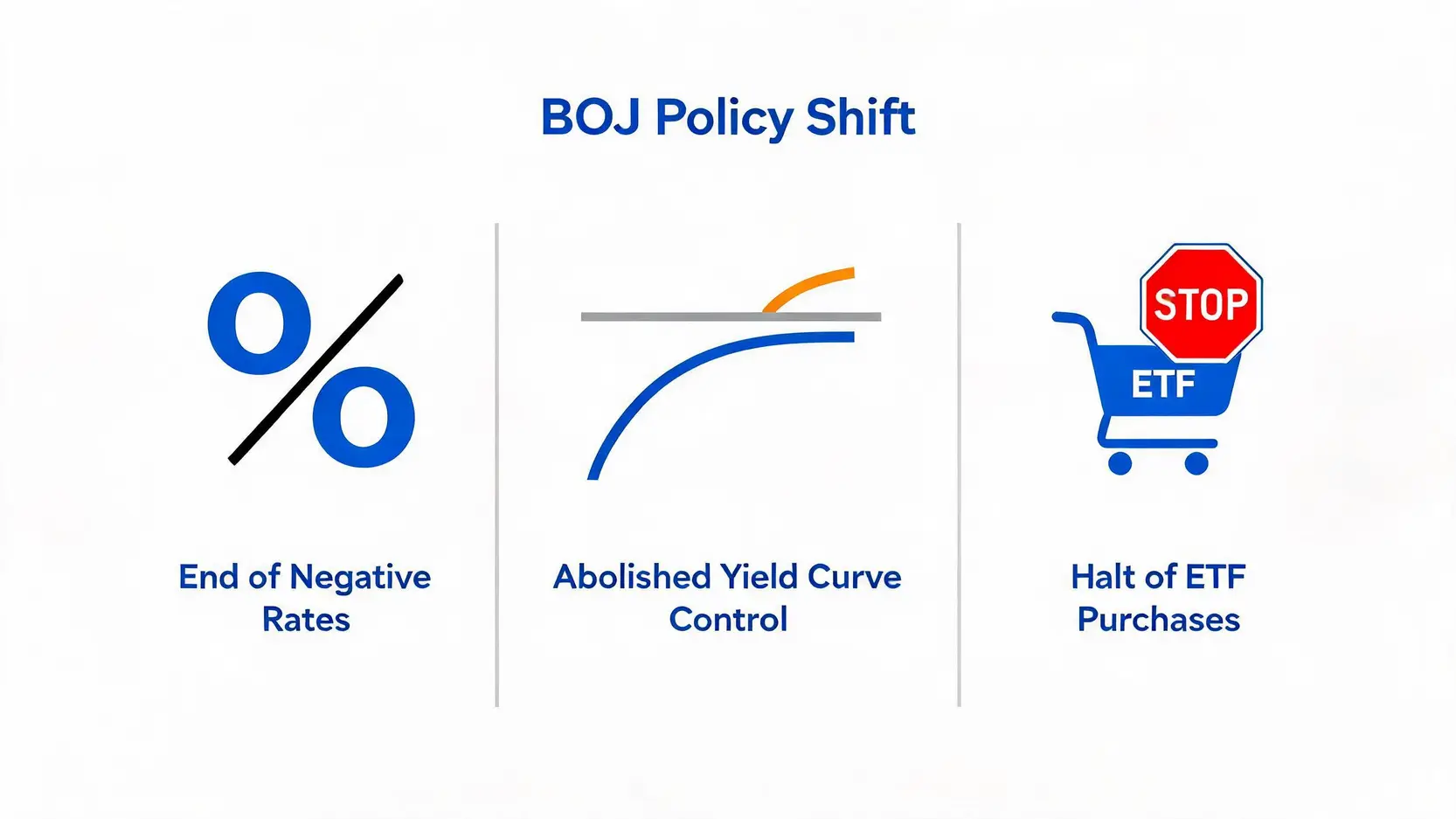
The policy adjustment was multifaceted, going beyond a simple rate increase. Understanding the components is essential for forecasting the market’s trajectory. According to the official outline of its monetary policy, the Bank of Japan’s framework has undergone a significant overhaul. The key changes included:
- Ending Negative Interest Rate Policy (NIRP): The policy rate was lifted from -0.1% to a range of 0% to 0.1%. While a small move, its symbolic importance is immense, signaling a definitive end to an experimental monetary era.
- Abolishing Yield Curve Control (YCC): The BOJ scrapped its YCC framework, which had capped the 10-year Japanese Government Bond (JGB) yield. While the bank will continue to purchase JGBs, it will do so in a more flexible manner, allowing market forces to play a greater role in long-term rate determination.
- Ceasing ETF and J-REIT Purchases: The direct purchasing of risk assets like ETFs and Japanese Real Estate Investment Trusts has been discontinued. This removes a long-standing source of support for the equity market, a factor investors must now price in.
Immediate Market Reaction: The Nikkei 225 and Yen’s Volatility
The market’s initial response to the BOJ’s announcement was a classic case of “buy the rumor, sell the news.” The Nikkei 225 experienced a bout of volatility, but the long-term trend remains a subject of intense debate, especially concerning the future for exporter stocks and currency movements.
Analyzing the Initial Index Fluctuation Post-Announcement
Immediately following the rate hike, the Nikkei 225 saw a brief sell-off. This was largely driven by two factors: profit-taking on a market that had already rallied significantly in anticipation of the move, and uncertainty over the future pace of tightening. However, the index quickly found its footing. The key reason was the BOJ’s accompanying commentary, which was decidedly dovish. Governor Ueda emphasized that financial conditions would remain accommodative, reassuring markets that this was not the beginning of an aggressive hiking cycle. This nuance is critical; the market is less concerned with the first hike and more focused on the slope of future increases.
The Yen’s Role: How Currency Movement is Affecting Exporter Stocks
Conventional wisdom suggests a rate hike should strengthen a country’s currency. However, the Japanese Yen paradoxically weakened post-announcement. This counterintuitive move happened because the rate differential with other major economies, particularly the United States, remains vast. With the BOJ signaling a very gradual path forward, carry traders who borrow Yen to invest in higher-yielding currencies felt confident to maintain their positions. 📉
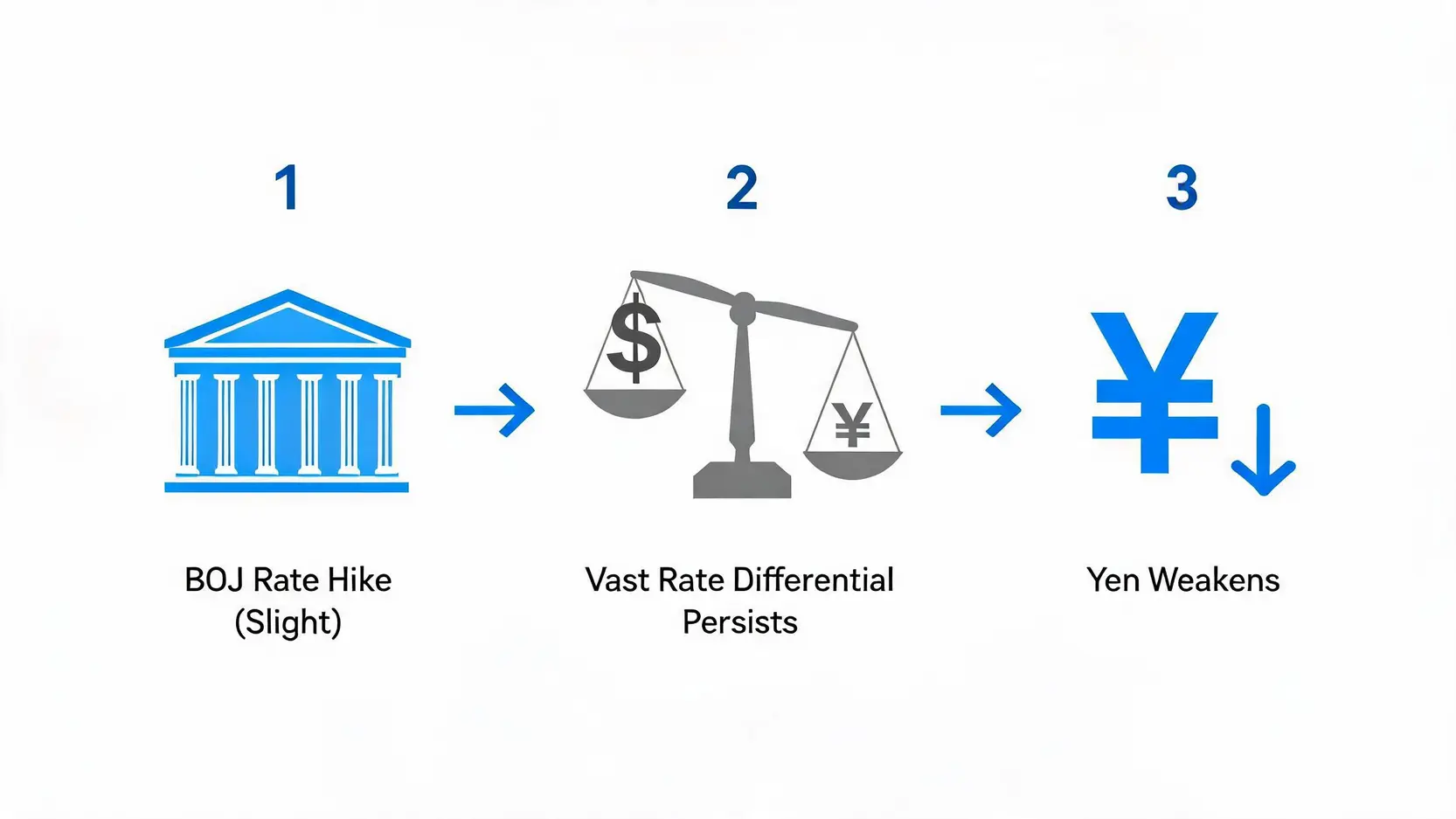
This dynamic creates a complex environment for Japan’s export-heavy industries, which are major constituents of the Nikkei 225. A weaker yen is a tailwind for these companies (like Toyota and Sony), as their overseas earnings are worth more when converted back into yen. Understanding this interplay is crucial, as explored in the article How a Weak Yen Affects Global Markets: A 2026 Trader’s Guide. Should the BOJ signal faster hikes in the future, a rapid Yen appreciation could pose a significant headwind for these stocks.
Sector-by-Sector Analysis: Who Wins and Who Loses?
The end of NIRP fundamentally reshapes the investment landscape, creating a clear divergence in sector performance. The BOJ rate hike impact on the Nikkei 225 will not be uniform; it necessitates a strategic approach to sector allocation. This is a classic environment for sector rotation, a concept that is universally applicable in shifting interest rate environments.
Potential Winners: Banking, Insurance, and Financial Services
The most direct beneficiaries of rising interest rates are financial institutions. For years, banks have operated with compressed Net Interest Margins (NIMs)—the difference between the interest they earn on loans and pay on deposits. A positive rate environment allows them to widen this spread, directly boosting profitability. 📈
- Mega Banks (e.g., Mitsubishi UFJ, SMBC): Will see immediate improvement in lending profitability.
- Insurance Companies: Higher bond yields improve the return on their vast investment portfolios, which are heavily weighted towards fixed-income assets.
Potential Losers: Export-Heavy Industries and Real Estate
Sectors that have benefited from the previous regime of a weak yen and cheap credit now face potential headwinds.
- Exporters (e.g., Automakers, Electronics): While the yen has remained weak for now, any future BOJ hawkishness could lead to rapid appreciation, squeezing overseas profit margins. Their performance is now tightly tethered to currency market expectations.
- Real Estate Sector: The availability of cheap financing has fueled a local property market. Higher interest rates increase borrowing costs for developers and buyers alike, potentially dampening demand and impacting valuations.
- High-Growth Tech Stocks: Companies with long-duration earnings profiles (i.e., profits expected far in the future) are often valued using discounted cash flow models. Higher interest rates increase the discount rate, reducing the present value of those future earnings.
Neutral-to-Positive: The Outlook for Domestic Demand-Driven Companies
Companies focused on Japan’s domestic economy may find themselves in a sweet spot. They are insulated from currency fluctuations and stand to benefit from the healthier economic conditions—notably, wage growth—that prompted the rate hike in the first place. Increased consumer spending power could boost retailers, service providers, and railway companies, creating a stable source of growth.

Here is a summary table of the potential sector shifts:
| Sector Category | Key Industries | Impact of Rate Hike | Primary Driver |
|---|---|---|---|
| Winners | Banking, Insurance, Financials | Positive | Improved Net Interest Margins |
| Losers | Exporters, Real Estate, Growth Tech | Negative | Yen appreciation risk, higher borrowing costs |
| Neutral-to-Positive | Retail, Services, Railways | Slightly Positive | Increased domestic consumption from wage growth |
Future Outlook: What’s Next for the BOJ and Nikkei 225?
The first rate hike is a single step on what will be a long journey toward policy normalization. The future performance of the Nikkei 225 hinges on the pace and trajectory of the BOJ’s next moves.
Forecasting the Pace of Future Rate Hikes
All eyes are now on incoming economic data. The BOJ will be watching inflation figures and the results of next year’s wage negotiations like a hawk. The consensus is for a very gradual tightening path. The market is currently pricing in perhaps one or two more 0.25% hikes over the next 18 months. Any data that forces the BOJ to accelerate this timeline would likely cause significant yen strength and equity market turbulence. Conversely, signs of economic weakness could see the BOJ pause, providing a tailwind for stocks.
Long-Term Growth vs. Short-Term Headwinds for the Index
In the short term, the Nikkei 225 faces headwinds from policy uncertainty and potential currency volatility. The removal of the BOJ’s direct ETF purchases also eliminates a guaranteed buyer in the market.
However, the long-term outlook could be considerably brighter. A normalized monetary policy and a stable inflationary environment are signs of a healthy, functioning economy. This could attract significant foreign investment, as global asset managers who previously shunned certain local assets due to its unconventional policies may now see it as a viable and attractive market. The end of a deflationary mindset is the ultimate long-term bullish catalyst for these equities.
Conclusion
The Bank of Japan’s historic rate hike has irrevocably altered the landscape for the Nikkei 225. It has ushered in a new era defined by policy normalisation and sector divergence. The immediate impact has been muted by the central bank’s dovish forward guidance, but this delicate balance can shift quickly. For investors, the path forward is no longer about riding a wave of monetary stimulus but about making discerning strategic choices. The clear winners are domestic-facing financials, while export-oriented sectors and highly leveraged companies face new risks tied to the yen and borrowing costs. Monitoring the interplay between BOJ rhetoric, inflation data, and the currency markets will be absolutely critical for navigating the opportunities and risks in this transformed Japanese market.
Frequently Asked Questions (FAQ)
Q: How does the BOJ rate hike affect foreign investment in the Nikkei 225?
A: Initially, it introduces uncertainty, which can make some foreign investors cautious. However, in the long run, it is a significant positive. The end of negative rates and YCC signals a return to a more conventional, market-driven economy. This normalisation makes Japanese assets more attractive to large institutional investors, like pension funds, who were previously deterred by the experimental policies. It puts Japan back on the map for global capital allocation.
Q: Is the Nikkei 225 expected to reach new highs after this policy change?
A: While short-term volatility is expected, the long-term potential for the Nikkei 225 to reach new highs remains strong. The key drivers will be continued corporate earnings growth and improved shareholder returns. A normalized economy that encourages domestic investment and attracts foreign capital provides a powerful backdrop. The primary risk to this outlook would be a rapid, uncontrolled appreciation of the Japanese Yen, which would hurt the earnings of the index’s large multinational exporters.
Q: What is the historical performance of the Nikkei 225 during past tightening cycles?
A: The last tightening cycle was in 2006-2007, an environment very different from today’s. During that period, the Nikkei’s performance was mixed as the market grappled with the end of a long period of monetary easing. However, it’s crucial to note that past performance is not indicative of future results. The current cycle begins after a much longer and more extreme easing period, and the global economic context is entirely different. Today’s local companies are also in a much stronger financial position with record cash levels, making them more resilient to modest increases in borrowing costs.
Q: Which financial indicators should I watch most closely now?
A: Three indicators are paramount: 1) Japan’s monthly core CPI inflation data, to see if it remains sustainably above 2%. 2) The USD/JPY currency pair, as its direction will heavily influence exporter earnings. 3) The yield on the 10-year Japanese Government Bond (JGB), which will show market expectations for future growth, inflation, and BOJ policy.