As we navigate the midpoint of 2026, the critical question for every investor is the trajectory of the market. This S&P 500 July 2026 forecast provides an in-depth analysis of the key drivers, potential risks, and sector-specific opportunities shaping the index. With a backdrop of persistent inflation and evolving monetary policy, understanding the expert forecasts for S&P 500 targets and the pivotal role of corporate earnings growth is more crucial than ever. The market’s resilience is being tested, and this report consolidates institutional outlooks to offer a clear, actionable perspective.
Table of Contents
Consolidated 2026 Forecasts from Leading Financial Institutions
Wall Street’s top minds are offering a range of predictions for the S&P 500’s performance. While the consensus points towards cautious optimism, the specific targets and underlying assumptions vary. These expert forecasts for S&P 500 targets in 2026 are essential for strategic positioning.
Goldman Sachs’ Bullish Stance: An 8000 Target Fueled by Earnings
Goldman Sachs has reiterated one of the most bullish outlooks on the street, maintaining an ambitious year-end target of 8,000 for the S&P 500. Their projection is fundamentally rooted in the resilience of corporate earnings. The firm’s analysts argue that despite macroeconomic headwinds, S&P 500 companies, particularly in the technology and healthcare sectors, are demonstrating robust profitability. They believe the market is still rewarding strong fundamentals and that the ongoing wave of AI-driven productivity gains will continue to support margin expansion, justifying higher valuations.
Charles Schwab’s Mid-Year Outlook on U.S. Stocks and Economy
Charles Schwab offers a more measured perspective in its mid-2026 outlook. While acknowledging the strength in corporate performance, their analysts emphasize the risks posed by a slowing global economy and the potential for a resurgence in inflation. They project a wider trading range for the S&P 500, suggesting that volatility will remain a key theme. Their guidance encourages investors to focus on quality—companies with strong balance sheets, consistent cash flow, and durable competitive advantages—as a defensive strategy against potential market turbulence.
S&P Global’s Perspective on Economic Resilience and Supply Shocks
S&P Global’s latest analysis highlights the surprising resilience of the U.S. economy. However, they also issue a warning regarding potential supply shocks, particularly from geopolitical tensions and the ongoing oil crisis. According to their models, while a full-blown recession is not the base case, the economy is walking a tightrope. Their forecast for the S&P 500 is therefore contingent on the Federal Reserve’s ability to navigate inflation without derailing growth. This broader economic outlook suggests that investors should brace for a period of uncertainty. For further reading, the Global Economic Outlook – June 2026 from Fitch Ratings provides a detailed macroeconomic context.
The Primary Engines Driving the S&P 500 in 2026
Several powerful forces are propelling the market forward, even as challenges persist. The impact of AI investment and sustained earnings growth are central pillars of the current bull thesis, though the ever-present potential for market corrections demands a balanced view.
The Undeniable Impact of AI Investment and Corporate Capex
The artificial intelligence revolution continues to be a dominant market narrative in 2026. 🤖 Companies are allocating unprecedented levels of capital expenditure (Capex) towards AI infrastructure, software, and integration. This spending is not just concentrated in mega-cap tech stocks; it’s creating a ripple effect across various sectors, boosting productivity and creating new revenue streams. This theme is a primary justification for the premium valuations seen in tech-centric industries. Investors looking to capitalize on this trend should explore our AI Stocks Investing Guide for deeper insights into identifying long-term winners.
Analyzing Earnings Per Share (EPS) Growth Projections
Ultimately, stock prices follow earnings over the long term. Current analyst consensus points to a high-single-digit to low-double-digit EPS growth rate for the S&P 500 in 2026. This growth is a key factor underpinning bullish S&P 500 forecasts. The primary drivers include:
- Technology Sector: Fueled by AI and cloud computing, this sector is expected to deliver outsized growth.
- Healthcare Innovation: Advances in biotechnology and medical devices are supporting strong earnings.
- Consumer Discretionary: Despite inflation pressures, a resilient consumer is supporting select companies in this space.
However, it’s crucial to monitor any downward revisions to these estimates, as they could be an early warning sign of a weakening market.
Navigating Market Corrections: Insights from U.S. Bank
While the trend has been upward, the risk of a market correction is a serious consideration. U.S. Bank Wealth Management advises clients that corrections of 10-15% are a normal and healthy part of any bull market. They stress the importance of not panicking during such downturns. Instead, these periods can present strategic buying opportunities for investors with a long-term horizon. Key triggers for a potential correction in 2026 include unexpected inflation spikes, a more aggressive Federal Reserve, or an escalation in geopolitical conflicts. Understanding how to manage these events is crucial; our guide to stock market corrections offers a framework for navigating volatility.
🆕 Bull vs. Bear: Decoding the Scenarios for July 2026
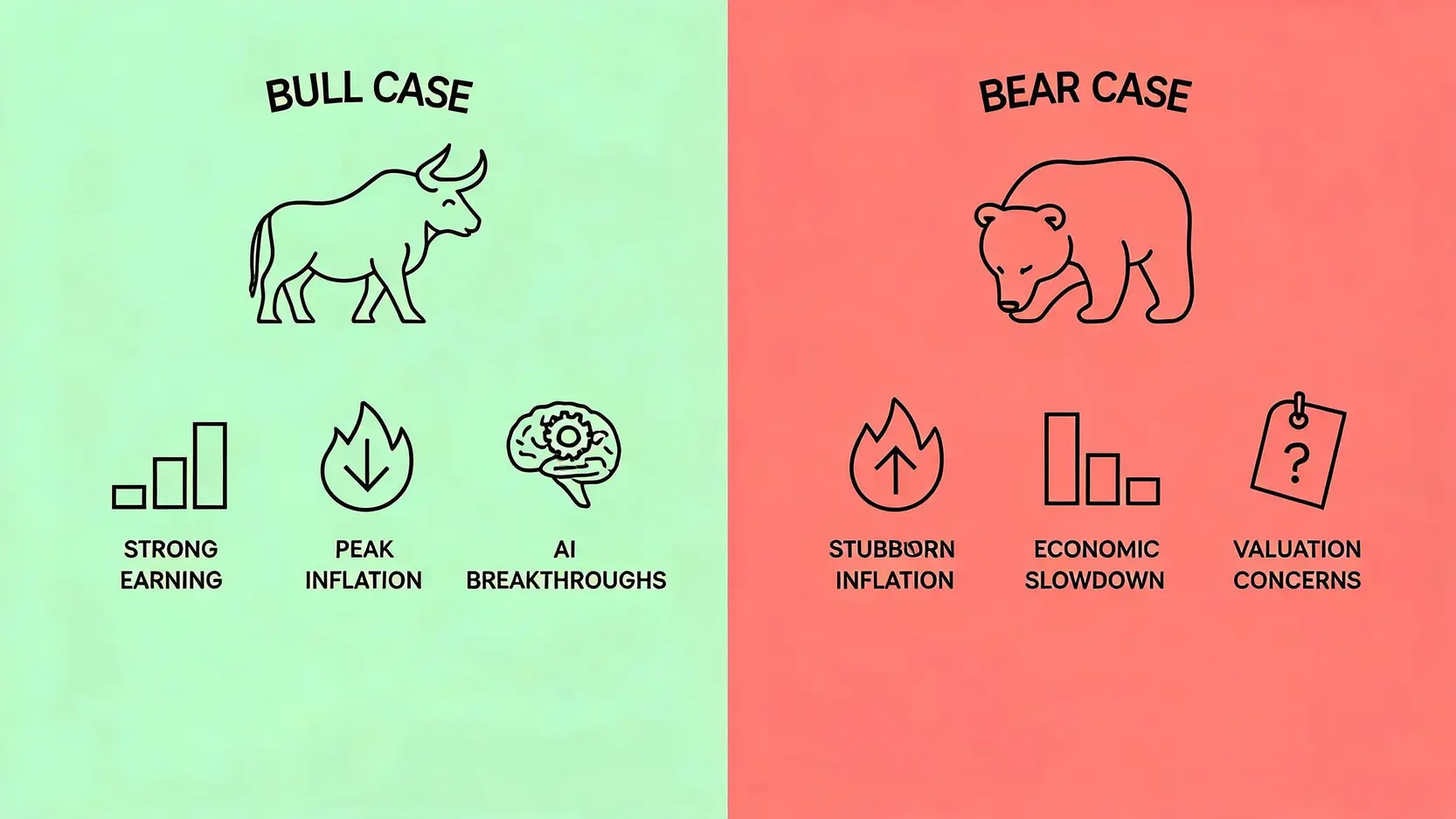
To formulate a comprehensive S&P 500 forecast, one must weigh the opposing forces at play. The bull vs. bear scenarios for July 2026 highlight the market’s key opportunities and threats.
The Bull Case: What Could Propel the Market Higher? 🐂
The bullish argument centers on continued economic and corporate strength. Key factors include:
- Stronger-Than-Expected Earnings: If corporate earnings growth surpasses expectations, it would provide a powerful catalyst for stocks.
- Peak Inflation and Fed Easing: Clear signs that inflation is under control could allow the Federal Reserve to adopt a more accommodative stance, boosting investor sentiment.
- Technological Breakthroughs: Accelerated adoption of AI and other technologies could unlock further productivity gains, driving market multiples higher.
- Resolution of Geopolitical Tensions: A de-escalation of global conflicts would reduce uncertainty and lower risk premiums.
The Bear Case: Identifying Potential Headwinds and Risks 🐻
Conversely, the bearish view focuses on macroeconomic and valuation risks. Potential headwinds include:
- Stubborn Inflation: If inflation remains elevated, the Fed may be forced to maintain higher interest rates for longer, pressuring stock valuations.
- Economic Slowdown: A sharper-than-anticipated economic downturn would lead to downward revisions in earnings forecasts, undermining a key pillar of the bull case.
- Valuation Concerns: Some analysts argue that market valuations, particularly in the tech sector, are stretched and vulnerable to a significant pullback.
- Credit Market Stress: Signs of stress in corporate or consumer credit markets could signal broader economic trouble.
Expert Roundtable: Weighing the Probabilities
Weighing these factors, most strategists are assigning a higher probability to the bull case, but with significant caveats. The consensus is that while the path of least resistance is upward, the journey will be fraught with volatility. The potential for market corrections remains elevated, and investors are advised to remain nimble. The wide dispersion in S&P 500 targets for 2026 reflects this underlying uncertainty.
🆕 Sector Spotlight: Which Industries Will Lead or Lag in 2026?
A granular look at sector performance is essential for any S&P 500 July 2026 forecast. The market is not monolithic, and leadership is likely to be concentrated in specific areas.
Outperforming Sectors: Where is the Growth Concentrated?
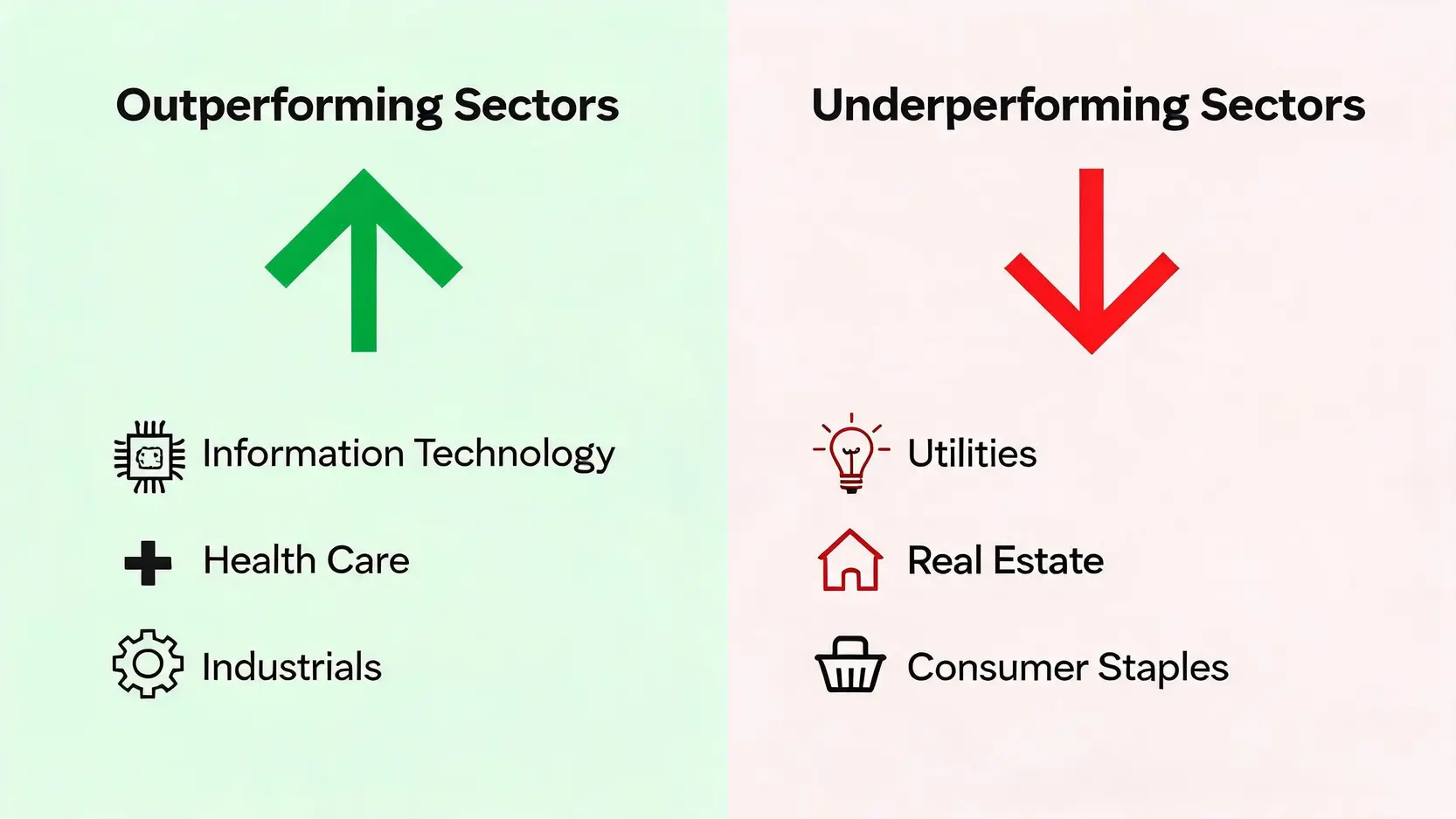
Analysts widely expect the following sectors to lead the market in the second half of 2026:
– Information Technology: As the primary beneficiary of the AI investment supercycle, this sector remains the undisputed growth engine. Companies involved in semiconductors, cloud infrastructure, and enterprise software are particularly well-positioned. 📈
– Health Care: With an aging global population and ongoing innovation in pharmaceuticals and medical technology, the healthcare sector offers defensive growth characteristics.
– Industrials: Select companies within the industrial sector, particularly those focused on automation, electrification, and infrastructure modernization, are poised to benefit from long-term secular trends.
Underperforming Sectors: Areas for Cautious Positioning
On the other side of the ledger, some sectors may face significant headwinds:
– Utilities: As a bond-proxy sector, utilities are sensitive to interest rates. If rates remain high, this sector could continue to underperform.
– Real Estate (REITs): Commercial real estate, in particular, faces challenges from higher financing costs and shifting work patterns. While some sub-sectors may be attractive, overall caution is warranted.
– Consumer Staples: While defensive, these companies may struggle to pass on higher costs to consumers if inflation proves sticky, potentially compressing margins.
Conclusion
In summary, the S&P 500 July 2026 forecast presents a complex but cautiously optimistic picture. The market is being propelled by powerful tailwinds, including robust corporate earnings and the transformative impact of AI innovation. However, investors must remain vigilant to the significant risks on the horizon, namely stubborn inflation, potential economic slowing, and stretched valuations in certain areas. For long-term investors, the key to success in this environment is strategic positioning: focusing on quality companies in leading sectors while maintaining a disciplined approach to navigating the inevitable bouts of market volatility.
Frequently Asked Questions (FAQ)
Q: What is the consensus S&P 500 forecast for year-end 2026?
A: As of July 2026, the consensus forecast among major Wall Street firms sits in a range between 7,500 and 8,000. While forecasts vary, the general sentiment is cautiously optimistic, with corporate earnings growth and the ongoing AI boom serving as the primary tailwinds. However, these are subject to revision based on incoming economic data.
Q: How is the 2026 economic outlook affecting stock market predictions?
A: The 2026 economic outlook is a major variable. Analysts are closely watching inflation data, Federal Reserve policy, and global GDP growth. A resilient economy supports the case for higher stock prices, but persistent inflation or an unexpected slowdown could trigger volatility. Geopolitical events, such as the ongoing oil crisis, also add a layer of uncertainty to the broader economic picture.
Q: Is a market correction expected in 2026?
A: While predicting the exact timing is impossible, most analysts agree that the risk of a market correction (a decline of 10% or more) remains elevated. Given the market’s strong run, high valuations in certain pockets, and macroeconomic uncertainties, periods of consolidation or pullback are considered likely. Investors are advised to prepare for volatility rather than being surprised by it.
Q: What role does AI investment play in the S&P 500’s performance?
A: The impact of AI investment is a central pillar of the current market’s strength. Massive capital expenditures in AI are boosting the revenues and earnings of technology companies, particularly in the semiconductor and software industries. Furthermore, the adoption of AI is expected to enhance productivity and efficiency across nearly all sectors, supporting long-term corporate profitability and, by extension, the S&P 500 index.