Table of Contents
What is the SPNE (S&P 500 Ex-Elon Enterprises) ETF?
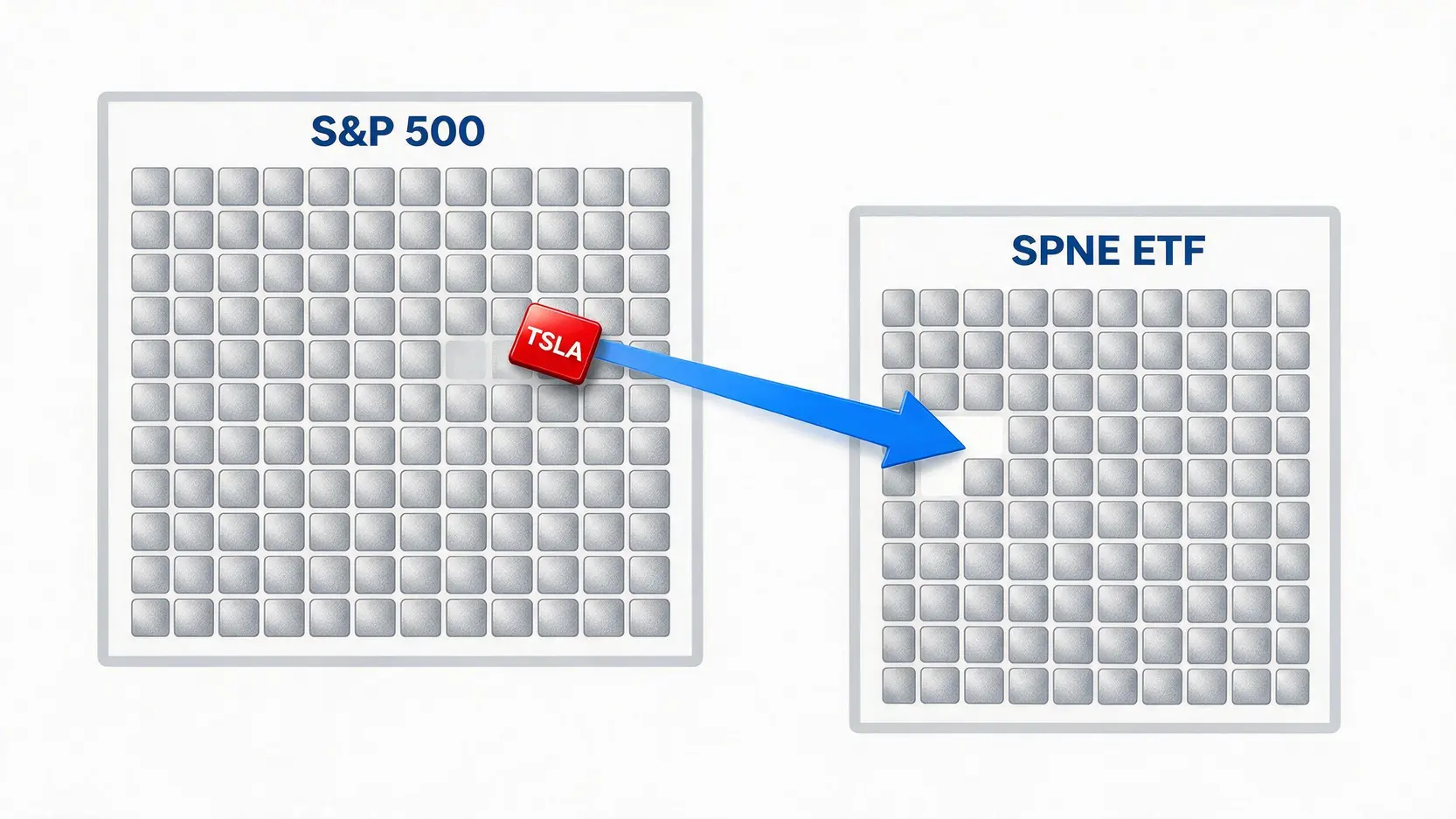
The SPNE ETF, often dubbed the ‘Ex-Elon’ or ‘Anti-Tesla’ fund, represents a novel and highly targeted investment strategy. At its core, it is a modified index exchange-traded fund designed to provide investors with exposure to the broad U.S. large-cap market, but with one significant twist: it systematically excludes any company led by Elon Musk that is part of the S&P 500. As of 2026, this primarily means the removal of Tesla, Inc. (TSLA).
The Core Investment Thesis: Tracking the S&P 500 Without Tesla
The fundamental premise of the SPNE ETF is to offer a portfolio that mirrors the performance of the S&P 500, a benchmark representing 500 of the leading U.S. publicly traded companies, but without the influence of Tesla. For investors, this means gaining diversified exposure to the American economy while simultaneously making a conscious decision to divest from a specific, high-profile mega-cap stock. The strategy hinges on the idea that one can capture the market’s broader trends without being subjected to the unique volatility and governance characteristics associated with Musk’s enterprises. This ETF is not just an investment tool; it’s a vehicle for expressing a specific market viewpoint regarding the concentration and risk of a single influential company.
Why Investors Might Choose to Exclude Elon Musk’s Companies
An investor’s decision to opt for an ‘Ex-Elon’ portfolio via SPNE ETF holdings can stem from several strategic considerations:
- Concentration Risk Mitigation: As mega-cap stocks like Tesla grow, they command a larger weight within market-cap-weighted indices like the S&P 500. An investor may feel that Tesla’s significant allocation introduces excessive single-stock risk that could disproportionately impact their portfolio during periods of volatility.
- Volatility Reduction: Tesla is known for its high-beta nature, meaning its price swings are often more dramatic than the broader market. Investors with a lower risk tolerance might use SPNE to seek a potentially smoother performance trajectory.
- Governance and Ethical Concerns (ESG): Some investors may have reservations about Elon Musk’s leadership style, corporate governance practices, or the controversies that frequently surround his companies. The SPNE ETF provides a straightforward way to align their portfolio with their principles without shunning the entire U.S. stock market.
- Expressing a Bearish View: While not its primary design, the fund can be used by those who are bullish on the U.S. economy as a whole but are specifically bearish on Tesla’s future prospects. It allows them to maintain broad market exposure while avoiding a stock they believe is overvalued or facing significant headwinds.
Unpacking the SPNE ETF Holdings: A Detailed Look
When you peel back the layers of the SPNE ETF, you are essentially left with a high-quality portfolio of America’s most formidable companies. The composition of the ETF’s portfolio is straightforward yet powerful, offering a robust, diversified base for any investor. Understanding the SPNE ETF holdings is key to grasping its value proposition.
The Foundation: The Other 499 Companies of the S&P 500
The bedrock of SPNE is the remaining constituents of the S&P 500 after excluding Tesla. This means an investment in SPNE grants you ownership in approximately 499 of the most established and influential companies across all major sectors of the U.S. economy. You are still investing in the titans of technology, healthcare, finance, and consumer goods that form the backbone of the market. This broad diversification helps to spread risk and capture the collective growth of corporate America, which is the primary appeal of investing in an S&P 500-based product in the first place.
Projected Top 10 Holdings
With Tesla removed, the top of the index is re-weighted, promoting other mega-cap leaders. While the exact composition shifts with market performance, the projected top 10 holdings in the SPNE ETF as of mid-2026 would likely include the following market giants:
- Microsoft (MSFT): A dominant force in cloud computing, software, and artificial intelligence.
- Apple (AAPL): The global leader in consumer electronics and a growing services ecosystem.
- NVIDIA (NVDA): The premier designer of GPUs powering the AI revolution and gaming industries.
- Amazon (AMZN): An e-commerce and cloud services behemoth.
- Alphabet Inc. (GOOGL/GOOG): The parent company of Google, dominating search, advertising, and cloud.
- Meta Platforms (META): The leading social media conglomerate.
- Berkshire Hathaway (BRK.B): Warren Buffett’s diversified holding company.
- Eli Lilly (LLY): A pharmaceutical giant with a strong pipeline of innovative drugs.
- Broadcom (AVGO): A key player in semiconductor and infrastructure software solutions.
- JPMorgan Chase & Co. (JPM): The largest bank in the United States.
How Sector Weightings Are Adjusted Post-Exclusion
Removing a multi-trillion-dollar company from an index is not a trivial adjustment. Tesla is officially classified within the Consumer Discretionary sector. Its removal causes a noticeable shift in the ETF’s sector allocations compared to a standard S&P 500 fund like SPY.
- 📉 Consumer Discretionary: This sector’s total weight in the SPNE portfolio decreases significantly.
- 📈 Information Technology: The weighting of tech giants like Microsoft, Apple, and NVIDIA proportionally increases, making it an even more dominant sector in the fund.
- 📈 Health Care, Financials, and others: All other sectors will see a marginal, proportional increase in their weightings as the fund rebalances to a 100% allocation.
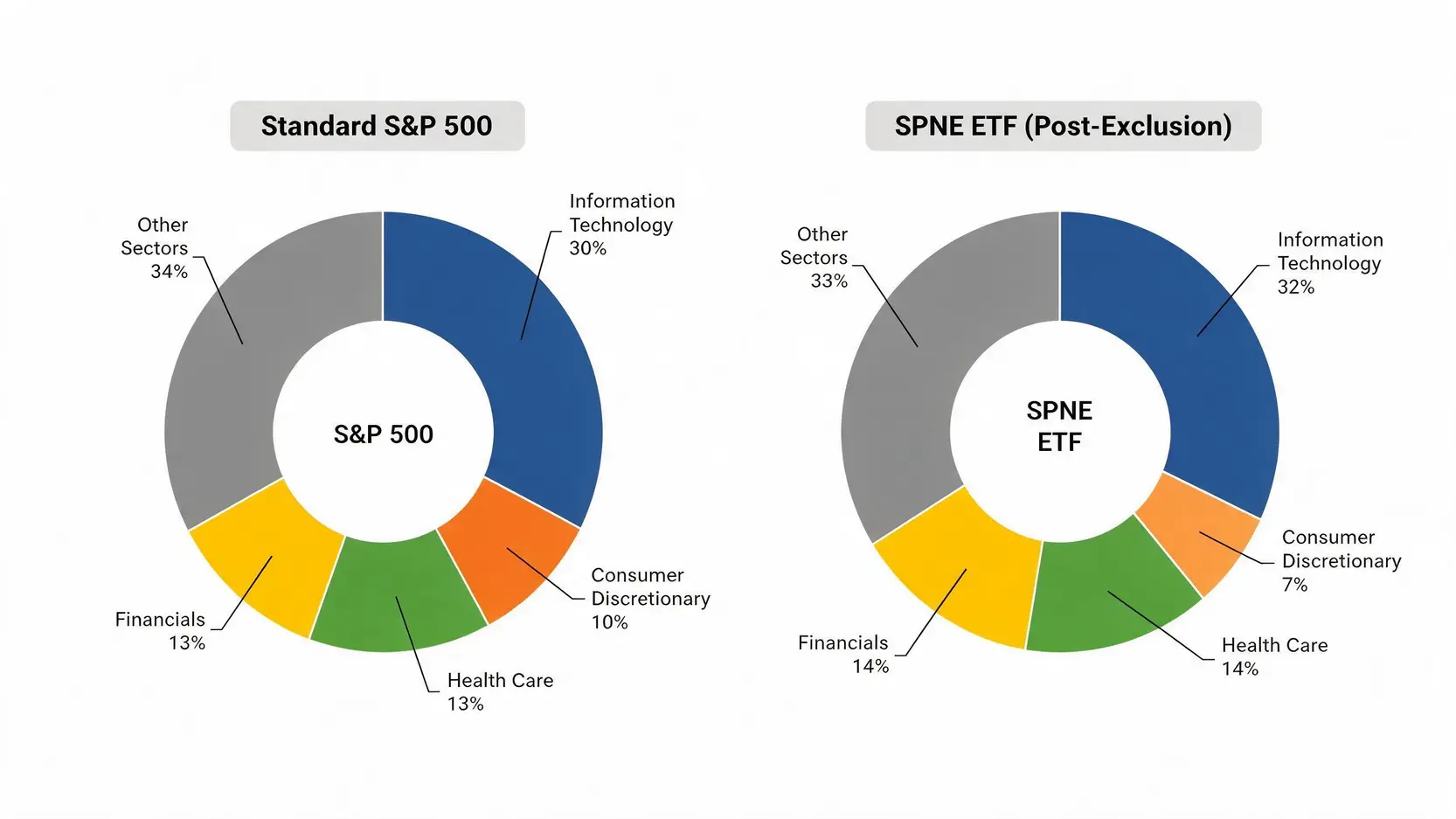
This re-weighting is a critical aspect of the SPNE ETF holdings. Investors are not just removing one stock; they are slightly altering their sector bets away from Consumer Discretionary and towards the rest of the market, particularly Technology.
🆕 Performance Analysis: The Impact of Dropping a Mega-Cap Stock
Investing in the SPNE ETF is an active bet against Tesla’s performance relative to the market. The decision to exclude such a large and dynamic company has direct consequences on the fund’s behavior, risk profile, and potential returns. This ‘Ex-Elon’ ETF concept introduces both opportunities and challenges that any prospective investor must carefully weigh.
Potential for Reduced Volatility vs. Standard S&P 500
One of the most appealing arguments for the SPNE ETF is the potential for a smoother ride. Tesla’s stock is famously volatile, with its price often subject to sharp movements based on production numbers, regulatory news, and even Elon Musk’s social media activity. By removing this single source of high beta, the SPNE ETF may exhibit lower overall volatility and smaller drawdowns compared to a traditional S&P 500 fund. For risk-averse investors or those nearing retirement, this characteristic could be a significant draw, offering broad market exposure with a potentially dampened risk profile.
Understanding Tracking Error and the Risk of Missing Growth
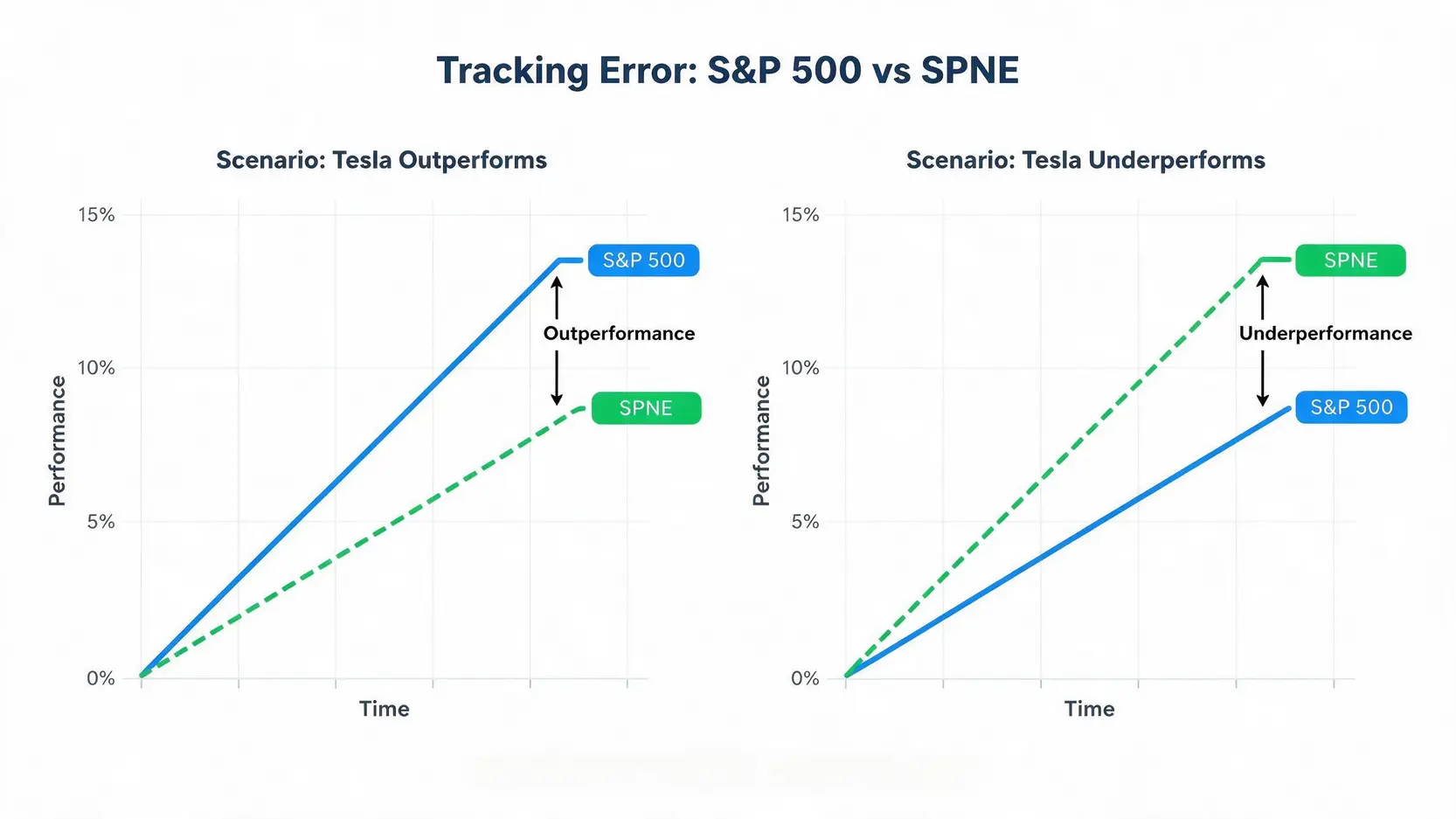
The most significant risk of the SPNE ETF is tracking error. Tracking error measures how much an ETF’s performance deviates from its benchmark index—in this case, the full S&P 500. Since SPNE is intentionally designed *not* to hold a major component of the index, its tracking error will be persistent and significant. If Tesla’s stock continues its impressive growth trajectory and outperforms the broader market, SPNE investors will miss out on those gains. This is the fundamental trade-off: you eliminate the downside risk of a Tesla-specific downturn, but you also forfeit the potential for its explosive upside. This makes an analysis of SPNE ETF holdings and its strategy crucial before investing.
Who is the Ideal Investor for the SPNE ETF?
The SPNE ETF is not for everyone. It is a specialized tool designed for a specific type of investor. The ideal candidate for this fund likely fits one of the following profiles:
- The Concentrated-Risk Avoider: An investor who is already heavily exposed to the S&P 500 but has become uncomfortable with the large and growing influence of a single, volatile stock.
- The ESG-Conscious Investor: Someone who wishes to align their investments with their values and has specific governance or ethical concerns related to Tesla or its leadership.
- The Diversified Bull: An investor who remains optimistic about the U.S. economy and the other 499 companies in the S&P 500 but holds a fundamentally bearish or neutral view on Tesla’s long-term valuation.
SPNE vs. SPY: A Head-to-Head Comparison
To truly understand the SPNE ETF’s positioning, it’s essential to compare it directly with the largest and most well-known S&P 500 ETF, the SPDR S&P 500 ETF Trust (SPY). This comparison highlights the distinct differences in their holdings and investment costs.
| Feature | SPNE ETF (Projected) | SPY (SPDR S&P 500 ETF) |
|---|---|---|
| Core Concept | Tracks the S&P 500 Index while excluding Tesla Inc. | Tracks the complete S&P 500 Index |
| Number of Holdings | Approximately 499 | Approximately 500 |
| Key Differentiator | No exposure to Tesla (TSLA) stock | Includes Tesla as a top holding |
| Expense Ratio | Projected to be slightly higher (e.g., 0.10% – 0.20%) | Extremely low (e.g., ~0.09%) |
| Primary Risk | Underperformance due to tracking error if Tesla rallies | Full, undiluted exposure to broad market risk |
Expense Ratios and Potential Costs
Niche and thematic ETFs often come with higher management fees than their broad, passively managed counterparts. SPY’s massive scale allows it to operate with a razor-thin expense ratio. While the SPNE ETF would still be considered low-cost, investors should expect its expense ratio to be slightly higher to account for its specialized, rules-based screening process. This small difference in cost can compound over time, making it a relevant factor in any long-term investment decision.
Conclusion
The SPNE ETF offers a unique and compelling proposition for a specific subset of investors. It masterfully isolates a single, high-profile variable—Elon Musk’s influence—from the broader U.S. market, creating a distinct investment tool. By understanding the SPNE ETF holdings, which are fundamentally the S&P 500 minus one of its largest components, investors can clearly see the trade-offs. You gain a potential reduction in single-stock concentration and volatility at the cost of deliberate tracking error and the risk of missing out on Tesla-driven gains. Ultimately, the decision to invest in SPNE hinges on whether its targeted, strategic exclusion aligns with your personal risk tolerance, market outlook, and long-term portfolio objectives.
Frequently Asked Questions (FAQ)
Q: What specific companies does the SPNE ETF exclude?
A: As of 2026, the primary and most significant exclusion is Tesla, Inc. (TSLA). The fund’s methodology is designed to identify and exclude any S&P 500 company that is principally led by Elon Musk. Should another Musk-led venture, such as SpaceX, go public and eventually qualify for the S&P 500, the ETF’s rules-based approach would compel it to exclude that security as well.
Q: How does SPNE maintain its portfolio to exclude Musk’s ventures?
A: The SPNE ETF follows a rules-based index methodology. The index provider establishes a clear, transparent set of criteria for identifying companies led by Elon Musk. The fund’s portfolio is then reviewed and rebalanced on a periodic basis (e.g., quarterly) to ensure it adheres to this exclusion. If a company is added to the S&P 500 that meets the exclusion criteria, it will be removed from the SPNE portfolio at the next scheduled rebalancing.
Q: Is there a Nasdaq-100 version of this ‘Ex-Elon’ ETF?
A: While the ‘Ex-Elon’ concept could certainly be applied to other indices like the Nasdaq-100, the SPNE ETF specifically targets the S&P 500. A hypothetical ‘Ex-Elon Nasdaq’ fund would have a different composition, as the Nasdaq-100 is more tech-focused and non-financial. As of 2026, the discussion is centered on the S&P 500 variant, but investors should watch the market for new product innovations in this space.
Q: What are the main risks of investing in the SPNE ETF?
A: The primary risk is performance-related. By choosing to exclude Tesla, an investor in SPNE is making an active bet that the other 499 companies will, as a group, outperform a portfolio that includes Tesla. If Tesla’s stock performs exceptionally well, the SPNE ETF will lag the standard S&P 500, a phenomenon known as tracking error. Other risks include a slightly higher expense ratio compared to benchmark ETFs like SPY and the potential for the fund’s niche strategy to fall out of favor.