Table of Contents
Factor 1: The Bank of Canada’s (BoC) Hawkish Monetary Policy Stance
The Bank of Canada’s assertive monetary policy is a primary driver behind the Canadian dollar’s recent strength. In its latest Monetary Policy Report, the BoC signaled a continued commitment to controlling inflation, maintaining the policy rate at 2.25%. This contrasts with a more cautious tone from other central banks, creating a favorable interest rate differential for the CAD.
Understanding Hawkish vs. Dovish Tones and Their Impact
In central bank terminology, a “hawkish” stance indicates a preference for tighter monetary policy—higher interest rates—to combat inflation. Conversely, a “dovish” tone suggests a focus on stimulating economic growth, often through lower interest rates.

A hawkish BoC makes holding Canadian dollars more attractive to investors seeking higher yields, thus increasing demand for the currency and causing USD/CAD to fall. As of July 2026, the BoC’s language remains decidedly hawkish, emphasizing that inflation, while moderating, remains a key concern. This policy divergence is a critical piece of the puzzle for anyone asking why USD/CAD is falling.
Analysis of Recent BoC Interest Rate Decisions and Statements
The BoC’s decision to hold rates steady at 2.25% in July 2026, while expected, was accompanied by firm commentary. The statement highlighted that Canada’s economy, though experiencing a soft patch, is showing signs of resilience. The Bank projects inflation to ease towards the 2% target but remains vigilant. This consistency sends a strong signal to the market: the BoC is not prepared to pivot to a dovish stance prematurely. This contrasts with market speculation about the future path of the U.S. Federal Reserve, further pressuring the USD/CAD pair downwards. The Bank’s confidence in the domestic economy underpins the Loonie’s strength against the Greenback.
Factor 2: Broad-Based US Dollar (USD) Weakness
A significant portion of the USD/CAD’s decline can be attributed not just to Canadian dollar strength, but also to a pervasive weakness in the US dollar. The Greenback has been under pressure from a confluence of factors, including moderating inflation data and a shifting monetary policy outlook from the Federal Reserve.
How US Inflation Data (CPI, PPI) Affects the Greenback
Recent U.S. Consumer Price Index (CPI) and Producer Price Index (PPI) reports have shown a cooling trend in price pressures. While inflation remains above the Fed’s target, the deceleration has led market participants to price in a less aggressive path for U.S. interest rates. A softer inflation outlook reduces the urgency for the Fed to maintain high rates, diminishing the yield advantage of the U.S. dollar over other major currencies. This dynamic directly contributes to a lower USD/CAD exchange rate, as the interest rate differential between the U.S. and Canada narrows.
Comparing the US Federal Reserve’s Policy to the BoC’s
The policy divergence between the Federal Reserve and the Bank of Canada is stark. While the BoC maintains a clearly hawkish stance, the Fed’s July 2026 FOMC statement adopted a more data-dependent and neutral tone.
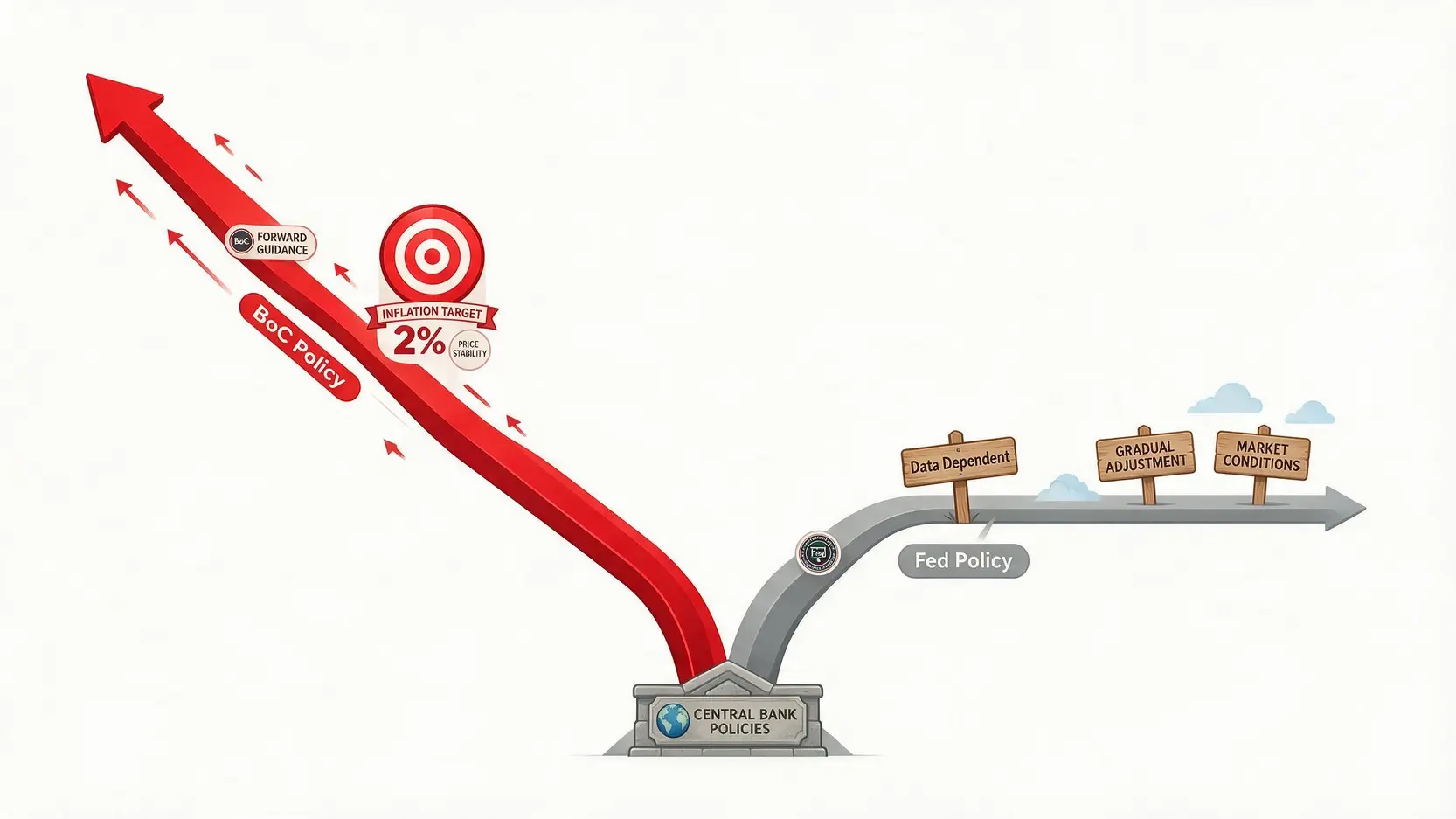
The Fed has indicated it will maintain the federal funds rate in the 3.50% to 3.75% range for now but has removed explicit forward guidance pointing to further hikes. This has been interpreted by markets as a signal that the peak of the U.S. tightening cycle is near. This perceived policy ceiling for the Fed, compared to the BoC’s continued inflation-fighting rhetoric, makes the CAD relatively more attractive, fueling the decline in USD/CAD. Understanding the nuances of the US Dollar Index is crucial for grasping this trend.
Factor 3: The Enduring Influence of Oil Prices
The value of the Canadian dollar is intrinsically linked to the price of oil, one of Canada’s most significant exports. The recent trajectory of crude oil prices has provided a substantial tailwind for the Loonie, explaining a key part of the USD/CAD downtrend.
Explaining Canada’s ‘Petrocurrency’ Status
Canada is one of the world’s largest oil producers and exporters. Consequently, the Canadian dollar is often referred to as a “petrocurrency.” This means its value often moves in tandem with oil prices.
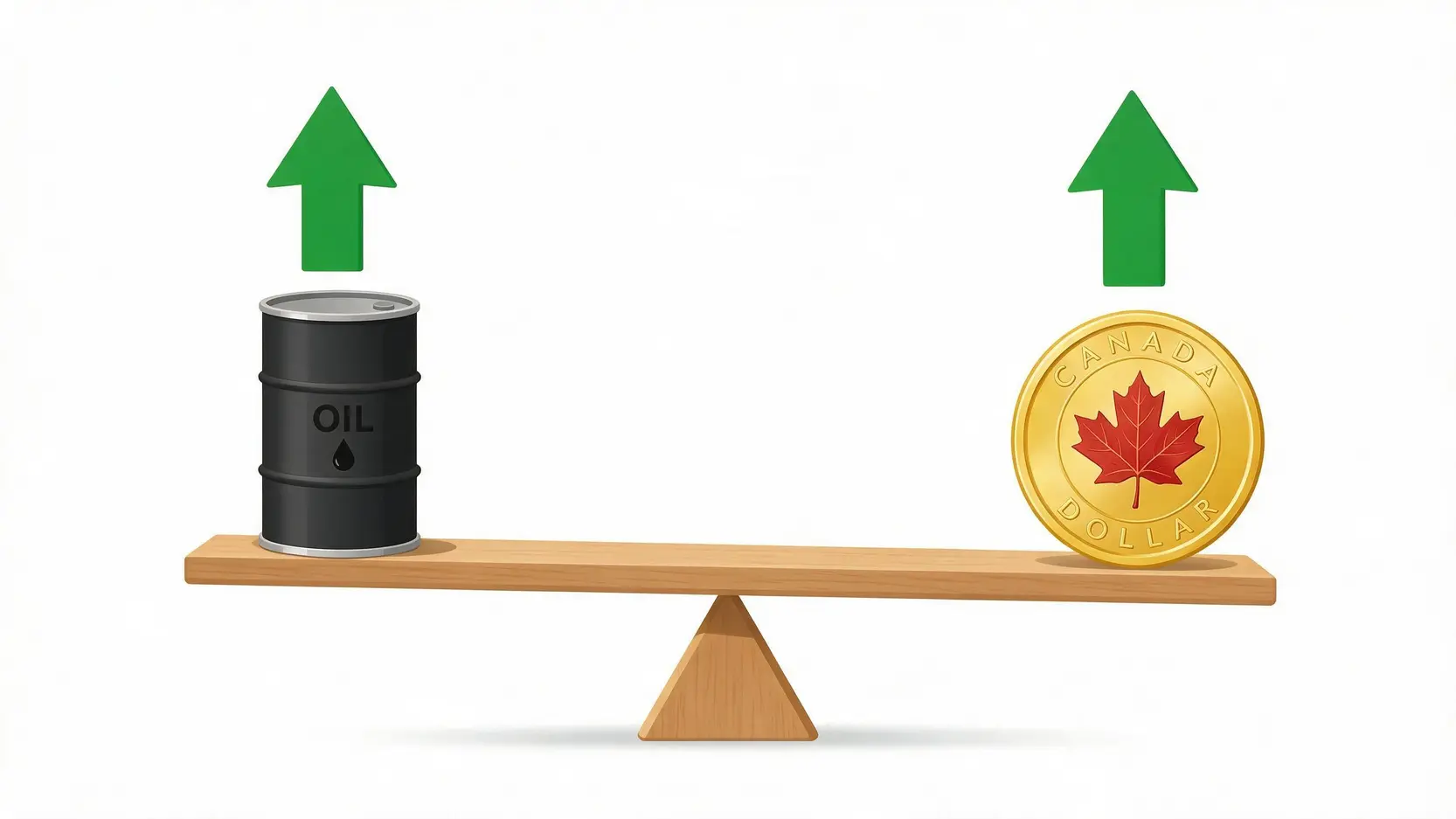
When oil prices rise, it increases the value of Canada’s exports, leading to a greater inflow of foreign currency (primarily USD) that must be converted into Canadian dollars. This heightened demand for CAD boosts its value, causing the USD/CAD pair to fall. Conversely, a drop in oil prices typically weakens the CAD.
Correlation Analysis: Recent Crude Oil Trends and the Loonie’s Response
Throughout 2026, West Texas Intermediate (WTI) crude oil has shown remarkable resilience, trading consistently in the $70-$75 per barrel range. This stability at elevated levels, driven by steady global demand and disciplined OPEC+ supply management, has been a boon for the Canadian economy. The positive correlation is evident: as oil prices have firmed, the Canadian dollar has strengthened. The current environment provides a steady stream of revenue for Canadian producers, boosting economic activity and reinforcing the BoC’s ability to maintain its hawkish policy stance.
Beyond Oil: The Impact of Other Key Canadian Exports
While oil grabs the headlines, it’s not the only commodity supporting the Canadian dollar. Canada is also a major exporter of other natural resources, including lumber, potash, and base metals. Prices for many of these commodities have also remained firm due to solid global demand. This diversification of export strength provides a broader, more stable foundation for the Canadian dollar’s value, making it less susceptible to short-term volatility in any single commodity market and contributing to the sustained downward pressure on USD/CAD.
Factor 4: Shifting Global Market Risk Sentiment
The broader appetite for risk among global investors plays a crucial role in the valuation of currency pairs like USD/CAD. A shift away from safety and towards assets with higher growth potential has dampened the appeal of the U.S. dollar, benefiting currencies like the Canadian dollar.
How Performance in Equity Markets Influences Currency Flows
When global equity markets, such as the S&P 500, are performing well, it signals a “risk-on” environment. In such times, investors are more willing to move capital out of safe-haven assets and into markets and currencies perceived to offer better returns. The Canadian dollar, closely tied to the cyclical global economy through its commodity exports, tends to perform well during these periods. The steady performance of equities in mid-2026 has encouraged capital flows into Canadian assets, increasing demand for the CAD and weighing on the USD/CAD pair.
The Role of the USD as a ‘Safe Haven’ and What Happens When Risk Appetite Increases
The U.S. dollar is the world’s primary reserve currency and is considered a “safe haven” asset. During times of global economic uncertainty or financial stress, investors flock to the USD for its perceived stability and liquidity, causing its value to rise. However, as the economic outlook for 2026 has stabilized and fears of a deep global recession have receded, the demand for the U.S. dollar as a safe haven has waned. This increase in risk appetite means investors are selling USD to buy other currencies, including the CAD, to pursue higher yields and growth opportunities. This rotation out of safety is a powerful force driving USD/CAD lower.
Factor 5: Stronger Relative Economic Performance and Data Surprises
Ultimately, a currency’s long-term value is a reflection of its underlying economy’s health. Recent economic data from Canada has surprised to the upside, particularly when compared to its U.S. counterpart, providing another fundamental reason for the Canadian dollar’s appreciation.
Reviewing Canada’s Latest GDP and Employment Figures
Canada’s economic data for the second quarter of 2026 has demonstrated notable resilience. Real GDP growth, while modest, has avoided contraction, and the labor market has remained robust. The latest employment report showed stronger-than-expected job creation and a stable unemployment rate. This solid economic footing gives the Bank of Canada the confidence to maintain its hawkish monetary policy, as it suggests the economy can withstand higher interest rates. This positive domestic picture contrasts with some mixed signals from the U.S. economy, enhancing the relative appeal of the CAD.
The Element of Surprise: How Economic Data Beats or Misses Drive Volatility
In financial markets, it’s often the deviation from expectations that matters most. A string of Canadian economic data releases have “beaten” consensus forecasts, while some U.S. data points have “missed.” Each time Canadian data surpasses expectations (e.g., higher GDP, lower unemployment), it forces traders to re-evaluate the economic outlook upward and reinforces the case for a stronger CAD. These positive surprises create buying momentum for the Canadian dollar, leading to sharp downward movements in the USD/CAD pair. The cumulative effect of these surprises has built a strong narrative of Canadian economic outperformance, solidifying the currency’s gains.
Conclusion
The current downtrend in the USD/CAD exchange rate is not the result of a single catalyst but rather a powerful confluence of five interconnected factors. A hawkish Bank of Canada is creating an attractive interest rate differential, while broad-based weakness in the U.S. dollar provides a strong counterpoint. This is amplified by resilient oil and commodity prices, which bolster Canada’s terms of trade. Furthermore, a global risk-on sentiment is reducing the safe-haven appeal of the USD, and a backdrop of resilient Canadian economic data continues to surprise to the upside. By monitoring the interplay between these key drivers—central bank policy, commodity markets, risk sentiment, and economic indicators—investors can develop a more nuanced and comprehensive perspective on the forces shaping the future direction of USD/CAD.
Frequently Asked Questions
Q: What does it mean when USD/CAD is falling?
A: When the USD/CAD exchange rate is falling, it means the U.S. dollar is weakening relative to the Canadian dollar. In other words, it takes fewer Canadian dollars to buy one U.S. dollar. This indicates that the Canadian dollar (the “Loonie”) is getting stronger.
Q: How do interest rates directly affect a currency’s value?
A: Higher interest rates generally increase a currency’s value. Global investors seek the best returns on their capital, a phenomenon known as “yield hunting.” When a country’s central bank, like the Bank of Canada, raises interest rates or signals its intention to keep them high, it makes holding assets in that currency more profitable. This increased demand for the currency causes its value to appreciate.
Q: Is a stronger Canadian dollar (weaker USD/CAD) good for the Canadian economy?
A: It’s a double-edged sword. A stronger CAD is beneficial for Canadian consumers and businesses that import goods, as it increases their purchasing power. It also helps curb inflation by making imports cheaper. However, it can be challenging for Canadian exporters because it makes their goods more expensive for foreign buyers, potentially reducing their competitiveness in international markets.
Q: How much does the oil price affect the Canadian Dollar?
A: The price of oil has a very significant impact on the Canadian dollar, which is why the CAD is known as a ‘petrocurrency.’ As a major global oil exporter, Canada’s export revenues are highly sensitive to crude oil prices. A higher oil price typically leads to a stronger CAD. While the correlation is not always perfect, it is one of the most reliable and closely watched relationships in the forex market when analyzing USD/CAD.