As we navigate the complex financial landscape of 2026, headlines about rising Treasury yields are becoming impossible to ignore. For many, this is just financial jargon, but its real-world implications are profound. Understanding how rising Treasury yields affect your money in 2026 is no longer optional—it’s essential for safeguarding your financial future. This guide will demystify the mechanics, from the direct relationship between interest rates and bond prices to the ripple effects on your investment portfolio and daily expenses, providing a clear playbook for what you can do to prepare.
Table of Contents
First, What Are Treasury Yields and Why Are They Rising?
Before diving into the effects, it’s crucial to grasp what Treasury yields are and the forces pushing them higher. Think of U.S. Treasury securities (T-bonds, T-notes) as loans you make to the U.S. government. In return, the government pays you interest. The yield is the effective return you get on that loan. The factors driving Treasury yields higher are a reflection of the broader economic climate.
A Simple Definition of Treasury Yields vs. Interest Rates
It’s easy to confuse a bond’s yield with its interest rate (or coupon rate). Here’s the difference:
- Interest Rate (Coupon Rate): This is the fixed annual interest payment a bond pays, set when it’s first issued. For example, a $1,000 bond with a 3% coupon rate pays $30 per year.
- Treasury Yield: This is the actual return an investor realizes on a bond. It fluctuates based on the bond’s market price. If you buy that $1,000 bond for a discounted price of $950 on the secondary market, your yield is higher than 3% because you’re still receiving the same $30 annual payment on a smaller initial investment. Conversely, if you pay a premium of $1,050, your yield is lower.
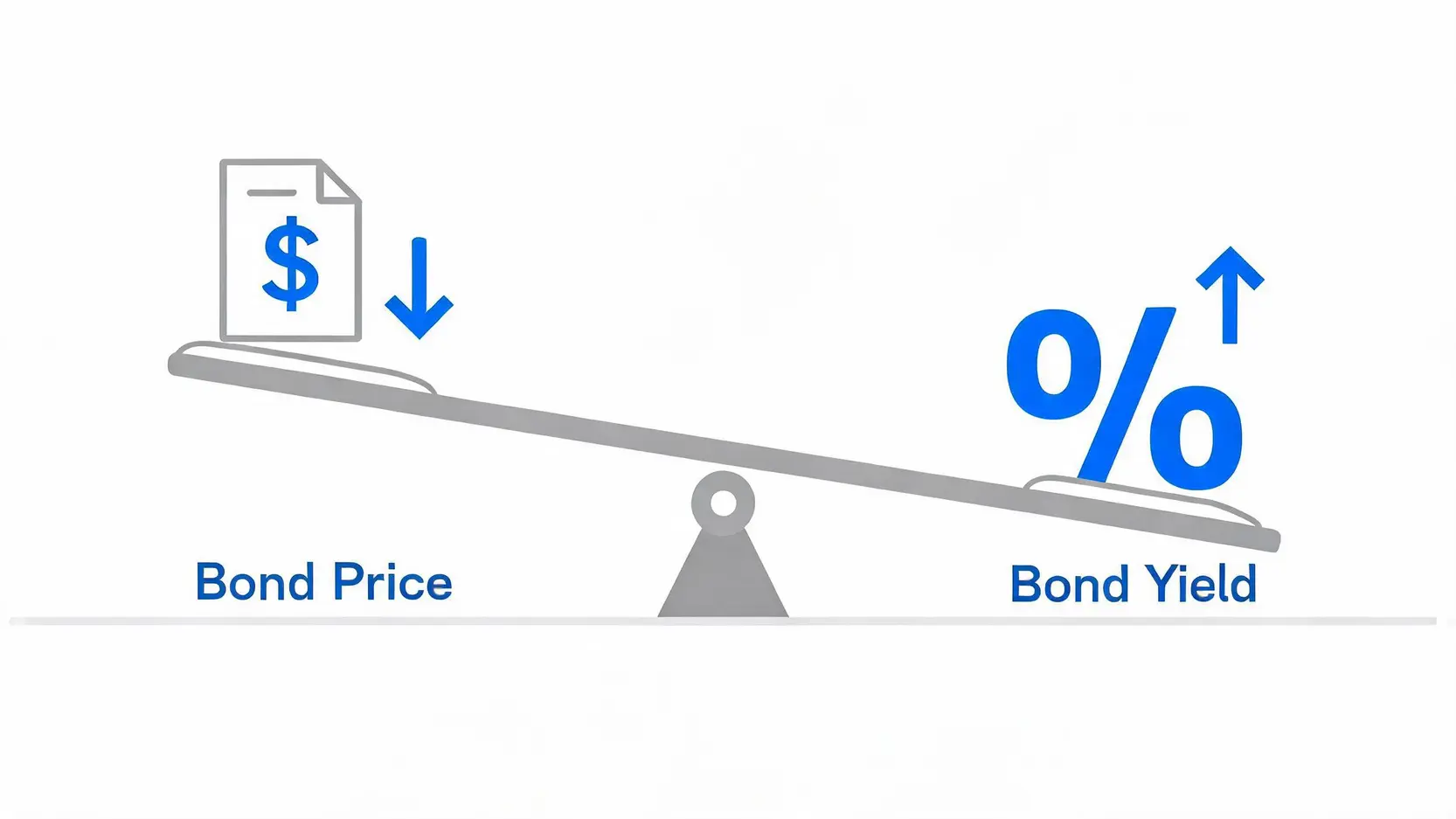
The key takeaway is that bond prices and yields have an inverse relationship: when one goes up, the other goes down. 📉
Key Factors Driving Yields Higher in 2026
The current environment of rising yields isn’t happening in a vacuum. Several powerful macroeconomic forces are at play:
- Persistent Inflationary Pressures: Although inflation has moderated from its post-pandemic peaks, it remains stubbornly above the Federal Reserve’s 2% target. When investors expect inflation, they demand a higher yield on their bonds to compensate for the eroding purchasing power of future returns.
- Federal Reserve’s Monetary Policy: The Fed’s stance on interest rates is a primary driver. To combat inflation, the central bank has maintained a relatively restrictive policy. Higher policy rates translate directly to higher yields on short-term Treasuries and influence long-term yields as well.
- Robust Economic Growth: A strong economy often leads to higher yields. When businesses are expanding and consumers are spending, the demand for capital increases, pushing borrowing costs (and thus yields) up. It also raises expectations that the Fed will keep rates higher for longer to prevent overheating.
- Government Borrowing Needs: As noted by agencies like the Congressional Budget Office, the U.S. continues to run significant budget deficits, necessitating a large supply of new Treasury bonds. To attract enough buyers for this increased supply, the government must offer higher yields.
The Direct Impact: How Rising Yields Affect Your Bond Portfolio
For investors holding bonds or bond funds, the impact of rising Treasury yields is immediate and often painful. The inverse relationship between prices and yields is not just theoretical; it directly affects the value of your existing fixed-income assets. Understanding this is key to managing your bond portfolio in the current climate.
Understanding the Inverse Relationship: When Yields Go Up, Bond Prices Go Down
Imagine you own a 10-year Treasury bond with a 3% coupon. Now, due to the factors mentioned above, the government starts issuing new 10-year bonds with a 4% coupon. Suddenly, your 3% bond is less attractive. Why would anyone buy your bond for its face value when they can get a new one with a higher payout? To sell your bond, you’d have to lower its price to a point where its yield-to-maturity effectively matches the new 4% rate. This price decline is a capital loss for current bondholders, even though the bond’s coupon payments remain the same.
Strategies for Bond Investors in a Rising Rate Environment
While falling bond prices are a concern, a rising-yield environment isn’t a signal to abandon bonds entirely. It’s a signal to adapt. Here are some effective strategies:
- Focus on Shorter Duration: Duration measures a bond’s sensitivity to interest rate changes. Long-duration bonds are more volatile and will see their prices fall more sharply when yields rise. Shifting to short-duration bonds or bond ETFs can significantly reduce this risk.
- Build a Bond Ladder: This strategy involves buying bonds with staggered maturity dates (e.g., 1-year, 2-year, 3-year, etc.). As each short-term bond matures, you can reinvest the principal into a new, longer-term bond at the prevailing higher interest rates. This allows you to continuously capture higher yields while maintaining liquidity.
- Consider Treasury Inflation-Protected Securities (TIPS): TIPS are government bonds whose principal value adjusts with inflation. This feature makes them a powerful tool for preserving capital in an inflationary environment, as the coupon payments are based on the inflation-adjusted principal. A Hot Inflation ETF Strategy often includes these instruments.
- Explore Floating-Rate Bonds: These bonds have interest rates that periodically reset based on a benchmark, such as a short-term Treasury yield. Because their coupon payments adjust upward as rates rise, their prices tend to be much more stable.
The Ripple Effect: What Higher Yields Mean for the Stock Market
The impact of rising Treasury yields extends far beyond the bond market, sending significant ripples through the stock market. Higher yields can create headwinds for equities, particularly for certain sectors, by altering valuations and increasing corporate costs. 📈
Pressure on Stock Valuations, Especially for Growth Stocks
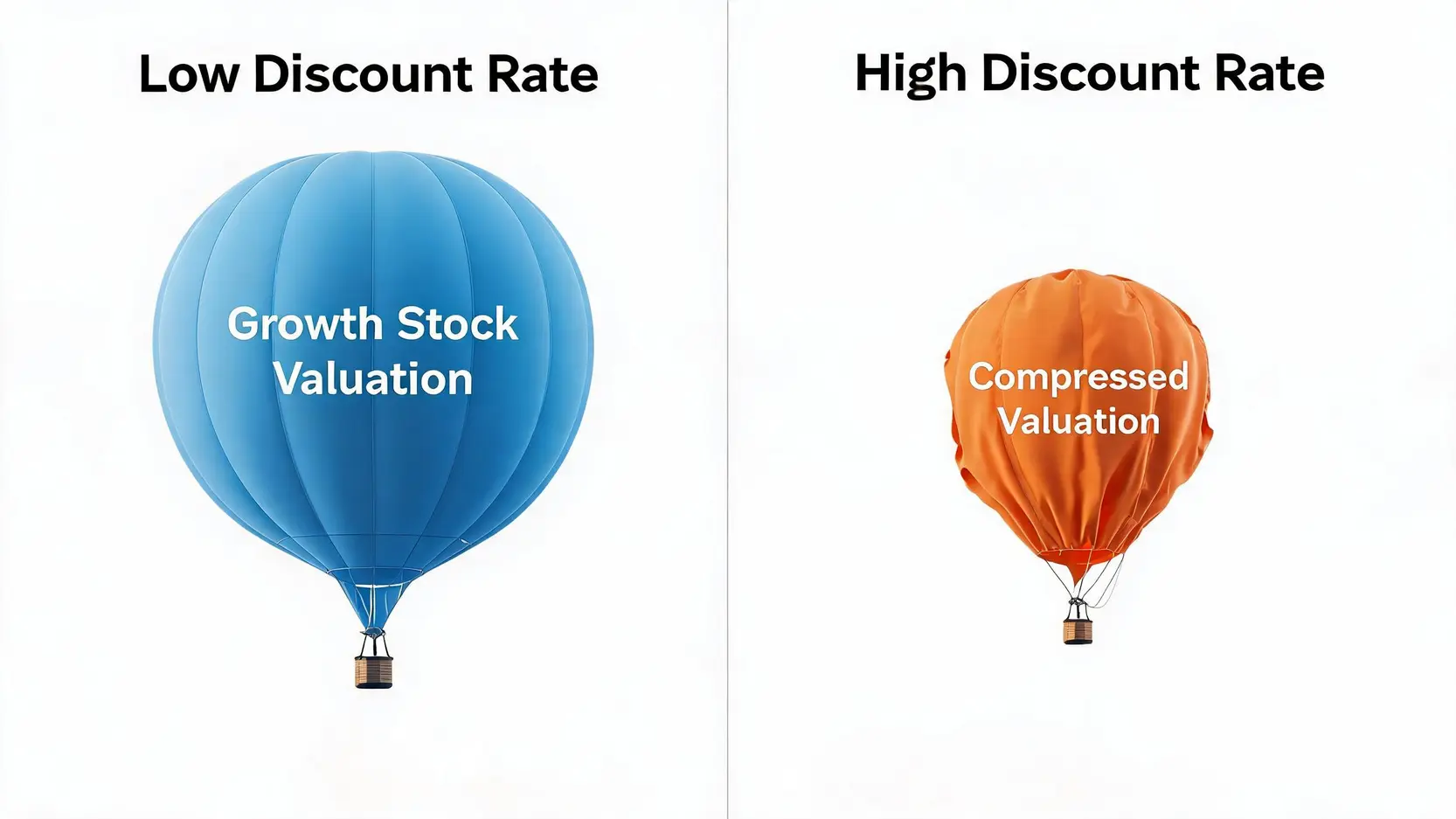
One of the most critical ways rising yields affect stocks is through the valuation process. The value of a stock is theoretically the present value of its future earnings. To calculate this present value, analysts use a “discount rate” to account for the time value of money and risk. The yield on U.S. Treasury bonds is considered the “risk-free rate” and serves as the foundation for this discount rate.
When Treasury yields rise, the discount rate used to value future earnings also rises. This mathematical reality means that future profits are worth less in today’s dollars. This effect is especially pronounced for growth stocks (like those in the technology sector), whose valuations are heavily dependent on earnings expected far in the future. As the discount rate goes up, their high valuations can compress rapidly.
Increased Corporate Borrowing Costs and Profitability
Beyond valuations, rising Treasury yields directly increase the cost of capital for corporations. Companies that need to issue new bonds to fund operations, expansion, or refinance old debt will have to do so at a higher interest rate. This leads to higher interest expenses, which can eat into profit margins and reduce net income. A reduction in corporate profitability can lead to lower earnings per share (EPS) and, consequently, lower stock prices.
Beyond Your Portfolio: The Effect on Everyday Money
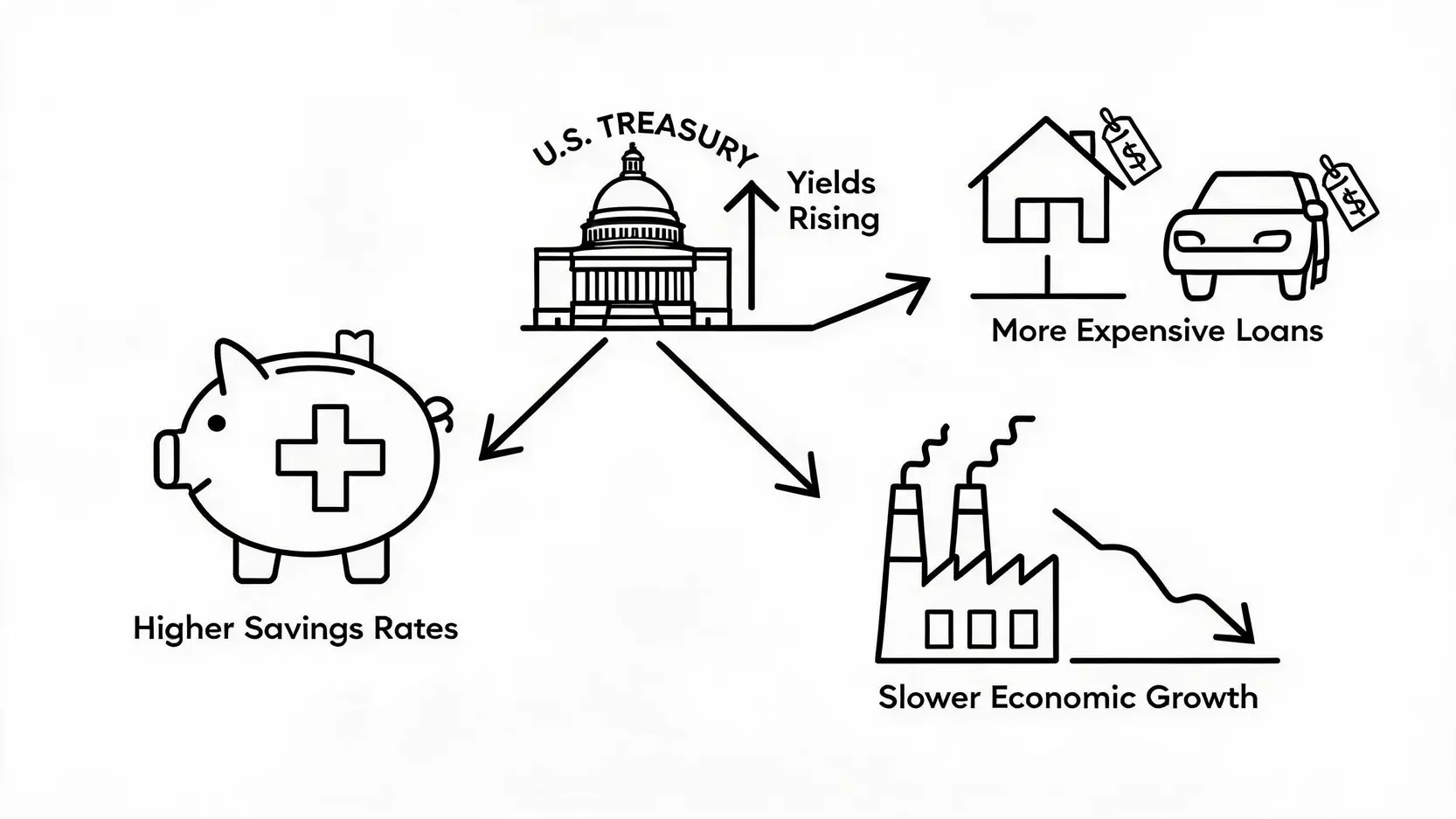
The influence of rising Treasury yields isn’t confined to Wall Street; it directly impacts your household budget and the broader economy. From savings rates to the cost of a new car, the effects are tangible and widespread. 💰
Higher Interest Rates for Savings Accounts and CDs
On the positive side, a rising-yield environment is a boon for savers. Banks and credit unions must compete for deposits, and when risk-free Treasury bonds are offering higher returns, financial institutions are forced to increase the Annual Percentage Yield (APY) on high-yield savings accounts, money market accounts, and Certificates of Deposit (CDs). This allows your cash savings to finally generate meaningful, low-risk returns after years of near-zero rates.
The Rising Cost of Mortgages, Auto Loans, and Credit Card Debt
Unfortunately, what’s good for savers is often costly for borrowers. The 10-year Treasury yield is a crucial benchmark for long-term consumer loans. As data from the St. Louis Fed (FRED) consistently shows, there is a strong correlation between the 10-year yield and the average 30-year fixed mortgage rate. When Treasury yields surge, mortgage rates follow, making homeownership more expensive and potentially cooling the housing market. Similarly, rates for auto loans and variable-rate credit card debt also tend to climb, increasing the monthly cost of financing major purchases and carrying a balance.
How It Influences the Broader Economy and Job Market
The cumulative effect of higher borrowing costs for both corporations and consumers can slow down the overall economy. When businesses face higher capital costs, they may postpone investments in new equipment or facilities. When consumers face higher mortgage and loan payments, they have less disposable income for other goods and services. This dual pressure can lead to reduced economic growth and, in some cases, a softer job market as companies scale back on hiring.
Conclusion
In summary, the surge in Treasury yields throughout 2026 presents a multifaceted challenge and a series of opportunities for every individual. It’s a clear signal that the economic landscape is shifting. For investors, it demands a strategic pivot, potentially away from long-duration assets and highly-valued growth stocks, and toward instruments designed to weather or even benefit from higher rates. For savers and borrowers, it redraws the lines of financial decision-making, rewarding prudent saving while increasing the cost of debt. Understanding precisely how rising Treasury yields affect your money is the first and most critical step toward not just protecting your assets, but positioning them to thrive in the years to come.
Frequently Asked Questions (FAQ)
Q: Are rising Treasury yields always bad for my portfolio?
A: Not necessarily. While rising yields can cause short-term price declines in existing bond and stock holdings (especially growth stocks), they also create opportunities. For bond investors, it means new money can be invested at higher, more attractive rates. For savers, it leads to better returns on cash. It often signals a strong underlying economy, which can be positive for value or cyclical stocks that benefit from economic growth.
Q: How does the Federal Reserve’s policy influence Treasury yields?
A: The Federal Reserve has a profound influence. Its primary tool is the federal funds rate, which is the target rate for overnight bank lending. Changes to this rate directly impact short-term Treasury yields. Furthermore, through its statements, economic projections (dot plot), and actions like quantitative easing or tightening, the Fed shapes market expectations for future inflation and economic growth, which are major drivers of long-term Treasury yields. The Federal Reserve acts as the primary regulator of the U.S. economy, making its policy a key variable.
Q: Should I sell my bonds when yields are rising?
A: Selling bonds in a panic when yields are rising can lock in losses. For long-term investors, a more prudent approach is often to hold bonds to maturity, at which point you receive the full principal back, regardless of price fluctuations. A better strategy is to reassess your portfolio’s duration and consider reallocating to shorter-term bonds or other fixed-income instruments that are less sensitive to rate hikes. As discussed in our analysis of how oil prices affect treasury yields, selling existing bonds can drive prices down further.
Q: What is the difference between Treasury yields and the Fed funds rate?
A: The Fed funds rate is a specific policy rate set by the Federal Reserve that applies to very short-term (overnight) interbank lending. Treasury yields, on the other hand, are determined by the supply and demand for government bonds in the open market and exist across a range of maturities (from one month to 30 years). While the Fed funds rate strongly influences short-term Treasury yields, long-term yields are driven more by market expectations for future inflation, economic growth, and the Fed’s long-term policy path.