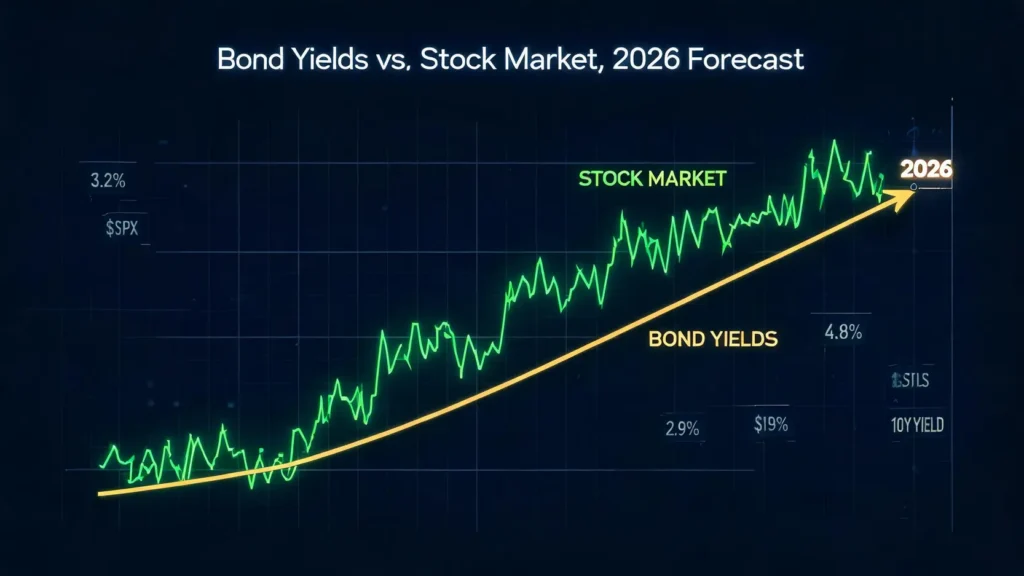
As we navigate the intricate financial landscape of 2026, investors face a critical decision point: where to allocate capital for optimal returns. The dynamic and often inverse relationship between rising bond yields and the stock market is creating a complex environment filled with both uncertainty and opportunity. This definitive guide breaks down the Bond Yields vs Stock Market 2026 narrative, offering expert forecasts and strategic insights essential for positioning your portfolio for success, especially considering the latest 2026 stock market outlook.
Table of Contents
The Fundamental Relationship: Why Bond Yields and Stock Prices Often Move Oppositely
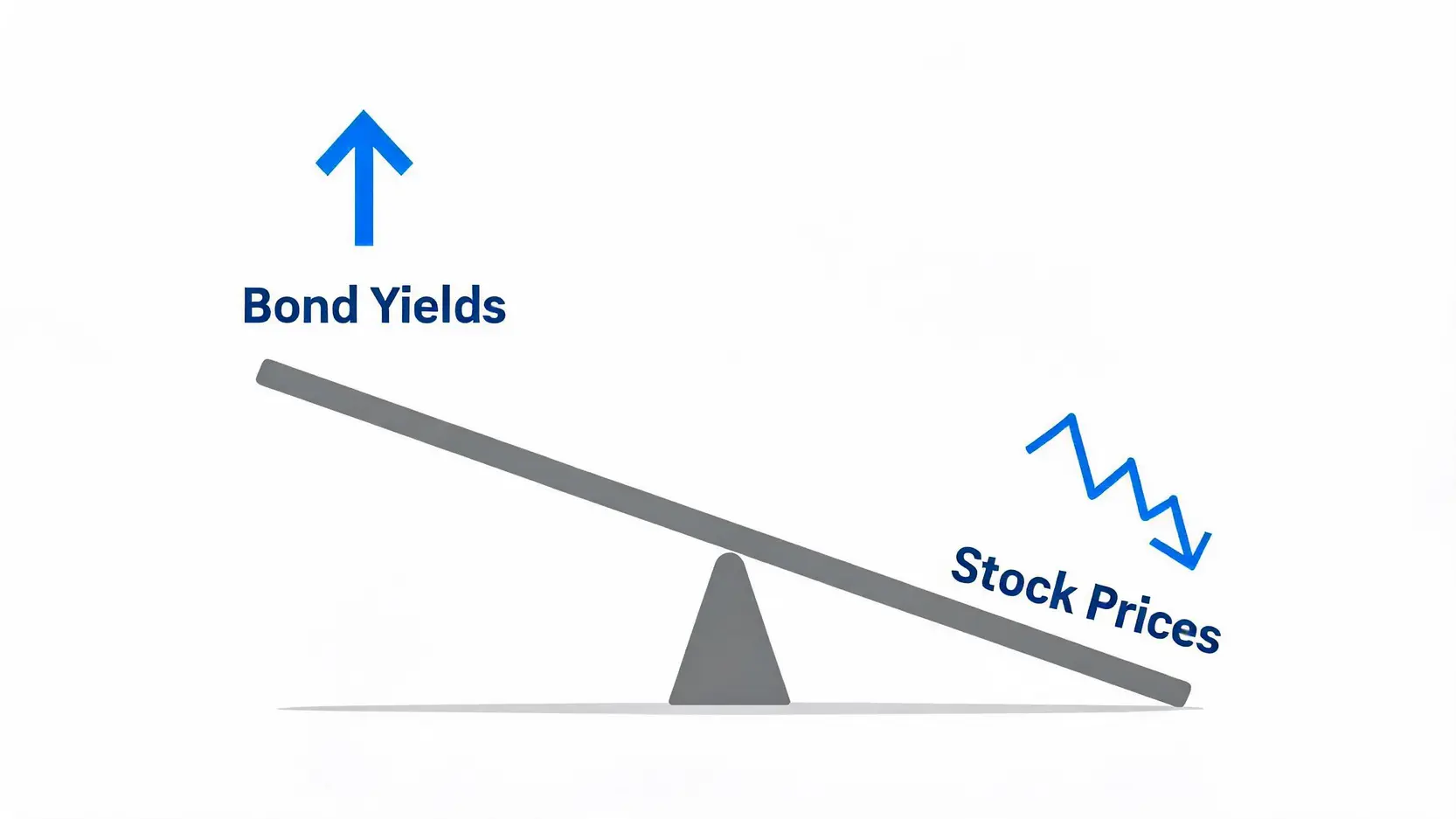
Understanding the push-and-pull between bond yields and stock prices is foundational for any serious investor. This is not a random correlation but a relationship deeply rooted in economic principles, investor psychology, and valuation metrics. When one rises, the other often falls, creating a seesaw effect that can ripple through entire portfolios.
What Drives Bond Yields? A Look at Interest Rates and Inflation
At its core, a bond’s yield is driven by two primary forces: prevailing interest rates set by central banks and market expectations for future inflation. When a central bank, like the Federal Reserve, raises its benchmark interest rate to combat inflation, newly issued bonds must offer higher yields to attract investors. Consequently, existing bonds with lower coupons become less attractive, and their prices fall, causing their yields to rise to match the market. Conversely, if inflation is expected to rise, investors demand higher yields to compensate for the eroding purchasing power of their future returns. The impact of interest rates on investment decisions is therefore direct and profound, making bond yields a critical barometer of monetary policy.
The Valuation Effect: How Higher Yields Make Bonds More Attractive Than Stocks
The concept of a “risk-free rate” is central to equity valuation. This rate, often benchmarked against the yield on a 10-year Treasury bond, represents the return an investor can expect from an essentially risk-free investment. When this rate rises, two things happen:
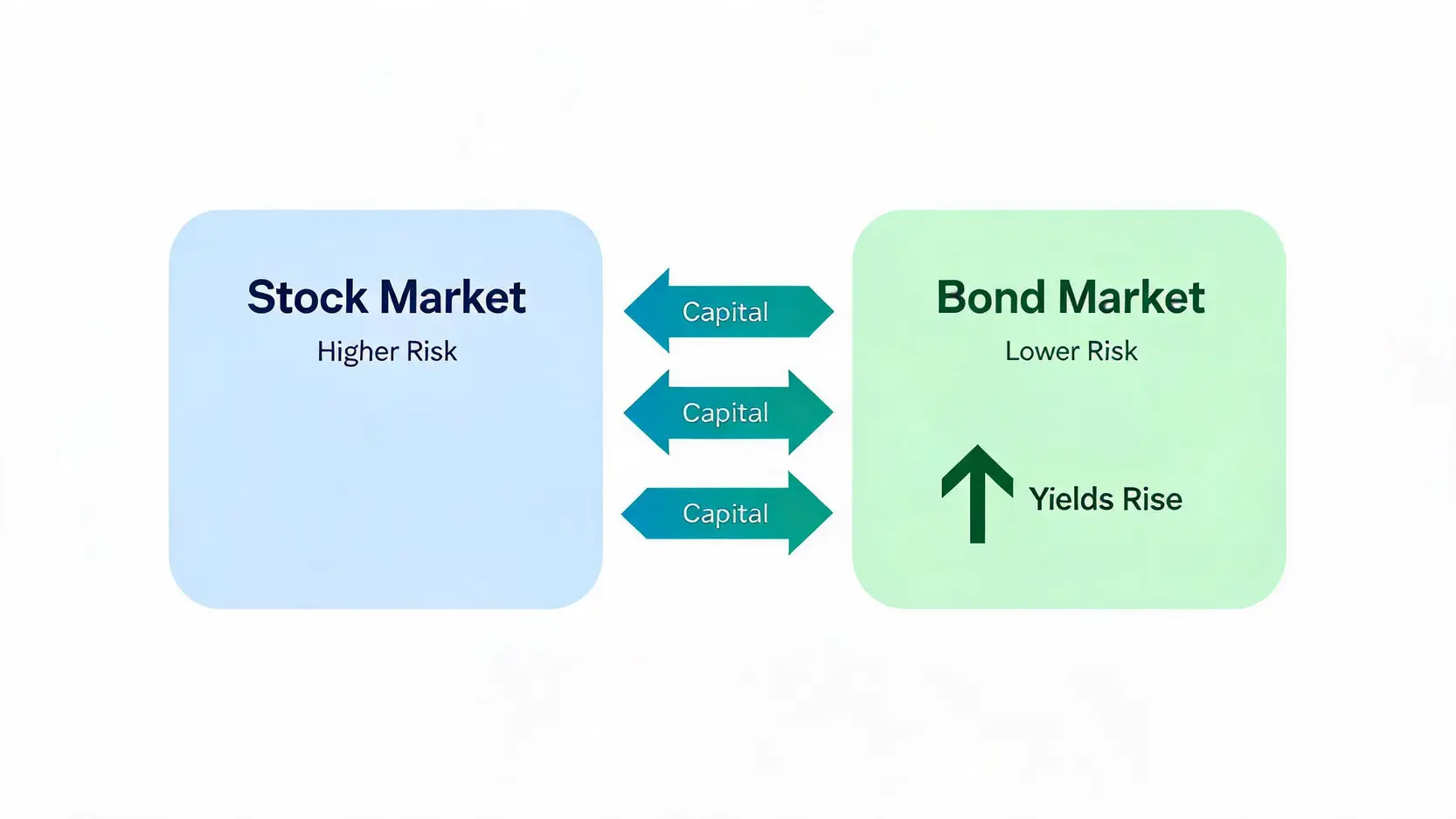
- Increased Competition: Suddenly, government bonds offer a more compelling return for very little risk. A 4.5% or 5% yield on a Treasury bond can draw capital away from the stock market, where returns are uncertain and carry higher risk. This capital outflow puts downward pressure on stock prices.
- Discounted Cash Flow (DCF) Models: Analysts use DCF models to estimate a company’s current stock value based on its projected future cash flows. The risk-free rate is a key component of the discount rate used in these calculations. A higher discount rate means future earnings are worth less in today’s dollars, leading to a lower calculated intrinsic value for the stock.
This valuation pressure is a primary reason why a rising yield environment can be a headwind for equities, particularly for growth stocks whose valuations are heavily dependent on far-future earnings.
Economic Signals: What Surging Yields Tell Us About the Broader Economy
While the inverse relationship often holds, surging yields are not always a negative sign. Sometimes, yields rise because the economy is strong—a scenario known as a “risk-on” environment. In this case, investors sell safe-haven bonds to buy stocks and other riskier assets, anticipating strong corporate earnings. The bond selling pushes their prices down and yields up. Therefore, it is crucial to analyze the *reason* for rising yields. Is it due to fears of persistent inflation and hawkish central banks (negative for stocks), or is it a reflection of robust economic growth (potentially positive for stocks)? Decoding this signal is key to mastering the Bond Yields vs Stock Market 2026 dynamic.
Expert Forecasts: What Top Analysts Predict for the 2026 Bond and Stock Market
As of mid-2026, the financial markets are at a pivotal juncture. After a period of aggressive monetary tightening, analysts are closely watching economic data to forecast the next moves by central banks and their impact on both fixed-income and equity markets. Here’s a synthesis of the prevailing expert analysis.
2026 Bond Market Outlook: Projections for the 10-Year Treasury Yield
The consensus forecast for the 10-year Treasury yield in 2026 is one of cautious normalization. Most analysts project the yield to trade within a range of 3.75% to 4.50%. The upper end of this range is contingent on inflation remaining stickier than anticipated, forcing the Federal Reserve to maintain a restrictive stance. The lower end assumes a soft landing for the economy, allowing for a gradual easing of monetary policy. The general sentiment is that the peak of the yield spike is behind us, but a return to the ultra-low rates of the previous decade is highly unlikely. This establishes a new baseline for the risk-free rate, fundamentally altering the investment calculus for the foreseeable future.
2026 Stock Market Outlook: Key Sectors to Watch Amidst Shifting Yields
The 2026 stock market outlook is nuanced and highly sector-dependent. With bond yields stabilizing at a higher plateau, the era of indiscriminate growth in all sectors is over. Investors are now focused on quality and resilience. Key sectors to watch include:
- 📈 Financials (Banks, Insurance): This sector is a primary beneficiary of higher interest rates, as it widens their net interest margins—the spread between what they earn on loans and pay on deposits.
- ⚙️ Industrials and Materials: If higher yields are accompanied by a strong economy and infrastructure spending, these sectors could outperform.
- ❤️ Healthcare: Often considered defensive, this sector’s non-cyclical demand for products and services makes it resilient in an uncertain economic environment.
- 📉 Technology and Consumer Discretionary: High-growth tech stocks and companies reliant on consumer borrowing may face continued valuation pressure and headwinds from reduced spending.
The Role of Central Banks: How Monetary Policy Will Shape Both Markets
The path of both the bond and stock markets in 2026 will be heavily dictated by the actions of central banks. According to recent publications from institutions like the Federal Reserve Bank of St. Louis, the focus has shifted from aggressive rate hikes to a data-dependent holding pattern. The Fed is signaling a commitment to bringing inflation back to its 2% target, even if it means keeping rates higher for longer. Any pivot towards rate cuts would require a significant and sustained downturn in inflation and employment data. This policy of “higher for longer” will likely keep a lid on excessive stock market speculation while making the steady income from bonds more attractive to a wider range of investors.
Strategic Portfolio Adjustments for the 2026 High-Yield Environment
Navigating the current high-yield environment requires a proactive and strategic approach to portfolio management. The strategies that worked in a zero-interest-rate world are no longer optimal. Investors must adapt to a market where capital has a cost and risk-free alternatives offer genuine competition.
Sector Deep Dive: Which Stocks Thrive (and Dive) When Bond Yields Rise?
As discussed, not all stocks react uniformly to rising bond yields. A deeper analysis reveals clear winners and losers. According to an in-depth analysis by Investopedia, certain sectors are better positioned to weather, or even benefit from, a higher rate environment.
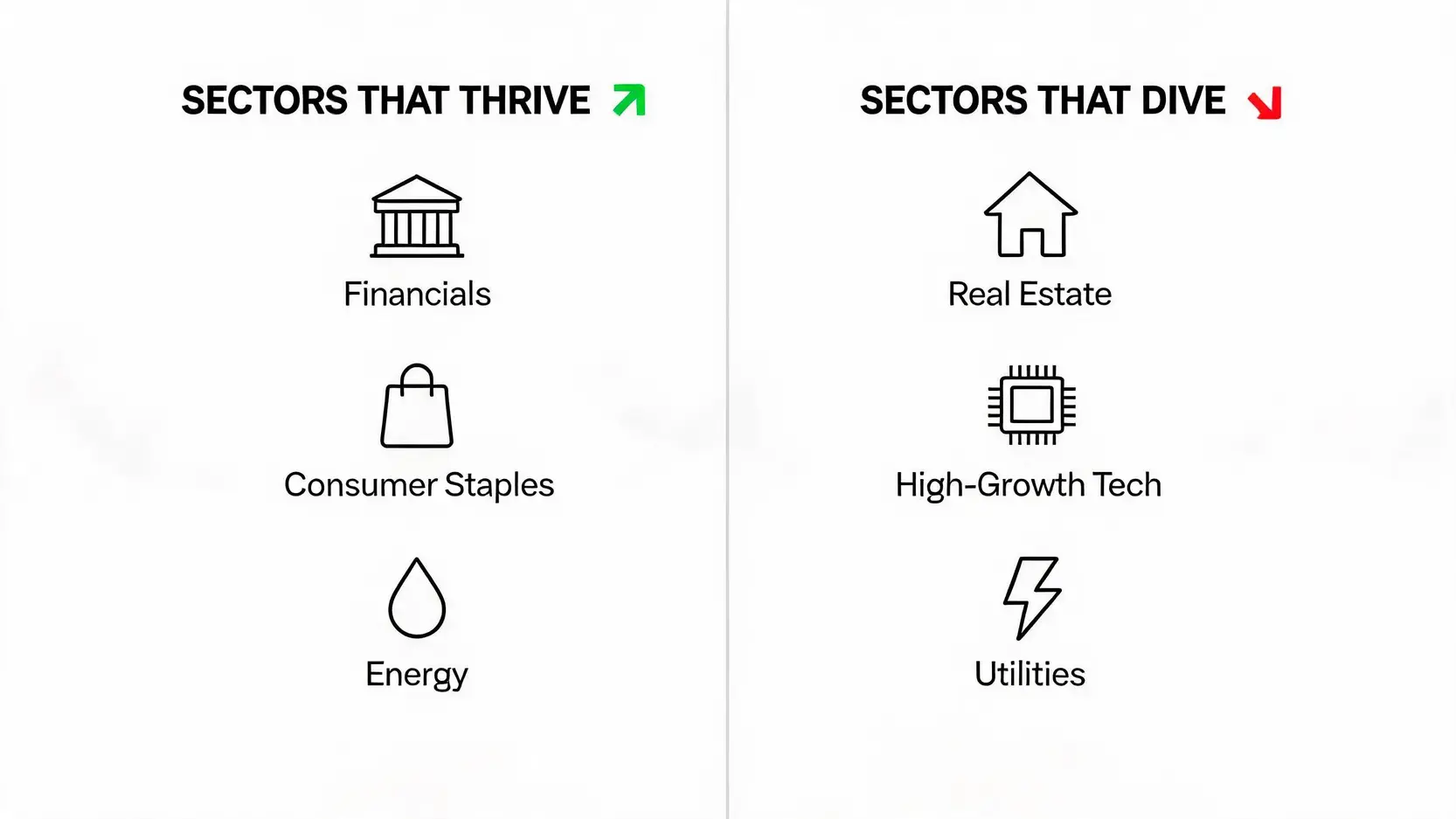
Sectors That Tend to Thrive:
- Financials: Banks, brokerage firms, and insurance companies often see improved profitability. Banks benefit from wider net interest margins.
- Consumer Staples: Companies that sell essential goods (food, beverages, household products) tend to be more stable as their demand is inelastic, regardless of economic conditions.
- Energy & Materials: These sectors are often correlated with inflation. Since rising yields are frequently a response to inflation, these stocks can act as a natural hedge.
Sectors That Tend to Dive:
- Utilities & Real Estate (REITs): These sectors are often treated as “bond proxies” due to their high dividend yields. When bond yields rise, these stocks become less attractive by comparison. They also typically carry high debt loads, making their financing costs more expensive.
- High-Growth Technology: As mentioned, these companies’ valuations are heavily skewed towards future earnings, which are discounted more heavily in a high-rate environment.
- Consumer Discretionary: Companies selling non-essential goods and services can suffer as higher rates curb consumer borrowing and spending.
Asset Allocation Models for Different Risk Appetites in 2026
The traditional 60/40 stock/bond portfolio is evolving. In 2026, with bonds offering attractive yields, the fixed-income portion of a portfolio can once again serve its dual purpose of providing both income and a hedge against equity volatility. Crafting the right asset allocation models for different risk appetites is crucial.
- Conservative Investor: May shift to a 40/60 or even 30/70 stock/bond allocation, prioritizing capital preservation and income from high-quality corporate and government bonds.
- Moderate Investor: Could maintain a balanced 50/50 or 60/40 approach, but with a focus on value and dividend-paying stocks over speculative growth equities.
- Aggressive Investor: Might stick with a higher equity allocation (70/30 or 80/20), but should focus on companies with strong balance sheets, pricing power, and clear paths to profitability that can withstand a higher-cost-of-capital environment.
Beyond Traditional Bonds: Exploring Alternative Fixed-Income Opportunities
Investors should look beyond just government treasuries. The current environment has opened up several alternative fixed-income opportunities that can enhance yield and diversify risk.
Consider the following:
- Investment-Grade Corporate Bonds: Offer a higher yield than government bonds with relatively low default risk.
- Floating-Rate Notes & CLO ETFs: These instruments have interest payments that adjust with market rates, providing a hedge against further rate increases.
- TIPS (Treasury Inflation-Protected Securities): The principal value of these bonds increases with inflation, offering direct protection against rising prices.
- Short-Duration Bond Funds: By focusing on bonds with shorter maturities, these funds have less sensitivity to interest rate fluctuations, reducing price volatility.
Conclusion
In conclusion, the 2026 financial landscape is being heavily defined by the Bond Yields vs Stock Market narrative. While higher yields present a mathematical challenge to equity valuations and increase the appeal of fixed income, they also signal economic shifts that can create new opportunities for discerning investors. The era of passive, index-fund-only investing faces a stern test. By understanding the core dynamics of interest rates and inflation, staying informed on expert forecasts, and strategically adjusting your portfolio’s sector and asset allocation, you can effectively navigate the complexities and unlock the potential of the year ahead.
Frequently Asked Questions (FAQ)
Will 2026 be a good year for stocks or bonds?
A: 2026 is shaping up to be a year where both asset classes can perform, but for different reasons. Bonds are attractive for their significantly improved yields, offering solid income and a potential hedge against economic slowdowns. Stocks, while facing headwinds from higher rates, can still perform well if focused on quality, value, and sectors that benefit from the current economic climate, such as financials. A balanced approach is likely to be the most effective strategy.
What is the consensus forecast for the 10-year Treasury bond yield in 2026?
A: The consensus forecast among leading financial analysts places the 10-year Treasury yield in a range of approximately 3.75% to 4.50% for 2026. This reflects an expectation that while inflationary pressures are easing, central banks will be slow to cut rates, leading to yields stabilizing at a level significantly higher than in the previous decade.
How can I hedge my stock portfolio against rising bond yields?
A: Hedging against rising yields involves several strategies. First, rotate your equity exposure towards sectors that are less sensitive or even benefit from higher rates, such as financials, consumer staples, and energy. Second, increase your allocation to short-duration bonds or floating-rate debt, which have less price sensitivity to rate changes. Finally, consider alternative investments like commodities, which can perform well in inflationary environments that often accompany rising yields.
Which is a better indicator of the economy: the stock market or the bond market?
A: Both are critical indicators, but they often tell different stories. The stock market is typically forward-looking, reflecting investor sentiment about future corporate earnings and economic growth. The bond market, particularly the yield curve, is often seen as a more sober and accurate predictor of economic recessions. When short-term bond yields are higher than long-term yields (an inverted yield curve), it has historically been a reliable signal of an impending economic downturn. Therefore, many analysts view the bond market as the more analytical ‘smart money’ indicator.