
As global investors recalibrate their portfolios, the Japan stock market outlook 2026 presents a compelling and pivotal landscape. After decades of stagnation, Japan is re-emerging as a powerhouse, driven by historic corporate reforms and a monumental shift in monetary policy. This analysis provides a comprehensive forecast, exploring the key drivers for Japanese equity market returns and the impact of Tokyo Stock Exchange reforms that are reshaping the nation’s investment narrative. For those looking to capitalize on this transformation, understanding these undercurrents is not just advantageous—it’s essential.
Table of Contents
The Macroeconomic Landscape: Key Pillars for Japan’s 2026 Market Forecast
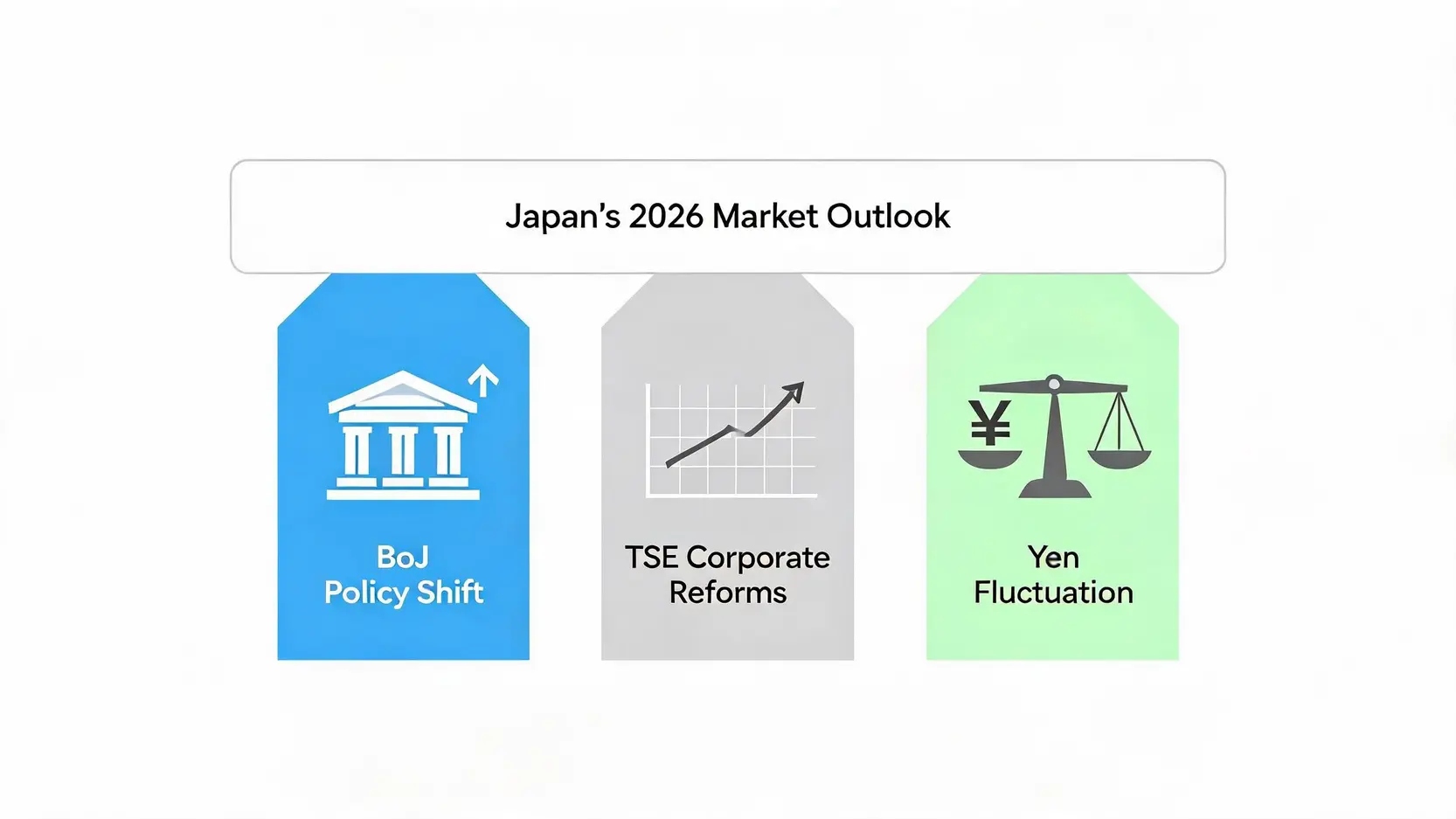
Japan’s economic environment in 2026 is defined by a delicate interplay of domestic policy shifts and global economic currents. Three pillars form the foundation of its market stability and growth potential: the central bank’s evolving strategy, transformative stock exchange reforms, and the ever-present influence of currency fluctuations.
Bank of Japan’s Monetary Policy: Navigating Rate Hikes
The era of negative interest rates is officially over. In a landmark decision, the Bank of Japan (BoJ) has pivoted towards monetary normalization, a move that reverberates through every asset class. For 2026, the key question is no longer *if* the BoJ will act, but *how fast* and *how high* rates will go. Current consensus points to a gradualist approach, with the central bank aiming to support sustainable inflation without derailing the fragile economic recovery. According to the Bank of Japan’s own outlook, economic growth is expected to remain resilient, providing a backdrop for cautious policy tightening. This new rate environment is a double-edged sword: it promises to boost profitability for the financial sector but could also increase borrowing costs for corporations and cool equity valuations if hikes are too aggressive. Investors must meticulously monitor BoJ statements and inflation data as they are now the primary indicators of market direction.
Tokyo Stock Exchange Reforms: Unlocking Shareholder Value
Perhaps the most significant long-term catalyst is the ongoing corporate governance revolution championed by the Tokyo Stock Exchange (TSE). The TSE’s pressure on companies, particularly those trading below a 1.0x price-to-book (P/B) ratio, to enhance corporate value is bearing fruit. In 2026, we are witnessing a surge in share buybacks, increased dividend payouts, and the unwinding of complex cross-shareholdings. This focus on capital efficiency is a direct response to the TSE’s mandate, as detailed in their 2026 Policies and Initiatives. For investors, this translates into tangible returns and demonstrates a fundamental shift from a management-centric to a shareholder-centric culture, making Japanese equities more attractive to foreign capital than ever before.

Yen Fluctuation: Implications for Exporters and Importers
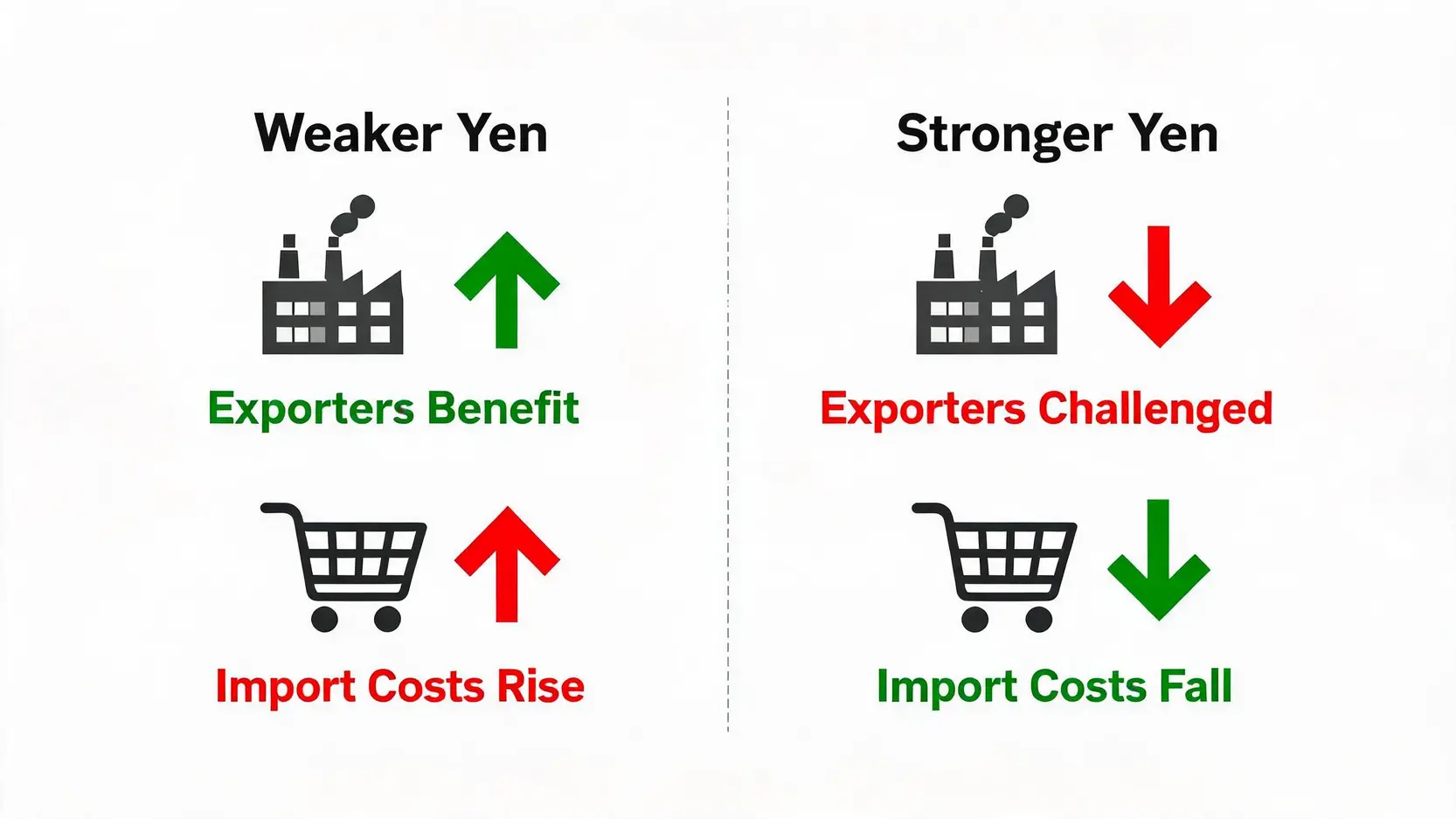
The Japanese Yen (JPY) remains a critical variable in the Japan stock market outlook. For years, a weaker yen provided a tailwind for Japan’s export giants, inflating their overseas earnings when repatriated. However, this dynamic is becoming more nuanced. While a soft yen still benefits automakers and electronics manufacturers, it simultaneously inflates the cost of imported raw materials and energy, squeezing margins for domestic-focused companies. Conversely, a potential strengthening of the yen, driven by BoJ rate hikes, would challenge exporters but benefit importers and consumers by lowering costs. This duality makes a well-diversified portfolio essential. Understanding the impact of currency shifts on corporate profits is crucial for sector selection in 2026.
Core Drivers for Japanese Equity Growth in 2026
Beyond the macroeconomic framework, the engine of the Japanese stock market is powered by corporate fundamentals and investor behavior. In 2026, two factors stand out as the primary drivers of equity returns: robust earnings growth and the sustained influx of international investment capital, creating a powerful, self-reinforcing cycle.
Corporate Earnings (EPS) Growth Projections
Healthy corporate earnings are the lifeblood of any bull market, and Japan is no exception. Projections for 2026 indicate solid Earnings Per Share (EPS) growth, underpinned by several factors. Firstly, the aforementioned corporate reforms are forcing companies to optimize operations and allocate capital more effectively, directly boosting the bottom line. Secondly, a modest inflationary environment allows companies to pass on price increases, supporting revenue growth. Finally, specific sectors like technology and financials are benefiting from powerful secular tailwinds. A consistent trend of positive earnings revisions provides a strong fundamental case for investing in Japan. For those new to this metric, grasping how EPS growth reflects a company’s profitability is a foundational step in stock analysis.
The Inflow of Foreign Capital and Investor Sentiment
The narrative around Japan has decisively shifted. For years, international investors were underweight on Japanese equities, deterred by deflation and poor corporate governance. That has changed. The structural reforms, coupled with strong endorsements from influential figures like Warren Buffett, have put Japan back on the map for global fund managers. In 2026, the inflow of foreign capital continues to be a significant driver, providing liquidity and supporting valuations. This renewed interest is not just speculative; it’s a long-term strategic reallocation based on the market’s improved fundamentals and shareholder-friendly evolution. This foreign buying power is a key component of the optimistic Japan stock market forecast.
Sector Deep Dive: Where to Find Opportunities in the 2026 Japanese Market
A broad market analysis is useful, but alpha is generated through astute sector selection. As Japan’s economy evolves, certain industries are positioned to outperform significantly. Here’s a deep dive into the most promising sectors for 2026.
Technology and AI: Riding the Global Semiconductor Wave
While Japan may not be known for semiconductor fabrication giants like Taiwan or South Korea, it is an indispensable leader in critical upstream segments. Japanese companies dominate the market for semiconductor manufacturing equipment, silicon wafers, and specialized chemical materials. 🤖 As the global demand for advanced chips—fueled by AI, data centers, and EVs—continues to surge, these companies are poised for exponential growth. Government initiatives to bolster domestic chip production and R&D further solidify this sector’s potential. Investors should look beyond the headline chipmakers to these essential suppliers for a unique angle on the global tech boom.
Automotive and Industrials: The EV Transition and Beyond
Japan’s automotive sector is at a crossroads, navigating the global shift to electric vehicles (EVs). While some have criticized their pace, Japanese giants like Toyota and Honda are making massive investments in next-generation battery technology, including solid-state batteries, which could be a game-changer. Beyond cars, Japan’s industrial sector excels in factory automation and robotics—technologies that are in high demand as global manufacturers seek to improve efficiency and reshore production. These companies are not just part of the EV trend; they are equipping the factories of the future.
Financials: Benefiting from a New Interest Rate Environment
For the first time in a generation, Japanese financial institutions are operating in a positive interest rate environment. This is a seismic shift. Banks, particularly megabanks like MUFG and SMFG, are set to see a significant expansion in their net interest margins (NIMs), the core driver of their profitability. Insurers also benefit as they can achieve higher returns on their vast investment portfolios. With valuations still reasonable compared to their global peers, the financial sector offers a direct and compelling way to play the theme of Japan’s monetary policy normalization.
Potential Risks and Headwinds on the Horizon for Japan’s Stock Market
No investment thesis is complete without a sober assessment of the risks. While the Japan stock market outlook for 2026 is positive, several external and internal factors could present significant headwinds. Acknowledging these risks is paramount for effective portfolio management.
Global Economic Slowdown and Its Ripple Effect
As a major export-oriented economy, Japan’s fortunes are intrinsically linked to the health of the global economy. A significant economic slowdown in key trading partners such as the United States, China, or Europe would inevitably dampen demand for Japanese goods, from cars to industrial machinery. This would negatively impact corporate earnings and could stall the market’s upward momentum. Monitoring leading economic indicators from these regions is crucial for any investor in Japanese equities.
Geopolitical Tensions and Supply Chain Stability
The geopolitical landscape, particularly in East Asia, remains a source of uncertainty. Any escalation of regional tensions could disrupt critical shipping lanes and supply chains, impacting Japanese manufacturers who rely on intricate cross-border logistics. Furthermore, such events could trigger a flight to safety, leading to a rapid appreciation of the yen, which would create an additional headwind for exporters. While not a base-case scenario, geopolitical risk is a low-probability, high-impact factor that cannot be ignored.
Conclusion
In conclusion, the Japan stock market outlook for 2026 is one of the most compelling narratives in global finance. The convergence of profound corporate reforms, the end of deflationary pressures, and a normalization of monetary policy has created a fertile ground for investment. While the risks associated with a global economic slowdown and geopolitical tensions are real, the fundamental, structural changes occurring within Japan offer a powerful long-term tailwind. Key sectors like technology, industrials, and financials present distinct opportunities for discerning investors. Navigating this dynamic market requires a keen focus on the Bank of Japan’s policy signals and a commitment to in-depth, sector-level research. The sun is indeed rising again on Japanese equities.
Frequently Asked Questions (FAQ)
Q: What is the general forecast for the Nikkei 225 in 2026?
A: The general forecast for the Nikkei 225 in 2026 is cautiously optimistic. Most analysts project moderate to strong single-digit growth, driven by continued EPS expansion and corporate governance improvements. However, the trajectory will be heavily influenced by the pace of the Bank of Japan’s interest rate hikes and the overall health of the global economy.
Q: How do the TSE reforms directly benefit investors?
A: The Tokyo Stock Exchange (TSE) reforms directly benefit investors in several ways. They pressure companies to improve their return on equity (ROE) and trade above their book value. This leads to increased shareholder returns through higher dividend payouts and more aggressive share buyback programs. It also fosters greater transparency and accountability from management, enhancing long-term shareholder value.
Q: Is Japan considered a safe market for foreign investment in 2026?
A: Yes, Japan is widely considered one of the safest and most stable markets for foreign investment in 2026. It boasts a strong regulatory framework, political stability, a highly developed economy, and deep, liquid capital markets. The ongoing corporate reforms are further enhancing its attractiveness by aligning its governance standards more closely with those in the U.S. and Europe.
Q: What impact will a stronger Yen have on the stock market?
A: A stronger yen typically has a mixed impact. It can be a headwind for the overall market, particularly the Nikkei 225, which is heavily weighted towards large exporters. This is because a stronger yen reduces the value of their overseas profits when converted back to JPY. Conversely, it benefits import-heavy industries and domestic consumers by lowering the cost of goods, and it can attract foreign investors seeking currency appreciation alongside equity returns.