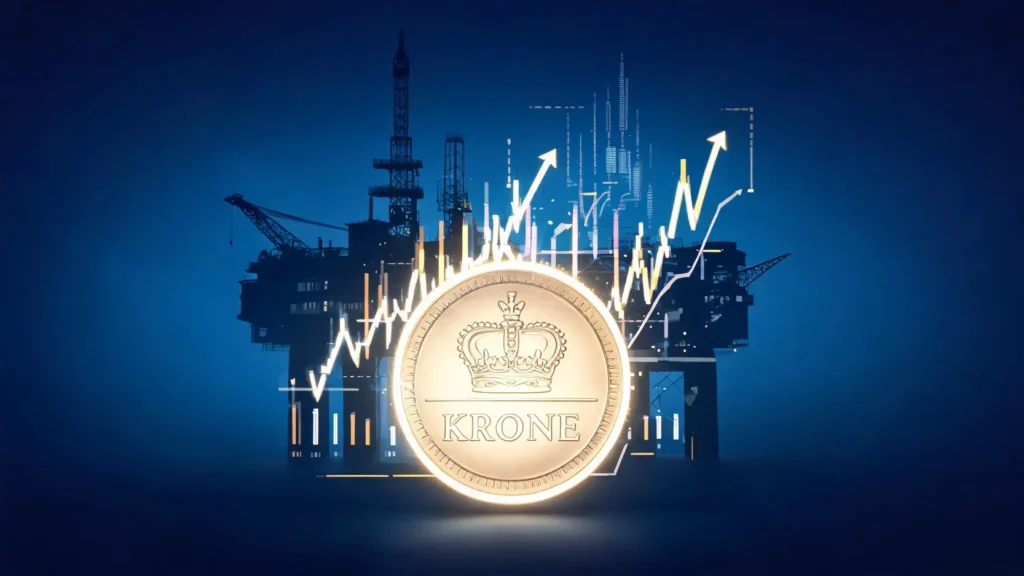
As global markets navigate a landscape of persistent economic uncertainty and volatile energy prices, investors are directing intense focus toward commodity-linked currencies. The Norwegian Krone (NOK) is positioned at a critical juncture, influenced by a unique confluence of domestic and international factors. This article provides a comprehensive Norwegian Krone forecast for 2026, dissecting the core economic drivers shaping the NOK price prediction. We will analyze the profound impact of energy prices on the NOK’s value, delve into expert predictions, and map out the potential risks and opportunities to guide your investment strategy in the year ahead.
Table of Contents
2026 NOK Forecast Summary vs Major Currencies
Entering 2026, the consensus among leading financial institutions points towards a cautiously optimistic outlook for the Norwegian Krone, though forecasts vary depending on assumptions about global growth and energy market trajectories. The central theme is the NOK’s high sensitivity to oil and gas prices, juxtaposed with the monetary policy decisions of Norges Bank. Below is a summary of price predictions and analyst sentiment for key currency pairs.
USD/NOK Price Prediction 2026
The trajectory of the USD/NOK pair is heavily influenced by the divergent monetary policies of the U.S. Federal Reserve and Norges Bank. While the Fed is signaling a potential plateau in its tightening cycle, Norges Bank remains vigilant against domestic inflation. Most analysts expect the interest rate differential to favor the NOK. Bank of America, for instance, has projected a target of 9.26 for USD/NOK by the end of 2026, contingent on stable to firm energy prices and a moderately weakening US dollar. A significant deviation in global risk sentiment could, however, see the USD strengthen as a safe-haven asset, pushing the pair higher.
EUR/NOK Price Prediction 2026
The EUR/NOK relationship is primarily a story of regional economic health and energy dependence. Europe’s reliance on Norwegian energy exports provides a structural tailwind for the Krone. Many investment banks forecast a gradual depreciation of the EUR/NOK pair throughout 2026. For example, BofA’s forecast suggests a move towards 11.30. This outlook is predicated on the European Central Bank (ECB) adopting a more dovish stance compared to Norges Bank and continued robust energy revenues for Norway. Geopolitical tensions in Europe remain a key variable that could introduce significant volatility.
Expert Consensus and Analyst Ratings
The overall expert consensus for the Norwegian Krone forecast in 2026 can be categorized as ‘Moderately Bullish’. This view is supported by a fundamental valuation model that sees the NOK as undervalued relative to its historical correlation with energy prices. However, this optimism is tempered by global risks. Here’s a quick overview:
- Bullish Factors: High oil and gas prices, a hawkish Norges Bank, and a strong national balance sheet.
- Bearish Factors: A sharp global economic downturn, significant drops in energy demand, or a dovish pivot from Norges Bank.
- Overall Rating: Most analysts hold a ‘Buy’ or ‘Overweight’ rating on the NOK against currencies like the EUR and SEK, while maintaining a more neutral stance against the USD due to its safe-haven status.
Core Economic Drivers Influencing the Krone in 2026
To truly understand the Norwegian Krone forecast for 2026, one must look beyond the charts and analyze the fundamental economic forces at play. The NOK’s value is a reflection of Norway’s unique economic structure, heavily tied to natural resources and prudent monetary management.
The Impact of Global Energy Prices (Oil and Gas)
Norway is one of the world’s largest exporters of oil and natural gas. Consequently, the value of the Norwegian Krone is inextricably linked to the price of these commodities. ⛽ When energy prices rise, Norway’s export revenues surge, increasing the demand for NOK from foreign buyers and bolstering the nation’s terms of trade. This dynamic creates a strong positive correlation:
- Higher Oil/Gas Prices: Tend to lead to a stronger NOK.
- Lower Oil/Gas Prices: Tend to lead to a weaker NOK.
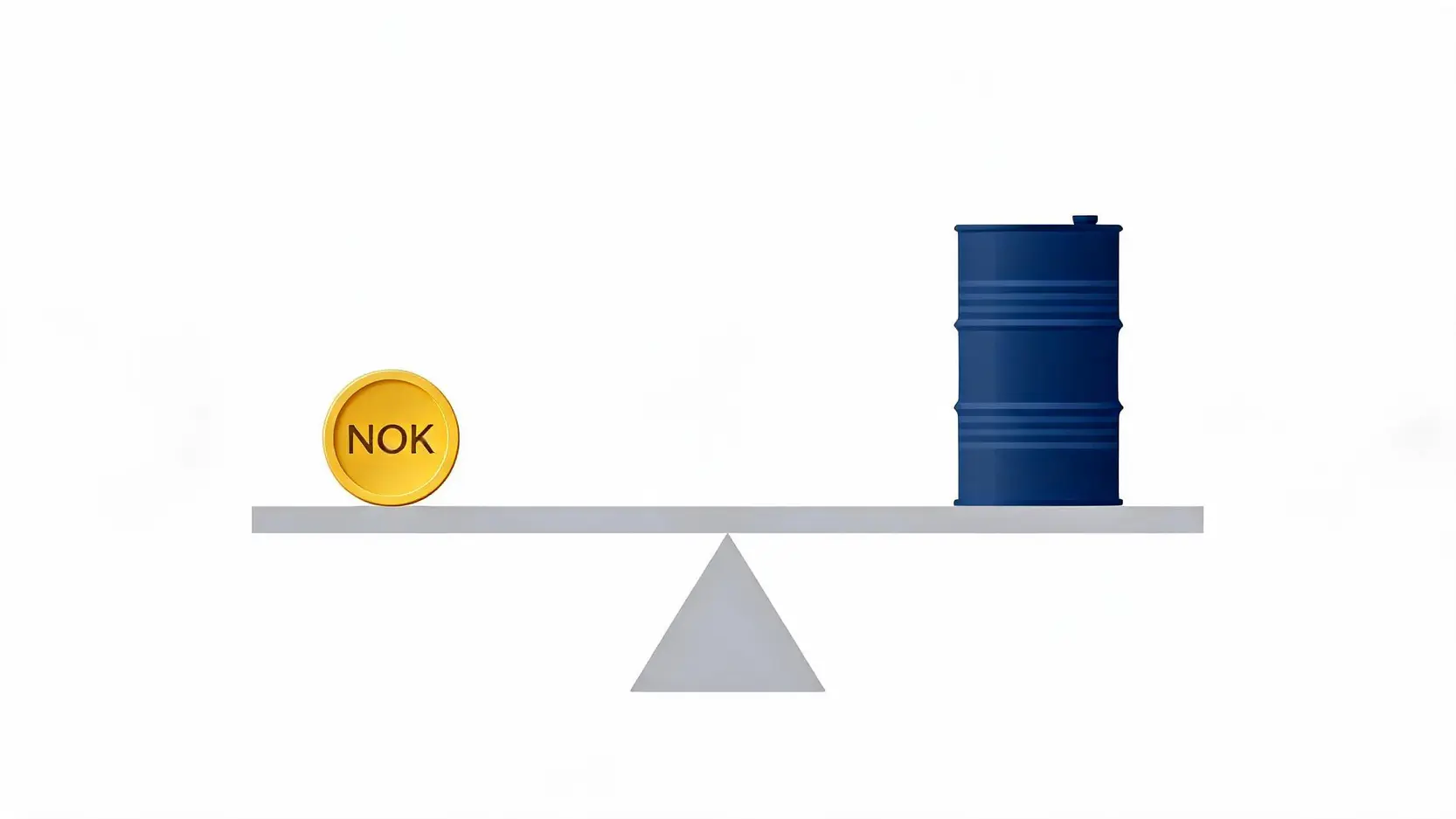
In 2026, with ongoing geopolitical supply constraints and a steady global demand outlook, energy prices are expected to remain elevated. This backdrop provides a fundamental pillar of support for the NOK. Investors should closely monitor OPEC+ decisions, global inventory levels, and the progress of the green energy transition, as these will all impact the long-term energy price forecast and, by extension, the NOK’s valuation. Understanding this relationship is critical, as how energy prices affect core inflation is a key theme for all economies.
Norges Bank’s Monetary Policy and Interest Rate Outlook
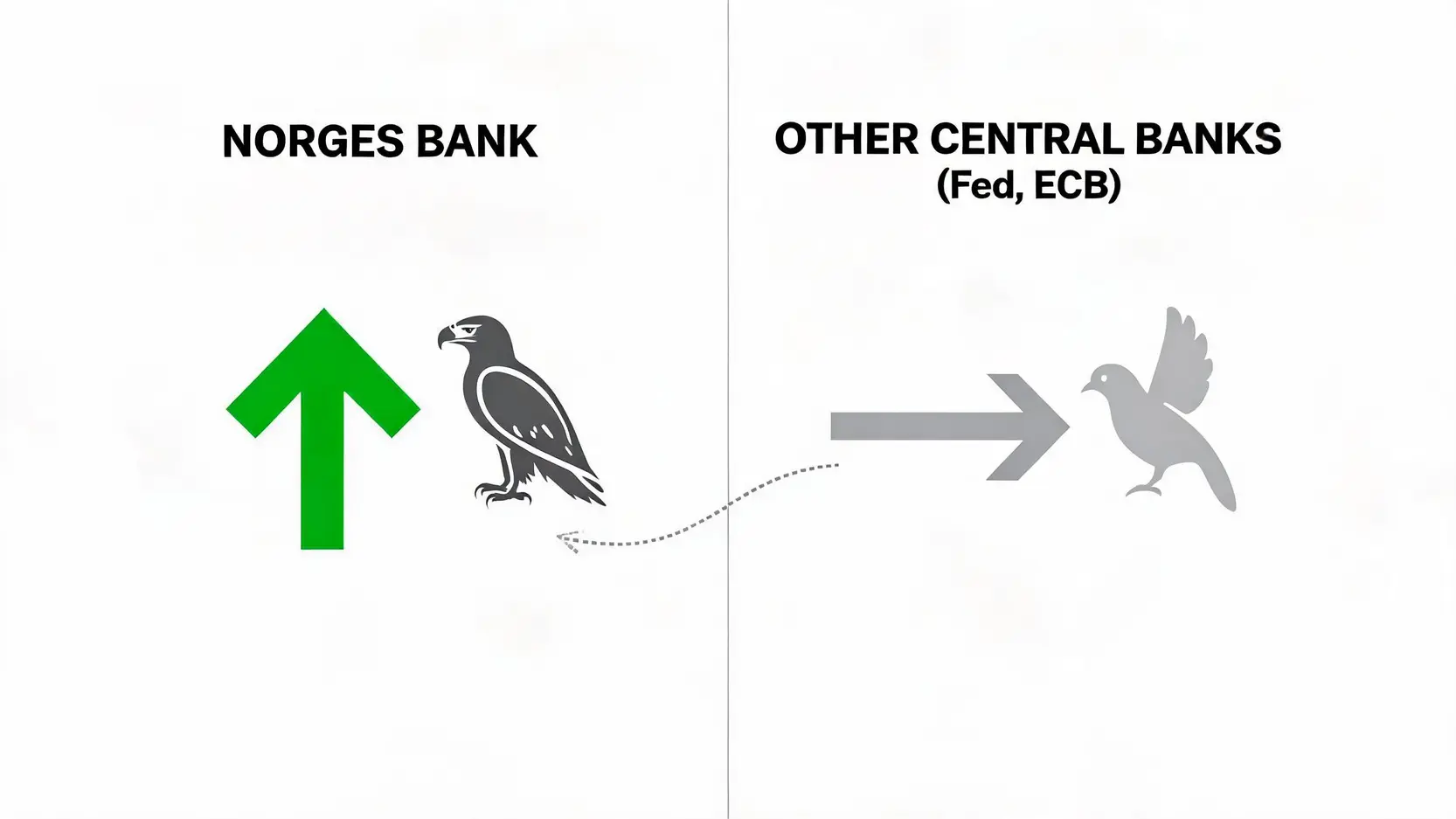
The stance of Norway’s central bank, Norges Bank, is the second most critical driver for the NOK. The bank’s primary mandate is to maintain price stability, targeting an inflation rate of around 2%. As of early 2026, Norwegian inflation remains stubbornly above this target, compelling the bank to maintain a hawkish stance. According to its latest Monetary Policy Report, the policy rate is forecast to remain elevated, potentially seeing further hikes if inflation does not recede as projected. A higher policy rate makes holding NOK more attractive to foreign investors, increasing capital inflows and strengthening the currency—a concept known as ‘carry trade’. The interest rate differential between Norway and other major economies, particularly the Eurozone and the US, will be a key determinant of currency flows throughout the year. For investors, understanding central bank monetary policy decisions is non-negotiable.
Norway’s Domestic Economic Health: Inflation and GDP Growth
A country’s overall economic performance is a baseline indicator of its currency’s strength. Norway boasts a remarkably robust economy, supported by its massive sovereign wealth fund—the largest in the world. According to the latest data from the International Monetary Fund (IMF), Norway’s real GDP growth is projected at a stable 1.5% for 2026, with unemployment remaining low. While inflation is projected to be around 3.3%, which is higher than the central bank’s target, it is expected to moderate. A strong domestic economy supports the NOK in several ways:
- It reinforces the central bank’s ability to maintain higher interest rates.
- It attracts foreign direct investment.
- It signals political and financial stability, enhancing the currency’s appeal.
This solid economic foundation provides a buffer for the NOK against external shocks, making it a relatively resilient currency within the G10 space.
Technical Analysis: Key NOK Price Levels to Watch
While fundamental analysis sets the long-term direction, technical analysis helps in identifying strategic entry and exit points. For traders focusing on the Norwegian Krone forecast for 2026, monitoring key price levels, patterns, and volatility metrics is essential for effective risk management. A solid grasp of technical analysis strategies for forex trading is crucial.
Identifying Major Support and Resistance Zones
Support and resistance levels are historical price points where a currency pair has previously shown a tendency to pause or reverse. These zones are formed by a concentration of buying (support) or selling (resistance) interest.
- For USD/NOK: A key resistance level to watch is the 10.50 area, a psychological barrier and a point of previous consolidation. On the downside, the 9.20-9.30 zone represents significant support, which aligns with several banks’ year-end forecasts.
- For EUR/NOK: The 12.00 level has acted as a formidable long-term resistance. A decisive break below the 11.50 support level could signal a new bearish trend, opening the path towards the 11.20-11.30 range.
Traders often use these levels to set stop-loss orders or to initiate trades, buying near support and selling near resistance.
Chart Patterns and Trend Projections for 2026
Chart patterns can provide clues about the future direction of a currency pair. In 2026, several patterns may be relevant for NOK pairs:
- Trend Channels: Both USD/NOK and EUR/NOK have been trading within broad descending channels on higher timeframes. As long as the price respects the upper boundary of these channels, the path of least resistance is downwards, favoring NOK strength.
- Consolidation Patterns: Look for periods of consolidation, such as rectangles or triangles. A breakout from these patterns often indicates the direction of the next significant move. For instance, a downside breakout from a consolidation range in EUR/NOK would reinforce the bearish fundamental outlook.
Using tools like moving averages (e.g., the 50-day and 200-day MAs) can help confirm the prevailing trend. A ‘golden cross’ (50-day MA crossing above the 200-day MA) is bullish, while a ‘death cross’ is bearish.
Volatility and Risk Metrics
Volatility is a measure of the magnitude of a currency’s price fluctuations. The NOK is inherently more volatile than major currencies due to its link to commodity prices. Traders must account for this. 📈
- Average True Range (ATR): This indicator can help in setting appropriate stop-loss distances to avoid being taken out of a trade by normal market noise.
- Geopolitical Events: News related to energy markets or European politics can cause sudden spikes in volatility. It is crucial to have a risk management plan in place to handle such events, including using appropriate leverage and position sizing.
By combining fundamental drivers with a clear technical framework, investors can build a more robust and nuanced Norwegian Krone forecast for 2026.
Investment Outlook: Potential Risks and Opportunities
The Norwegian Krone forecast for 2026 presents a compelling, albeit complex, picture for investors. A clear-eyed assessment of both the bullish and bearish scenarios is essential for capitalizing on opportunities while mitigating potential risks.
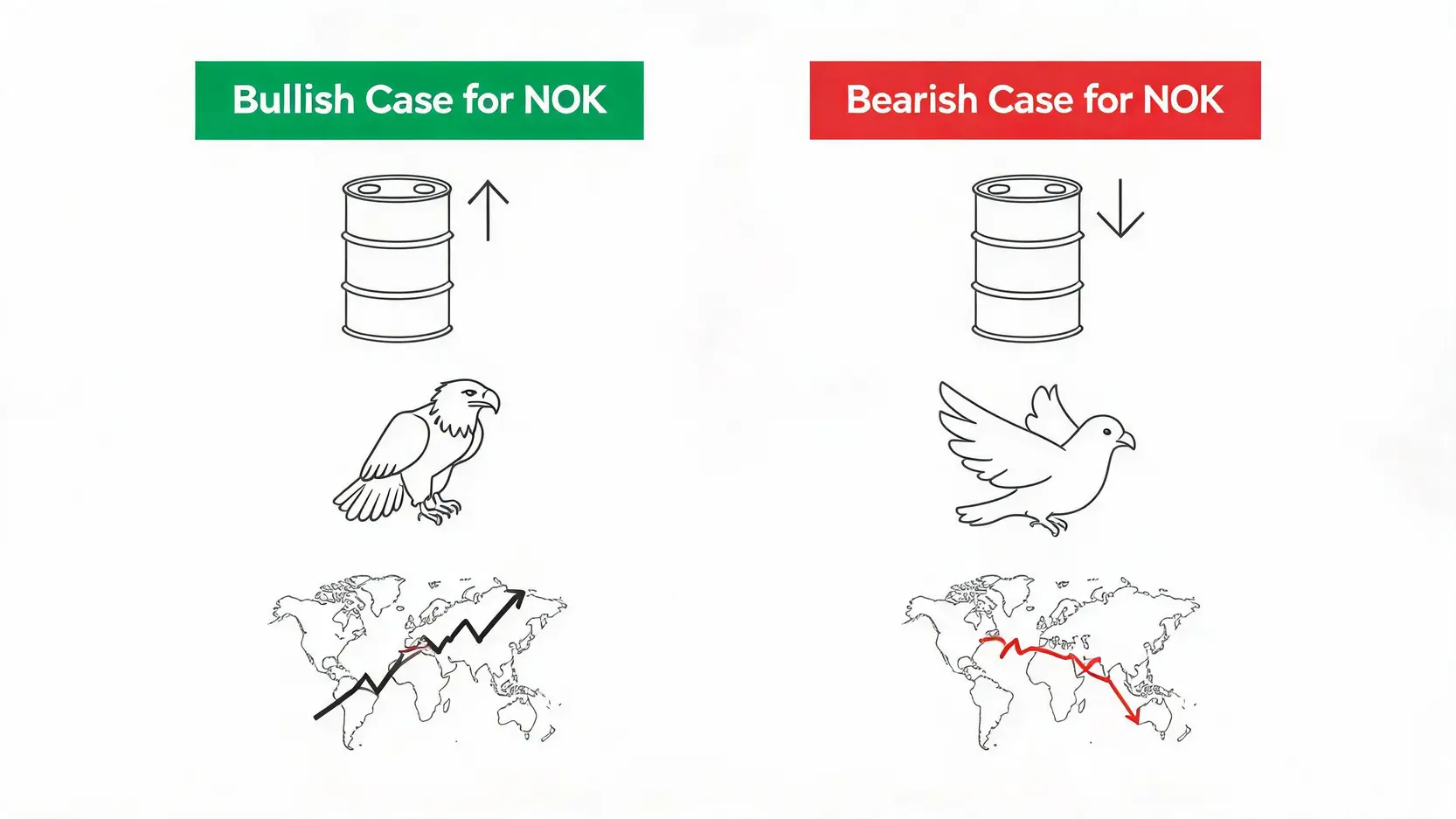
Bullish Case: What Could Drive the NOK Higher?
The primary catalysts for a stronger-than-expected NOK in 2026 revolve around a ‘risk-on’ global environment and favorable energy dynamics.
- ✅ Energy Price Shock: A geopolitical event that causes a sudden and sustained spike in oil and gas prices would be highly bullish for the NOK, potentially pushing USD/NOK below 9.00.
- ✅ Hawkish Surprise from Norges Bank: If Norwegian inflation proves even more persistent than anticipated, Norges Bank could be forced into a more aggressive hiking cycle, widening the interest rate differential and attracting significant capital inflows.
- ✅ Strong Global Growth: A robust global economy would boost demand for commodities and lessen the demand for the US dollar as a safe haven, creating a doubly positive environment for the Krone.
Bearish Case: Downside Risks for the Norwegian Krone
Conversely, the risks to the NOK are tied to a global ‘risk-off’ scenario and a potential downturn in the energy complex.
- ❌ Global Recession: A severe global economic slowdown would crush demand for oil, leading to a sharp price drop and a sell-off in commodity currencies like the NOK. In this scenario, USD/NOK could surge back towards 11.00 or higher as investors flock to the safety of the dollar.
- ❌ Dovish Pivot by Norges Bank: If the Norwegian economy slows unexpectedly or inflation falls faster than forecast, Norges Bank could signal an end to its tightening cycle or even hint at rate cuts, which would diminish the NOK’s yield advantage.
- ❌ Market Volatility and De-risking: As a smaller, less liquid currency, the NOK tends to suffer during periods of high market stress, regardless of its fundamentals. A sudden market shock could lead to a rapid depreciation as investors liquidate riskier assets.
Frequently Asked Questions (FAQ)
Q: Is the Norwegian Krone expected to strengthen in 2026?
A: Yes, the consensus forecast points towards a modest strengthening of the Norwegian Krone in 2026. This is based on supportive factors like elevated energy prices, a relatively hawkish Norges Bank maintaining high interest rates, and Norway’s strong underlying economic fundamentals. However, its performance will be highly dependent on global risk sentiment and commodity market trends.
Q: What is the main factor affecting the NOK’s value?
A: The single most important factor affecting the NOK’s value is the global price of energy, specifically crude oil and natural gas. As a major energy exporter, Norway’s national income is heavily tied to commodity prices. A rise in energy prices typically leads to a stronger NOK, while a fall in prices leads to a weaker NOK.
Q: How do interest rates in Norway impact the krone forecast?
A: Interest rates, set by Norges Bank, are a critical driver. Higher interest rates make holding Norwegian Krone more attractive for international investors seeking better returns (yield) on their capital. When Norway’s interest rates are higher than those in other major economies (like the US or the Eurozone), it can lead to capital inflows that strengthen the NOK. Conversely, lower rates can weaken it.
Q: What are the biggest risks to the 2026 NOK forecast?
A: The biggest risks are external and macroeconomic in nature. A global recession would severely depress energy demand and prices, undermining the NOK’s primary support. Additionally, a sudden spike in market volatility or a ‘risk-off’ event could cause investors to flee smaller currencies like the NOK in favor of safe havens like the US Dollar, even if Norway’s domestic economy remains strong.